By Tom Demerly for tomdemerly.com
HF-bridge-double-span-1991

Purity and distillation. In endurance sports these two things reduce us to our motives, our capabilities. They hold a mirror to our our inner core and reveal what drives us. What keeps us going forward when there is nothing else there- no music, no crowds, no finish line, no mile markers. Only distance and our own strength.

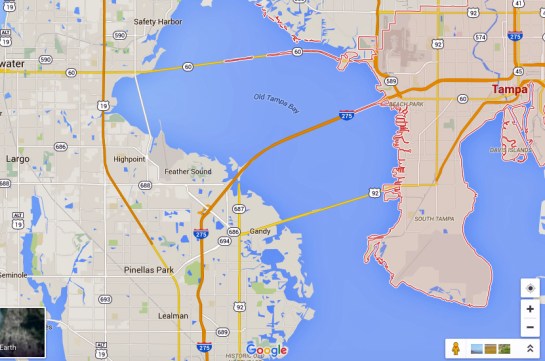
Between Clearwater and Tampa, Florida stretches a rare 9-mile ribbon of white pavement. Set against a stark backdrop of water and sun it distills ambition to reality and leaves a volatile cocktail of capability. What is left after the distillation process is what you have to work with. The Courtney Campbell Causeway is a two-lane traffic span for people driving to the Florida coastal region of Tampa from Clearwater and back. Purpose built next to the highway span is a multi-use path for bikes and runners.

When you run Courtney Campbell out and back it is 18 miles. And it is hot.

courtneycampbell15

The Garmin Connect map display from my Garmin 920XT showing the mile markers.

I ran Courtney Campbell on Monday, January 25th. It was 60-degrees Fahrenheit with an East North East wind at only 6 MPH and low humidity at 57%. Perfect conditions.

You run Courtney Campbell at noon by yourself on a weekday. There are almost no other people there. You are left alone with your ambitions, your shortcomings, your capabilities. After 18 miles of running the concrete ribbon across the brilliant ocean you understand what you can, and can’t, do. And that is why I was there.

It is quiet. Brilliantly, disturbingly quiet. The ocean surface is finely rippled. Seabirds paddle in groups above submerged weed patches on the sand looking for fish. You hope for a good omen- perhaps a shark or a dolphin, to add some mystic power, some suggestion of allegiance to the wild sea.

courtneycampbell20

A boat crosses under the causeway toward the other elevated highway to the south.

Because the miles accumulate without markers or fanfare you simply glide for hours without concern. It just feels good to be next to the ocean, running, in the company of the wild sea.

People run and do triathlons for many reasons. As you grow older your reasons change. Evolve. If you are still in this sport after 30 years it isn’t to impress someone, it isn’t to prove anything, it isn’t for a tattoo or a medal or a T-shirt. It is for the things on the Courtney Campbell Causeway.

Wind. Distance. Air. Ocean. Strength. Purity. Solitude.

I found those things on the Courtney Campbell Causeway, and I had missed them for the past few years.

courtneycampbell25

The Courtney Campbell Causeway is Highway 60 at the North end of Old Tampa Bay. There is parking at either end and restrooms at the east side, but no water or restrooms on the causeway.


By Tom Demerly for tomdemerly.com

education

Immigration, the economy, national security, foreign policy, health care: the hot point issues in the 2016 election.

But the single most important issue for Americans isn’t on that list.

This single issue governs the direction of every topic listed above. The success or failure of this single issue, usually low on the list of hotly debated topics, will determine the trajectory of our collective future in every area. It also has the potential to fix nearly every major challenge our nation faces.

It is the single most important issue in society, and one of the most neglected.

It is education.

America has done decades of government by crisis management. From the federal budget to the Affordable Care Act to our diplomatic efforts, our collective doctrine is to moderate problems after they’ve happened. Usually when they are in crisis.

As a result of our collective “fix it after it’s broke” doctrine we waste billions of dollars on missed opportunity, crisis management and bad planning, from the personal level with individual citizens to the national and international level with failed projects, damage control and wasted conflict. We legislate common sense instead of teaching it. We litigate tolerance and acceptance instead of learning it. And we struggle to resolve endless global conflicts in a bizarre replay of history that seems never ending.

We do this because we are collectively less educated. We’re less able to think critically to solve complex problems. Because we know less based on the trends in our test scores, we draw from a smaller and smaller inventory of knowledge and skills to solve problems. More importantly, we fail to learn from mistakes and avoid them in the future. That is an ominous trend. As the world becomes more connected and more populous we become less able to think critically, to reason and make well-conceived decisions. Our decisions become simpler and less forward thinking.

When we do learn, we learn the hard way, and the ominous trajectory of society is that we are becoming less educated, not more.

In 2013 then- Secretary of Education Arne Duncan said, “We have a real state of crisis. This is much bigger than education.”

Duncan was talking about the effects of an “education deficit” emerging between the United States and the rest of the world based on a global comparison of test scores in a battery of tests administered to 166,000 people, ages 16 through 65, in 23 countries in both 2011 and 2012. Results reveal the U.S. is trailing many other countries in test scores and graduation rates. These test results make the U.S. less employable, productive and innovative.

Our collective health is in decline only a few decades after massive reductions in physical education. We needed more exercise in school, teaching better lifelong health habits. Instead we have a band-aid healthcare system that protects big medicine financially and sticks the individual healthcare consumer with the bill, mandated by law and enforced by fines. All the while we get fatter, sicker, eat worse and spend more than we can individually afford on healthcare. Better health and fitness education over the last four decades could have moderated this crisis. Instead we try to fix it after it is broken.

The same paradigms exist in math and science. America has lost ground in test scores in every area. As other countries teach English as a second language requirement, our schools struggle to even teach English. Americans can voice a passionate opinion about Syrian refugees but can’t name that country’s capital or find it on an unlabeled map.

Our next President needs to put education first, above all other agendas. If people are educated in problem solving, recognizing signs of mental health problems, resolving conflict and accepting diversity they may not choose gun violence as a way to resolve conflict. Someone may recognize a person’s mental illness and help them get treatment. If people are better educated they will make better life choices and avoid substance abuse. If people are better educated they will take more responsibility for their health and be less likely to be obese. If people are immersed in sciences we may produce the student who becomes the doctor who cures cancer. But only if we put education first.

Why hasn’t education gotten more attention in the election rhetoric? It may be a self-feeding problem. We’re too dumb to realize how bad it is.

And while the economy, national security, foreign policy and health care are the banner issues in this election, the structural problems with our future only get worse. Based on the Republican and Democratic debates, it doesn’t look to improve any time soon.


0238 Hours Local Zone Time, 17 January 1991. Baghdad, Iraq. 

eliteathlete

It is dark and Mike Smith’s clothing is wet.

Mike Smith is an athlete, an elite athlete in fact. He is a triathlete, has done Ironman several times, a couple adventure races and even run the Marathon Des Sables in Morocco- a 152 mile running race through the Sahara done in stages.

Mike has some college, is gifted in foreign languages, reads a lot and has an amazing memory for details. He enjoys travel. He is a quiet guy but a very good athlete. Mike’s friends say he has a natural toughness. He can’t spend as much time training for triathlons as he’d like to because his job keeps him busy. Especially now. This is Mike’s busy season. But he still seems very fit. Even without much training Mike has managed some impressive performances in endurance events.

It’s a big night for Mike. He’s at work tonight. As I mentioned his clothing is wet, partially from dew, partially from perspiration. He and his four co-workers, Dan, Larry, Pete and Maurice are working on a rooftop at the corner of Jamia St. and Khulafa St. across from Omar Bin Yasir.

Mike is looking through the viewfinder of a British made Pilkington LF25 laser designator. The crosshairs are centered on a ventilation shaft. The shaft is on the roof of The Republican Guard Palace in downtown Baghdad across the Tigris River.

Saddam Hussein is inside, seven floors below, three floors below ground level, attending a crisis meeting.

Mike’s co-worker Pete (also an Ironman finisher, Lake Placid, 2000) keys some information into a small laptop computer and hits “burst transmit”. The DMDG (Digital Message Device Group) uplinks data to another of Mike’s co-workers (this time a man he’s never met, but they both work for their Uncle, “Sam”) and a fellow athlete, at 21’500 feet above Iraq 15 miles from downtown Baghdad. This man’s office is the cockpit of an F-117 stealth fighter. When Mike and Pete’s signal is received the man in the airplane leaves his orbit outside Baghdad, turns left, and heads downtown.

Mike has 40 seconds to complete his work for tonight, then he can go for a run.

Mike squeezes the trigger of his LF25 and a dot appears on the ventilator shaft five city blocks and across the river away from him and his co-workers. Mike speaks softly into his microphone; “Target illuminated. Danger close. Danger Close. Danger close. Over.”

Seconds later two GBU-24B two thousand pound laser guided, hardened case, delayed fuse “bunker buster” bombs fall free from the F-117. The bombs enter “the funnel” and begin finding their way to the tiny dot projected by Mike’s LF25. They glide approximately three miles across the ground and fall four miles on the way to the spot marked by Mike and his friends.

When they reach the ventilator shaft marked by Mike and his friends the two bunker busters enter the roof in a puff of dust and debris. They plow through the first four floors of the building like a two-ton steel telephone pole traveling over 400 m.p.h., tossing desks, ceiling tiles, computers and chairs out the shattering windows. Then they hit the six-foot thick reinforced concrete roof of the bunker. They burrow four more feet and detonate.

The shock wave is transparent but reverberates through the ground to the river where a Doppler wave appears on the surface of the Tigris. When the seismic shock reaches the building Mike is on he levitates an inch off the roof from the concussion.

Then the sound hits. The two explosions are like a simultaneous crack of thunder as the building’s walls seem to swell momentarily, then burst apart on an expanding fireball that slowly, eerily, boils above Baghdad casting rotating shadows as the fire climbs into the night. Debris begins to rain; structural steel, chunks of concrete, shards of glass, flaming fabrics and papers.

On the tail of the two laser guided bombs a procession of BGM-109G/TLAM Block IV Enhanced Tomahawks begin their terminal plunge. The laser-guided bombs performed the incision, the GPS and computer guided TLAM Tomahawks complete the operation. In rapid-fire succession the missiles find their mark and riddle the Palace with massive explosions, finishing the job. The earth heaves in a final death convulsion.

Mike’s job is done for tonight. Now all he has to do is get home.

Mike and his friends drive an old Mercedes through the streets of Baghdad as the sirens start. They take Jamia to Al Kut, cross Al Kut and go right (South) on the Expressway out of town. An unsuspecting remote CNN camera mounted on the balcony of the Al Rashid Hotel picks up their vehicle headed out of town. Viewers at home wonder what a car is doing on the street during the beginning of a war. They don’t know it is packed with five members of the U.S. Army’s SFOD-D, Special Forces Operational Detachment – Delta. Or simply, Delta.

Six miles out of town they park their Mercedes on the shoulder, pull their gear out of the trunk and begin to run into the desert night. The moon is nearly full. Instinctively they fan out, on line, in a “lazy ‘W’ “. They run five miles at a brisk pace, good training for this evening, especially with 27 lb. packs on their back. Behind them there is fire on the horizon. Mike and his fellow athletes have a meeting to catch, and they can’t be late.

Twenty-seven miles out a huge gray 92-foot long insect hurtles 40 feet above the desert at 140 m.p.h. The MH-53J Pave Low III is piloted by another athlete, also a triathlete, named Jim, from Fort Campbell, Kentucky. He is flying to meet Mike.

After running five miles into the desert Mike uses his GPS to confirm his position. He is in the right place at the right time. He removes an infra-red strobe light from his pack and pushes the red button on the bottom of it. It blinks invisibly in the dark. He and his friends form a wide 360-degree circle while waiting for their ride home.

Two miles out Jim in the Pave Low sees Mike’s strobe through his night vision goggles. He gently moves the control stick and pulls back on the collective to line up on Mike’s infra-red strobe. Mike’s ride home is here.

The big Pave Low helicopter flares for landing over the desert and quickly touches down in a swirling tempest of dust. Mike and his friends run up the ramp after their identity is confirmed. Mike counts them up the ramp of the helicopter over the scream of the engines. When he shows the crew chief five fingers the helicopter lifts off and the ramp comes up. The dark gray Pave Low spins in its own length and picks up speed going back the way it came, changing course slightly to avoid detection.

The men and women in our armed forces, especially Special Operations, are often well-trained, gifted athletes. All of them, including Mike, would rather be sleeping the night away in anticipation of a long training ride rather than laying on a damp roof in an unfriendly neighborhood guiding bombs to their mark or doing other things we’ll never hear about.

Regardless of your opinions about the war, the sacrifices these people are making and the risks they are taking are extraordinary. They believe they are making them on our behalf. Their skills, daring and accomplishments almost always go unspoken. They are truly Elite Athletes.

Epilogue:

I wrote this fictional, based on fact, article a few days after the start of Operation Desert Storm in 1991. In the days that followed its publication it went “viral” with over 1 million hits per day. Almost every major news agency contacted me about the article and my sources; CNN, MSNBC, Knight-Ridder and others.

I got an e-mail and a phone call from the U.S. Army Criminal Investigation Division for Intelligence at Fort Bragg, North Carolina. They were interested in hearing my sources. I told them to check my service records. They did, and advised me to be more careful about what I wrote about.

Following the publication of “An Elite Athlete” in 1991 several literary agents contacted me to submit book proposals. At the time, I was advised not to do this for a long list of good reasons. So I never did.

Recently a friend asked me to repost “An Elite Athlete” in its original form to commemorate the 25th anniversary of the start of the Gulf War. People still tell me, “You should write a book.”

I still haven’t. Not yet.

By Tom Demerly for tomdemerly.com

5856b34468d5f0158ca04541197e36c1


Triathlon is big business now. With profits to earn and gadgets to sell how do you cut through the marketing haze and decide what really gets you to the finish line?

There are 2,377 books about triathlon on Amazon.com. An online seminar, a Facebook page and- bam, anyone is a triathlon coach. Add triathlon forums, that guy with an M-Dot tattoo dispensing advice and the amount of bullshit heaped on new triathletes is harder to cut through than the swim pack at Lake Placid.

Here are 10 no-bullshit, hardcore, old-skool insights on triathlon training. No quick-starts, no “12 Weeks to Ironman” plans. They aren’t easy, they aren’t pretty, but they produce results. You may not like them, you may disagree with them, but history proves these are solid producers for getting better.

  1. Fire your coach.

You don’t need them and they’re probably not qualified. You can learn everything you need to know about swim stroke, bike handling skills and transitions faster and for free on YouTube. Mostly, you just need to train more. Your first year in the sport should be about building an aerobic base and slowly developing technique. As a wise old-timer once said, “Intervals are the icing on the cake, and you don’t have a cake yet.”

Triathlon coaching in the U.S. is a mostly B.S. affair. Anyone who passed a three-day clinic can call himself or herself a coach. By contrast, in Germany using the title “coach” requires a graduate degree in exercise physiology. While there are outstanding triathlon coaches in the United States there are many more who are not qualified to dispense training advice, especially to new athletes. The difficulty in knowing the difference between the few truly good coaches and the many truly bad ones combined with the basic goals of building an aerobic base while losing weight mean coaching can wait.

Take ownership of your knowledge of the sport. Learn basic exercise physiology. Learn technique. Do the reading. Be a student of the sport, not just a consumer of cookie-cutter coaching plans. And most of all, put in more time.

  1. Actually Learn How to Ride Your Bike.

newtri20

Get on the road. Yes, a car might hit you. You might fall. No, you will fall. There are two kinds of riders: the kind who have crashed and the kind who will. Sport has risk. The difference between a competitor and spectator is accepting- and managing- that risk, not just avoiding it.

Wear a current helmet adjusted properly. Find out the safest routes to ride from local road cyclists. Get out of the protected parks and onto roads that are appropriate for cycling. Ride in the real world. It is dangerous. But it is important to develop good bike handling skills and the ability to not panic when you are in a real-world riding environment. Your “A” race won’t be held on a spin bike at the health club. And, you may be interested to know the facts show that road cycling is safer now than in previous years.

  1. Take Responsibility for Basic Bike Maintenance.

newtri70

Can you fix a flat tire? Remove and replace your wheels? Put a bike in a flight case? Do you know your bike fit measurements? If not, learn those skills from YouTube. Don’t be the person who can’t change his or her own flat tire, didn’t carry a spare and has no clue how to remove and replace a rear wheel. Take responsibility. Be competent. Learn today. If you can’t name the components on your bike, start there.

  1. Your Bike Doesn’t Fit. 

newtri50

It doesn’t. I’ve been fitting triathletes on their bikes since before triathlon bikes were invented in 1987. I see good triathlon bike positions about once a month. I do about four bike fits a day. Very few triathletes I see are on a bike that is the right frame size for them, and even fewer are in the right position to remain comfortable and be efficient.

If you hear a bike fitter say, “We’re going make your position lower and more aggressive and get you more aero” don’t walk, run out of there. No one can guess at aerodynamics. No one can guess at what will make you “more aero”.

If you’ve heard an athlete say, “Triathlon bikes are less comfortable than road bikes” what they are really saying is; “My triathlon bike doesn’t fit me and I don’t know what I’m talking about.”

Spending money on a bike that fits and is comfortable is one way you actually can buy speed, and it doesn’t have to be a $10K superbike. It just has to fit, and your bike likely doesn’t.

  1. Get in the F@#king Open Water. NOW!

newtri40

Scared of the open water? That’s fine, there’s still bowling and ballroom dancing.

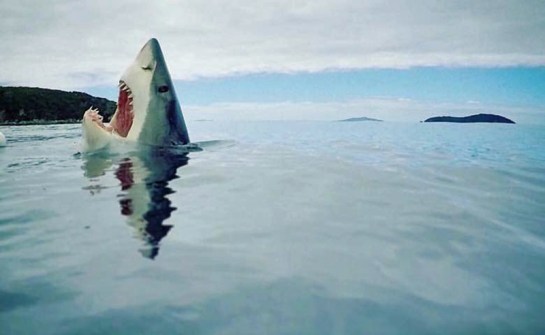
Triathlon was born in the ocean, by people who were competent and comfortable in the ocean. Lifeguards, swimmers, surfers, watermen, Navy SEALs. Yup, there are sharks. They won’t hurt you. Well, probably not. There are waves. You’ll get seasick. The salt will burn your eyes. Deal with it. This is triathlon. We swim. In the ocean. With the big fish.
newtri10

If you are doing all of your swimming in a pool and expect to be immediately comfortable in an open water mass swim start- that is not a reasonable expectation. You will panic and be a danger to yourself and athletes around you. You will get kicked and shoved. When you freak out (and you will) it is your fault. You failed to prepare adequately. Get your swim anxiety under control before race day. Way before. Take responsibility for being competent in the unforgiving maritime environment. Your race will depend on it, and someday your life may too.

  1. Swim More. Way More.

newtri30

Good swimmers swim a lot. Three days a week might get you through the swim leg. It might. It also might not. There is an axiom in triathlon: get tired running, and you walk, get tired cycling, and you coast, get tired swimming, and you drown. The reason the swim is first is to improve your chances of living through it.

Talk to any good open water swimmer and their yardage and time is incredible. Five days a week. Six days a week. Two times a day. Swimming is no-impact (except on race day) so you can put in long training sessions regularly and not suffer overuse injuries. On race day you will not only be a safe, competent swimmer you may actually have a decent swim split. This one is easy: Swim more.

  1. Ditch the Superfluous Gadgets.

newtri60

If it takes you more time to learn how to use your GPS, power meter, training log website, “smart” indoor trainer, smart phone app, body fat calculating scale, swim gadgets and all the other crap available to triathletes, than you spend in a workout- get rid of them. And just train. I used a “smart” indoor bike trainer for a season but spent so much time setting it up, making sure it was connected, trying to sync all the apps and then trying to find the “data”, much of which wasn’t really data at all but largely an estimate of power output the trainer made, that I eventually stopped using it. Using a “smart” trainer made me so dumb I didn’t realize I was wasting a total of 2 hours a week just trying to get it set up and working right. I could have used that extra time for training. And believe me, I needed the training more than I needed the technology. When your technology takes time from your training, get rid of it. You need the training. You don’t need the technology. 

I’ve been in the triathlon industry since it started in the 1980’s. I am one of the guys responsible for selling this stuff to you. Some of it is useful, most of it is a time suck. Some of it makes training more convenient and easier. I only use one gadget: A Garmin Fenix wrist top computer since it is easy to use and does what I need. That’s it. Only one. It tells me how far, how fast, how hard. That’s all I need.

Think about this: how much data do you really need? The sport is pretty basic: Speed, time, distance. Most fitness apps are so overloaded with features that cutting to the chase of how fast and how far takes scrolling, clicking and sifting through reams of superfluous “data” that is really just bullshit. And don’t get me started on “sharing” your workouts on social media. That is a bizarre phenomenon all to itself. The reality is, if you have to flaunt your training in some disjointed attempt to “stay motivated” then you are doing it in a vein attempt at impressing someone else, not for yourself. The motive needs to be intrinsic. It needs to be internal.

Remember, at the finish line only one metric counts: how fast you got there.

  1. Practice Transitions.

newtri80

You say you are just there to finish, but I have been doing this long enough to know that you are lying. If all you wanted to do was go the distance you wouldn’t have pinned on a number or paid an entry fee. It’s a race. Race it.

The best way to shave a few seconds (or minutes) quickly is to practice transitions at home. Set up a transition area in your driveway and let your neighbors laugh at you. You’ll get the last laugh on race day when you win your age category by the 15 seconds you just learned how to save in transition. That is free speed.

  1. Lose Weight.

You’re too fat. Don’t take offense, I am too. The fastest way to get faster is to be lighter. Nearly all of us could drop 10-30 pounds. Finishing a triathlon when you’re overweight is an impressive accomplishment, but it doesn’t give you a pass on being overweight. It is less healthy, harder on your body and your equipment and even more dangerous.

Take responsibility for your fitness. This isn’t about body shaming. It is about health, safety and performance.

Losing weight is basic: burn more calories than you take in every day. That’s it. Do that and you’ll lose weight. It is inherently simple. That doesn’t make it easy. It’s one more reason not everyone does this sport. If it were easy, everyone would.

  1. Just Train More.

newtri90

More is more. There are no shortcuts. Time and distance are ruthless, indiscriminate arbiters. On race day you learn that you either put in enough time or you didn’t. Almost everyone realizes they didn’t. There is no faking it.

We live in an iThing, instant gratification, One-Click world where almost everything we aspire to can be had quickly and easily. Not here, not in this sport. If you want to have a good race you have to earn it in the months and years before race day. There are no shortcuts. You either have the miles in your legs or you don’t.

Before race day, make sure you do. There is no bullshitting the miles or the clock into believing you do.

SaveSave

SaveSave

SaveSave

SaveSaveSaveSave

By Tom Demerly for tomdemerly.com

1b72b4b0139d8345fe111d54173579d6

Hope or fear? Which do we choose?

More than any recent decade Americans are strongly divided between two themes: Hope for a better tomorrow or fear of repeating an ominous history.

Both hope and fear are presiding doctrines that come with peril. The human condition has never been problem free.

Which narrative prevails? Why do both exist?

Our country is founded on hope. Hope for religious freedom, hope for greater opportunity. Hope for a new tomorrow that, while fraught with peril, so greatly exceeds a prior condition it is worth any risk. Even risk of life.

Read the lore of our founding fathers, this is their doctrine: risk for the hope of a better tomorrow. Some starved, some were killed in wars. Some lived to see the birth of a nation so vast that in only two short centuries has lead the world to countless new things. Our country passed ancient ones fraught with conflict, suffering and oppression for thousands of years, and we did it in less than 200 years. In nearly every case, when a person is downtrodden and wants to leave their homeland for the Promised Land, the United States is their first choice. Because hope is our legacy, our doctrine, our national narrative. Not fear.

The advancement of mankind and of our country has accelerated at a dizzying rate during the last centuries. At first our national throttle was at idle for a few decades, moved into “drive” for a few more, slammed into “reverse” around 1867, nearly ran out of gas in 1929, plowed forward through terrible storms at a grinding speed until 1945 then drove down the on-ramp of a new freeway in the 1950’s and accelerated to a speed that went supersonic.

Like any momentous journey through time there have been tragedies and triumphs; wars, depressions, recessions, scandals and controversies. But these have only punctuated a national narrative of momentous success and dizzying progress.

What is the next chapter in this great national novel, the Story of America? Is it that we circle the wagons, build walls and shut out a world that accelerates at a pace approaching and in some countries exceeding our own national velocity? Or, do we espouse a risky and promising doctrine of world community? inclusion rather than exclusion, new ideas and new challenges rather than a serialized, romanticized yesterday often embellished by historical lore and suspiciously untarnished by the historical reality that any time our national tempo toward “better” has diminished, calamity has followed.

I still choose hope.

This comes from a man who has had everything, has lost everything, and grinds inexorably back toward that great American Dream; not just material wealth, but precious things that enrich our lives like free ideas, a sense of community, the guarantee of inclusion and the promise of growth so vast I cannot envision it. And mostly that ephemeral and fleeting feeling of safety.

These things are possible. We have had them. And while we have suffered tragedies the trajectory and acceleration of our national destiny tracks more favorably when propelled by the thrust of hope than the drag of fear.

So, I still choose hope.

By Tom Demerly for tomdemerly.com

will-smith-concussion

Concussion is a knockout that will leave you dizzy from the impact of a movie done so well it is destined for Academy Award greatness.

Director Peter Landesman may have been the only person capable of bringing this incredible drama and great American story to the screen then making it leap into your lap with such rapt pacing and skillful storytelling that you can never look away. In every way Concussion is masterpiece storytelling.

Will Smith and Alec Baldwin may have achieved their greatest roles ever in this important film that showcases the frightening risk of head injuries in professional American football.

The true story traces main character Dr. Bennet Omalu, a Nigerian born academic and forensic pathologist with a north-pointing arrow for doing the right thing. His intellect and crusade for the truth are pitted against big American football’s establishment. The result is just like the skull-scrambling impact of players colliding after the ball is snapped.

Concussion masters the difficult art of pacing and dialogue. Simply filmed but opulently cast the movie hits the screen running and never backs off. I am not a football fan nor do I know much about the game, but the insights bring you into a drama turned sports story interwoven with detective thriller and sprinkled in romance that you won’t find in any galaxy far away.

This is the opening that should have set records over the holiday movie season.

There are so many significant and relevant dimensions to the film it is almost too much for one sitting but because of its subtle and precise delivery combined with perfect pacing it is deep, rich but digestible.

AR-310270317

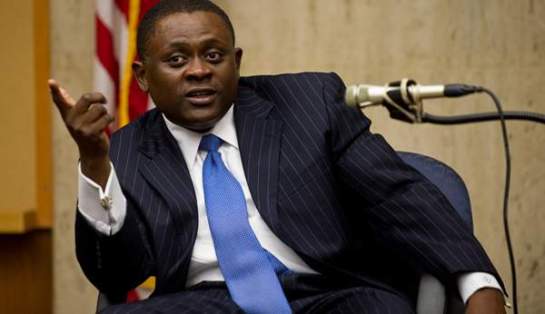
The real Dr. Bennet Omalu.

One of the most significant features of the story is the starring role that education plays in the true story and the way it is featured in the movie. While sports drama create synthetic heroes dramatized in the guttural ethos of sucking-it-up Concussion celebrates education, determination and a dedication to virtue and truth.

We need a hundred more movies that celebrate virtue and education emanating from real life.

Don’t miss Concussion. It is a brain-swelling impact on the traditionally fluffy holiday film season that hits hard out of left field and will leave your ears ringing.

By Tom Demerly for tomdemerly.com

GUNS-articleLarge

A New York Post photo shows activity at a local gun show.

Smith & Wesson, up 142%, Ruger Firearms, up 69%, Vista Outdoor (parent to Federal Ammunition, Savage Firearms, Bushnell optics and Camelbak) up 13%.

There is an axiom that Americans vote with their dollars, and the votes are in: Americans love their guns. They are buying more guns now than at any time in history. Why?

Despite fervent debate over gun law reform and national outrage about mass shootings the American reverence for firearms is not just continuing, it is growing. Here are some reasons why:

1. Firearms Symbolize our Defiance and Liberty.

From the pilgrims to the American Revolution, world wars, defiance of banks in the depression, and the emergence of equal rights the appearance of guns in our social and political landscape sends a clear message; Americans are willing to kill and die for liberty and equality.

malcolm-x-carbine-ebony

A 1964 photo of American civil rights activist Malcom X with a .30 calibre carbine and two 30-round magazines. Some Americans believe private firearms ownership is the last resort deterrent to government oppression and tyranny.

Our decisions about gun laws also say we’ll accept some “collateral damage” in the continuance of freedom. The unflattering reality of U.S. culture is that if we are willing to send our daughters and sons to war in the defense of freedom, we are also willing to let our sons and daughters die in classroom shootings in that same preservation. That’s an ugly reality, but America’s behavior confirms it as reality.

For some Americans, gun ownership is a “last resort” to maintain a voice in their own destiny, even if that voice is heard over gunsmoke and spilled blood. Exactly the same ethos exists in the Arab Spring. You’ve likely heard the colloquialism, “God created man, but Samuel Colt and Mikhail Kalashnikov made him equal.”

The rising volume of gun ownership in America could be an ominous portend- not about guns, but about our culture. Americans are hedging against some frightening outcome, real or imagined. It’s a sad commentary on our social condition if we feel we must resort to self-armament rather than democracy to guide our future.

James Hagerman poses with a .12 gauge shotgun in his Fort Collins home on Wednesday, September 26, 2012. AAron Ontiveroz, The Denver Post

Sporting shooter James Hagerman poses with a .12 gauge shotgun in his Fort Collins home. Aaron Ontiveroz photo via The Denver Post

A significant motive for gun ownership is sporting, recreational or some other discretionary motive. The increase in gun sales is like buying anything before it may become difficult to obtain, like coins or stamps. This is an honorable and reasonable motive.

While our reverence for guns symbolize our attachment to freedom and liberty they also acknowledge our inability to move forward from ways of thinking we formed when gunpowder was invented in the 9th century.

In a perfect world we would own guns peacefully, target shoot, hunt and compete without gun crime. Not by rule of law, but by collective moral conscience. Despite recent sensational mass shootings most gun crime statistics do suggest a downward trend in gun crime. That is better news for gun owners- and our society.

2. Shooting is a Rite of Passage.

gun-ownership-decline-us

Learning to shoot is a rite of passage into adulthood for some. One of the first, and most solemn, responsibilities bestowed on young men and women. When I was 11 my Uncle Norb, Indiana Pistol Shot Champion, taught me the three rules of firearms safety. He made me practice with an unloaded rifle. The next day he handed me my first live bullets. The implication was clear, “You are old enough and responsible enough to use a gun safely.” It was a solemn and respectful passage to adult responsibility.

Later, in the U.S. Army, my shooting heritage helped me learn combat marksmanship quickly and I excelled at it. It was another rite of passage to qualify with various firearms, small and large. As each successively advanced qualification was earned it became a greater and greater responsibility, not just to myself, but also as a soldier sworn to protect the U.S. Constitution.

3. We Value Personal Liberty and Responsibility Above All Other Values.

Personal responsibility is a part of out National DNA, and the reason for the NRA. It is foundational to our country. Individual gun ownership is about more than shooting or owning guns to Americans. It is a last bastion of personal responsibility; a “line in the sand” between deciding our own destiny or having it administered by elected officials that some people believe are increasingly disconnected from their constituency.

4. It’s Human Nature to Place Significance on the Forbidden.

Some people have no real need for a gun, but are caught up in the sensationalism that surrounds gun ownership now. They go to a gun shop and buy a gun, perhaps not truly understanding the significance of firearms ownership. Hopefully this group will practice good firearms safety, get training to safely use their firearm and remain current in that training.

5. Before It Was a Political Controversy, Gun Ownership Was A Pastoral Affair.

Our image, real or fabricated, of the American gun owner has shifted from sportsman, hunter and target shooter to right-leaning curmudgeon and self-appointed vigilante. Like most arguments the reality spans the entire spectrum between those extremes- with mostly middle ground.

Guns used to be mostly sporting equipment. Today they are viewed increasingly as weapons. While they are both, this shift in perspective is due to worldwide conflict and crime, and also a propensity of mainstream media to report on war and crime.

Millions of older Americans became familiar with guns and shooting during the World Wars. Having developed proficiency and comfort with firearms in a military context, the transition to a sporting context in civilian life was part of post-WWII America.

LAFS-Profile-Julie_Golob

U.S. Army veteran, top competitive shooter, hunter and mother Julie Golob has been a voice of reason in the gun debate, but a voice that has received little attention in sensational mainstream media. Photo: Smith & Wesson.

Today the media does not report on Olympic shooting sports, safe hunting classes and stories about responsible gun owners. A more accurate look at the American gun owner is Smith & Wesson athlete Julie Golob. Golob is the reference American gun owner. She is a veteran, competitive shooter, a sportswoman, hunter and a mother and wife. Golob is the model for the American shooting sportsperson. She is vocal, responsible, educated and eloquent. But it is an uphill battle for a person like Golob. Her moderate perspective takes on an increasingly reactionary anti-gun lobby, the majority of whom have no idea what responsible gun ownership means or the role it plays in American culture. Golob’s primary mouthpiece has been social media like Facebook. Her message is successful and effective on that channel but seldom transitions to mass television news media, mostly because a responsible person teaching safe shooting isn’t good headline fodder.

It isn’t guns that have changed as much as it is society. Our society may be less responsible and is more communicative. Society feels more reactive and less contemplative. The collective voice seems larger while the independent will seems smaller.

6. Most of Our Society is Ignorant About Gun Ownership.

We are desensitized to violence through media. Violence enacted by “heroes” is a quick, profitable plotline for popular media from James Bond to Tom Clancy. Most Americans experience gun use in romanticized Hollywood film clips or gaming. They are detached from the responsibility of firearms ownership and the true role of guns in society. Popular media seldom depicts responsible civilian gun use partially because it is no more sensational than using power tools.

The truth about gun ownership in the United States is obscured by the circular, unwinnable arguments emanating from either extreme. There is a middle ground in the firearms debate, and that is likely where the majority of Americans reside, even if they aren’t vocal about it in social media. It’s likely this middle ground is what will drive our country’s firearms heritage forward.

SaveSave

By Tom Demerly for tomdemerly.com

151207093511-06-obama-sotu-1206-exlarge-169

The President made several substantive statements during his address to the nation on Sunday, December 6, 2015. In the diplomatic subtlety that is a necessity from a U.S. President he signaled five key shifts in U.S. policy and additional changes in the perspective of his administration. Here is an analysis of the President’s remarks:

  1. The U.S. President told us the shooting in California was “An act of terrorism, designed to kill innocent people”.

Key Shift #1. For two days after the shooting the media and government was reluctant to label this attack as “terrorism”. That word carries with it gravity beyond terms like “mass shooting”. It specifies a coordinated, planned attack by a group, not an individual, with the goal of undermining the way of life in the United States.

This acknowledgement grants clemency to make future policy decisions congruent with a new goal: preventing terrorism in the United States. It also signifies a different political environment. When a U.S. President acknowledges an “Act of terror” inside the U.S. the thematic and actual rule set for every U.S. military, intelligence and law enforcement agency changes. We saw that change before our eyes last night, albeit in the subtle words of a President practiced in measured language. But as of today, it is no longer business as usual.

  1. In the very next paragraph of his address President Obama said, “Our country has been at war with terrorists since Al Qaeda killed nearly 3,000 Americans on 9/11.”

Key Shift #2. That remark further recalibrates our policy decisions going forward: We are at wartime footing now. Previous remarks have used words like “conflict” or the word “war” in a more colloquial context. This was a very George W. Bush-like declaration. President Obama said, substantively, that the United States is at war. That acknowledges the nature of the attack and grants a change in tenor toward our response, and our future responses to similar incidents.

  1. “…We will continue to provide training and equipment to tens of thousands of Iraqi and Syrian forces fighting ISIL on the ground so that we take away their safe havens. In both countries, we’re deploying Special Operations Forces who can accelerate that offensive.” 

Key Shift #3. The President announced we have special operations forces deployed on the ground in Syria. Through the masterful use of a plural pronoun for Iraq and Syria referencing this first sentence, the President told us there are U.S. Special Operations forces on the ground in Syria. This may be the first executive acknowledgement of U.S. intelligence and military personnel deployed on the ground inside Syria. He also said, by masterful omission, they are there in a combat role by using the words, “…can accelerate that offensive.”

Specialoperationsinsyria

The President acknowledged there are U.S. Special Operations troops inside Syria.

In Washington-speak there is a difference between deploying small special operations direct-action and intelligence gathering personnel and using larger military assets from the U.S. Quick Reaction forces including Army Rangers, U.S. Marines, Army Airborne and light infantry units.

The conduct of a sophisticated and subtle special operations/intelligence war compared to the deployment of more conventional forces is the difference between treating a cancer with sophisticated chemotherapy that subtly targets key cells, or treating it with an amputation. The President told us we are doing the former.

  1. The President told us, Congress should act to make sure no one on a no-fly list is able to buy a gun.” 

Key Shift #4. This suggests a recalibration for the President’s argument for reviewing gun laws when he asked for changes in weapons buying for people on an existing no-fly list. It isn’t easy to get on a no-fly list, and this step resonates with common sense in a time of war. It is also a minor concession from his more sweeping rhetoric for gun law reform. Polarized conservatives will likely still reject this proposed change in firearms buying law, but it does suggest a concession, however minor, in the President’s relentless admonitions for new gun legislation.

  1. The President brought the inertia of unity to his argument, acknowledging that “…65 countries that have joined an American-led coalition.”

This is an “all against one” war against ISIL. This acknowledgement of the balance of power and the cooperation of the international community is significant.

  1. The President said, “…We should put in place stronger screening for those who come to America without a visa so that we can take a hard look at whether they’ve traveled to warzones. And we’re working with members of both parties in Congress to do exactly that.” 

Key Shift #5. This administration has come under criticism for not being tough enough on immigration. This statement signals a shift in that mindset.

immigrants

  1. The President’s most important thesis statement may have been, “We cannot turn against one another by letting this fight be defined as a war between America and Islam.” 

America has become a culture that mistakenly seeks one solution to one problem. Any experienced analyst will tell you that is not possible, especially in a complex conflict. This is an asymmetrical war, not a conventional war. There is no front line, the enemy doesn’t wear uniforms and the battlefields are not the vast oceans, high skies and sweeping deserts on some faraway continent.

The battlefields are our churches, schools, festivals, arenas, shopping centers, airliners and anywhere a vulnerable crowd gathers that can be exploited through violent terrorism and instant media.

DearbornWEB

  1. If we’re to succeed in defeating terrorism we must enlist Muslim communities as some of our strongest allies, rather than push them away through suspicion and hate.”

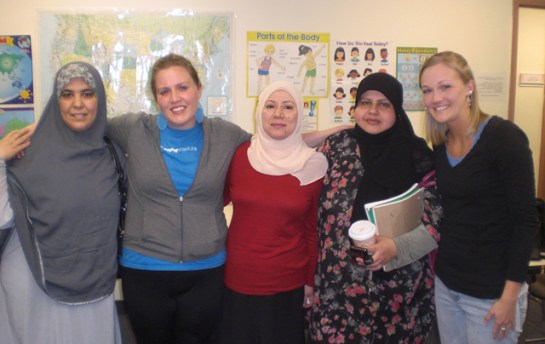
 This continued agenda of inclusion and mutual problem solving is the most effective doctrine in undermining ISIL’s “us against them” rhetoric. A key strategy to any insurgency is to divide the larger opponent into polarized factions that will fight against themselves. It is the manifestation of the ancient Arabic saying, “The enemy of my enemy, is my friend” and it is exactly the doctrine ISIL is employing in Syria. Unity in the United States makes us impervious to that doctrine.

  1. “…It is the responsibility of all Americans — of every faith — to reject discrimination.” 

More than just a call to reject discrimination, this is a call for all Americans to think more deeply and learn more about this conflict. Most Americans couldn’t find Syria on a map, or name its capital. They don’t understand the conflict. Rather than applying the template of old belief sets to new conflicts, Americans must seek first to understand this conflict before trying to apply old rules to fighting ISIL. This is a different war. There will be no carpet-bombing, no sweeping armored assaults across vast deserts and no squaring-off of infantry divisions. ISIL has no sophisticated air force (yet), no large navy and does not field massive armored divisions. They are a cancer, not a compound fracture.

By Tom Demerly for tomdemerly.com

14206272

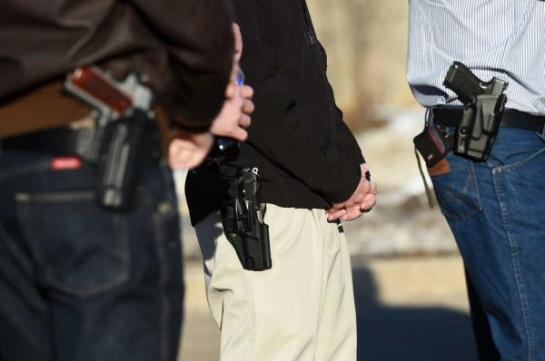
People are talking about carrying guns, gun laws and mass shootings. I was in a Long Range Surveillance Unit in the U.S. military and I grew up with guns in my family. But I don’t carry a gun. Here’s why:

  1. I Don’t Want To Live In a Community Self-Governed by Threat of Force.

I’ve traveled all over the world. Been to conflict zones on three continents. I have seen first hand what it is to live in a community governed by threat of force. That is not how I want to live. Our society and culture develops congruent with our vision. If our vision is an armed society, that will be our reality. If our vision is a society less reliant on arms to solve and prevent problems, our reality will manifest that way. That is how I want to live. So I do.

  1. Carrying a Gun is Inconvenient. 

When I did carry a gun it was a significant responsibility, and it was inconvenient. The heavy pistol concealed on my belt caused my pants to fall down when I went to the bathroom. The handgun dug into my back when I sat in a car. I couldn’t draw it in a hurry from a concealed position in a car anyway. When I got home at night I had to secure the weapon in my house. It was a lot of extra work and responsibility. I don’t want that.

  1. I Probably Couldn’t Hit Anything Anyway.

I haven’t pulled a trigger in over a year. I am not current or proficient in combat shooting. And, with the small pistols commonly carried as a concealed firearm, I doubt I could hit anything beyond 10 yards accurately and dependably anyway. For me to carry a gun and then employ it effectively and safely in a civilian setting I would need extensive re-training and then ongoing proficiency training. In the military we had to qualify with our weapons on a regular basis. I haven’t done that in a long time. Despite my military and civilian experience, I’m not qualified.

  1. I Don’t Want The Responsibility of Deciding Whether or Not to Take a Life.

If I carry a gun to defend others, and myself but I make a bad decision and accidentally shoot the wrong person, I would regret that- and cannot undo it. Carrying a gun is making the decision that you are willing, and ready, to kill. I am not- at least not at a moments notice in a civilian setting.

Many people don’t realize that the responsibility of shooting another person, even when justified, exposes you to significant civil liability. If you shoot a criminal and your actions are judged to be legally justified, you won’t do jail time. However, you may be financially responsible for some loss the criminal you shot may suffer. These losses can include medical bills, disfigurement and compensation to a surviving family. You may stay out of jail for a justified self-defense shooting, but it could cost you hundreds of thousands of dollars in a civil suit in addition to the cost of mounting a costly defense.

  1. It Is Unsettling to People, Especially Some of My Friends.

I have friends on both sides of the firearms debate. Some carry firearms, some are opposed to even owning guns. I respect both perspectives. I also consider myself an animal rights advocate, but I don’t brandish my animal empathy in front of someone eating a steak. Ultimately, we all have to get along. I am a shooting enthusiast, I love to shoot, and I own guns. But I do it respectfully. I know carrying a gun, openly or concealed, makes some people uncomfortable. I don’t want to do that.

  1. It’s unlikely I’ll Ever Really Need It. 

I’ve climbed mountains, fallen in crevices, jumped out of airplanes, visited all seven continents, swam with sharks. I’ve never been in a civilian situation where I needed deadly force. The odds are, I never will. I have had to take medications to save my life when I had a heart defect. I still have that heart defect, but I don’t carry the medications; because I likely will never need them again and it is inconvenient. I view having to use a gun to save my life as a very remote possibility. I don’t carry a fire extinguisher (although my house is full of them), a CPR mask or a personal flotation device with me (I live near water). Like a gun, it is statistically unlikely I will need any of those things on a daily basis. So I don’t bother with it.


By Tom Demerly for tomdemerly.com

Black-Friday-1

The busiest days of the retail season are here. Statistics are already emerging about how America is shopping during the Black Friday and Cyber Monday season. I’ve been a retailer across several categories for over 30 years in both brick n’ mortar and e-commerce, here are the trends I’m seeing this year:

There Were Many Poorly Executed Sales and Promotions.

Websites were poorly designed with too many exclusions and “moving parts”. Black Friday/Cyber Monday is not about shopping, it is about buying. Those are different things. The easier it is to buy (not shop) the more buying takes place.

The best Black Friday/Cyber Monday promotions I saw were stand-alone sales. Some had separate websites designed months ago. The offers were straightforward and, because they were segregated from other shopping, there were no restrictions or exclusions. If you wanted the item and the discount was adequate, you bought.

Online stores with convoluted shopping/discount codes were less appealing. Coupon codes that were added in the shopping cart/checkout page of online stores resulted in the highest percentage of abandoned carts ever. Product page markdowns with clear “Was/Is” pricing drove faster conversions. When customers see the deal up front they are more likely to convert to buyers.

Cheating the System.

Shoppers looked for traditionally non-discounted brands in a discount setting. While this took work, there were “accidental” deals. Coupon codes that weren’t supposed to work on certain brands, did work. Social media was a hotbed of activity for communicating loopholes in discounts restrictions. If you did your due diligence, you could beat the system, but this was only for the most determined and resourceful shoppers. Based on the statistics there was a lot of Internet traffic, a lot of activity in carts, but a decrease in actual sales compared to traffic. There were more abandoned shopping carts this year than any time in history. That means e-tailers failed to convert.

The Best Brands Made a Clear Statement.

Top brands, both in niche markets and in broad consumer goods, removed themselves from the mayhem by offering small, simple discounts or simply not participating.

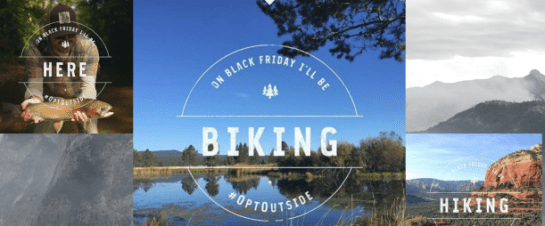
The biggest was outdoor retailer REI, who actually built an ad campaign around being closed on Black Friday called “Opt Outside”. Whether this promotion added to their bottom line is unknown, but it did increase their brand awareness and sharpened there brand identity. Because the REI campaign was classic contrarian marketing (“zig” when the others “zag”) it resonated well in the new social media landscape. One media outlet, GeekWire.com, reported that REI had a “26 percent increase” in online sales, attributing this reported increase in large part to the closed on Black Friday promotion.

Screen-Shot-2015-11-11-at-2.21.30-PM

“In a year over year comparison this year and last year, the retailers who closed their stores performed better than their leading competitors,” said Pascal Cohen, digital insights manager for SimilarWeb in an email statement. “In addition, day over day they also performed better for visits.” (from GeekWire.com)

There is Emerging Cynicism About Black Friday.

After the recession and recovery peoples’ shopping behavior has changed. Motives for buying include need and value, not want and discounts. People are buying when they need something (as opposed to when it is marked down) and they are buying by value as opposed to price.

Time Magazine wrote “The epic Thanksgiving-Black Friday-Cyber Monday shop-a-thon is over” in a report published hours ago. Time cited that Amazon.com’s sales were up significantly (about 6%) from last year, likely aided by their straightforward checkout system and price displays- but not deep discounts. There was also a huge increase in shopping from mobile devices. In a strong economy people are motivated by convenience, not savings. 

This creates opportunity for small, lean retailers with unique, high quality goods. It is particularly good news for retailers that are also their own brand, a new and emerging trend that helps retailers maintain profit margins, control prices and offers unique appeal to consumers.