Archive

Commentary.

By Tom Demerly for tomdemerly.com
screen-shot-2017-02-23-at-4-52-01-pm

Disc brake road bikes, new tire sizes, new brake caliper brake placement, new models, new categories, new components.

The cycling industry has a spastic obsession with newness

The belief is that, to keep cycling compelling for consumers there must be a continuous flow of new products, exciting products.

But not necessarily better products.

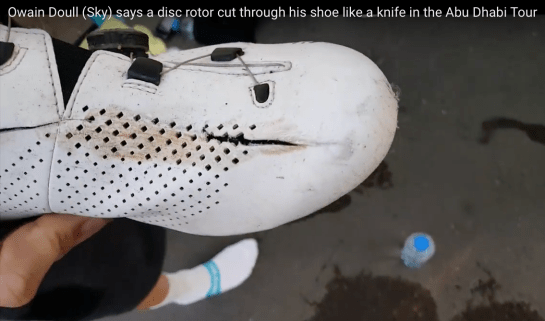
In an incident today in Stage 1 of the Abu Dhabi Tour top professional rider Owain Doull of Team Sky told reporters his left shoe was sliced clean through by a disc brake rotor in a crash. Doull sustained additional cuts he attributed to the sharp-edged disc brake rotor from the racing bicycle of sprinting sensation Marcel Kittel of the Quick-Stop Floors pro team. The two were involved in a crash near the race finish; a common occurrence in fast, bunch sprints.

Disc brakes on road bikes have been a new feature for three years. The jury is still out if they are better. This latest exhibit does not bode well for the future of disc brakes on road bikes, and it isn’t the first time.

Gregor Brown of Velo-News.com wrote this today following the Abu Dhabi incident:

“It was not the first time a rider has accused disc rotors of inflicting damage. At Paris-Roubaix in 2016, Movistar’s Fran Ventoso claimed that a large cut on his lower leg was caused by a disc rotor used by the Roompot team. That assertion has been disputed, but Ventoso stands behind the story.”

The sales pitch is often something like, “Everything is going to disc brakes!” and “Cars use disc brakes, discs work better in wet weather.” But there is a contrarian argument to be made that disc brakes are a feature without a benefit, or, at least, not a benefit commensurate to their attendant drawbacks.

In a balance sheet format, disc brakes look something like this:

Advantages:

Better wet weather stopping performance than caliper brakes. Greater tire clearance at fork and rear triangle facilitating wider tires on disc equipped bikes. More frequent use of structural thru-axle wheel design for better lateral stiffness. Removal of braking surface from wheel rim allows new rim shape designs.

Drawbacks:

Reliance on disc-brake specific wheels. Difficulty maintaining adjustment of brake calipers relative to wheel brake disc. Slower wheel changes compared to caliper brakes. Difficulty moving wheels from one bike to another due to tight tolerances. Heavier weight. More expensive. Fewer wheel options for disc brakes. New maintenance requirements, especially with hydraulic disk brakes.

So the question for consumers is, do the drawbacks outweigh the benefits? Another attendant question for consumers is, “Was there anything wrong with caliper brakes?”

In fairness, road calipers have had decades to evolve. Brake surfaces, rim profiles, brake calipers, brake levers, brake pad materials and brake cables for caliper brakes have been evolving ever since they were invented in the late 1920’s. That is a century of technological evolution in favor of calipers.

Conversely, disc brakes are new to road bikes compared to calipers, and the technology is not quite ready for prime time. If it were, the incidents with rider injuries, complexity surrounding wheel changes and maintenance wouldn’t exist.

During the past two decades when the bike industry introduced a few ideas that made it to market when they arguably were not mature we saw an increase in service and warranty related inquiries. These included, most notably, bottom brackets following the move to press-fit bottom bracket formats.

And the bike industry has a dismal record of owning its bad judgment unless compelled to do so via litigation, usually in the form of mandated recalls or personal injury lawsuits. Until those things happen the pedal is to the metal on selling new innovations with an often-subordinated regard for technical merit, let alone safety or integrity.

Solution: Do a Better Job of Selling What Already Works.

While the bike industry has done a great job of introducing “new” it has mired itself in an increasing number of sales narratives.

For every new innovation there needs to be a new sales case, new sales materials, new web assets, new sales and distribution channels and new marketing materials. It takes time and resources to develop those assets, and they cost money. It makes sales conversations longer on the floor of the bike shop on Saturday morning. It may not increase sales, but it makes it longer to complete sales. There is simply more to talk about.

An alternative solution exists in other industries where price maintenance, dealer cooperation and better marketing of existing products along with more judicious management of the supply chain has maintained product quality, profit margin and customer satisfaction.

Perhaps the best example of maintaining profit and demand for a static, non-evolving product is the diamond industry. Despite the rising supply of diamonds (there is actually a surplus) and the introduction of nearly indistinguishable synthetic diamonds, prices for diamonds have consistently risen. The diamond industry has created an emotional perception of worth although all other metrics suggest diamond prices should be falling.

The bicycle industry has not mastered any version of this perceived value equation. It is consistently undercutting price and negotiating a seasonal “surplus” of inventory that has conditioned consumers to buy previous model years at discounts. While some bike brands have reduced the emphasis on model years this has resulted in sometimes-stale offerings since the marketing narrative was not supported vigorously enough within the bike industry. They forget to sell. But they remember to invent new shiny things.

When the bike industry begins to focus on the job of selling rather than the novelty of making shiny new things then product quality will improve and profit margins will follow. And, most importantly, consumers will get a better, safer, more valid product instead of just the latest shiny thing.

By Tom Demerly for tomdemerly.com

vice-admiral

We got him because no one else would take him.

Malcom the Cat was in a crowded foster home with dogs, cats, ferrets and rabbits. Food was competitive and the population changed frequently as new foster animals came in, and older ones were (hopefully) adopted.

The lady from the animal foster home told me, “He’s a… handful.”

The arrangement seemed somewhat odd. The lady would bring Malcom to us, we would not go to the animal foster home to meet him. She asked me, “If I bring him there and it seems like it may work out, are you willing to keep him then?”

I said “Yes”.

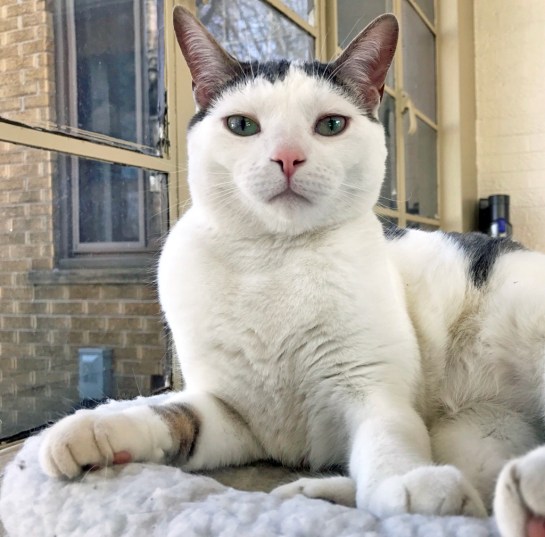
Malcom was big, even before he turned one. A large, sturdy male cat, tall and long with powerful limbs and a large head. He was bright white with unusual striped spots and a dark striped tail. And claws. Very, very big claws.

We took him.

I am the first to admit that it did not go well at first, and that I was concerned. Our other cat, MiMi, is a gentle and polite girl with soft fur, one eye (she lost the other to a snake bite in the Arizona desert next to an air force base before she was rescued) and kind disposition. She’s a lap cat.

Malcom was a competitive, territorial predator. A fighter.

One day, when the house was torn up, MiMi was hiding somewhere terrified and I was losing blood through another series of scratches on both arms, I sat down and spoke with Malcom.

“You know Sir,” I told him, “This is a cooperative home. Every cat has to get along here, do his share, and be a good cat.”

Malcom stared at me.

“I know you are a fine cat, you just need some time.”

Time went by. One day I picked Malcom up and he didn’t tear me apart. He started purring. One night I felt something heavy on my leg. He was in bed with me.

Soon after a little cat named Chester showed up outside our window. And Chester moved in. Now there were three.

viceadmiraladministers

The Vice-Admiral oversees the delivery of new equipment.

I sat them all down one morning, as well as you can do that with three cats (which isn’t very well). We laid some ground rules: every cat must get along with the other cats. Meals are in the morning and the evening. Everyone eats together, served in order, from their own bowl. Everyone gets up at the same time. Everyone is allowed to sleep where they want but no fighting over sleeping places. There were more rules.

The three cats listened, seemingly interested, likely indifferent as cats are.

Finally, I appointed Malcom as the de facto leader, largely because of his physical prominence, but also because of his experience in an animal foster home. Apparently he used his size, strength and razor-sharp talons to enforce a kind of martial law there. Hence, he became Vice-Admiral Malcom Fredrick Davis III. Named from a number of sources, the third in an honorable naval lineage of cats who rose to equal prominence and distinction from the crucible of adversity.

Today the Vice-Admiral, as he is formally known, presides over nearly every activity in the house. He is served first at breakfast and dinner, eats in the highest position and in matters of cat politics, is subordinate only in seniority to MiMi, who is several years his senior and hence the wiser.

It took time to understand Malcom. It took time for him to become comfortable with the rules and procedures of a house with three very different cat personalities and two people. But with guidance and compassion and patience he has become a very fine man, a leader of cats, and an example to all cats. That every cat can rise above a difficult past, learn to stop scratching, accept and show affection, behave in a gentlemanly manner and enjoy the many things that cats take amusement in.

It’s just matter of patience and understanding.

viceadmiralportrait


By Tom Demerly for tomdemerly.com

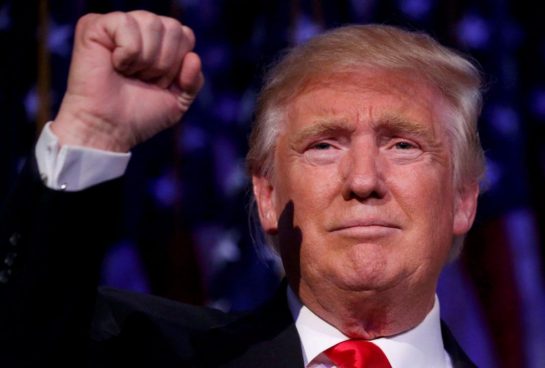
president-elect-donald-trump

“Thank you America! Thank you!

Thank you for being a great country, a great people, a country made up of great people.

You know, we won this election based on many things, one of them is a slogan, and it’s a fabulous slogan, “Make America Great Again.” I say “we” won this election because we all did. Every one of us. There are no losers today. There are no losers in a free country when democracy grinds its often loud, often difficult way toward what it is we all desire, even though we propose to get there in different ways.

We argued and debated, checked and rechecked our system, and we learned that it is still a great system. It’s always been great. Today proves it’s great again. Our forefathers made this system great, and you’ve made it great again today.

This election proves what I’ve believed all along, America truly is great. The fact we’re standing here together, on this day, proves how truly great America is. It’s the reason I asked you two years ago to hire me for this job, one of the most important jobs in the entire world, and by far the most important and sacred job I’ve ever had the privilege of doing.

During this last administration Americans showed why we’re great. They rallied, they demonstrated, they debated on both sides and they worked through a difficult process to be heard. And you are heard. So here we are. Thank you for speaking up, and speaking out.

And I have one thing to tell you as we start out today, America: I hear you.

I hear you calling out from the factories and the assembly lines and the check-out counters. I hear you when you tell me that half of us can’t afford the basics even though the stock market nears all time highs. I hear you call out from both sides of the aisle, no matter where you live or how you live or what you earn. I hear you. And I’m listening.

I’ve heard that government is so bloated with its own rules and forms and regulations that it can’t push away from its own dinner table to answer the knock on the door of people who want the freedom and liberty to remain great, and the ability to be even greater.

I’ve heard that things like the Affordable Care Act are anything but affordable. I’ve heard that you can’t afford to take care of your aging parents even though you work three jobs and sixty hours a week. I hear that you can’t afford college for yourself or your kids so we can continue to be great. I’ve heard that you work so hard that you have no time to retrain for a new job in a changing economy. And I’ve heard one thing that bothers me the most, one thing that ultimately got me here today, I’ve heard, both here and outside our country, that America isn’t as great as it used to be. Well I don’t agree with that. Today proves we’re right.

And America, I’m listening. And I’ll keep listening.

You’ve hired me to do a job, and I’m honored to be the candidate chosen for that job, it’s the most important one I’ve ever had, and I’m humbled that we stand here today, together, ready to get to work. And along the way to getting here you’ve told me what you want done.

You’ve told me you don’t want a hand-out, that you want a way up. You’ve told me that Washington needs to lead, to follow or to get out of the way. We’re going to do some of all three, and in different ways than we’ve seen before.

I’ve heard that we face threats to the ideals and values that we hold dear. The things that are guaranteed to all women and men. These threats originate in places far, far away. We’ll meet those challenges with strength and resolve at every corner.

I know that the creeping cancer of terrorism threatens America. That cancer will never infect our country. I’ve already picked the strongest and most experienced team of people in history to lead our continuing fight against terrorism. And I have a message for those who choose violence and oppression over unity and liberty; Your evil ways are over.

And I know that you hired me not just to listen, but to deliver on the promise of an American dream that, during this past decade seemed, to many, like only a dream while we waited in endless lines and filled out endless forms for a hand-out or a fair chance when all we wanted was to get to work.

I hear you.

Today we do get to work. We work on forging an America better than ever before, built on the foundation of the greatest country on earth. Built by people from all over this world who have always wanted three precious things; a chance, a change and the freedom to prove there are no limits in the United States of America.

This won’t be easy, and in the long American workday we all won’t get everything we want as individuals. But America isn’t only about individuals. It’s about unity, community and our great national ‘whole’ being greater than the sum. That when we reach above our differences and find our common goals, our common aspirations, we can unite in the hard work to make our shared dreams into a reality better than ever before. And as Americans working together in these United States, we can accomplish anything.

I hear you America.

And now the world will hear the sound of an America made great once more. An America that rises up again and again and again, built upon a succession of yesterdays from our foundation and principles to a future of tomorrows greater than we can imagine. An America that will reach ideals and goals not yet dreamed of.

Think of our lives 30 years ago and how different they were then. Now try to imagine our lives 30 years from now in an age when the only constant is change and change happens so fast we sometimes feel we’re lost in a succession of ever-reinventing Americas that often seem strange, out of control.

But we are not lost. Our founders drew maps called the Constitution and the Bill of Rights. Those great maps will take us to our destiny across any future, no matter how changing and unforeseeable. When we use our shared ideals as our national roadmap we can navigate any change with courage, ambition and grace.

And as we navigate this change together I pledge to always stay the course of freedom, liberty, the strength of the American people and the things that have always made us great.

America, I hear you, and it is a joyous chorus of voices rising up as one to tell of a tomorrow greater than any of us can imagine.

America, I hear you. Now join me in listening to the sound of our success! May God bless these United States of America!”


Speechwriter’s Notes: 

  1. This is written in the language and speaking patterns of President-elect Trump. It is the result of listening to his oration and creating a style that is natural and comfortable for him, using his favorite words. It also includes his penchant for repetition of themes, and restating them in different words during the same speech.
  2. His penchant for speaking in themes, “promises” and leaving specific commitments out of the delivery.
  3. There is a moderate “centering” of position in the post-election rhetoric as the President-elect transitions from a divisive election narrative to the mission of aligning a divided nation in the interest of progress and cooperation; the campaign divided us, the President-elect’s term must unite us in order to accomplish anything.
  4. The speech, as written, runs only seven minutes (07:00). Previous inauguration speeches, including Ronald Reagan’s first address, ran over 20 minutes and were more substantive. In keeping with President-elect Trump’s history of orating only on theme rather than specific substance, and the success it has brought his campaign. At the President-elect’s discretion, specific themes can be outlined into the script while care is taken to maintain the continuity of the theme.
  5. The intent is for media to colloquially refer to this as President-elect Trump’s “I Hear You” speech, a theme that will be revisited throughout his term.


By Tom Demerly for tomdemerly.com

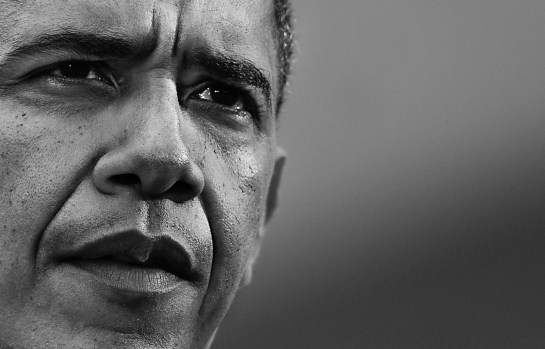
President Obama during his speech at 2010 winter commencement held at Michigan Stadium on May 1st 2010. (SAM WOLSON/Daily)

Friday, January 20, 2017 is the final day President Barack Hussein Obama II will serve as President of the United States. He was President for 2,931 days.

Those were among the most significant days in my life.

The day President Obama was sworn in I owned a business grossing well over $1M. I earned an upper-middle class living. I owned a house in the city where I was born. I actively participated in local government, paid for a new car in cash and was on track with retirement savings for a person my age.

A year later I lost everything.

The full weight of the banking collapse, the global recession and the automotive meltdown settled on Dearborn, Michigan. The stock market plummeted to 6,000. People lost houses, businesses and livelihoods. I lost all those things and more. I had a stroke and lost part of my vision and needed heart surgery. I declared bankruptcy, packed a suitcase and moved to Tucson, Arizona in a modern day “Grapes of Wrath” migration to start a new life.

Now, 2,500 days later (give or take) I’m back. Detroit and Dearborn are back. I own part of a business again and write for four media outlets published around the world. Abandoned buildings and empty businesses on Michigan Avenue in Dearborn are gone. New ones are being built. Ford Motor Company is rebuilding its engineering center. Small businesses are going back into Dearborn. The stock market is flirting with a new record at 20,000.

Seven years later I have hope again.

It would be wrong to attribute America’s entire comeback to President Obama, and it would be equally inaccurate to blame all of America’s many remaining problems on him.

It is entirely accurate to acknowledge his steadfast adherence to his ideals. It is also accurate to credit him with a measure of unity and compassion that was much needed in America when he was elected.

When President Obama first took office our country was fractured and afraid. And while much of that feeling remains and even expanded during this last, divisive election year, President Obama presided over our national crisis with quiet strength, dignity and wisdom.

He inspired us to rise up, come out, speak up and get to work. If you believed in him, he inspired you to support his agenda. If you disagreed with him he inspired you to oppose his agenda with action and resolve. No matter your political orientation President Obama inspired us to action. He inspired us to hope we could be a part of the system, then he set an example that everyone can be a part of that system.

A consistent theme of President Obama’s time in office has been “Hope”. When he was elected he said;

Do we participate in a politics of cynicism or a politics of hope? I’m not talking about blind optimism here — the almost willful ignorance that thinks unemployment will go away if we just don’t talk about it, or the health care crisis will solve itself if we just ignore it. I’m talking about something more substantial. It’s the hope of slaves sitting around a fire singing freedom songs; the hope of immigrants setting out for distant shores; the hope of a young naval lieutenant bravely patrolling the Mekong Delta; the hope of a millworker’s son who dares to defy the odds; the hope of a skinny kid with a funny name who believes that America has a place for him, too. Hope in the face of difficulty. Hope in the face of uncertainty. The audacity of hope!”

But hope is a hollow doctrine without action, and President Obama inspired us through his own action. In every policy that he believed in, in every doctrine that he supported, he was tireless, resourceful and relentless. I did not agree with all of his initiatives, but I remain inspired by his endurance, tenacity and grace in driving them.

Understand that President Obama stood for two things: his political agenda- that you may or may not have agreed with- and most importantly, the strength of hope. Not hope only for our own agendas and politics, but hope for every single American, regardless of politics, race, religion, orientation or aspiration.

That hope has carried us, sometimes in the absence of anything else.


By Tom Demerly for tomdemerly.com

2016storeclosingsalesliquidationfinalgoingoutofbusinesssalesgettyimages-758495-571f256c5f9b58857dc11614

In a brutal week for traditional big-box U.S retailers, Sears Holding announced the closure of 108 Kmart and 42 Sears locations in 40 states. Overall 150 large department stores are being closed by the formerly popular department store brand. Additionally, department store giant Macy’s announced the closure of 68 stores across the U.S.

As with any large shift in business there is likely no single reason for the closures. They are the result of a complex amalgam of factors that have aligned to degrade the appeal of big department stores to retail customers.

What can the bicycle retail industry learn from the big-box closures?

If you insist on a singular narrative to the “big-box bust” it is failure to adapt.

Big box retail stores are essentially a time capsule of retail since the post World War II consumer boom era. They have not changed significantly since then. Items are stocked by category in displays on a large sales floor. Displays highlight featured products. Shoppers can see, feel and touch items before they buy them. And while this seems like a logical way to present and sell consumer goods it fails to acknowledge a simple theme: Most other factors in retail consumption have changed.

When Sears, JC Penney and Macy’s were founded Costco, Sam’s Club, online shopping, smart phones, Amazon.com “One-Click” and e-Bay did not exist. These new alternatives to traditional retail have exerted a kind of slow, painful “death by a thousand cuts” on traditional department store retail. Add the “reset” affect of the U.S. recession and structural changes in age demographics and you have a brutal conspiracy of factors working against traditional retail.

Retail has become increasingly polarized, with consumers gravitating toward either end of the retail spectrum. They buy from massive online and warehouse stores for commodity items like appliances, most daily apparel and food staples. They buy from small well-branded niche retailers for discretionary purchases like fashion apparel, luxury goods, specialty recreational equipment and items that help define their lifestyle.

The lesson for the bike industry is simple; sell, stock, display and market differently than old school department stores. Look at what they have done, and do the opposite.

Here are a few specifics for bike retailers: Avoid excessive program buying that makes any one brand dominant in your store making it feel like a generic “brand store”.

Bike brand takeover of independent bike dealers has been an emerging trend because of attractive pricing incentives for dealers, financing of inventory and the marketing strength that the big brands offer the small shops. These things sound great to a small specialty retailer. Bike brands have sold small independent dealers on the idea of “competing with the big boxes” by aligning with a big bike brand for marketing, financing inventory and even point of sale systems. The problem with that logic is that small specialty retailers don’t need to, and cannot, compete with the big box retailers. Instead, they need to create and maintain an entirely new identity unto themselves. They need to create their own niche, and that takes original thinking and acceptance of risk.

If there is a singular lesson it is: If the big box retailers are doing something, then the small independent bike shops should invent another approach. Small specialty bike shops should capitalize on their small size by remaining nimble with inventory, rapidly adaptive to trends and constantly changing their merchandising to reflect their position at the leading edge of the sport. They also need to be honest about the structural elements of their business. Are they located in an area where cyclists live, ride and shop? Does the local population use specialty retailers? Are they near other niche-category specialty retailers?

Finally, the small specialty bike shop needs to exploit the great equalizer of modern commerce, the Internet. This doesn’t necessarily mean having a shopping cart experience online, but it does mean presenting products that are unique and branding themselves by communicating a unique voice that reinforces expertise, candor and authority.

It’s possible for the small bicycle retailer to succeed, and some continue to, but the rules have changed and continue to change quickly enough that doing the same old thing will earn a retailer the same destiny as once-great retail giants Sears, Macy’s and JC Penney.


By Tom Demerly for tomdemerly.com

ap_hillary_clinton_jt_151030_12x5_1600

Hillary Diane Rodham Clinton ran a credible and just campaign. It brings to a probable conclusion a long political career that included two runs at the U.S. Presidency.

Clinton has distinguished herself as a public servant for her entire career. And while no public servant, especially at the highest levels that she rapidly rose to, is without criticism, her dedication to public service never lacked vigor, drive or tenacity.

In a divisive election played out largely on the battlefield of social media, Clinton outwardly played by the old rules. That is commendable. But the new rules are, there are no rules.

Secretary Clinton is to be best remembered by her tireless efforts to preserve diplomacy in a world that lacks civility now. When the world went low, she stayed (at least outwardly) high. Her approach to politics was dignified and poised. She should be remembered for that.

Hillary Clinton will never be gone from public service or commentary, and that is good. She is an articulate and civil voice to be heard, and she will remain relevant. She is particularly relevant contrasted against a new Presidency that has swung so far to the opposite extreme.

If you voted for Hillary Clinton, I commend you. You are as fine an American as Secretary Clinton. It is now up to her supporters to vigorously continue to work, further her worthy doctrine, and be heard.

Hillary Clinton and her supporters did not lose. Regardless of Secretary Clinton’s transgressions and errors- of which all humans are susceptible and most are guilty- much of America is better from the legacy of Hillary Clinton.


By Tom Demerly for tomdemerly.com

00-0b-cats-at-war-french-army-indochina-1956

My psychiatrist told me to get a cat.

I was having nightmares. For seven years. Nightmares of plane crashes. I was not in the crashes but would see them from the ground. Not all the dreams were the same, but they were similar. Detailed. Color. Graphic. Gruesome. In one dream body parts were caught in a tree where a plane went down right over my head. In another I tried to pull a burning person from a crash. His arm came off in my hand. I would wake up and stay up, and I was afraid to go back to sleep.

So my psychiatrist told me to get a cat.

I did.

We live in a big world, and most people only see a very small part of it. I have seen much of it. When you travel over continents from peace to war you bear witness to the full spectrum of human interaction, from inspiring charity to noble heroics to horrifying cruelty. And I have seen them all.

So I got a cat.

Over time I noticed that, if I was kind and patient and loving to the cat, it would act the same toward me. I learned that cats were much more intelligent than I originally thought. They have individual characters and personalities. They also have fears and anxieties and sometimes act out.

But for the most part, when you show a cat kindness, it returns kindness.

I also learned that having animals allows us a sacred privilege on a sacrilegious earth; the privilege to create our own little world.

When you have a cat you can make your own moral code of how to live: You will never abandon the cat. You will always care for the cat. You will love the cat selflessly even if it scratches you or knocks something valuable on the floor. You will elevate the cat to a place of reverence and safety. In doing so your relationship with the cat becomes an island of kindness, love and safety in a the vast ocean of the world where things are often cruel and unfair.

But in the little world that you have built between you and your cat, there are no nightmares. Only petting and purring and playing and scratching and cat toys. And until the sad day when your cat leaves this earth it will be happy and well cared for.

And in this life, no matter what else happened, you can point to one thing and say, “I made that better.”

That’s why I got a cat.

By Tom Demerly for tomdemerly.com

turkey-july-16-2016_wide-aae7deda93a35bf42d8b229e897c716c13a3ebc9-s900-c85

The July 2016 coup d’é·tat in Turkey erupted almost overnight and lead to widespread destabilization in the country and the region. Before it happened the region seemed reasonably stable to most outsiders.

It feels like the most divisive election in history. It is the first one played out across the broad and unaccountable stage of contributory media. It comes after nearly a decade of at least relative political stability in the U.S.

But regardless of who wins this deeply divisive Presidential election there is one thing to keep in mind: Things will go on. The sun will rise. Good, bad and indifferent, Americans will still be Americans. As long as that is what we want. And trust me- that is what we want compared to the alternative.

Remember that, because this election and its aftermath could spin out of control in an entirely non-constructive way, and it could do it more easily than we think, We, The People, need to keep our shit together.

The relatively stable and entirely ancient country of Turkey nearly descended into bedlam this year in a failed coup attempt. An entire region, from Libya to Egypt to Syria, flipped decades of dictatorship in the Arab spring. The fallout and instability from those dramatic, rapid changes in government resonate across Europe. They contributed toward fears in the European Economic Union, nearly crashed Greece, disenfranchised Germany and sent England running. And it isn’t over as allied forces launch a massive offensive in Iraq against ISIL, the evil-empire that rose from the ashes of multiple failed governments to fill the vacuum with blackness and terror on a medieval scale.

It doesn’t matter whom you are voting for in this discussion. The election is close; it may be closer than slanted media reports admit. What matters more is how we behave in the aftermath of this election.

“In a close race a lot of people will wake-up disappointed: Deal with it.”

In a close race there will be a lot of people who wake-up disappointed after Election Day. Deal with it. This is not an excuse to lose your shit. This is America. We’re founded on acceptance and tolerance and democracy.

If your candidate loses, don’t throw your toys. Don’t talk about recalls and impeachment and fraud. Instead, lock step with the new leadership while using the tools of democracy to enact change within the system, however slow it may feel. Slow change is better than rough justice.

No matter who wins this deeply divisive election America needs to enter a period of healing, and that needs to start on a very local level. Another great American principle is cooperation, the notion that we are better together than apart. That means no matter how this crazy election swings, the day after we need to get up, get back to work and keep being Americans.

inexpensivetribike10

It’s become the script for releasing new high end bikes: tease with media “leaks”, stage a rollout with attendant theatrics, segue into “hard science” with slick videos of wind tunnel testing and release a thick “white paper” of empirical engineering speak. Follow-up with ad nauseam debate about which bike is fast-est, light-est, aero-est or best-est in internet forums. Every bike brand in triathlon has done it.

There are two problems: The script is tired and people care less and less.

“Superbike” is an overused term attached to any bike sold with cliché marketing hyperbole. The reception to “superbike” introductions among social media and triathlon forum users has become decidedly lukewarm this “superbike season”.

There are a few reasons why:

  1. You’ve Heard It All Before. 

If every new superbike introduction claims to be the fastest, lowest drag, most developed in the wind tunnel and “best-est”, every one of them is wrong except one.

superbiketrended10

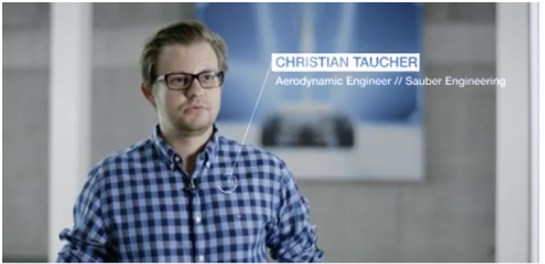
An actual race car aerodynamic engineer, who knows about science, talks about bikes. Again.

The arguments for the designs are circular and never resolved. No one ever wins. They are no more than claims, and the claims all sound so similar they get lost. So people stop listening. It’s great argument, but bad marketing. Consequently for all the hot air that is moved online and in person very few of these bikes are actually sold at full retail.

  1. The Superbike is Increasingly Irrelevant. 

Triathletes are getting slower and finisher rates at large events are dropping. Between bizarre weather events at Ironman and other factors people are having a tough time just getting to the finish line, let alone shaving two minutes off their Kona bike split- a race almost no average triathlete does. There are more beginner and middle of the pack athletes now- races are filling from the bottom, not the top. The new generation of superbikes is not relevant to them. They are too expensive, too difficult to maintain and designed for average speeds the bottom 95% of new triathletes never ride at.

The bottom 95% of triathletes have needed new product offerings in the $1500-$2500 range for a decade now, and there have been almost none. That is a missed opportunity for the bike industry.

  1. The Superbike Feeds an Ugly Stereotype. 

If you wheel a superbike into a transition area and don’t finish at the top of the podium you run the risk of becoming a harsh parody: the conspicuous consuming triathlete dandy, the girl or guy with more gold cards than gold medals.

Superbikes have become a statement that infers hubris and elitism to some, and that doesn’t always have a positive ring. It isn’t “inclusive” in tenor. The outdated perception that having a Superbike is necessary to be taken seriously has become an economic barrier to entry in triathlon, and new participants are increasingly rejecting it. But bike brands have not latched onto this opportunity.

  1. Triathletes Have a Voice Now, And They’re Using It.

The first superbikes were developed in a user-media vacuum compared to today. Triathlon specific social media was limited to specialty forums. There weren’t as many Facebook groups of triathletes. Social media outlets were more segregated. People couldn’t comment as readily to such a large audience. Bike companies had not wandered into the rough n’ tumble social media landscape to do marketing.

superbike1000

Now bike brands are using social media for marketing. They’ve discovered the medium is harshly critical. That has blunted the older wide-eyed excitement surrounding new bike introductions with cynicism from contributors. It has made superbikes seem “less cool” and somewhat foolhardy.

  1. Most Triathletes Can’t Afford It, Even If They Did Want It.

The Gallup Daily U.S. Economic Confidence Index measures consumer sentiment about the economy. It has trended below negative throughout the summer with one brief foray into the positive that turned south as the election season heated up. Even if people do have discretionary income they have become increasingly cautious about spending it. They may be willing to spend $1500-$2500 on a new bicycle, still a substantial amount for most buyers, but spending above $5000 is unusual in a pre-election year with a divisive political environment. As a result these introductions above $5000 at retail are less relevant than they were in a stronger consumer market. 

What’s The Solution?

Glossy triathlon media is locked-step with their paid advertisers. They run splashy press releases within the hour of a new superbike’s release. This year the buying public hasn’t been as enthusiastic. They railed against it on Facebook and other media.

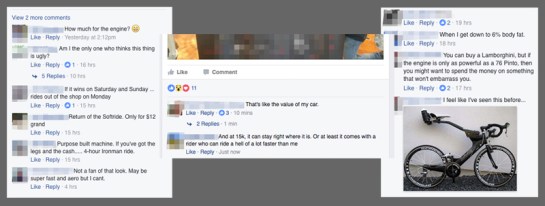
In an unscientific glance at the reception of one of the industry’s biggest superbike introductions this past week the tenor of 100 comments from four different Facebook user feeds showed 91 comments that could be characterized as “predominantly negative” while only 9 were “predominantly positive”.

The opportunity for the bike industry lies in the empty spaces, the categories no other brand is selling to: Entry level multisport bikes in the sub-$3000 price range.

While bike market segments like off-road have been diced up into multiple sub-segments by wheel size and suspension type the multisport athlete is stuck with two polarized choices: road bike or triathlon bike.

A value-priced bike that crosses from road to triathlon categories would add new bike buyers and eliminate perceived barriers to entry in triathlon. It would also create a more logical progression of products for customers to graduate to. It may actually help sell more superbikes.

The bike industry has done a bad job of asking what the rank n’ file triathlon customer actually wants. They never ask bike shop customers and end-user entry level triathletes what they are shopping for. As a result they are disconnected, and so are their product offerings.

When I worked in marketing at a large U.S. based bike brand known for triathlon bikes I never saw them survey consumers directly, in person or even with an online survey of what end-users wanted. They never asked customers what they wanted. They just went back to the wind tunnel year after year to blow smoke over another new $10,000 bike for a marketing video. Until the bike industry has the courage to change this tired script their wind tunnels are just more hot air.


Story and Photos by Tom Demerly.

Karen Mckeachie Du

Last week an American woman, Gwen Jorgensen, won the Gold Medal in the Olympic Triathlon in Rio de Janeiro. It is the first Gold Medal the U.S. has ever won in triathlon, a sport we invented.

A few days ago one of the women who is more responsible for the Olympic triathlon movement than any other single female was killed by a car while cycling on Dexter-Chelsea Road near North Fletcher in Lima Township on Friday morning, August 26, 2016.

She is Karen Mckeachie, 63, of Ann Arbor, Michigan.

This is (a very small part of) an enormous story of an incredible life, so I’m going to start back in 1984, at my first triathlon where I met Karen Mckeachie and Lew Kidder.

The Big 10 Triathlon in Lansing, Michigan. It’s a “Half-Ironman”, what we call a 70.3 today.

I don’t know what I’m doing, but I saw the Ironman Triathlon on ABC Wide World of Sports, thought it was cool, so here I am. Almost none of us know what we are doing yet. The sport is too young.

Except two people.

They are Karen Mckeachie and Lew Kidder.

I am in awe of Karen and Lew immediately. Lew is tall, thin and commanding. He knows every statistic, every athlete. He knows about bikes, knows how to set up a transition. He also knows Ironman champion Dave Scott, who is making a special appearance at the race today. They chat like old friends. Lew even knows Dave Scott’s dad, Verne. Lew is an attorney and businessman wired into the hierarchy of triathlon government.

Karen Mckeachie and Lew Kidder are married, and even as early as 1984 they are triathlon’s power couple. They’re from Ann Arbor, Michigan, the Midwest hub of an emerging movement called “endurance sports” that loosely includes bicycling and distance running, and this new thing- “tri-ath-alon”. We’re not even sure how to spell it yet.

In a few years Boone Lennon will invent a downhill skier position handlebar or “aerobar” called the Scott DH handlebar. Soon after an ingenious fellow named Dan Empfield will invent a wetsuit made especially for triathlon swimming. Then Empfield will design a bicycle to work with Boone Lennon’s handlebar. And a guy named Steve Hed (say “Head”) will invent a deep-rim wheel for better aerodynamics. Eventually all of them, including Karen Mckeachie, will be inducted into some version of triathlon’s Hall of Fame.

My first race is a disaster. I wind up second from last. But I am in love. In love with a sport that will take me around the world, break my heart, build me up, make me rich and break me poor, nearly kill me and then save my life. And through this conduit I will learn about triathlon, and I will learn about life- especially at first- from Karen and Lew.

Karen and Lew are remarkable people. Laser focused and white-hot driven. At the hub of everything. Constantly training, racing, advocating, organizing, traveling, starting something new, saving something old. Visiting their house is like entering the core of a nuclear reactor. So much is going on it glows with vitality and vigor.

The only things missing from their lives are limitations. There are none.

While Lew is a fascinating man, Karen is quiet- at least at first. She is trained as an engineer, wears her hair in a utilitarian bob, seems to eschew the conspicuous frivolities of gender. I will experience a massive paradigm shift about women because of Karen in about twenty years, so keep reading.

Lew and Karen start a triathlon magazine and I write for them. It’s called Triathlon Today! They start the first ever triathlon equipment mail order company, before Seton Claggett at TriSports.com and before Craig Turner at Nytro.com. The company is run, along with the magazine, from the basement of their house. Later, as both companies grow, from an office in downtown Ann Arbor.

Lew calls and wants me to visit their house off State Street in Ann Arbor across from one of the University of Michigan’s largest sports complexes. He has some new triathlon gear he wants to show me for the magazine.

Karen is downstairs. She is working at a workbench strewn with bicycle tools. There are several bikes in various states of assembly around the room. In the center is a bicycle work stand. The bike on it has a saddle that appears to be held together by tape.

“Did you crash?” I ask Karen.

“No, these saddles kill me. They aren’t made for women riding in aerobars, so I cut out the parts that hurt and made this. It works much better.” She tells me.

Mckeachie has just engineered the triathlon specific saddle. John Cobb will go on to produce it when Karen visits him for wind tunnel testing. The original concept will spin off into both ISM Adamo saddles and Cobb Cycling saddles. Today nearly all of the top fifteen men and top fifteen women at the Ironman World Championship ride some version of the saddle Mckeachie innovated in her basement with a power saw and duct tape.

Karen Mckeachie is an engineer by degree and trade. She knows tools and equipment. She is analytical and has a mindset for questioning things. She is also a pragmatist. But the early 1980’s are still a time when men work on bikes and- in some sports still- women compete at shorter distances wearing lighter colors with ribbons in their hair, or stand on the sidelines in short skirts waving pom-poms. Because they’re girls. A woman named Julie Moss has already started to shift that reality at Ironman.

Karen Mckeachie is continuing that shift.

Mckeachie shows me how she engineered her saddle, changes the freewheels on a couple bike wheels, shows me how to pack a flight case to fly a bike, then looks me in the eye, tilts her head slightly to one side- and farts. Loud. It is, as if to say, “I can design, engineer, race, wrench, and do anything I want alongside you, better in fact, because I am an engineer, an athlete, and a strong person before I am anything else.”

Years pass. I’m in the military, first full time, then part time. I start a business.

I continued to work with Lew and Karen on a number of projects. About 1996 or ‘97 they sent a girl from Livonia, Michigan into my bike shop who told me she wanted to start doing triathlons. She told me she already knew how to swim.

I noticed she wore a ring with five circles on it. “Were you in the Olympics?” I asked.

Sheila Taormina won an Olympic Gold Medal in Atlanta as a member of the 1996 U.S. women’s team in the 4×200-meter freestyle relay. She didn’t know anything about bikes and wasn’t a runner, but she figured she’d try a triathlon, you know, since she was already a pretty good swimmer.

Karen Mckeachie and Lew Kidder worked extensively with Sheila from the time she started doing triathlons and for a number of years after.

Taormina went on to become an Olympic triathlete, taking sixth at the first ever Olympic triathlon in Sydney, Australia in 2000. Taormina also raced in the Olympic Triathlon in Greece in 2004, finishing 23rd after she won the ITU World Championships that same year.

Because of Karen and Lew, I got to set up Sheila’s bike for the Olympic Trials in Honolulu and traveled to Hawaii with her for the race, acting as her personal race mechanic. I did the same for her at the Olympic Trials in Dallas, Texas.

More years went by. Airliners hijacked by terrorists hit buildings in New York and Washington. A massive recession hit. A global war started. Karen and Lew continued to promote the sport by putting on events, many of them women’s only races, by hosting training sessions, by coaching and mentoring. Even by propping the triathlon federation up financially.

In 2011 I was a photographer at the U.S. National Duathlon Championships in Tucson, Arizona. I rode on the back of a camera motorcycle and shot photos in the transition area of the race.

On the first run of the duathlon I recognized Karen Mckeachie and knew she was a top contender. I found her bike in the transition area and set up to photograph her coming out of T1 to mount her bike. Then I would jump on the back of the camera motorcycle and speed out on the course to photograph her on the bike.

karen duathlon full size

Mckeachie entered T1 after the run. She was breathing fire. She transitioned in an instant, passed multiple athletes in transition, grabbed her bike and ran toward the mount line where I was standing.

She did not smile, wave, or acknowledge anything other than the urgent need to shave every second, gain an advantage, get out on the bike course and race.

In that instant my concept of women’s athletics changed forever. I was in awe. Mckeachie was a badass, charging out of the transition area with a look on her face like an 18-year old Marine running a bayonet-fighting course. Nothing would slow her; nothing would get in her way. She was a fire breathing, take-no-shit, I am serious as hell elite athlete. Reserved, diminutive, soft spoken and analytical off the bike, a driven and practiced elite competitor on the racecourse.

My image of athletics and gender shifted structurally in that instant. When I saw this photo I shot of Karen on my computer back in the office I saw a photo of one of the greatest endurance athletes in all of history. She never appeared on the cover of Sports Illustrated, never wore an Olympic Gold Medal around her neck- but she did collect stacks of world and national championship medals, overall race wins, age group victories and accolades and more importantly, did the heavy lifting of getting other women into the sport, and the sport into the Olympics.

I don’t know if Gwen Jorgensen knows Karen and Lew. I’m not sure Jorgensen understands the foundational role Karen along with Lew played in, first, women’s triathlon and then the Olympic triathlon.

I do know this; Karen Mckeachie has achieved immortality because of her contributions to triathlon and women’s athletics. This horrible tragedy took her life, but they did not take her legacy. Nothing ever will.