Archive

Tag Archives: tom demerly’s book

By Tom Demerly.

Cmdr. Brian W. Sebenaler, commanding officer of Naval Special Warfare Basic Training Command (BTC) speaks to members and guests during an establishment ceremony for the command held at Naval Amphibious Base Coronado. BTC reports to the Naval Special Warfare Center and is charged with the basic training of all naval special warfare forces, including both Navy SEAL and special warfare combatant-craft crewman (SWCC) basic training programs, which include the BUD/S course and SEAL qualification training for SEAL candidates, and basic crewmen training and crewmen qualification training for SWCC candidates. (U.S. Navy photo by Mass Communication Specialist 2nd Class Kevin S. Beauchamp/Released)

Cmdr. Brian W. Sebenaler, commanding officer of Naval Special Warfare Basic Training Command (BTC) speaks at Naval Amphibious Base Coronado. (U.S. Navy photo by Mass Communication Specialist 2nd Class Kevin S. Beauchamp)

52 years ago today President John F. Kennedy signed into law the formation of a new special operations unit called the U.S. Navy SEa, Air and Land” or “SE.A.L Teams”; the U.S. Naval Special Warfare Teams, the Navy SEALs.

No military unit is more misunderstood, misrepresented or misquoted. The Naval Special Warfare Teams are also justifiably celebrated as one of the most vigorous, capable and successful combat units in the entire U.S. arsenal.

Over the past 30 years I’ve been occasionally privileged to work and socialize with members of the Naval Special Warfare community. I’ve never failed to be impressed by their internal standards, training and capabilities. And by their humility.

The history books tell you the Naval Special Warfare Teams were born from the Underwater Demolition Teams, the “Frogmen”. Since then their mission and capabilities have expanded to include intelligence gathering, direct action, rescue, security, reconnaissance, technical and operational development and a host of other missions so diverse it has presented major challenges to these units.

(left) Athletes participate in the Navy SEAL Fitness Challenge in Dearborn, Michigan. (right) Naval Special Warfare Operator Mitch Hall wins the annual SuperSEAL triathlon in Coronado, California. (Photos by Tom Demerly).

(left) Athletes participate in the Navy SEAL Fitness Challenge in Dearborn, Michigan. (right) Naval Special Warfare Operator Mitch Hall wins the annual SuperSEAL triathlon in Coronado, California. (Photos by Tom Demerly).

Another great challenge facing the Naval Special Warfare community is the media’s love affair with them. Officially and unofficially the Navy has fed into this, with everything from support of Hollywood film projects to unsanctioned technical support of computer games and thousands of books.  In 2008 and 2009 Naval Special Warfare promoted a national fitness competition called the “Navy SEAL Fitness Challenge”. Naval Special Warfare has supported an annual triathlon called “SuperSEAL” and “Superfrog”.  Naval Special Warfare also sponsored the Ironman World Championship along with several triathletes who are active members of The Teams.  Next week a new Hollywood movie, “Lone Survivor”, joins over 40 popular movies featuring Naval Special Warfare operators as diverse as “G.I. Jane”, “Transformers” and “Act of Valor” that featured cast members from the Naval Special Warfare teams.

In the past decade there has been tremendous growth in the Naval Special Warfare community.  The last time I visited the Phil Bucklew Naval Special Warfare Center in Coronado, California during 2007 there was a construction project underway to house new Basic Underwater Demolition School students and expanded administration activities.

Naval Special Warfare has also seen its share of controversy.  In 2010 a west coast Naval Special Warfare operator and instructor was arrested for trafficking weapons smuggled from Afghanistan and sentenced to over 17 years in prison.  In 2013 Esquire magazine ran a feature story alleged to be an interview with a Naval Special Warfare Operator who claimed to have killed Osama bin Laden during a U.S. raid on Pakistan. The interview was sharply critical of treatment of Naval Special Warfare veterans.

What I’ve learned from the Naval Special Warfare Teams and their members is that they are human. While they are exceptionally dedicated, incredibly well trained and maintain an impressive level of proficiency in a vast array of skill sets they still suffer the fallibilities of the common man. They have difficulty in personal relationships like the rest of us and struggle with divorce and emotional challenges.
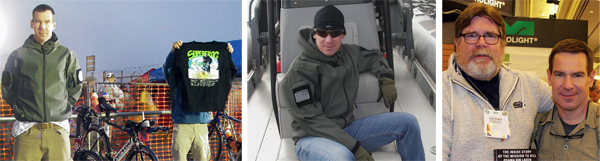
(left) At the Phil H. Bucklew Naval Special Warfare Center for SuperSEAL triathlon. (center) On board an 11-meter RIB off Coronado Island. (right) With Naval Special Warfare Development Group original member and author Chuck Pfarrer

(left) At the Phil H. Bucklew Naval Special Warfare Center for SuperSEAL triathlon. (center) On board an 11-meter RIB off Coronado Island. (right) With Naval Special Warfare Development Group original member and author Chuck Pfarrer.

One of many things that makes them exceptional is they do all this set against the backdrop of a necessity to maintain operational security and rarely disclose their true challenges among non-military relationships. This makes their tremendous burden even greater.

Naval Special Warfare is a community worthy of effusive praise and recognition. They have shouldered a mighty share of the burden of the Vietnam Conflict, numerous “peace time” actions, Operation Iraqi Freedom, the Global War on Terror and other conflicts while maintaining a level of inter-unit quality almost unmatched in the world.  On their 52nd birthday it’s worth acknowledging their contribution.

Authors Note: If you are a fan of books about the U.S. Naval Special Warfare Teams you may find my review for MILTECHREV.com of Greg E. Mathieson Sr. and David Gatley’s impressive new book, Naval Special Warfare here of interest. It is the definitive work on Naval Special Warfare available to the public:

seals10

2014 New Year's fireworks on the Burj Khalifa, Dhubai.

2014 New Year’s fireworks on the Burj Khalifa, Dhubai.

1. You do not know when you will die.

2. It will be sooner than you expect.

3. There will be things you wish you had done.

4. Not fearing death makes you more alive.

5. You will fail in life. Try again. Don’t give up.

6. Don’t fear failure. Instead, fear not trying.

7. Happiness is a balance of striving for new and being content with now. Do both.

8. True friends are one of the most important things.

9. Understand what you can control and control it vigorously. Let the rest go.

10. Plan for later but live for now

By Tom Demerly.

the-waltons-40th-anniversary-today-show-interview

I walked into my friend Mark’s house around 6:30 PM one evening. He lives about a block away. I was returning, in a small way, one of the many big favors he has done for me since I moved back to Michigan. What I saw was shocking. To me at least.

Mark and his wife were seated at a small, round table with a tablecloth. They each had plates, and cups. They were eating food with knives, forks and spoons. It was like the set of a 1950’s movie: a husband and wife having dinner around 6:30 PM, a new baby sound asleep in another room. It was positively… normal.

It struck me pretty hard: This is what that fleeting, ephemeral thing called “normal” looks like.

Like many people I didn’t have  a “normal” family when I was a kid. I had a dad with mental problems, a single mom, and two sisters long gone for those reasons. My childhood was not bad. I didn’t have everything I wanted, I did have everything I needed. But my childhood was different from what I saw at Mark’s house that night.

My family was fractured. Fractured by distance, disapproval, loneliness, lack of communication, forgiveness and trust. In other words, we’re like most families. We have our problems. We have more skeletons than a medical school.  One sister got married in Africa; I’ve got a niece in who lives in Japan. The only way we could keep our distance any better would involve NASA.

Two things that happened in the last decade caused me to revisit the value of family: I almost died and so did my 91-year old mom. As I type this she lays in Beaumont Hospital after two heart surgeries in three days.

When I moved back to Michigan my friends urged me to moderate the fractures in my family. It took time, but I did. It was frightening and humbling. It has also been rewarding and invigorating.

Peace efforts within a family are a lot like negotiating between warring factions in a third world country. Since I have a little exposure to the later, I used what I learned there.

Firstly, you approach it with ownership of your own mistakes and a lot of humility. Secondly, you do a lot of listening. You do what author Stephen Covey said, “Seek first to understand, then to be understood.” Thirdly, you bring some pretty thick skin.

A critical mindset is that you have to leave the past where it belongs- behind you.  You talk a lot about how things could be. Should be. You replace blame with empathy; you replace the lesser past with the idea of a greater future. And you focus on the half of the glass that is full. And mostly, you forgive. Living in the previous world of family arguments, disconnects, betrayals, broken promises and let-downs cannot result in a constructive dialog. It doesn’t foster healing.

Not everyone will get it at first. Families are made of complex personalities and complex pasts. But the behaviors of listening, understanding and forgiving are as contagious as the ones that drive families apart.

Ultimately we decide which behaviors we want in our family by which ones we choose to live in our present. When we make that decision and live it, we get along better.

By Tom Demerly.

1be786d9fe2cdc1fa6a77072d7adefc3

When I woke up in the room I had no idea where I was but something smelled like dust and urine.

There was a man I had never seen before asleep in the twin bed next to the one I was in. He snored.

I sat up, put my feet on the floor and saw they were in decent shape, slightly swollen, skin mostly intact, nine toenails, only one gone. Much better than last time. My mouth was dry. I had a headache. I could stand on my own though.

It took two showers to get all the dust, sand, grime, urine, blood, smoke, stale sunscreen and even fabric bits off of me. I was thankful I didn’t run out of hot water. There were some dead insects in my hair that rinsed out. I took mouthfuls of warm water from the shower. Brushed my teeth four times. After I threw out the clothing that was producing the smell of piss and dust in the room I actually felt clean.

Petra, Jordan, 9 November, 2001; 105.38 miles from the Gaza Strip, 168 miles (by helicopter) on heading 24.1 degrees to the Syrian border, 267.16 miles on heading 55.4 degrees to Iraq.

The Jordan Telecom Desert Cup was a 105-mile non-stop running race from Wadi Rum to Petra, Jordan. I had just finished as the top American, or the second American, I don’t remember which. I had informally allied with a man named Andrew during the previous night. He was a soft-core pornographer from South Africa.

1b0dab114e831d2475db1c5f161b0725

Andrew and I had a mutual interest in racing together. As the youngest male in the race at 22 he was competing for a special prize at the finish line. I had an interest in being the top U.S. finisher. If we worked together to keep each other on course, awake and from freezing to death in the high desert during the night, then made a 30-mile dash at sunrise into Petra we would each achieve our independent goals.

As we trotted into the desert night, packs on our backs, Andrew recounted lurid tales of his business to keep us awake. He met an opulently configured, 18-year old aspiring young lass he described as a… “milk maid”, apparently a common South African colloquialism. The pair drove her father’s expensive Land Rover to the beach one night where she intended to “audition”. Apparently her performance was so commanding that Andrew neglected to notice the tide coming in. It swamped their Land Rover. They only noticed when it began to float and teeter. They were forced to immediately abandon the vehicle, sans apparel, before it capsized. They were left naked on the beach with a long walk ahead of them. Andrew volunteered for the nude jog for help while the young lady searched the tide for swaddling clothes. He considered it training for this race.

It was so cold in the freezing, high desert wind just before dawn that we stopped at a nomadic encampment and asked to roll ourselves up in their rugs for warmth. The incredulous Bedouins obliged and we made ourselves into a kind of human shawarma-wrap in their tent carpets. I promptly passed out. Andrew did too. We slept for over an hour.

Just before we arrived at the finish line we descended a series of ancient steps carved into the wall of a deep desert wadi or canyon. They led to the Lost City of Petra. Jesus Christ had walked these steps. It was said that if you descend these steps you are cleansed of your sins. I could use that.

I remembered we were lunching with staff from the U.S. Embassy in Syria. After I dressed and returned from lunch I learned the man in my room was a U.S. helicopter pilot, and this adventure had only just started.

b504a3bb3c605a3e16327fb56aa9b5aa

By Tom Demerly.

cali

I survived the collapse of Detroit, the Middle East after 9/11 and watched East Germans through binoculars while dodging spies. I’ve never had a sense of looming change like California. The ground beneath your feet is unstable, and it’s not just geology.

California is ruled by silent fear. The culture is collectively grasping the dead image of the California dream.

It must be similar to sailing on the RMS Titanic in 1912 or being on Wall Street on 9/10. Everything seems fine, but there is a tectonic uneasiness. Consider that both the Titanic tragedy and the 9/11 attacks happened by the slightest of circumstances. California is vulnerable to a similar flutter of the butterfly’s wings. It is a culture perched on the fulcrum of the American dream, or nightmare. It can so easily go either way.

I lived in Mission Viejo, California for a year. The neighborhood was idyllic with soaring palms, manicured landscaping, and artificial lakes. Traffic jams of BMW’s delivered perfectly coiffed teenagers to the local high school in what looked like a cattle call for an Abercrombie catalog shoot. If nothing else, Californians are beautiful.

When I arrived in California I walked around a corner to discover two 40-ish females hefting their breasts in comparison. “Oh!” The woman remarked when she noticed me, “We’re sorry… we just got these.” Californians eat natural foods but have artificial breasts. They are afraid of the inevitability of aging and spend enormous amounts in a losing battle to avoid it. There is a cultural aversion to dressing your age in California.

California is crowded. So crowded that I lived inside a massive, sprawling strip mall. The expanse of strip malls is like a skin-eating disease on the terrain. The lesions have connected with each other across the tissue of the landscape to engulf the corporate housing boxes of consumers. We were caged there between purchases and labor shifts.  It resembled an above ground ant nest with nice landscaping. The ants drove Benzs instead of following scent trails.

My cell between the strip malls in California had 2 windows, 2 rooms and cost about $1600 a month. Now I live in a house with 17 windows, 9 rooms and it is $800 a month. I also have a massive yard. In California I slept with my head 9 feet from the front bumpers of cars parked outside. And their constantly bleating alarms. I did have a nice pool though.

Southern California is fragile. One morning on my five-mile commute to work a traffic light went out. One traffic light. The ripple effect throughout Orange County was bizarre. Nearly the entire distance of my five-mile route was delayed or stopped because of one traffic light failure. One. What would happen if there were power failures here like the East Coast power failure of 2003?

California works (now) because of a little known but real principle of space management called the “chicken coop” theory: When there are too many chickens in the coop to all sit on the floor at once you must continually bang on the side of the coop to keep some chickens in the air. The result is an unsustainable society of increasingly collective fatigue. If every Californian had to drive somewhere at once the roads could not handle the number of vehicles. If too many Californians flush their toilets at once…

You may ask, “What about the authentic surf culture? The liberal, progressive attitude and the tolerant society?” Those are the depictions of California we see in themed mall stores, music videos and media. The reality has shifted to an industry of depicting those things. Instead of being California, California is in the business of selling California to the rest of the world, or at least what they think California is. Or was.

What was most embarrassing is that many Californians were very up-tight about being laid-back. They were incapable of poking fun at themselves. When they made fun of me for calling a carbonated beverage “pop” I would reply, “Sorry dude, it’s totally soda man, that was so lame of me…” they would stare at me blankly, as if I had just taken the laid back Dude-God’s name in vein. The reality is that the California surfer dude is simply a hillbilly with a trust fund. Sorry to totally harsh on your scene dudes.

Mostly, Californians are lonely and afraid, and I was one of them. I asked a close friend who was moving if he needed help. He said, in all seriousness, “I don’t want you to help me because you might need me to help you.” That was California in a nutshell.

I went to the same pretty little check out girl at the grocery store every time for a year. The last week I lived there the girl asked, “Why do you always come through my line?”

“I think you are pretty.” I told her. She told me she was taking her break at six and asked if I wanted to have coffee with her next door at Starbucks.

“No,” I said. “I am moving back to Detroit tomorrow.”

By Tom Demerly.

Specialized Bicycles' Founder and CEO Mike Sinyard personally traveled to Cochrane, Canada to delivery an apology to Cafe Roubaix founder Dan Richter.

Specialized Bicycles’ Founder and CEO Mike Sinyard personally traveled to Cochrane, Canada to delivery an apology to Cafe Roubaix founder Dan Richter.

In a widely shared story on social media from December 8, 2013, bicycle mega-brand Specialized Bicycles threatened legal action for alleged trademark infringement against small local retailer Cafe Roubaix Bicycles in Cochrane, Alberta, Canada. The threat originated from concerns by Specialized Bicycles over their legally protected trademark for the word “Roubaix” when referring to specific product categories.

Social media critics, including this writer, were quick to point out what appeared at the time to be a heavy-handed approach by Specialized.

On Thursday, December 12, 2013 Specialized founder Mike Sinyard was quick to reply with a sincere apology to Cafe Roubaix Bicycles’ owner Dan Richter. In the apology, Sinyard said, “I just want to say a big apology for this whole thing that got way out of line…”

“I just want to say a big apology for this whole thing that got way out of line…” Mike Sinyard, Specialized Bicycles.

Sinyard traveled to Cochrane, Canada to deliver the apology in person at Cafe Roubaix Bicycles. In a text book example of social and business crisis management Sinyard went on to say, “I completely take full responsibility.”

Specialized Bicycles can be credited with financial support of independent bicycle dealers across the U.S. who have suffered during the recession. In several cases Specialized has provided financing, management, merchandising and inventory assistance that saved local retailers from closing. In addition Specialized Bicycles has demonstrated extensive support of social and environmental causes through their “Sustainable Innovation” initiatives that include environmental, import and workplace guidelines for corporate integrity.

Sinyard’s textbook example of crisis management establishes a new standard of corporate responsiveness and accountability in the cycling industry and cements Specialized Bicycles’ status as a leading brand in cycling.

By Tom Demerly.ap_twinkies_comeback_jt_130623_wgOwn it.

Before you can change it, you have to own it. Owning your failures is the first part in not repeating them. Understand that owning your failures may be different from fixing them. Some failures can’t be fixed, they can only be owned. The difference is taking a hard look in the mirror and understanding what you did to fail in the first place so you never repeat it. Making excuses and blaming others doesn’t work.

Dissect it.

Once you own your failure you can examine it in a forensic manner. What did you do wrong? Hindsight is 20/20. A detailed accounting of what got you into failure is the second step in climbing out of it and, most importantly, avoiding it again.

One warning: Avoid the paralysis of analysis. Once you dissect your failure and own it you must have control over it. It can’t own you through fear. The perspective of friends and associates can help with this. Understand what things are inside your “sphere of influence” (Stephen R. Covey, The Seven Habits of Highly Successful People) and what lies outside it. Control what you can control and let the rest go.

Get to Work.

There is only one way back from failure: Hard work. This means work without pay, work without sleep, work without adequate food, work without convenient transportation and work without the things that make work easy. It’s just ditch digging. You may need to work in an austere environment and not make excuses while doing it. Accept that. In fact, embrace it. This is the filter through which you must pass to achieve success again and the reason why few people do. They simply aren’t tough enough.

No excuses, no shortcuts. Hard work, measured risk and good decisions led to the only American to ever win the Tour de France, Greg LeMond's, spectacular victory in 1989.

No excuses, no shortcuts. Hard work, measured risk and good decisions led to the only American to ever win the Tour de France, Greg LeMond’s, spectacular victory in 1989.

Except in dire need (such as feeding children), avoid government social programs to assist you. They are time consuming to apply for and laden with bureaucracy. You are better served working a minimum wage job. This is part of the axiom in any survival situation that following the crowd will make you a refuge. Refuges don’t have control of their future. They are victims. The real danger of reliance on social programs is that once you get on them it could be hard to get off.

Don’t Compare Your Situation to Others.

When you own your situation you don’t look at other people and feel sorry for yourself. Instead, you celebrate the successes of others and take inspiration and hope from them. They are a source of strength. Be focused on your own life and goals. Don’t permit distractions. Maintain a “glass half full” mentality that author Stephen Covey called the “abundance mentality”.

Network.

While it’s tempting to crawl into a hole and hide when you fail, resist that temptation. Instead, show others how proactive and vigorous you are. Instead of just asking for help, ask to help them. You always have something to offer even if it is shoveling snow or listening to someone’s problems. Helping others boosts your self worth and keeps you positive. Remember that no job is beneath you. Even if you were the owner of a million dollar company and you land a job cleaning toilets treat those toilets as your business and a reflection of yourself. Make them the cleanest, best toilets you know how and find ways to improve on that. Always strive. Never settle.

By Tom Demerly.

tomhome20

I am, finally, home.

After four laps of the globe, trips to every continent, living on three continents, six countries and five states and not even remembering everywhere I’ve been, I’m back to the place I started from, my favorite place on earth; Dearborn, Michigan in the United States. It is and always has been home. And this has been a very long trip.

I will tell you stories about beautiful beaches and exotic places, about high mountains and vast deserts, war torn countries and hopeful sunrises. Success and failure. I will bore you to tears with esoteric facts and improbable stories, all true, mind you, if modified by time and memory. But I will never tell you there is a place better than Dearborn. So I am home.

Dearborn is the hometown of Henry Ford, the place where Ford Motor Company is headquartered and a suburb of the beleaguered and rebounding City of Detroit. We have one of the largest Arab-American populations in the world outside of the Middle East. Through the dark and light of our history we’ve been known for industry, recession and racism, Orville Hubbard and Greenfield Village. We have a campus of the University of Michigan and one of the best community colleges in the country named after Henry Ford. We also design and build cars here so good that when the entire U.S. auto industry needed a government bailout, we didn’t take it. Ford stock was about a dollar a share then. Today it is sixteen times that. And climbing.

So I’m home.

I learned something about home during the time I was away. Home is made of the history you’ve lived, the people you love and who love you. It is built of the precise map of your hometown built into your head so you never need Google Maps or a GPS in your car. You know every street, alley, sidewalk, and every shortcut.

But mostly, home is friends. Friends who share your history of triumph and failure, promise and forgiveness. Home is the girl you walked to school with in 7th grade and then take on a date 37 years later. And she still looks the same to you.  Home is the place where friends give you their old furniture and know your cats’ names.

Home is where you made your mistakes, took your licks, learned your game and gone on to things you thought were bigger and better only to discover there is a world of people searching for the same thing. But never really finding it. Because it is back home.

Home is also where you discover you really aren’t all that and that you have to take all these big lessons, experiences and adventures and cram them back into a little box and get back to work. Because you are only as good as the outcome of your next game. And whatever you may or may not have accomplished out there in the big world, home doesn’t care much. Home only cares that you carry on doing the things that make made this place… home.

I am so happy to be home.

By Tom Demerly.

pearlharbor-flash

06:14, Hawaii-Aleutian Time Zone (UTC-10:00), 7 December, 1941; 221 miles north of Oahu in the Pacific Ocean.

Navigating through the dark, Pacific morning under strict radio silence the Japanese aircraft carriers Zuikaku, Kaga, Soryu, Hiryu, Shokaku and task force flagship flagship Akagi came about into the wind on mild seas. Deck crews stood ready at the wheel chocks of idling attack aircraft with exhaust flame flickering from their cowlings. Dawn would break in minutes.  Communications officers on the high decks changed signal flags to indicate the attack was underway.

Chocks were pulled and throttles advanced as 50 Nakajima Kate dive bombers began their short take off rolls from the carrier decks. They were laden with massive 1,760-pound armor-piercing bombs. Another 40 Kates carrying top-secret long-finned, shallow water torpedoes thundered forward on the flight deck, drowning out the cries of “Bonzai! Bonzai!” from the deck crew.

Secret Operation Z was under way. The Japanese surprise attack on Pearl Harbor.

The Japanese attack on Pearl Harbor remains one of the most successful combat operations in history. Achieved with total surprise after maintaining strict security a massive naval armada of over 60 total Japanese vessels crossed 3000+ miles to stage near simultaneous attacks on multiple targets with miraculous precision and minor losses. The American naval capability was compromised to such a degree that it would take months to mount a tangible offensive in the Pacific. That more Americans did not die at Pearl Harbor is likely a function of the attack coming early on a Sunday morning.

Days earlier on November 26 the secret task force had left the covert naval installation at Etorofu Island and sailed over 2100 miles to its “initial point”. On December 2nd they were assembled stealthily under cover of bad weather to begin their final attack run toward the aircraft launch area north of Oahu. Admiral Isoroku Yamamoto, back on mainland Japan, issued a coded radio message via morse, “新高を登る!” or “Climb Mount Niitaka!”. This signaled the attack was to proceed as planned.

A new U.S. Army SCR-270 mobile radar array mounted high up Opana Point on Oahu detected the Japanese attack force 70 miles away but believed they were friendly aircraft. At 07:40 local the Japanese attack force spotted the Hawaiian coast at Kakuku Point. They had navigated partially by following the radio transmissions of music from the island.

Flight Officer 1st Class Shinpei Sano launches from the flight deck of the Akagi in an A6M2 model 21 Zero after sunrise in the second attack wave. Sano died in the Battle of Midway in June, 1942.

Flight Officer 1st Class Shinpei Sano launches from the flight deck of the Akagi in an A6M2 model 21 Zero after sunrise in the second attack wave on Pearl Harbor. Sano died in the Battle of Midway in June, 1942.

The attack began with total surprise and withering precision. Air superiority over Pearl Harbor was quickly established by lightweight, highly maneuverable Japanese A6M2 Zero fighters, the equivalent of today’s F-16. The Americans were unable to mount an effective air defense. As a result, air-attack commander Mitsuo Fuchida transmitted a famous morse radio message in the clear, “トラ,トラ,トラ…” or “To-ra, to-ra, to-ra!”.

Fuchida’s torpedo and dive bombers destroyed their targets with impunity as the Americans attempted to mount a defense with anti-aircraft guns. Two ships, the USS Nevada and USS Aylwin were able to start their boilers and run for the channel toward open ocean. Only the Aylwin, staffed by four new junior officersmade it to sea. The Nevada ran aground intentionally in Pearl Harbor after its commander was seriously wounded.

My mother, Velma Demerly, was in Lafayette, Indiana on December 7th, 1941 when the Japanese attacked Pearl Harbor. She is 92 now. The video above is a brief interview of her recollections of hearing the news that day. Her response typified the American misunderstanding of the gravity of the attack and the U.S. isolationism at the time.

The attack on Pearl Harbor was an incredible tactical and strategic success for the Japanese. It put the Americans on the back foot at the beginning of WWII. There were 2,402 Americans killed in the attack. By comparison 2,977 people in the U.S. died in the 9/11 terror attacks.

The social effects of the Pearl Harbor attack touched every American for decades. The Pearl Harbor attack lead to the first and only operational use of nuclear weapons five years later when the U.S. launched nuclear strikes on Hiroshima and Nagasaki. Those attacks combined with a protracted and bloody island hopping, sea battle and air campaign across the Pacific finally brought WWII in the Pacific to an end five years later on August 15, 1945.

Remembering the Pearl Harbor attack is critical to our current political and military doctrine. The Pearl Harbor attack along with the 9/11 terror attacks stand as examples of why the U.S. must maintain strategic defensive capabilities and constant surveillance miles from our borders. It has been 72 years ago today since the first bomb fell on Pearl Harbor. The lessons learned from that tragic attack remain as relevant now as today’s headlines. Unless we remember we are condemned to repeat the past.