MiaObituary20

Mia Demerly died on Sunday morning, October 11, at 4:27 AM after a three-year battle with Feline Hypertrophic Cardiomyopathy. Mia was a ragdoll mix found as an abandoned stray in a litter of cats inside a dumpster near Wyandotte, Michigan in 2007. She was 7 years old.

Feline Hypertrophic Cardiomyopathy is a chronic heart condition inherited from parents and present especially in the ragdoll breed. She died peacefully at home early Sunday morning from complications related to her cardiac condition after being seen by feline cardiac specialists and emergency veterinarians on Friday and Saturday.

MiaObituary10

During her life Mia was junior to the late Fred the Cat and senior to MiMi the Cat, whom she leaves behind. Mia was a clever, calm and industrious cat who enjoyed food, bird watching, collecting cat furniture, beds and cardboard boxes. Mia also had an extensive collection of toy mice. Her favorite pastime was chasing a length of bright orange .550 parachute cord. Mia also enjoy being brushed and read to and kept a regular night/day schedule, sleeping with her human guardian (me) and most recently in her life, Ms. Jan Mack, whom she particularly loved.

Mia Demerly was native to Wyandotte, Michigan but also lived in Tucson, Arizona and Mission Viejo, California until she returned to Michigan three years ago. Her current home was in Dearborn.

Funeral for Mia will be in Dearborn, Michigan later this week. In memory of Mia you may want to make a donation to The Hermitage No-Kill Cat Shelter in Tucson, Arizona, Emerson and the Gang at Miller’s Safe Haven or the Dearborn Animal Shelter.


MiaObituary30

By Tom Demerly.

konablog10

When the top pros line up with wide-eyed age groupers in Kona it gets serious. People get nervous. They don’t sleep the night before. They throw-up the morning of. For us, it doesn’t get any bigger than Kona.

So it is worth de-pressurizing before race day. There is no better way to take the pressure off than poke good-natured fun at ourselves and lift some of the weight off our shoulders. After all, triathlons are like fun, but different. And by the way, I’ve been guilty of every one of these.

Here are 8 things we believe as triathletes. When you think about them for even a moment, well… it all becomes less serious.

1. We believe there actually is a tangible difference in bike aerodynamics. Every modern triathlon bike is fast. All of them are aerodynamic. The largest determining factor in our bike performance is our physical fitness. Every bike company claims their bike was developed in the wind tunnel and is the fastest. They can’t all be right. Ultimately it comes down to having the miles in your legs and a good bike position. Contrary to what the marketing guys would have us believe, Kona isn’t won in the wind tunnel. It’s won with your legs. And your guts.

2. We Believe We Are Awesome. Triathletes in general, especially in Kona, think we’re awesome. We are our own biggest fans. Look at our Facebook, Instagram and Twitter during Kona week. And here is a reality check: We’re right. No other sporting event is like the Ironman World Championships. You can be the biggest football fan in the world, but you’ll never snap the ball at the 50-yard line during the Superbowl. You’ll never start from the grid in a Formula 1 race in Monaco. But at Kona, you and I do the exact same course, in the exact same conditions, on the same day as the top pros. I don’t know of another major sport (and yes, we’re “major” now) where this is possible. Author Arthur C. Clarke once said, “We each create our own reality.” In Kona, the only thing required for you to be awesome, is for you to believe it.

3. We think our stomachs are “special”. I can’t drink what is in the aid stations, I can’t eat chocolate after mile 40 (exactly mile 40), I need a special drink, in a special container, in my special needs bag. It has to be a special temperature. Nothing else works. I can eat only Hershey bars, tuna (packed in spring water), free-range, gluten-free figs and drink only Di-Hydro Zullified Endurospritz sports drink, a special sports drink made in Uzbekistan for Olympic curlers. It’s the only sports drink that works for me. Ever. Everything else makes me sick. The truth is you can train your stomach to use almost anything as fuel. It takes time and adaptation, and it’s too late for that now. So enjoy your tuna and figs, and don’t forget, there are Porta-Jons every mile on the run. That might even make you run faster.

4. We spent $20,000 to get to Ironman, but may not be able to change our own $10 inner tube. It’s too late to do anything about that tonight, so I hope you have fresh tires and good karma. And by the way, the reason they call it “Neutral Support” is because when you get a flat on the bike course, they may as well be in Switzerland.

5. We know best. What? “Nothing new on race day?” Phooey. After traveling half way around the world it makes perfect sense to buy a new saddle, cycling shoes, triathlon clothes, energy gel and sunscreen at the expo two days before race day, then use them all in the race. When our crotch is numb, our eyes are burning, the contents of our stomachs are in our tri shorts and our feet are on fire it is the manufacturers’ fault. Because we are Ironmen, and we know best. Oh, and don’t forget, nothing new on race day.

6. I research my equipment, and buy with empirical logic that would be the envy of a NASA engineer. We read, obsess, post on forums, make spread sheets, read some more, obsess a lot more, then buy the coolest looking thing. See #5 above.

7. We don’t care about bike weight. Even though the aid stations are 5 miles apart on the bike course, we have five full waterbottles, 20 gels, eight powerbars, 30 salt tablets with dispenser and sunscreen. We also carry an iPhone, power meter, two spare tires, four CO2’s, a Garmin and deep section aero wheels. But since #5, and even though #4, and understanding #3, our bike weighs… 31 pounds on race day. But since #2, this doesn’t bother us much.

konablog20

8. Triathlon didn’t exist before us. Dave who? Scott what? And who is this “Paula” girl anyway? This is a participant sport. We don’t put our stars on very high pedestals. We’d rather be there ourselves. And besides, after you’ve peed your tri shorts for the fourth time on the way out of the Energy Lab and the sun is beginning to set over Kailua-Kona, who cares who won?

If you are racing tomorrow in Kona, to paraphrase Teddy Roosevelt, know that you are in the big arena. The big show. Your face will be covered by dust and sweat, but hopefully no blood (depending on the swim…). You will know the great exertions, the great devotions, and you will spend yourself in a worthy cause. So that your place shall never be with those cold and timid souls following you on the live feed who know neither victory nor defeat.

Most importantly of all, have a great race. I wish I were there with you to share the greatest race on earth.

By Tom Demerly.

560ea157d518609f2b3bb1a4_the-martian-movie-matt-damon-cr-courtesy

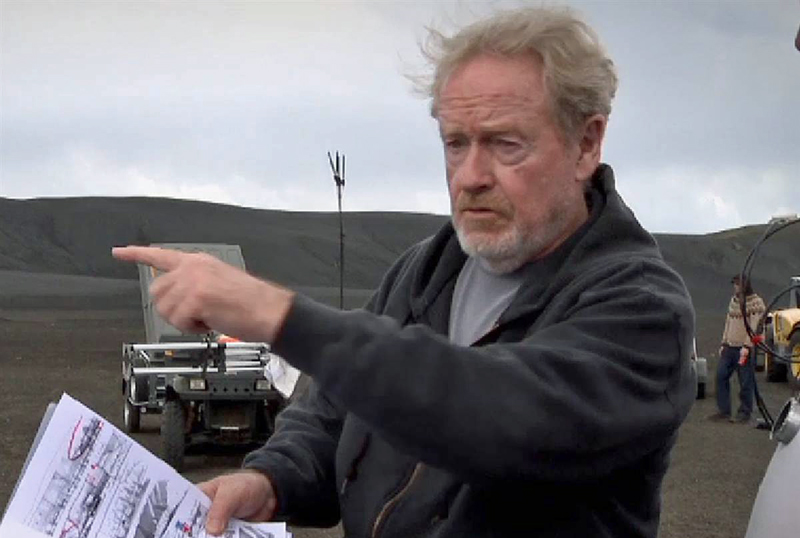
Matt Damon as Mark Watney comes to grips with a bleak landscape, literal and figurative, in Ridley Scott’s “The Martian”.

Know two things about The Martian: 1. I normally don’t like outer space movies and, 2. Director Ridley Scott is the single greatest film director of our time.

The Martian is a triumph of film we haven’t seen in over a decade- or more. It lingers like the one book you read as a youth that changed the trajectory of your life. As with the space mission it depicts, it uses existing technology masterfully to meld plot, theatre and visual effect into one of the finest movies in the history of film. It is without flaw.

The Martian chronicles stranded astronaut Mark Watney’s survival ordeal after being trapped on Mars alone. It documents themes of survival, valor, and unity.

But there is one shining idol in The Martian, one hero, one savior- and it is the savior we increasingly must look to in our modern world: Knowledge.

The film is supported by an equally outstanding sidekick: Unity.

While the cast of The Martian is incredible, it is the theme that wins this remarkable journey. That we must think, learn and reason to survive; that we must do these things in unity and cooperation.

The Martian isn’t about space exploration; it is about our collective future and mutual society on earth. The story is told against the dusty, hostile canvas of the Martian landscape, a metaphor for our terrestrial world that has become increasingly bleak- nearly identical to the dry surface of a hostile planet. While told as a story about survival on Mars, this is a story about our lives on earth, increasingly separated- and oddly united- by technology against a backdrop of survival in a modern age. In the end the film’s hero character relies on knowledge, learning, thinking and the international cooperation of a unified mankind for survival. It isn’t about reaching for the stars, it’s about getting back to earth.

I don’t like “FX” movies, and that (by necessity) defines the space film genre’. But Scott creates visual magic in The Martian with effects that are stunning and vast. He creates a sense of distance and time in the open space visuals, and a sense of remote desolation in the Mars scenes.The film is also visually luxurious and adventurous. I grew up in the Apollo age, and this is the first thing that has ever made me want to actually go into outer space.

Many of the Mars scenes in Martian were filmed in Wadi Rum Jordan, a desolate canyon system in the western Sahara that is home to extreme endurance events like the 150-mile Marathon des Sables ultra-running race and the Paris-Dakar rally. Wadi Rum was also the haven of the real-life Sir Lawrence of Arabia. This accounts for much of its authentic visual feel.

The visual treat extends from judicious and masterful effects to stunning and desolate real life sets and finishes with remarkable treatment of the technology props from space suits to communications equipment to Watney’s Martian rover vehicle.

ridleyscott

That this movie is a Ridley Scott product is no surprise. But there are two surprises; Ridley Scott keeps churning out perfectly timed masterworks. Recall his landmark Gladiator, a film so perfectly done, so utterly out of left field, and so universally received across cultures that it became one of a small handful of modern classics alongside Forest Gump, Titanic, and a select collection of other blockbusters. Gladiator was released in 2000. It became a metaphor for many as the world squared off in a global war beginning the next year. And it expressed the fatality of conflict, even set against heroism. Scott also produced the landmark war film Blackhawk Down. Scott was even executive producer of the joyous Life in a Day documentary celebration of mankind around the world.

As for the cast of The Martian, they are secondary but integral, and stand in the foundational role of theme and plot like concrete thespian pillars. Each characters performs, no character overwhelms. Their performances are subtle mastery.

And then there is Matt Damon. Damon trumps the best of movie and theater by presenting characters on his personal canvas that is dashing and endearing. You love the guy. He is real, accessible and grows to hero status before your eyes. No author could hope for a better interpreter of their main character than Matt Damon, whether it is Robert Ludlum’s character Jason Bourne or as Will Hunting in Good Will Hunting.

Finally, I acknowledged a hefty paradigm shift with two other similarly themed movies when leaving the theater after The Martian. Both Castaway and Life of Pi discussed themes of isolation and survival. These stories guide us through an ordeal against which our values are recalibrated. We learn what is important. But The Martian makes Life of Pi feel oddly clinical and cryptic and makes Castaway feel desolate and sad in theme. The Martian renews our faith.

The great gift you leave the theater with after The Martian is hope, and that is perhaps our most valuable gift right now.

martian2

By Tom Demerly.

thegatesofheaven_imfinish-oct1982-finallr-_0

I don’t care who owns Ironman. Here’s why.

Years ago I saw the race on TV. It was 1982. A woman stumbled to the finish and fell. A blonde man from California won. He was a lifeguard and drank smoothies. Another man from Brazil was the fastest swimmer. The day after the race he rescued a woman from drowning in the Pacific.

I watched them on TV, in the race. Their faces. The clothes they were wearing. The bikes they rode. And I realized something; this is really cool. This is special.

I grew up fat. So fat they put me in a special education phys ed. class in junior high. I was lucky enough to have a great teacher in that class. He taught me to believe in myself. He taught me to never give up. He taught me that with work come results.

Later, in the Army, I learned he was right. I also learned that its what you do that counts, not what you wear or what you look like. Your actions define you. Not uniforms or special hats or patches or medals. Or tattoos or T-shirts or finisher medals.

The only thing that matters is what you do. Not your tattoo, your medal, your T-shirt.

Our sport has changed. People ask, “How little can I do and still reach the finish line?” They want the medal, the shirt, the tattoo. It’s important to them, and those icons help define them. That’s not wrong. It just is.

But I don’t care. I don’t care who owns Ironman. It’s still long, hard, hot and difficult. Every mile has 5,280 feet. It isn’t shorter, easier, cheaper (that’s for sure) or somehow “less”.

You can do an Ironman any day of the week. Swim 2.4 miles, ride 112 then run 26.2. When you’re done, you’ve done it. You finished. You don’t need a T-shirt, a medal, a tattoo.

You do need courage, determination, confidence, endurance and strength. You can’t buy those things anywhere. No one else owns those. No one needs to see proof. Just you. Only you really own it.

By Tom Demerly.

_84583932_hi028371646

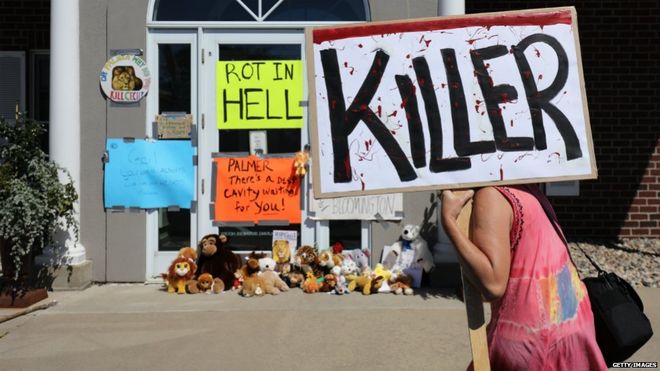
Protesters outside Walter Palmer’s dental office, which is now closed, on Wednesday, July 29th in Minnesota.

Cecil the Lion is dead.

Cecil’s death and our reactions say a lot about mankind. None of it is good.

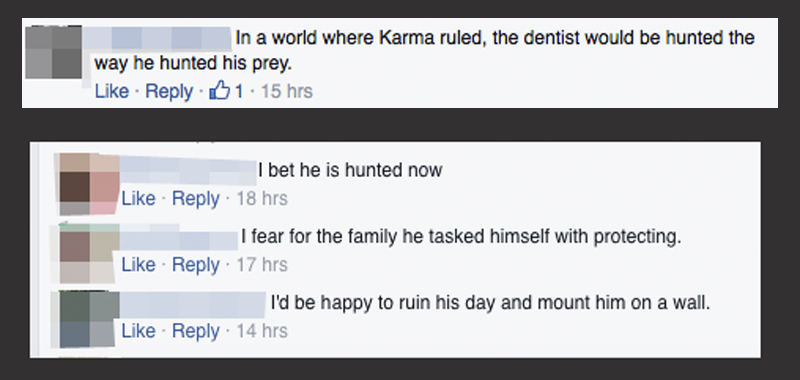
People are calling for the death of the hunter who killed Cecil the Lion. “He should die the same way Cecil died…” “He doesn’t deserve to live…” “I’d shoot him myself and not feel a thing…” are comments on my Facebook feed.

The hunter is a dentist from Minnesota. Social media and news reports say his practice is closed now, he has removed his social media and he and his family have received threats.

The people who write those threats aren’t far removed from the act they are criticizing. While these sentiments seem harmless and passionate on social media they are the violent rants of people removed from the harsh reality of much of the world. And they feed that harsh reality with their vitriol.

cecilthelion

A friend and wise man named Seth Y. observed on Facebook that the same week Cecil the Lion was killed a 12-year old girl in Nigeria blew herself up and killed 10 people in a suicide attack. The day before a 17-year old girl did the same, killing 20. There is also a civil war in Sudan, on the same continent where Cecil the Lion died, that has displaced 2 million people, many suffering from malaria, dysentery and cholera. There isn’t much about that in the social media feeds.

We didn’t grow up on charming Disney animated movies about Nigerian suicide bomber girls or cholera epidemics, so there is little sympathy for the suicide bombing or the refuge crises. Instead we are incensed by the crucifixion of a Kimba surrogate and, in our vast empathy and righteousness, call for the perpetrators head. That makes us not much better.

That’s no more right that killing Cecil in the first place.

Violence and cruelty only end one way: stop the cycle. Stop the cycle of revenge, retaliation, retribution. This includes the vitriol toward the man who shot Cecil. There is a great Arabic proverb, “The wisest is the one who can forgive.” And another that says, “It is wise to forgive, but unwise to forget.”

The sympathy for Cecil the Lion is well founded. He died a horrible and needless death. But the calls for harm to his killer have no more merit than the character of the man who killed him. That man lives in his own private prison. He carries the burden of every life he has taken. To threaten him is to join him.

Our outrage at Cecil the Lion’s murder is well founded. Our behavior surrounding it is shameful. Our cycle of justified violence and exploitation of nature is the downward spiral that could eventually end this illusion we call “civilization”. There really never has been much civil about it.

If you are truly outraged at the needless and tragic death of Cecil the Lion, then do something about it. Volunteer one Sunday at an animal shelter. Donate $50 to a fund that preserves wildlife. Write a letter to the Zimbabwean Embassy in the U.S. (Embassy of Zimbabwe, 1608 New Hampshire Ave NW, Washington, DC 20009 [202] 332-7100), adopt an animal from a shelter and give it a good life. Do something positive so the tragic and needless death of this lion becomes a rallying point for good rather than a lynch mob that destroys another life.

cecil-and-lioness-brent-stapelkamp

By Tom Demerly.

cowboy10

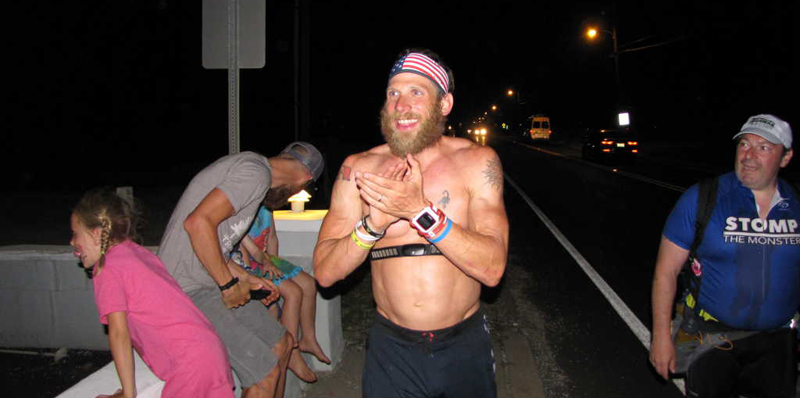
When he started, no one thought he could do it: Complete 50 Ironman distance triathlons in 50 states in 50 days. But he’s done it. And in doing so, he’s changed our concept of what is possible. He is James Lawrence from Utah, 38 years old; The Iron Cowboy.

Ironman has become a tattoo, a brand and an object of conspicuous consumption. A logo on a warehouse club fleece jacket bought after a race.

Before that, back on a beach in Hawaii on February 18, 1978, it was something else. And thanks to Iron Cowboy, it gets back to its roots of pushing through barriers rather than stopping at them to buy a logo-ed jacket and get a tattoo.

Iron Cowboy ran straight through all the marketing. Knocked down the barriers. He reminds us that Anything is Possible. And he did it without the licensing fees and waiting lists. He really Just Did It. The finish line is also tomorrow’s start line. It really isn’t over when it’s over. It’s only over when we stop.

One of the things he demonstrated is that we’ve been pretty lazy, pretty complacent, somewhat petty and oddly “consumer-ish” in our approach to Endurance sports. We just want the tattoo. And fleece jacket. And hat. And bumper sticker. And license plate. And bike number. And…

Ironman built it, and we bought it. Until The Cowboy, it had gotten stagnant, the needle stuck at 140.6.

There are longer races, there are harder races; Marathon des Sables is one. But without the mega promotion and the TV deals and the brand licensing they have remained off the everyman’s radar.

Iron Cowboy ran around the outside of the licensing fees that have been attached to the use of any reference to The Full Distance and made a mockery of dots and “M”s and tattoos. And in doing so he undid, in 50 days, what has taken nearly four decades to do. He reminds us that human limits exist only in our minds. That, unless we continue to push our concept of limits, that wet blanket we call “impossible” begins to settle heavily over us.

When Ironman Hawaii started it was also thought to be impossible by some, injurious by most. Now finishing Ironman is commonplace. It isn’t easy, but it is common.

So The Cowboy just raised the bar. And while Ironman, just one, lowly Ironman done in good conditions after months of training, good nutrition and careful tapering, is somehow made “smaller” in context by James Lawrence, the “Iron Cowboy”, it also remains a significant challenge.

But now we are reminded that there are many accomplishments beyond the finish line at Ironman, and that there is much more to our capabilities than logos or tattoos.

cowboy20

James Lawrence, 38 years old from Utah, completes 50 consecutive Ironmans in 50 days in 50 states on July 26, Sunday.


By Tom Demerly for tomdemerly.com
roadsafety20

Is road cycling dangerous? What are the chances of being hit by a car while riding on the road? Can cyclists manage risk while riding in a shared bicycle/car environment?

The perception is that road cycling is more dangerous today than a decade ago. And, that driver distraction and higher traffic volume have increased the risk and frequency of car/bike accidents.

There is one problem with this perception: The data does not support it. In fact, there is data to suggest that road cycling is statistically safer today per rider than ten years ago if you compare the frequency of reported accidents to the rate of growth in road and triathlon cycling.

Gina Kolata is a writer for The New York Times. In an October 2013 article published by the Times she wrote, “What remain [in cycling safety studies] are often counterintuitive statistics on the waxing and waning of cycling in the United States, along with some injury studies that could give cyclists pause.” By contrast, in the Fatality Analysis Reporting System (FARS) 2004-2012 Final File, 2013 Annual Report File (ARF) published by the U.S. Department of Transportation we actually discover only a 2.8% increase in reported cycling fatalities, from 727 in 2004 to 743 in 2013. This statistic is particularly relevant since cycling fatalities must be reported by law, whereas non-fatal accidents have no formal reporting requirement even if the victim receives medical treatment.

roadsafety10

Compare this change in cycling fatalities with the growth in the cycling sports: The Outdoor Foundation.org reports a significant “174% growth in Traditional Road Triathlon Participation in the last five years”. The foundation went on to report that, “Activities with high percentages of first-time participants in 2012 included stand up paddling, boardsailing/windsurfing and non-traditional and traditional triathlons.”

Even if you discount the statistics for cycling fatalities and triathlon growth each by 50%, the trend remains clear: Serious road cycling/car accidents are becoming less common per rider.

Why has the perception of road cycling evolved into a belief that riding on the roads in more dangerous than ever? There are likely several reasons.

When you conduct a survey of the literature on cycling accidents you discover that cycling safety statistics are pretty dry, while Facebook and social media posts about accidents are pretty sensational. This proliferation of social media posts about cycling accidents contrasted with boring accident analysis likely contributes to the misconception that cycling is more dangerous than ever.

This last decade has produced a new culture of sport cyclists, many of them attracted to cycling by triathlons. Triathlon is fed by several demographics; participants completely new to endurance sports, participants coming into triathlon from distance running, participants coming from a collegiate sports background. None of these three backgrounds emphasize technical bike handling skills. Few triathlon clubs conduct bike handling and group ride skills clinics. As a result this new culture of performance cyclists are racing their bikes on the roads in triathlons but may not be practicing bike handling and real-world road riding skills.

Road cyclists often default to anecdote when discussing cycling safety in traffic: “Yeah, but my friend knows a girl who was hit by a car and…”

As it happens, I am fluent in the language of cycling accident anecdote. I have been hit three times by cars while riding my bike. My lifelong best friend was killed by a car while riding his bike. I’ve had broken bones, torn skin, destroyed bikes and lost my best friend. A cursory examination of my first person experiences might point to a knee-jerk analysis like this: “See… the sport is dangerous, and your experiences prove it.”

3fdce2edcf52932f8d4da987fe006889

But there is more to each of my experiences. In each instance when a car hit me I contributed, partially or entirely, to the accident. In one I was riding in adverse weather, another I rolled a stop sign on a residential street and the third was just after dark when I was caught without lights. In short, I was at least partially responsible for the accidents. In the instance when my best friend was killed, he was riding in the dark on a busy road with a high speed limit by a drunk driver with an obscured windshield. It was the culmination of the most dangerous factors; the perfect storm.

Therein lies a lesson: Risk can be managed and moderated, but that management must be willful and methodical.

Perhaps the best practitioner of risk management is the military. The military’s model for risk management is simple: Meticulous preparation. Training, learning techniques, drilling key skills again and again. Crawl, walk, run. As a result, soldier preparation and survival on the modern battlefield, the deadliest in history, is better than ever. On both the road and in the water, multisport athletes could take a lesson from military training doctrines in risk management and training for riding in a real world environment.

Cyclists have taken an opposite approach: Avoidance. New cyclists tend to seek ride environments they perceive as less risky rather than work on skills for riding in the real world. New cyclists gravitate toward perceived cycling preserves like Metroparks and bike trails.

There are three problems with the risk avoidance approach; it does not teach necessary cycling skills, it does not reflect the broader cycling environment and it creates a false sense of security at the possible cost of taking time to learn good bike handling and road cycling skills. In fact, in a strange flip-flop of statistical trends, it appears as though areas around Metroparks in Michigan tend to have a higher frequency of accidents than do remote, rural and even low traffic density urban roads like streets in Downtown Detroit and the Michigan Downriver area.

roadsafety30

Perhaps the most significant contributor to the cycling-risk dogma is social media. I’ve been a victim, and a villain, of social media misreporting on cycling accidents myself. Several weeks ago a multiple-fatality car accident at a local Metropark was initially reported on social media as a cycling accident. It wasn’t a cycling accident. I shared the reports that the accident was a multiple fatality bike accident. When I learned the accident didn’t involve any cyclists at all, I deleted it from my Facebook page. But the story had already been widely seen and shared. The damage was done. What I should have done is checked the facts before I posted about the accident.

What is the truth about road cycling safety? I interviewed the executive director of the National Bicycle Dealer Association (NBDA), Fred Clements, about trends in road cycling safety. Clements, an experienced industry observer and critic, characterized it well:

“I would consider road cycling to be reasonably safe, though it has much to do with your skills, where you are, and what routes you choose. With reasonable care, the risk can be minimized. The risk is not as great as some people may believe.”

While some may suggest Clements’ perspective is skewed by his position in the industry- that this is the fox watching the hen house- the statistics support his suggestion that road cycling is not as risky as the social media dogma has scared us into believing.

A key reality is that cyclists must assume responsibility for their own safety. Until they do through improved skill training, selecting better routes and being pragmatic instead of sensational then the inaccurate perception that cycling is increasingly dangerous will continue to proliferate.


BY TOM DEMERLY.

tooskinny80_800

A Victoria’s Secret ad run on Facebook after I used Photoshop to retouch back to what I thought were normal looking, physically fit females.


Top fashion brands like Victoria’s Secret have taken heat from consumers and media for manipulating the appearance of their models through both real diet and exercise regimes and also by using photo retouching techniques to make the models appear thinner, taller, and without skin blemishes.

I wondered what would happen if I used Adobe Photoshop to retouch a Victoria’s Secret ad seen on Facebook in the other direction. I wanted to make the models look more “average”, more like my impression of what physically fit females actually look like. Here are the results seen side by side.

sidebyside800

The original ad on the left, my retouched version on the right. It took a lot of work to get rid of all that “thigh gap”.


The project took about 20 minutes in Photoshop, and I am not a skilled user. I used the “liquify” tool, the rubber stamp tool and the masking tool. For an expert in Photoshop the results would be better and quicker.

When I put the two photos next to each other I was struck by how truly bizarre the actual Victoria’s Secret ad looks. The two girls in the center with bare midriffs look truly weird in the real ad, and look a lot more realistic in my Photoshopped version.

The thing that struck me the most was that the ad I Photoshopped now looked pretty reasonable. The actual ad, before my Photoshop, looked freakish.

I don’t know how much (if any) Photoshop is done in an ad like this one for Victoria’s Secret. I do know it took 20 minutes of work to restore the image to my perception of a more normal, fit looking bunch of girls on the beach.


By Tom Demerly.

realtri20_edited-1

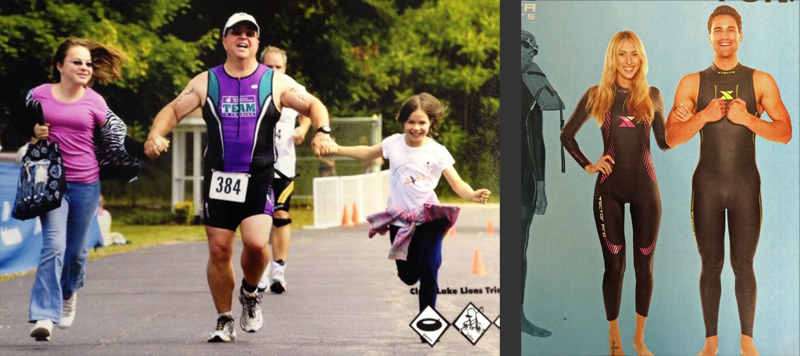
The heart and reality of modern triathlon is the everyday hero, not the thigh-gap supermodel.

Who does triathlons in the United States today? What does the “average” triathlete look like?

Industry dogma suggests all triathletes are high wage earners between 30 and 45 who aspire to race Ironman (or already have). They own a $10K bike, race wheels and a power meter. Their household income is above $120K and they have a graduate level degree. They are the marketer’s dream come true: Young, affluent, fit and shopping.

There are two problems with that “demographic”: it’s outdated and likely wrong. Why?

Set the way-back machine to December 2007. Economists agree this is when the Great Recession started in the United States. It ravaged personal discretionary income and decimated those just hanging on to upper middle class. Many haven’t recovered to pre-recession income and savings levels even though the recovery has thundered ahead, dropping them from the pack like a newbie on their first group ride. Those that have recovered or never suffered an economic loss may be reluctant to part with cash earned during the stock market gains of the past seven years. Americans seem less eager to carry debt, despite an ominous recent spike in credit card debt. Discretionary spending decisions have tightened in the post-recession era.

Many of the tired marketing statistics rehashed about triathlon were collected prior to the 2007 recession– and haven’t been updated since. The post-recession demographics for triathlon have changed.

Americans have also changed physically. We’re heavier- all of us. The number of svelte, uber-athletes is smaller now than it was 20 years ago relative to the general populace, who apparently has been spending what’s left of their shrinking discretionary incomes on Krispy-Kremes, not qualifying for Kona.

realtri100

Americans, including triathletes, have gotten heavier and may continue to as a population. Triathlon has failed to market effectively to that reality.

As a result of this economic and health demographic shift triathlon has filled from the bottom. The sport is growing from an increasing number of new athletes who are more average, heavier, less athletic but still inspired to participate– if not necessarily compete.

This is good news for the triathlon industry if they become more pragmatic about who is really doing triathlons. History suggests the triathlon industry isn’t very realistic about its own consumership. It continues to (try to) market to the svelte, Kona demographic in print and internet media- even though the inspirational stories that bring people into the sport are usually the saga of the everyman participant who had to overcome to participate, and doesn’t really compete.

This fundamental misunderstanding of the distinction between Participation and Competition is what continues to hold the triathlon industry back. It is also why retailers have a hard time earning consistent profits from a market they are increasingly out of touch with.

There has never been an ad campaign in triathlon featuring realistically sized, average age group triathletes. In fact, the same rebellion that has happened in women’s apparel marketing with consumers raging against brands like Victoria’s Secret and Abercrombie & Fitch is ready to happen in triathlon. The middle 90% wants triathlon to “get real” about who is actually participating, and they don’t care about who’s racing in Kona.

realtri40

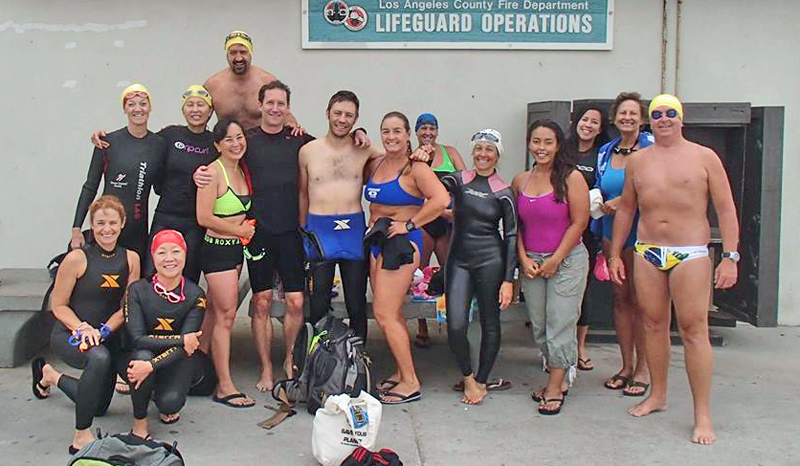
Triathlete Niecia Staggs and his Ocean Swim Club at Torrance Beach, California represent the athlete constituency that truly pushes triathlon forward.


A gold standard metric for triathlon marketers and product managers has been the “Kona Bike Count”, a census of brands and models seen in the transition area of the Ironman World Triathlon Championships in Kona, Hawaii each year. This increasingly irrelevant set of metrics is still used to (try to) sell everything from race wheels to bikes to power meters. There is one problem though- as the sport fills from the bottom the assumption that every participant aspires to emulate the couple thousand athletes in Kona is statistically flawed.

A bike company may devote six figures and more to developing the next triathlon “super bike” costing over $5000 (and even $10K) but they have failed to develop inspiring new designs in entry-level triathlon bikes. If a bike company introduced a comfortable, high head-tube bike with aerobars and a comfortable saddle with an aero appearance at the $1500-$2200 price point it would be an easy decision for new triathletes. New triathletes aren’t interested in the tired marketing paradigm of wind-tunnel white paper dogma that is debated ad nauseam among a shrinking number of triathlon Internet forum mavens. They just want to sit upright on their bikes, be comfortable, look presentable and have a good experience at their triathlon.

realtri30

Apparel and personal care brands have begun to leverage an inclusive, realistic approach to expand brand awareness and foster broader-appeal sales. Numbers say the approach is working.

Apparel manufacturers have missed the mark too, alienating prospective customers with images of sponsored pros with little or no recognition among average triathletes and building clothing that is too tight, too short and in size runs that are humiliating to try on. If a forward thinking triathlon apparel brand introduced a tactfully marketed apparel line called “PR” with upward-adjusted size runs, modest cuts and middle-road visual appeal they would outsell too-tight, mis-sized brands designed to fit anorexic Kona winners.

The idea of every triathlete being the “alpha consumer” isn’t accurate anymore. Triathlon has changed. The sport is filling from the bottom. It has become an “everyman and everywoman” sport. The vision of the triathlete as a super fit, alpha-consumer threatens the sport by becoming increasingly exclusionary. It fails to welcome new athletes and creates barriers to entry like body image and entry price.

There will be big and quick rewards for the first triathlon brands who acknowledge this in their product mix and marketing message. The money is there to make, but it must be earned through pragmatic product design and judicious, ego-free marketing. The first brands to reach the finish line of the new, realistic paradigm in triathlon marketing will be the new podium finishers on the top of the sales charts long after the “winners” of the Kona Bike Count are forgotten.


By Tom Demerly

snowstormshovelBW

I stepped out the door on the way to work two weeks ago. It had snowed. Nothing remarkable about that. It’s Michigan, it’s January.

What was remarkable is that my sidewalks, walkway and driveway were cleared of snow. I did not do it, it was done for me.

I live in Dearborn Heights, Michigan. Three blocks north of me is Dearborn. Dearborn Heights is considered less affluent than Dearborn. It’s like “Dearborn on a budget”. We have lower home values- by a lot. There is less government, fewer services, fewer building codes, fewer police and emergency services. A girl I dated a long time ago is on city council and has run for Mayor a few times. She hasn’t won yet, but I’d vote for her. She’s a smart politician and good administrator.

I can look three blocks north into Dearborn from my house in Dearborn Heights. I live in Dearborn Heights now because it is cheaper. A three-bedroom house on a big lot in Dearborn Heights is about $800 a month. Same house in Dearborn; maybe $1200, on a smaller lot.

Part of the reason Dearborn is more expensive is city services and government.

And that brings us back to the snow.

Like I said, my snow was cleared completely. Quite nicely too. Since I had allowed an extra 15 minutes to shovel my own snow I now had 15 extra minutes of discretionary time before I left for work.

Discretionary time: think about that. It is our most precious non-renewable resource.

So I had a choice about what to do with this valuable 15 minutes.

I was in the Army. And the National Guard. A key thing we learned was to be a team player, act without direction congruent with a key set of values. Work together selflessly. Strive to do more than is expected and never settle.

So I picked up my snow shovel and shoveled the snow of the neighbor one house down from me. Mine was done. His was not.

Meanwhile, three blocks north in Dearborn the city plows had been out (higher taxes there, more expensive housing) but the sidewalks were still snow covered. It takes a while for the sidewalk plows to come after the streets have been cleared. The city can only afford so many sidewalk plows and people to drive them, and sometimes they have damaged people’s private walkways to their house creating lawsuits to get the city to repair them. So it takes extra time for the sidewalks to get cleared in Dearborn. It’s also expensive. The sidewalk sweepers have to be bid on and bought, someone is paid to administer that project, and they must have a college degree in a related field since they are controlling a lot of public money. Then they have to hire people to drive the plows, and the process of hiring those people must be administered fairly and without discrimination or nepotism, so there needs to be some oversight there as well. The sidewalk sweepers also need gas and maintenance and storage during the summer, and that costs money too.

In Dearborn Heights, we just use snow shovels. A guy down the street has a snowblower, so he clears the sidewalks and walkways of his house and the neighbor on each side. Then the guy three doors down, also with a snowblower, does the same. I shovel the rest to the corner. I don’t have a snowblower.

Another guy, one block over, owns a snow removal service. He runs his plow up and down the street. Then we’re done.

Three blocks north in Dearborn, the sidewalk sweeper still hasn’t come.