Archive

Commentary.

By Tom Demerly.

bikefit70BEST

Bike fitting is big business. Having some version of “professional” bike fitting is the new standard for any bike sold above $1000.

How do you tell if your bike fitter knows what they’re doing? Are they a credible, trained, experienced fitter or just repeating buzzwords in a kind of bike fit “theater” learned in a weeklong clinic under the guise of years of experience fitting athletes during the evolution of bike fitting?

Here are ten checkpoints to assess the credibility of your bike fitter:

  1. Do They Ride? The Way You Do?

If a bike fitter knows what it’s like to be a beginner triathlete filled with anxiety and not even know what questions to ask they can help the newest beginner with solid recommendations. A good fitter knows the “beginner’s mind”.

At the opposite end of the experience scale, if your fitter knows what it’s like to sit on an uncomfortable saddle for six hours at Ironman- and can fix it– it’s easier for them to understand what you’re experiencing. If they have done it themselves, you’ve found a fitter you can relate to.
bikefit90

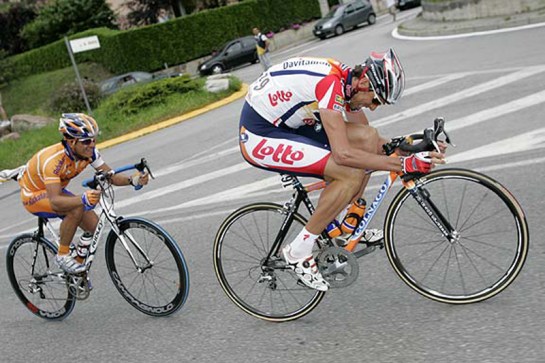
“After their bike fits Dave and Enrique couldn’t help but wonder if there had been some confusion between their two appointments…”

When a bike fitter combines the “beginner’s mind” with elite level competitive experience balanced with formal training and tempered against learned judgment from doing thousands of bike fits, you have a master. And the less a new rider knows, the more the fitter must.

There are a few credible fitters who are not triathletes or bike racers but do know bike fit well. But they are the exception.

Having the practical experience of riding the way you do (beginner or expert) makes communication more effective. It also means your fitter had to apply what they’ve learned about bike fit to themselves. It teaches them critical thinking and hones their analytical skills. That makes them a better fitter.

There is a dark side to the super-athlete bike fitter though, see #10 below.


  1. Have They Been Trained in Multiple Methods? 

Beware of any shop or fitter than espouses a single fit methodology. If a shop tells you “We do Retül (or Guru, or FitKit, or Body Geometry, or FIST)” but uses no other system and is not familiar with any others, it’s worth learning how deep their understanding of bike fitting and positioning really is.

How long have they been fitting? Have you spoken to any other fit clients of theirs? What are their reviews?

Bike fit systems are only tools to make the fitting process easier, more theatric, and in some cases, to sell bikes.

Dan Empfield, inventor of the triathlon bike and of the Stack and Reach sizing convention teaches a F.I.S.T. bike fitting class in England.

Dan Empfield, inventor of the triathlon bike and of the Stack and Reach sizing convention teaches a F.I.S.T. bike fitting class in England.

The quality of the end product depends on the fitter, not the system. A fitter with experience across a number of systems has a more balanced understanding of the bike fit landscape and assesses your fit from a broader perspective. That likely means you’ll get a better bike fit. Beware of the one-trick pony and the Johnny-come-lately with the shiny new fit bike and laser levels.


  1. Do They Espouse One “Fit System” Over Another?

If a fitter uses only the cookie-cutter fitting system associated with the bike brand they sell, you may still get a good fit on that brand, but the fitter’s capabilities may be limited.

As with point #2 above, bike fitting systems are merely tools. All of them will produce a favorable result in the hands of a skilled fitter- but all of them rely on an experienced fitter.

Nice tools, but do they know their stuff?

Nice tools, but do they know their stuff?

When was the last time you asked your bike mechanic, “What kind of wrenches do you use?” As bike fitters become more experienced and capable the system they use becomes less relevant.

It’s the experience and skill of your fitter that matters, not the system they use.


  1. Do They Only Suggest New Saddles for Saddle Discomfort?

Saddle discomfort is a leading motive for bike fit, but if the only thing your fitter does to make you more comfortable is bolt different saddles on your bike or try to measure your “sit bones” to sell you the right saddle, then they are a good salesperson, but a poor bike fitter.

bikefit110

A good fitter will take a holistic approach to saddle discomfort, addressing fit, position, saddle comfort habits, rider fitness and posture and the rider’s clothing to improve saddle comfort.

Bolting on new saddles is a great way to drive sales and usually the most logical approach to the customer, but it is a myopic view of what makes a person comfortable on a bike seat. Your fitter owes you more than a sales pitch on another magic saddle.


  1. Do They Claim To Be Able To Make You “More Aero”?

A great way to tell if a fitter is a hack is if they claim to be able to make you more aero without using wind tunnel testing or computational fluid dynamics.

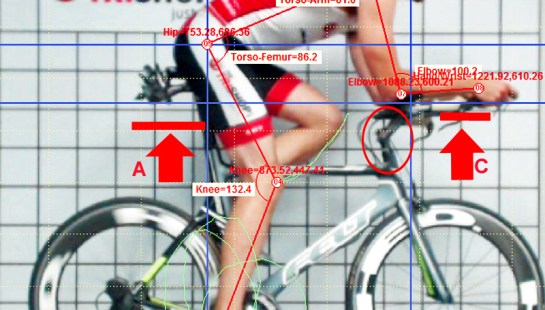
A bike fitter can use empirical, data-driven checks to verify joint angles. They can take specific measurements of frame dimensions and geometry. They can take quantifiable measurements of your body and make mathematical comparisons to determine relevant ratios for bike fit.

A bike fitter cannot do this for aerodynamics. If your bike fitter claims to be able to make you more aerodynamic on your bike they are guessing, and lying.

bikefit120

Air is 784 times less dense than water, and it is nearly impossible to predict the behavior of water swirling around your finger. Guessing how air will swirl around a pedaling rider at speed in different wind conditions is impossible without empirical analysis.

I know- I’ve been that guy. I spent over ten years telling clients I would get them “more aero” by lowering their handlebars and making them “more aggressive” until a wise man who happened to have a PhD in aerodynamics told me to “stop embarrassing yourself” by trying to guess at aerodynamics.

I’ve been privileged to wind tunnel test with two bike brands and one independent engineering laboratory in three different wind tunnels over 25 years, on the bike and in the control room. I’ve learned that no one can guess what small changes will make a rider faster over the entire length of a triathlon bike leg. And remember, the goal is to get faster, not just “more aero”, and while those two things are closely related, they are not entirely the same– especially for new riders with comfort issues.

bikefit70

“Jim wondered about riding 112 miles at Lake Placid like this after his bike fit was over.”

Firstly, no bike fitter without a wind tunnel or computational fluid dynamic analytics can guess at the behavior of the boundary layer of air surrounding your body across the entire performance envelope.

Secondly, even if they could, the constantly changing variables of speed, terrain, wind yaw angle and rider posture would make that snapshot in time a very fleeting case study.

Thirdly, while rider aerodynamic drag is the most significant force to overcome in cycling even at moderate speeds, wind tunnel positioning concepts were developed in testing at very high speeds, usually over 25 MPH. British professional triathlon coach Russell Cox discovered the median bike speed for the Men’s 40-44 age category at Ironman Florida, one of the fastest courses in the U.S., was only 17.5 MPH. At these sub-25 MPH speeds there are more opportunities for your fitter to improve your bike split through things that they can actually test for, as opposed to things they are guessing at for speeds you don’t even ride at.

The narrative “Let’s lower your bars to get you more aggressive…” is a valid way to tell if a bike fitter is regurgitating empty rhetoric from YouTube, a triathlon forum, or a three-day fit clinic.

bikefit80

Faster Bike Shop in Scottsdale, Arizona was the first and is likely the only bike retailer in the U.S. with actual wind tunnel test facilities.

If a fitter tries to critique your aerodynamics challenge them by asking, “Can we measure my drag coefficient before and after any changes?” You’ll likely get the sideways puppy stare or a litany of qualifying excuses. Don’t fall for it. There is only one bike retailer in the United States with a wind tunnel, Faster in Tempe, Arizona. If you aren’t there, then your fitter is guessing.


  1. Are They Trying to make you “Straight”?

There is a sub-segment of bike fitting and positioning that tries to enforce symmetry on the human form. The only symmetrical human is Mona Lisa. The rest of us are crooked.

It’s simple to use lasers and shims to try to make a person “straight”, but it may create further skeletal misalignment since our skeletons are usually not straight and symmetrical, especially as we age and accumulate injuries.

The craft of the experienced fitter is to find a functional balance between moderating asymmetries that could contribute to discomfort, or even an injury, and facilitating them. There is likely a “sweet spot” between facilitation and adaptation that provides the optimal benefit to each unique rider. This sweet spot is different for a new triathlete than a person doing their 10th Ironman.

If a bike fitter’s singular goal is to “get you straight” you should tell them to get bent.


  1. Do They Acknowledge Their Limitations?

Many bike fitters try to- or claim to be able to- do too much.

A retail bike fitter should be able to recommend a new bike model, frame size name and geometry that fits you optimally for the type of cycling you want to do. They can then adjust that bike for an optimal basic position, often using different handlebar stems, aerobars and other size-specific components to achieve the best result. Then, they can use any number of analytical tools to verify the results against commonly known bike fit standards.

That’s all.

Bike fitters can’t make you comfortable or “fix” you. They can’t add additional fitness or make you less overweight. They can’t produce the perfect saddle that feels right to you. You still have to train, lose weight if you are overweight and get acclimated to sitting on a bike seat. Those things don’t happen in a two-hour bike fit.

Unless the bike fitter in your store has a formal University level credential in anatomy, physical therapy, medicine or exercise physiology that should be their boundary, and they should respect their customers by working within their boundaries.

Beware of the bike fitter who tries to do too much without the degree to back it up. If a bike fitter learns a customer is suffering from a sports injury they are correct to refer them to a qualified physical therapist. Some licensed physical therapists now have formal instruction in bike fitting too, and you (or your health insurance) will pay extra for that, but it is worth it.

If your bike shop bike fitter tries to play physical therapist, limp out of there.


  1. How Long Have They Been Doing Bike Fits? 

Ten years ago it was still easy to sell a bike with a quick test ride. Now customers are smart enough to demand a more empirical, data supported process to selecting and adjusting the right bike. As a result there has been an explosion in the number of new “bike fitters” in the last ten years.

Not all of the new bike fitters are good.

Many new bike fitters are adequate and recognize their capabilities- and limitations- but many are also quick-talking hucksters who can sling the lingo and the laser beams to appear credible.

Ask your bike fitter questions about their training, their experience, their own cycling background and their limitations. A fitter who claims to be able to do everything has big shoes to fill.


  1. Are They Willing to Recommend Equipment They Don’t Sell?

It’s a good sign if a bike fitter occasionally “walks” a customer by telling them he has nothing in his store to fit them. That suggests their first motive is to get the customer on the right bike, not just get a bike out the door.

A specialty bike shop will stock a well-planned assortment of bikes that have subtly different fit characteristics. Some work well for larger, heavier riders, some for smaller riders, some for long torso cyclists, others for short torso cyclists.

When Triathlon Hall of Famer and inventor of the triathlon bike, Dan Empfield, invented the “Stack and Reach” table for comparing bike dimensions he created a kind of Rosetta Stone for bike fitters to make meaningful comparisons of different bikes and their dimensions. This leveled the playing field and decoded cryptic bike brand size names that have little to do with actual bike dimensions. Empfield’s accounting of bike dimensions gave bike fitters one of their most valuable tools since the tape measure, and also held fitters accountable for being honest.


  1. Are They Good Listeners? 

A good bike fitter conducts an interview with his customers, listening to their experiences, their goals and what they are thinking very carefully. This leads to more questions from the bike fitter. In fact, a good bike fitter often asks the customer more questions than the customer asks them when selecting a new bike.

The best bike fitters listen carefully to position their clients optimally on a continuum between facilitation and adaptation. Facilitating a client means the fitter exclusively listens to the client and does what they say makes them comfortable. Adapting a client means the fitter applies known principles of bike fitting without input from the rider and says, “This is right, get used to it.” The best bike fitters know how to listen to their clients to find the optimal balance between these extremes.

Some bike fitters try to be know-it-alls or local heroes. They try to mold each client into a specific posture or fit model, and they have little space left in their effusive knowledge of all things bike fit, cycling and triathlon related to learn anything from a lowly client. If you can’t get your bike fitter to listen to you, let them talk to the hand.

Craig Turner, founder of Nytro, one of the first triathlon shops in the world, is also one of the best listeners and bike fitters in the industry.

Craig Turner, founder of Nytro, one of the first triathlon shops in the world, is also one of the best listeners and bike fitters in the industry.

I once listened to Craig Turner, founder of Nytro in Encinitas, California, work with a bike customer. I was surprised by how little Craig said, how much he listened, and how he restated the key points the customer made back to them. It was clear that Turner was a careful and analytical interviewer, asking the right questions and leaving space for complete answers. When he was done with the interview he had the expertise to make learned and supportable recommendations. It was like listening to an expert attorney advise a client.


About The Author:

theauthor


While Tom Demerly can be full of shit he has been fitting bicycles since 1984 and performed well over 5,000 bike fittings including Olympic athletes Sheila Taormina and Olympian, National Champion and Tour de France rider Frankie Andreu. More importantly, Demerly has fit thousands of first time triathletes and only a few of them still have numb crotches.




By Tom Demerly.

Power_Of_Three_Book_Banner

I was in a small gift shop on an island when I first saw one of Erin Hunter’s The Warriors series books. I opened it and read one page.

And my trip began.

warriors 10

Warriors is an opulent, luxurious fantasy novel series featuring fictional cats who are empowered with mythical abilities. Their mystical powers have roots in ancient lore attributed to Native American, African and Asian cats- including Egyptian mythology. The result is a dream-like journey with loveable characters overlaid on a detailed examination of cat zoology and animal behavior science. Plot lines and morals threaded through the series feel like an amalgam of sacred texts, from Buddhist writing to the Bible and many others.

The Warriors series is immensely complex, featuring a dizzying number of cat-characters. On the Wiki page for the book series one reviewer is cited as saying the series is “confusing due to its large number of characters”.

But the incredible dream-like quality of the scenes, characters and the fairy-tale, Aesop’s-like moral themes unfold at a brisk pace that is incredibly readable and engaging.

“The incredible dream-like quality of the scenes, characters and the fairy-tale, Aesop’s-like moral themes unfold at a brisk pace that is incredibly readable and engaging.”

Author Erin Hunter is actually three writers and an editor/plot director; Kate Cary, Cherith Baldry, Tui Sutherland write the The Warriors series with Victoria Holms editing.

authors

“Warriors” writing team includes (Left to right) Victoria Holmes, Kate Cary, Tai Sutherland and Cherith Baldry.

This writing team may have created The Next Big Thing. Before you dismiss this idea, let me propose the following:

According to the A.S.P.C.A. there are 96 million pet cats in the United States. Nearly 37% of American households, more than one-third, have a cat. One celebrity cat, Tara the Hero Cat, earns an estimated “$55,000-$463,000 per year” according to the New York Times. Add in other celebrity cats and the total take for the top earning celebrity cats is well over $10 million- probably much more. Now, consider the “Hobbit” film trilogy grossed over $3 billion for three movies, and no one has a Hobbit for a pet. You get the idea; combine cats with a Star Wars style plot line and some convincing computer generated cat characters with celebrity voices and… The commercial potential for The Warriors series is titanic (pun intended), with licensing possibilities for plush toys of each of the cat characters, lines of every pet accessory attributed to the series and about every other standard movie merchandising theme imaginable. The earnings potential is boggling. Why the big movie studios haven’t grabbed this series already is a mystery.

Business potential aside, The Warriors series is why we read. It is escapist, descriptive, creative and pulls you in. Your imagination wanders the mystical forests in the moonlight with the cats. You learn about real cat behaviors and you see your own cats differently after reading these.

I’m a Tom Clancy, Robert Ludlum, Robert F. Dorr fan- technotrhillers, not flowery fantasy stories. But The Warriors series spans genres and speaks across topics to the animal lover and storyteller in me. This series is a gem waiting for mainstream discovery. I’m looking forward to seeing this series explode in popularity and I’m thrilled I discovered it early.

nine_lives_ceremony_by_climbtothestars-d9ld0tw


By Tom Demerly originally for MILTECHREV.com

BF-5 flight #91, piloted by SQLDR. Jim Schofield, performs STOVL operations aboard the USS WASP DT-II.

An F-35B Joint Strike Fighter of the U.S. Marines takes off from the USS Wasp aircraft carrier without the use of a catapult.

You’ve seen posts on Facebook about the new F-35 Lightening II Joint Strike Fighter suggesting it’s a “failure”, “a waste”, “damaging to the environment” and even that “F-35 basing is a racial injustice: new Americans and people of color are disproportionately harmed.” The public vitriol surrounding the F-35 program eclipses any previous defense program.

It begs the question, is the F-35:

A. A costly boondoggle spun as a super plane by the Pentagon “old boy network”?

B. The next ultra-weapons system that will render nation-users invincible?

C. A combat aircraft at the beginning of a typically difficult development program?

The reality is, of course,  “C”.

Another reality is the F-35 is the first major weapons system to do combat on the battlefield of social media. Social media is a great equalizer among combatants. All you need is a laptop and “friends” to fight a battle with the biggest defense contractors on earth. Whether you are Lockheed or Larry Smith the anti-F-35 activist, every opinion on social media is 800 x 600.
If you add some historical context to the development of military aircraft you see daunting realities. Firstly, the F-35 is actually doing quite well for such an ambitious project. In fact, some of the criticism for what has been described as “delays” may actually be the F-35 program’s primary drawback: too much caution. Partially because the magnifying glass of public opinion has focused so much heat on the F-35 the program has ground slowly ahead with more than the typical degree of caution.

Let’s look at some previous military aircraft development programs and think about how they would fare under “trial by Facebook”.

b17_wing_shot_away

An early model B-17 Flying Fortress breaks up over Germany in WWII. More airmen died in the first versions of the celebrated bomber than any combat aircraft in WWII. Today the B-17 is revered as a great aircraft.

In WWII my father was a draftsmen for Boeing Aircraft in Seattle, Washington at “Plant 2” near the Duwamish River. His first project was drawing a quickly conceived update to the B-17 Flying Fortress: a chin turret with two forward facing .50 caliber guns. The first eight versions of the B-17 lacked adequate guns to defend themselves from a frontal attack. German pilots quickly learned to attack the B-17 from high and head-on, or “Twelve O’clock High”. The results were catastrophic. Early B-17 crews attacking Germany had better odds of dying than surviving before completing their required 25 missions. In fact, more aircrews from the Allied 8th Air Force died over Europe than all of the Marines killed in the Pacific in WWII. Today the B-17 is remembered as a “great aircraft”. How would Facebook pundits have treated the first eight versions of the B-17 with a record like that?

b29_crash_feb_18_1943

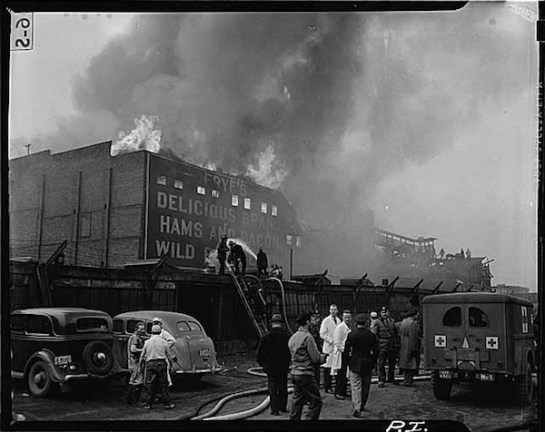
A early model B-29 Superfortress crashed into a meat packing plant in Seattle during its secret testing phase. The program was so classified that firefighters and first responders were initially prohibited from entering the crash scene contributing to mass casualties not getting emergency treatment at the crash site.

My dad was transferred to a top secret project working on a super bomber that would fly too high to shoot down and carry a larger bomb load than the B-17. It was the B-29 Superfortress, a project so secret he wasn’t allowed to tell my mom what he was working on. The B-29 delivered the only nuclear weapons used in combat. It is largely credited with ending the war in the Pacific. But the B-29 was a difficult and dangerous aircraft to operate. It used four Wright R-3350 engines that were prone to overheating, and catching fire. With a full bomb load while straining to get to altitude it was common for the B-29 to have engine fires.

The B-29 killed a lot of U.S. flight crews. The engine problem, combined with navigation and bombing accuracy problems encountered from an undiscovered high altitude wind phenomenon called the “jet stream” forced Maj. General Curtis LeMay to order B-29’s to attack Japan from low altitude, well within range of Japanese anti-aircraft guns. To carry more bombs LeMay told his bomber crews to remove their defensive guns and leave their gunners behind, a request some crews ignored according to the definitive account of B-29 operations, Mission to Tokyo by author Robert F. Dorr. What would people have said about the B-29 program on Facebook?

f-111b_cva-43_approach_july1968

The General Dynamics F-111 was originally intended as a multi-role, do everything aircraft for both the Navy and the Air Force. The Navy dropped it in early development, opting for the Grumman F-14 Tomcat. It ended its largely undistinguished career in service with the Australian Air Force.

More recently, and in an oddly similar program to the F-35 Joint Strike Fighter, in 1961 former Defense Secretary Robert MacNamara asked for a feasibility study on the development of one aircraft that could perform low-level, supersonic penetration bombing missions into the former Soviet Union and also serve as a fleet defense interceptor launching from aircraft carriers for the U.S. Navy. The result was the General Dynamics F-111. The F-111 was never adopted by the navy and served with mixed results in the Air Force. Initial F-111 operations in Vietnam were a catastrophe, with 50% of the aircraft being lost and the Vietnam deployment being halted. The one shining moment for the F-111 came during Operation El Dorado Canyon under the Reagan administration, when F-111’s attacked Libyan airfields in retaliation for Libyan sponsored terrorist attacks on U.S. servicemen. A version of the F-111 never initially envisioned, the EF-111 Raven electronic warfare aircraft, did serve successfully in the early Gulf war but, in general, the entire F-111 program fell well short of its original multi-role, multi-service concept.

These are three examples of aircraft that had major problems eclipsing anything the F-35 faces. But that was a long time ago. We’re not in a major air war with a similarly equipped air force. Technology has come a long way. Engineering tools exist today that were unheard of even in the 1970’s when the current generation of operational combat aircraft were first conceived. And those are some of the reasons the F-35 has been treated unfairly.

10640

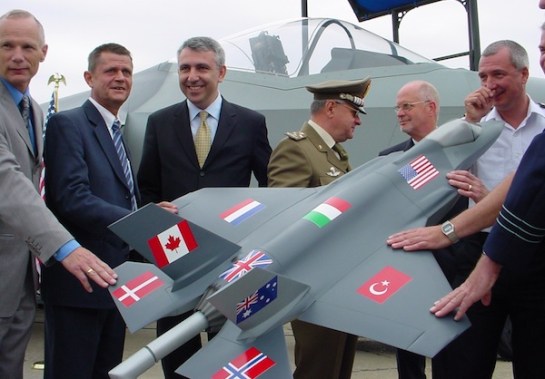
The development and production costs of the F-35 are to be shared between a host of nation-users, but the Eurozone crisis and global recession has placed more economic pressure on the program.

When cost estimates for the F-35 were originally drafted much of the development program included the new generation of virtual prototyping and testing. Computational Fluid Dynamics replaced early prototype flight-testing. Finite Elemental Analysis replaced actual strain gauge developmental analysis. The business model for the F-35 included development in the virtual space spread over international economies of many user-nations. Each of these factors left opportunities for a host of variables to act on the program and drive costs up. Some of those variables, such as the European economic crisis, have become a reality.

Another reality is the need for all combat aircraft to evolve significantly over their life span. The F-16, FA-18, AH-1 Cobra and AH-64 Apache are just a few legacy aircraft flying today that have undergone such sweeping updates they only vaguely resemble their original versions. The F-16 now has conformal fuel pallets, different control surfaces and improved sensors installed. One version of the FA-18 has gotten larger wings, new intakes, improved avionics and become an entirely new aircraft called the EF-18 Growler. And then there is the B-52 bomber, the plane that just won’t die. The B-52’s in operation now are older than their flight crews. They were based on lessons Boeing learned from- you guessed it- the B-17 and B-29 development programs my dad worked on in WWII. And the B-52 is still flying. People post photos of them on Facebook now, talking about how amazing an aircraft it is. Social media wasn’t around for the bumpy development years.

f-35b-vertical-landing_1

U.S. Marine Corps test pilot Lt. Col. Russ Clift performed the first F-35B night-time vertical landing aboard the USS Wasp off the Maryland coast last Tuesday, August 13, 2013. The F-35B replaces the aging AV-8B Harrier for the U.S. Marines and the Royal Navy.

The F-35 wasn’t developed in the middle of a world war, but it is being fielded in one of the most volatile periods in history, when enemies use airliners as attack aircraft and superpowers are fielding a new generation of combat aircraft like the Russian T-50 and the Chinese J-20. While it’s unlikely Al Qaeda, Islamic Jihad, ISIL and their radical splinter organizations will field a new- or any- combat aircraft the ability to command the airspace over insurgent controlled territory has kept their doctrine near the Stone Age and their controlled territory isolated from U.S. shores. It may have also helped prevent another 9/11.

The F-35 won’t bring peace to the world. It isn’t the final answer- no single combat aircraft is. It’s likely not even the best combat aircraft ever. But it is a viable next generation multi-role combat aircraft with a degree of information sharing and mission flexibility that can’t be retrofitted to aging current aircraft systems. It is also designed to fight a war we don’t know everything about yet: the next one. And while uncertainty, at a minimum, swirls around the F-35 on the vaunted spaces of social media the one thing that is certain is, that next war will come.


By Tom Demerly for tomdemerly.com

education

Immigration, the economy, national security, foreign policy, health care: the hot point issues in the 2016 election.

But the single most important issue for Americans isn’t on that list.

This single issue governs the direction of every topic listed above. The success or failure of this single issue, usually low on the list of hotly debated topics, will determine the trajectory of our collective future in every area. It also has the potential to fix nearly every major challenge our nation faces.

It is the single most important issue in society, and one of the most neglected.

It is education.

America has done decades of government by crisis management. From the federal budget to the Affordable Care Act to our diplomatic efforts, our collective doctrine is to moderate problems after they’ve happened. Usually when they are in crisis.

As a result of our collective “fix it after it’s broke” doctrine we waste billions of dollars on missed opportunity, crisis management and bad planning, from the personal level with individual citizens to the national and international level with failed projects, damage control and wasted conflict. We legislate common sense instead of teaching it. We litigate tolerance and acceptance instead of learning it. And we struggle to resolve endless global conflicts in a bizarre replay of history that seems never ending.

We do this because we are collectively less educated. We’re less able to think critically to solve complex problems. Because we know less based on the trends in our test scores, we draw from a smaller and smaller inventory of knowledge and skills to solve problems. More importantly, we fail to learn from mistakes and avoid them in the future. That is an ominous trend. As the world becomes more connected and more populous we become less able to think critically, to reason and make well-conceived decisions. Our decisions become simpler and less forward thinking.

When we do learn, we learn the hard way, and the ominous trajectory of society is that we are becoming less educated, not more.

In 2013 then- Secretary of Education Arne Duncan said, “We have a real state of crisis. This is much bigger than education.”

Duncan was talking about the effects of an “education deficit” emerging between the United States and the rest of the world based on a global comparison of test scores in a battery of tests administered to 166,000 people, ages 16 through 65, in 23 countries in both 2011 and 2012. Results reveal the U.S. is trailing many other countries in test scores and graduation rates. These test results make the U.S. less employable, productive and innovative.

Our collective health is in decline only a few decades after massive reductions in physical education. We needed more exercise in school, teaching better lifelong health habits. Instead we have a band-aid healthcare system that protects big medicine financially and sticks the individual healthcare consumer with the bill, mandated by law and enforced by fines. All the while we get fatter, sicker, eat worse and spend more than we can individually afford on healthcare. Better health and fitness education over the last four decades could have moderated this crisis. Instead we try to fix it after it is broken.

The same paradigms exist in math and science. America has lost ground in test scores in every area. As other countries teach English as a second language requirement, our schools struggle to even teach English. Americans can voice a passionate opinion about Syrian refugees but can’t name that country’s capital or find it on an unlabeled map.

Our next President needs to put education first, above all other agendas. If people are educated in problem solving, recognizing signs of mental health problems, resolving conflict and accepting diversity they may not choose gun violence as a way to resolve conflict. Someone may recognize a person’s mental illness and help them get treatment. If people are better educated they will make better life choices and avoid substance abuse. If people are better educated they will take more responsibility for their health and be less likely to be obese. If people are immersed in sciences we may produce the student who becomes the doctor who cures cancer. But only if we put education first.

Why hasn’t education gotten more attention in the election rhetoric? It may be a self-feeding problem. We’re too dumb to realize how bad it is.

And while the economy, national security, foreign policy and health care are the banner issues in this election, the structural problems with our future only get worse. Based on the Republican and Democratic debates, it doesn’t look to improve any time soon.


By Tom Demerly for tomdemerly.com

5856b34468d5f0158ca04541197e36c1


Triathlon is big business now. With profits to earn and gadgets to sell how do you cut through the marketing haze and decide what really gets you to the finish line?

There are 2,377 books about triathlon on Amazon.com. An online seminar, a Facebook page and- bam, anyone is a triathlon coach. Add triathlon forums, that guy with an M-Dot tattoo dispensing advice and the amount of bullshit heaped on new triathletes is harder to cut through than the swim pack at Lake Placid.

Here are 10 no-bullshit, hardcore, old-skool insights on triathlon training. No quick-starts, no “12 Weeks to Ironman” plans. They aren’t easy, they aren’t pretty, but they produce results. You may not like them, you may disagree with them, but history proves these are solid producers for getting better.

  1. Fire your coach.

You don’t need them and they’re probably not qualified. You can learn everything you need to know about swim stroke, bike handling skills and transitions faster and for free on YouTube. Mostly, you just need to train more. Your first year in the sport should be about building an aerobic base and slowly developing technique. As a wise old-timer once said, “Intervals are the icing on the cake, and you don’t have a cake yet.”

Triathlon coaching in the U.S. is a mostly B.S. affair. Anyone who passed a three-day clinic can call himself or herself a coach. By contrast, in Germany using the title “coach” requires a graduate degree in exercise physiology. While there are outstanding triathlon coaches in the United States there are many more who are not qualified to dispense training advice, especially to new athletes. The difficulty in knowing the difference between the few truly good coaches and the many truly bad ones combined with the basic goals of building an aerobic base while losing weight mean coaching can wait.

Take ownership of your knowledge of the sport. Learn basic exercise physiology. Learn technique. Do the reading. Be a student of the sport, not just a consumer of cookie-cutter coaching plans. And most of all, put in more time.

  1. Actually Learn How to Ride Your Bike.

newtri20

Get on the road. Yes, a car might hit you. You might fall. No, you will fall. There are two kinds of riders: the kind who have crashed and the kind who will. Sport has risk. The difference between a competitor and spectator is accepting- and managing- that risk, not just avoiding it.

Wear a current helmet adjusted properly. Find out the safest routes to ride from local road cyclists. Get out of the protected parks and onto roads that are appropriate for cycling. Ride in the real world. It is dangerous. But it is important to develop good bike handling skills and the ability to not panic when you are in a real-world riding environment. Your “A” race won’t be held on a spin bike at the health club. And, you may be interested to know the facts show that road cycling is safer now than in previous years.

  1. Take Responsibility for Basic Bike Maintenance.

newtri70

Can you fix a flat tire? Remove and replace your wheels? Put a bike in a flight case? Do you know your bike fit measurements? If not, learn those skills from YouTube. Don’t be the person who can’t change his or her own flat tire, didn’t carry a spare and has no clue how to remove and replace a rear wheel. Take responsibility. Be competent. Learn today. If you can’t name the components on your bike, start there.

  1. Your Bike Doesn’t Fit. 

newtri50

It doesn’t. I’ve been fitting triathletes on their bikes since before triathlon bikes were invented in 1987. I see good triathlon bike positions about once a month. I do about four bike fits a day. Very few triathletes I see are on a bike that is the right frame size for them, and even fewer are in the right position to remain comfortable and be efficient.

If you hear a bike fitter say, “We’re going make your position lower and more aggressive and get you more aero” don’t walk, run out of there. No one can guess at aerodynamics. No one can guess at what will make you “more aero”.

If you’ve heard an athlete say, “Triathlon bikes are less comfortable than road bikes” what they are really saying is; “My triathlon bike doesn’t fit me and I don’t know what I’m talking about.”

Spending money on a bike that fits and is comfortable is one way you actually can buy speed, and it doesn’t have to be a $10K superbike. It just has to fit, and your bike likely doesn’t.

  1. Get in the F@#king Open Water. NOW!

newtri40

Scared of the open water? That’s fine, there’s still bowling and ballroom dancing.

Triathlon was born in the ocean, by people who were competent and comfortable in the ocean. Lifeguards, swimmers, surfers, watermen, Navy SEALs. Yup, there are sharks. They won’t hurt you. Well, probably not. There are waves. You’ll get seasick. The salt will burn your eyes. Deal with it. This is triathlon. We swim. In the ocean. With the big fish.

newtri10

If you are doing all of your swimming in a pool and expect to be immediately comfortable in an open water mass swim start- that is not a reasonable expectation. You will panic and be a danger to yourself and athletes around you. You will get kicked and shoved. When you freak out (and you will) it is your fault. You failed to prepare adequately. Get your swim anxiety under control before race day. Way before. Take responsibility for being competent in the unforgiving maritime environment. Your race will depend on it, and someday your life may too.

  1. Swim More. Way More.

newtri30

Good swimmers swim a lot. Three days a week might get you through the swim leg. It might. It also might not. There is an axiom in triathlon: get tired running, and you walk, get tired cycling, and you coast, get tired swimming, and you drown. The reason the swim is first is to improve your chances of living through it.

Talk to any good open water swimmer and their yardage and time is incredible. Five days a week. Six days a week. Two times a day. Swimming is no-impact (except on race day) so you can put in long training sessions regularly and not suffer overuse injuries. On race day you will not only be a safe, competent swimmer you may actually have a decent swim split. This one is easy: Swim more.

  1. Ditch the Superfluous Gadgets.

newtri60

If it takes you more time to learn how to use your GPS, power meter, training log website, “smart” indoor trainer, smart phone app, body fat calculating scale, swim gadgets and all the other crap available to triathletes, than you spend in a workout- get rid of them. And just train. I used a “smart” indoor bike trainer for a season but spent so much time setting it up, making sure it was connected, trying to sync all the apps and then trying to find the “data”, much of which wasn’t really data at all but largely an estimate of power output the trainer made, that I eventually stopped using it. Using a “smart” trainer made me so dumb I didn’t realize I was wasting a total of 2 hours a week just trying to get it set up and working right. I could have used that extra time for training. And believe me, I needed the training more than I needed the technology. When your technology takes time from your training, get rid of it. You need the training. You don’t need the technology. 

I’ve been in the triathlon industry since it started in the 1980’s. I am one of the guys responsible for selling this stuff to you. Some of it is useful, most of it is a time suck. Some of it makes training more convenient and easier. I only use one gadget: A Garmin Fenix wrist top computer since it is easy to use and does what I need. That’s it. Only one. It tells me how far, how fast, how hard. That’s all I need.

Think about this: how much data do you really need? The sport is pretty basic: Speed, time, distance. Most fitness apps are so overloaded with features that cutting to the chase of how fast and how far takes scrolling, clicking and sifting through reams of superfluous “data” that is really just bullshit. And don’t get me started on “sharing” your workouts on social media. That is a bizarre phenomenon all to itself. The reality is, if you have to flaunt your training in some disjointed attempt to “stay motivated” then you are doing it in a vein attempt at impressing someone else, not for yourself. The motive needs to be intrinsic. It needs to be internal.

Remember, at the finish line only one metric counts: how fast you got there.

  1. Practice Transitions.

newtri80

You say you are just there to finish, but I have been doing this long enough to know that you are lying. If all you wanted to do was go the distance you wouldn’t have pinned on a number or paid an entry fee. It’s a race. Race it.

The best way to shave a few seconds (or minutes) quickly is to practice transitions at home. Set up a transition area in your driveway and let your neighbors laugh at you. You’ll get the last laugh on race day when you win your age category by the 15 seconds you just learned how to save in transition. That is free speed.

  1. Lose Weight.

You’re too fat. Don’t take offense, I am too. The fastest way to get faster is to be lighter. Nearly all of us could drop 10-30 pounds. Finishing a triathlon when you’re overweight is an impressive accomplishment, but it doesn’t give you a pass on being overweight. It is less healthy, harder on your body and your equipment and even more dangerous.

Take responsibility for your fitness. This isn’t about body shaming. It is about health, safety and performance.

Losing weight is basic: burn more calories than you take in every day. That’s it. Do that and you’ll lose weight. It is inherently simple. That doesn’t make it easy. It’s one more reason not everyone does this sport. If it were easy, everyone would.

  1. Just Train More.

newtri90

More is more. There are no shortcuts. Time and distance are ruthless, indiscriminate arbiters. On race day you learn that you either put in enough time or you didn’t. Almost everyone realizes they didn’t. There is no faking it.

We live in an iThing, instant gratification, One-Click world where almost everything we aspire to can be had quickly and easily. Not here, not in this sport. If you want to have a good race you have to earn it in the months and years before race day. There are no shortcuts. You either have the miles in your legs or you don’t.

Before race day, make sure you do. There is no bullshitting the miles or the clock into believing you do.

SaveSave

SaveSave

SaveSave

SaveSaveSaveSave

By Tom Demerly for tomdemerly.com

1b72b4b0139d8345fe111d54173579d6

Hope or fear? Which do we choose?

More than any recent decade Americans are strongly divided between two themes: Hope for a better tomorrow or fear of repeating an ominous history.

Both hope and fear are presiding doctrines that come with peril. The human condition has never been problem free.

Which narrative prevails? Why do both exist?

Our country is founded on hope. Hope for religious freedom, hope for greater opportunity. Hope for a new tomorrow that, while fraught with peril, so greatly exceeds a prior condition it is worth any risk. Even risk of life.

Read the lore of our founding fathers, this is their doctrine: risk for the hope of a better tomorrow. Some starved, some were killed in wars. Some lived to see the birth of a nation so vast that in only two short centuries has lead the world to countless new things. Our country passed ancient ones fraught with conflict, suffering and oppression for thousands of years, and we did it in less than 200 years. In nearly every case, when a person is downtrodden and wants to leave their homeland for the Promised Land, the United States is their first choice. Because hope is our legacy, our doctrine, our national narrative. Not fear.

The advancement of mankind and of our country has accelerated at a dizzying rate during the last centuries. At first our national throttle was at idle for a few decades, moved into “drive” for a few more, slammed into “reverse” around 1867, nearly ran out of gas in 1929, plowed forward through terrible storms at a grinding speed until 1945 then drove down the on-ramp of a new freeway in the 1950’s and accelerated to a speed that went supersonic.

Like any momentous journey through time there have been tragedies and triumphs; wars, depressions, recessions, scandals and controversies. But these have only punctuated a national narrative of momentous success and dizzying progress.

What is the next chapter in this great national novel, the Story of America? Is it that we circle the wagons, build walls and shut out a world that accelerates at a pace approaching and in some countries exceeding our own national velocity? Or, do we espouse a risky and promising doctrine of world community? inclusion rather than exclusion, new ideas and new challenges rather than a serialized, romanticized yesterday often embellished by historical lore and suspiciously untarnished by the historical reality that any time our national tempo toward “better” has diminished, calamity has followed.

I still choose hope.

This comes from a man who has had everything, has lost everything, and grinds inexorably back toward that great American Dream; not just material wealth, but precious things that enrich our lives like free ideas, a sense of community, the guarantee of inclusion and the promise of growth so vast I cannot envision it. And mostly that ephemeral and fleeting feeling of safety.

These things are possible. We have had them. And while we have suffered tragedies the trajectory and acceleration of our national destiny tracks more favorably when propelled by the thrust of hope than the drag of fear.

So, I still choose hope.

By Tom Demerly for tomdemerly.com

GUNS-articleLarge

A New York Post photo shows activity at a local gun show.

Smith & Wesson, up 142%, Ruger Firearms, up 69%, Vista Outdoor (parent to Federal Ammunition, Savage Firearms, Bushnell optics and Camelbak) up 13%.

There is an axiom that Americans vote with their dollars, and the votes are in: Americans love their guns. They are buying more guns now than at any time in history. Why?

Despite fervent debate over gun law reform and national outrage about mass shootings the American reverence for firearms is not just continuing, it is growing. Here are some reasons why:

1. Firearms Symbolize our Defiance and Liberty.

From the pilgrims to the American Revolution, world wars, defiance of banks in the depression, and the emergence of equal rights the appearance of guns in our social and political landscape sends a clear message; Americans are willing to kill and die for liberty and equality.

malcolm-x-carbine-ebony

A 1964 photo of American civil rights activist Malcom X with a .30 calibre carbine and two 30-round magazines. Some Americans believe private firearms ownership is the last resort deterrent to government oppression and tyranny.

Our decisions about gun laws also say we’ll accept some “collateral damage” in the continuance of freedom. The unflattering reality of U.S. culture is that if we are willing to send our daughters and sons to war in the defense of freedom, we are also willing to let our sons and daughters die in classroom shootings in that same preservation. That’s an ugly reality, but America’s behavior confirms it as reality.

For some Americans, gun ownership is a “last resort” to maintain a voice in their own destiny, even if that voice is heard over gunsmoke and spilled blood. Exactly the same ethos exists in the Arab Spring. You’ve likely heard the colloquialism, “God created man, but Samuel Colt and Mikhail Kalashnikov made him equal.”

The rising volume of gun ownership in America could be an ominous portend- not about guns, but about our culture. Americans are hedging against some frightening outcome, real or imagined. It’s a sad commentary on our social condition if we feel we must resort to self-armament rather than democracy to guide our future.

James Hagerman poses with a .12 gauge shotgun in his Fort Collins home on Wednesday, September 26, 2012. AAron Ontiveroz, The Denver Post

Sporting shooter James Hagerman poses with a .12 gauge shotgun in his Fort Collins home. Aaron Ontiveroz photo via The Denver Post

A significant motive for gun ownership is sporting, recreational or some other discretionary motive. The increase in gun sales is like buying anything before it may become difficult to obtain, like coins or stamps. This is an honorable and reasonable motive.

While our reverence for guns symbolize our attachment to freedom and liberty they also acknowledge our inability to move forward from ways of thinking we formed when gunpowder was invented in the 9th century.

In a perfect world we would own guns peacefully, target shoot, hunt and compete without gun crime. Not by rule of law, but by collective moral conscience. Despite recent sensational mass shootings most gun crime statistics do suggest a downward trend in gun crime. That is better news for gun owners- and our society.

2. Shooting is a Rite of Passage.

gun-ownership-decline-us

Learning to shoot is a rite of passage into adulthood for some. One of the first, and most solemn, responsibilities bestowed on young men and women. When I was 11 my Uncle Norb, Indiana Pistol Shot Champion, taught me the three rules of firearms safety. He made me practice with an unloaded rifle. The next day he handed me my first live bullets. The implication was clear, “You are old enough and responsible enough to use a gun safely.” It was a solemn and respectful passage to adult responsibility.

Later, in the U.S. Army, my shooting heritage helped me learn combat marksmanship quickly and I excelled at it. It was another rite of passage to qualify with various firearms, small and large. As each successively advanced qualification was earned it became a greater and greater responsibility, not just to myself, but also as a soldier sworn to protect the U.S. Constitution.

3. We Value Personal Liberty and Responsibility Above All Other Values.

Personal responsibility is a part of out National DNA, and the reason for the NRA. It is foundational to our country. Individual gun ownership is about more than shooting or owning guns to Americans. It is a last bastion of personal responsibility; a “line in the sand” between deciding our own destiny or having it administered by elected officials that some people believe are increasingly disconnected from their constituency.

4. It’s Human Nature to Place Significance on the Forbidden.

Some people have no real need for a gun, but are caught up in the sensationalism that surrounds gun ownership now. They go to a gun shop and buy a gun, perhaps not truly understanding the significance of firearms ownership. Hopefully this group will practice good firearms safety, get training to safely use their firearm and remain current in that training.

5. Before It Was a Political Controversy, Gun Ownership Was A Pastoral Affair.

Our image, real or fabricated, of the American gun owner has shifted from sportsman, hunter and target shooter to right-leaning curmudgeon and self-appointed vigilante. Like most arguments the reality spans the entire spectrum between those extremes- with mostly middle ground.

Guns used to be mostly sporting equipment. Today they are viewed increasingly as weapons. While they are both, this shift in perspective is due to worldwide conflict and crime, and also a propensity of mainstream media to report on war and crime.

Millions of older Americans became familiar with guns and shooting during the World Wars. Having developed proficiency and comfort with firearms in a military context, the transition to a sporting context in civilian life was part of post-WWII America.

LAFS-Profile-Julie_Golob

U.S. Army veteran, top competitive shooter, hunter and mother Julie Golob has been a voice of reason in the gun debate, but a voice that has received little attention in sensational mainstream media. Photo: Smith & Wesson.

Today the media does not report on Olympic shooting sports, safe hunting classes and stories about responsible gun owners. A more accurate look at the American gun owner is Smith & Wesson athlete Julie Golob. Golob is the reference American gun owner. She is a veteran, competitive shooter, a sportswoman, hunter and a mother and wife. Golob is the model for the American shooting sportsperson. She is vocal, responsible, educated and eloquent. But it is an uphill battle for a person like Golob. Her moderate perspective takes on an increasingly reactionary anti-gun lobby, the majority of whom have no idea what responsible gun ownership means or the role it plays in American culture. Golob’s primary mouthpiece has been social media like Facebook. Her message is successful and effective on that channel but seldom transitions to mass television news media, mostly because a responsible person teaching safe shooting isn’t good headline fodder.

It isn’t guns that have changed as much as it is society. Our society may be less responsible and is more communicative. Society feels more reactive and less contemplative. The collective voice seems larger while the independent will seems smaller.

6. Most of Our Society is Ignorant About Gun Ownership.

We are desensitized to violence through media. Violence enacted by “heroes” is a quick, profitable plotline for popular media from James Bond to Tom Clancy. Most Americans experience gun use in romanticized Hollywood film clips or gaming. They are detached from the responsibility of firearms ownership and the true role of guns in society. Popular media seldom depicts responsible civilian gun use partially because it is no more sensational than using power tools.

The truth about gun ownership in the United States is obscured by the circular, unwinnable arguments emanating from either extreme. There is a middle ground in the firearms debate, and that is likely where the majority of Americans reside, even if they aren’t vocal about it in social media. It’s likely this middle ground is what will drive our country’s firearms heritage forward.

SaveSave

By Tom Demerly for tomdemerly.com

151207093511-06-obama-sotu-1206-exlarge-169

The President made several substantive statements during his address to the nation on Sunday, December 6, 2015. In the diplomatic subtlety that is a necessity from a U.S. President he signaled five key shifts in U.S. policy and additional changes in the perspective of his administration. Here is an analysis of the President’s remarks:

  1. The U.S. President told us the shooting in California was “An act of terrorism, designed to kill innocent people”.

Key Shift #1. For two days after the shooting the media and government was reluctant to label this attack as “terrorism”. That word carries with it gravity beyond terms like “mass shooting”. It specifies a coordinated, planned attack by a group, not an individual, with the goal of undermining the way of life in the United States.

This acknowledgement grants clemency to make future policy decisions congruent with a new goal: preventing terrorism in the United States. It also signifies a different political environment. When a U.S. President acknowledges an “Act of terror” inside the U.S. the thematic and actual rule set for every U.S. military, intelligence and law enforcement agency changes. We saw that change before our eyes last night, albeit in the subtle words of a President practiced in measured language. But as of today, it is no longer business as usual.

  1. In the very next paragraph of his address President Obama said, “Our country has been at war with terrorists since Al Qaeda killed nearly 3,000 Americans on 9/11.”

Key Shift #2. That remark further recalibrates our policy decisions going forward: We are at wartime footing now. Previous remarks have used words like “conflict” or the word “war” in a more colloquial context. This was a very George W. Bush-like declaration. President Obama said, substantively, that the United States is at war. That acknowledges the nature of the attack and grants a change in tenor toward our response, and our future responses to similar incidents.

  1. “…We will continue to provide training and equipment to tens of thousands of Iraqi and Syrian forces fighting ISIL on the ground so that we take away their safe havens. In both countries, we’re deploying Special Operations Forces who can accelerate that offensive.” 

Key Shift #3. The President announced we have special operations forces deployed on the ground in Syria. Through the masterful use of a plural pronoun for Iraq and Syria referencing this first sentence, the President told us there are U.S. Special Operations forces on the ground in Syria. This may be the first executive acknowledgement of U.S. intelligence and military personnel deployed on the ground inside Syria. He also said, by masterful omission, they are there in a combat role by using the words, “…can accelerate that offensive.”

Specialoperationsinsyria

The President acknowledged there are U.S. Special Operations troops inside Syria.

In Washington-speak there is a difference between deploying small special operations direct-action and intelligence gathering personnel and using larger military assets from the U.S. Quick Reaction forces including Army Rangers, U.S. Marines, Army Airborne and light infantry units.

The conduct of a sophisticated and subtle special operations/intelligence war compared to the deployment of more conventional forces is the difference between treating a cancer with sophisticated chemotherapy that subtly targets key cells, or treating it with an amputation. The President told us we are doing the former.

  1. The President told us, Congress should act to make sure no one on a no-fly list is able to buy a gun.” 

Key Shift #4. This suggests a recalibration for the President’s argument for reviewing gun laws when he asked for changes in weapons buying for people on an existing no-fly list. It isn’t easy to get on a no-fly list, and this step resonates with common sense in a time of war. It is also a minor concession from his more sweeping rhetoric for gun law reform. Polarized conservatives will likely still reject this proposed change in firearms buying law, but it does suggest a concession, however minor, in the President’s relentless admonitions for new gun legislation.

  1. The President brought the inertia of unity to his argument, acknowledging that “…65 countries that have joined an American-led coalition.”

This is an “all against one” war against ISIL. This acknowledgement of the balance of power and the cooperation of the international community is significant.

  1. The President said, “…We should put in place stronger screening for those who come to America without a visa so that we can take a hard look at whether they’ve traveled to warzones. And we’re working with members of both parties in Congress to do exactly that.” 

Key Shift #5. This administration has come under criticism for not being tough enough on immigration. This statement signals a shift in that mindset.

immigrants

  1. The President’s most important thesis statement may have been, “We cannot turn against one another by letting this fight be defined as a war between America and Islam.” 

America has become a culture that mistakenly seeks one solution to one problem. Any experienced analyst will tell you that is not possible, especially in a complex conflict. This is an asymmetrical war, not a conventional war. There is no front line, the enemy doesn’t wear uniforms and the battlefields are not the vast oceans, high skies and sweeping deserts on some faraway continent.

The battlefields are our churches, schools, festivals, arenas, shopping centers, airliners and anywhere a vulnerable crowd gathers that can be exploited through violent terrorism and instant media.

DearbornWEB

  1. If we’re to succeed in defeating terrorism we must enlist Muslim communities as some of our strongest allies, rather than push them away through suspicion and hate.”

 This continued agenda of inclusion and mutual problem solving is the most effective doctrine in undermining ISIL’s “us against them” rhetoric. A key strategy to any insurgency is to divide the larger opponent into polarized factions that will fight against themselves. It is the manifestation of the ancient Arabic saying, “The enemy of my enemy, is my friend” and it is exactly the doctrine ISIL is employing in Syria. Unity in the United States makes us impervious to that doctrine.

  1. “…It is the responsibility of all Americans — of every faith — to reject discrimination.” 

More than just a call to reject discrimination, this is a call for all Americans to think more deeply and learn more about this conflict. Most Americans couldn’t find Syria on a map, or name its capital. They don’t understand the conflict. Rather than applying the template of old belief sets to new conflicts, Americans must seek first to understand this conflict before trying to apply old rules to fighting ISIL. This is a different war. There will be no carpet-bombing, no sweeping armored assaults across vast deserts and no squaring-off of infantry divisions. ISIL has no sophisticated air force (yet), no large navy and does not field massive armored divisions. They are a cancer, not a compound fracture.

By Tom Demerly for tomdemerly.com

14206272

People are talking about carrying guns, gun laws and mass shootings. I was in a Long Range Surveillance Unit in the U.S. military and I grew up with guns in my family. But I don’t carry a gun. Here’s why:

  1. I Don’t Want To Live In a Community Self-Governed by Threat of Force.

I’ve traveled all over the world. Been to conflict zones on three continents. I have seen first hand what it is to live in a community governed by threat of force. That is not how I want to live. Our society and culture develops congruent with our vision. If our vision is an armed society, that will be our reality. If our vision is a society less reliant on arms to solve and prevent problems, our reality will manifest that way. That is how I want to live. So I do.

  1. Carrying a Gun is Inconvenient. 

When I did carry a gun it was a significant responsibility, and it was inconvenient. The heavy pistol concealed on my belt caused my pants to fall down when I went to the bathroom. The handgun dug into my back when I sat in a car. I couldn’t draw it in a hurry from a concealed position in a car anyway. When I got home at night I had to secure the weapon in my house. It was a lot of extra work and responsibility. I don’t want that.

  1. I Probably Couldn’t Hit Anything Anyway.

I haven’t pulled a trigger in over a year. I am not current or proficient in combat shooting. And, with the small pistols commonly carried as a concealed firearm, I doubt I could hit anything beyond 10 yards accurately and dependably anyway. For me to carry a gun and then employ it effectively and safely in a civilian setting I would need extensive re-training and then ongoing proficiency training. In the military we had to qualify with our weapons on a regular basis. I haven’t done that in a long time. Despite my military and civilian experience, I’m not qualified.

  1. I Don’t Want The Responsibility of Deciding Whether or Not to Take a Life.

If I carry a gun to defend others, and myself but I make a bad decision and accidentally shoot the wrong person, I would regret that- and cannot undo it. Carrying a gun is making the decision that you are willing, and ready, to kill. I am not- at least not at a moments notice in a civilian setting.

Many people don’t realize that the responsibility of shooting another person, even when justified, exposes you to significant civil liability. If you shoot a criminal and your actions are judged to be legally justified, you won’t do jail time. However, you may be financially responsible for some loss the criminal you shot may suffer. These losses can include medical bills, disfigurement and compensation to a surviving family. You may stay out of jail for a justified self-defense shooting, but it could cost you hundreds of thousands of dollars in a civil suit in addition to the cost of mounting a costly defense.

  1. It Is Unsettling to People, Especially Some of My Friends.

I have friends on both sides of the firearms debate. Some carry firearms, some are opposed to even owning guns. I respect both perspectives. I also consider myself an animal rights advocate, but I don’t brandish my animal empathy in front of someone eating a steak. Ultimately, we all have to get along. I am a shooting enthusiast, I love to shoot, and I own guns. But I do it respectfully. I know carrying a gun, openly or concealed, makes some people uncomfortable. I don’t want to do that.

  1. It’s unlikely I’ll Ever Really Need It. 

I’ve climbed mountains, fallen in crevices, jumped out of airplanes, visited all seven continents, swam with sharks. I’ve never been in a civilian situation where I needed deadly force. The odds are, I never will. I have had to take medications to save my life when I had a heart defect. I still have that heart defect, but I don’t carry the medications; because I likely will never need them again and it is inconvenient. I view having to use a gun to save my life as a very remote possibility. I don’t carry a fire extinguisher (although my house is full of them), a CPR mask or a personal flotation device with me (I live near water). Like a gun, it is statistically unlikely I will need any of those things on a daily basis. So I don’t bother with it.


By Tom Demerly for tomdemerly.com

Black-Friday-1

The busiest days of the retail season are here. Statistics are already emerging about how America is shopping during the Black Friday and Cyber Monday season. I’ve been a retailer across several categories for over 30 years in both brick n’ mortar and e-commerce, here are the trends I’m seeing this year:

There Were Many Poorly Executed Sales and Promotions.

Websites were poorly designed with too many exclusions and “moving parts”. Black Friday/Cyber Monday is not about shopping, it is about buying. Those are different things. The easier it is to buy (not shop) the more buying takes place.

The best Black Friday/Cyber Monday promotions I saw were stand-alone sales. Some had separate websites designed months ago. The offers were straightforward and, because they were segregated from other shopping, there were no restrictions or exclusions. If you wanted the item and the discount was adequate, you bought.

Online stores with convoluted shopping/discount codes were less appealing. Coupon codes that were added in the shopping cart/checkout page of online stores resulted in the highest percentage of abandoned carts ever. Product page markdowns with clear “Was/Is” pricing drove faster conversions. When customers see the deal up front they are more likely to convert to buyers.

Cheating the System.

Shoppers looked for traditionally non-discounted brands in a discount setting. While this took work, there were “accidental” deals. Coupon codes that weren’t supposed to work on certain brands, did work. Social media was a hotbed of activity for communicating loopholes in discounts restrictions. If you did your due diligence, you could beat the system, but this was only for the most determined and resourceful shoppers. Based on the statistics there was a lot of Internet traffic, a lot of activity in carts, but a decrease in actual sales compared to traffic. There were more abandoned shopping carts this year than any time in history. That means e-tailers failed to convert.

The Best Brands Made a Clear Statement.

Top brands, both in niche markets and in broad consumer goods, removed themselves from the mayhem by offering small, simple discounts or simply not participating.

The biggest was outdoor retailer REI, who actually built an ad campaign around being closed on Black Friday called “Opt Outside”. Whether this promotion added to their bottom line is unknown, but it did increase their brand awareness and sharpened there brand identity. Because the REI campaign was classic contrarian marketing (“zig” when the others “zag”) it resonated well in the new social media landscape. One media outlet, GeekWire.com, reported that REI had a “26 percent increase” in online sales, attributing this reported increase in large part to the closed on Black Friday promotion.

Screen-Shot-2015-11-11-at-2.21.30-PM

“In a year over year comparison this year and last year, the retailers who closed their stores performed better than their leading competitors,” said Pascal Cohen, digital insights manager for SimilarWeb in an email statement. “In addition, day over day they also performed better for visits.” (from GeekWire.com)

There is Emerging Cynicism About Black Friday.

After the recession and recovery peoples’ shopping behavior has changed. Motives for buying include need and value, not want and discounts. People are buying when they need something (as opposed to when it is marked down) and they are buying by value as opposed to price.

Time Magazine wrote “The epic Thanksgiving-Black Friday-Cyber Monday shop-a-thon is over” in a report published hours ago. Time cited that Amazon.com’s sales were up significantly (about 6%) from last year, likely aided by their straightforward checkout system and price displays- but not deep discounts. There was also a huge increase in shopping from mobile devices. In a strong economy people are motivated by convenience, not savings. 

This creates opportunity for small, lean retailers with unique, high quality goods. It is particularly good news for retailers that are also their own brand, a new and emerging trend that helps retailers maintain profit margins, control prices and offers unique appeal to consumers.