Archive

Commentary.

By Tom Demerly.

tom52

I turn 52 today. I worried about that. Getting old. I decided to stop worrying about it. Instead I decided to worry about not living. I decided to stop looking into the rear view mirror of life and saying, “I remember when I…” instead of saying, “Right now I am…”

I was most worried about not doing things anymore. That scared me about aging. About being too old. Then I decided to stop worrying and just keep doing things. It really is that simple.

There is a physical element to aging. I’ve had three knee surgeries, a broken back, too many broken left arms to remember, a broken right arm and hand, eye surgery; heart surgery, a stroke and I have a cardiac implant. Those things affect me a little, and they are a badge of experience; a life well lived. An active life. So I work around them. And the more I do the less of an issue they are. They are not a reason to stare in the rear view mirror looking at what is behind me. They are a reason to keep moving, keep doing, keep living. Because there is no denying some day something will catch up to me that will have a limiting factor on living. Until then, it’s a race to get as much stuff done as I can. There are people who, at 52, are so much less capable than I am. Actually, there are people at 23 who are.

An embarrassing element of aging is beginning to understand how stupid I was when I was younger. In my thirties I knew everything. It was amazing how smart and successful I was. Good looking too. I was wrong of course, but I thought I was quite impressive at the time. Now I know better. Some of the errors of judgment I made still sting pretty badly. The only thing I can do about those errors is own them and not make them again. Some people say they have no regrets. They must not have taken many chances. I have plenty of regrets. I’ve also taken a lot of chances. That I don’t regret. I still have time to take more. I guess I don’t regret that I have regrets. Is that possible?

The good news about being older is we may be truly smarter. Most of us. I hope. The greatest fear I live with is not learning something from my mistakes. The fear of repeating them. As a result I remind myself of them often. Another risk is being fixated on what I did wrong. Not having the confidence to take on more risk, and do it wisely tempered against what I’ve learned from experience. I suppose that’s called “good judgment”.

One of the lessons I’ve learned is that, like the lyric in the Pearl Jam song, “…that what you fear the most will meet you half way…” failure has a way of finding you if you live your life to avoid it. In the cruelest irony if you navigate life to a warm, comfortable death bed with no regrets, no mistakes then there is a tendency to realize, in your final moments, that you could have done more. That is the cruelest regret. I don’t have that one.

By Tom Demerly.

81b63d97a3731980aa9fd7e0f4f513ff

Contrary to popular belief, rich people don’t cause other people to be poor. That’s a feeble excuse for our national condition.

There is a sentiment that the distribution of wealth in the United States, as inequitable as it is, comes from the wealthy “keeping the little man down”.  To horde disproportionate amounts of wealth- taking it from the backs of Walmart workers.

That’s wrong.  We’re not victims, we’re Americans. “The Man” isn’t keeping us down. That’s just an excuse. It’s us who let us down, and I am a perfect example.

I started and owned a successful business for over 16 years. Then lost everything. I lost my savings, my house, my car, my belongings, my income, my employees, my business, even my health… everything. There were circumstances that contributed to my loss. But ultimately I am the one responsible. Part of the proof is that two friends of mine in the same area and the same industry survived the recession. They survived because they made better decisions than me. They are better businessmen than me.

I am a reason why America failed during this last decade. There are a lot of “me” out there.

There is a reason to own this. Until we own the recession, the mortgage crisis, the banking collapse- unless we own these disasters, on an individual basis, we cannot correct them. We won’t truly recover.

The first step to correcting any problem is owning it. Taking responsibility for it. We need to take a painful and specific look at where we made bad decisions individually that led to our financial hardship. Once we understand how we got here, on an individual basis, we can get out, on an individual basis. America is built on the backs of individuals, and it fell on the backs of individuals who let it down. Guys like me.

Dearborn, Michigan, 2009 on Michigan Ave.

Abandoned businesses, downtown Dearborn, Michigan in 2009 on Michigan Ave.

What did I do wrong? Too much credit, not enough saving. Poor planning. Relying on the fact that money was easy to make and would always be easy to make. Becoming complacent, assuming business would always be good. Trusting the wrong institutions and people. Not saving enough for a rainy day. Beginning to think that earning a living was easy and success was common. Ignoring the basics. Never planning for a downturn in business. Those are some of the general mistakes I made. When you apply those mistakes to a huge company like General Motors before their bankruptcy, the banks before their collapse and the real estate market you see how these behaviors rippled from the individual through our entire culture. It was a house of cards. When the wind finally blew it didn’t need to blow very hard for it to topple.

So what now?

First, we need to own the problem on an individual basis. Look at how we failed. Individually, collectively. Then, with that knowledge, return to the basics of saving and building, working and taking risk, thinking and innovating. Our economic system, as chaotic as it seems, rewards risk and hard work with opulent success and penalizes failure with ruthless disregard and gut-wrenching impunity. It also rewards us with a second chance. It isn’t easy, in fact it is extremely difficult. My life these past few years has been more difficult than I care to share. It’s humiliating. Our system does work though. It provides a level of opportunity, however abrasive and difficult to achieve, that is nearly unmatched in the world. This is the greatest country, the land of opportunity, but it is also a ruthless arbiter.

It demands we own our past before we can earn our future. But our system also forgives.

In my case that meant a lot of tough years. Now I am certain I’ll never make these mistakes again. I’m thankful for a country that allows me to start again with what I’ve learned, no matter how difficult it is. That is the American way.

By Tom Demerly.

Slide07

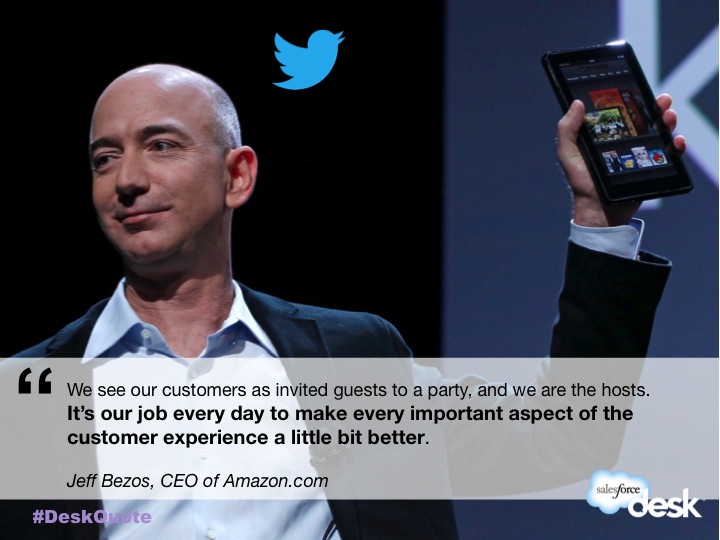
Amazon.com has lead the online customer service race with their patented “One Click” buying system for web purchases. It is fast, convenient and respectful.

The single largest retail mistake is failing to make the customer experience the top priority. Every operational decision should emanate from customer service and convenience.

Modern retailers have fallen into four traps of subordinating customer service:

  1. The sales staff is very poor.
  2. The checkout process is too long.
  3. They offer repeated, hollow apologies.
  4. They try to collect too much information without a reward.

First: Retail is at the bottom of the job ladder in all but a handful of niche markets. The pay is bad, the hours are long and the work is not inspiring.  If retailers spent more time training staff personally, not through an automated curriculum, staff quality would improve and a basic human need for the employee would be fulfilled; the need for interaction as a valued person. The most demoralizing part of being an employee is feeling like a poorly maintained cog in a machine. Everything from automated job applications to slide show training sends a clear message to employees; they’re a commodity. Personal and recurrent customer service training communicates and maintains not only the standards of customer service but also the nuances like tone, posture and other forms of subtle conduct. Retailers need to invest time in personally mentoring their sales staff. Then sales staff will mentor customers into being loyal.

Second: In a race to collect data and maintain inventory retailers have adopted checkout systems that take too long. I wrote about this here. The checkout experience has become painful. It should be quick and respectful. Two key mistakes are poorly handled defects in the transaction and making the customer wait. Customers: It’s not your fault if a bar code scans incorrectly. If even five percent of customers walked out when a bar code or checkout error occurred the retail industry would change. Vote with your dollars. If checkout is cumbersome or protracted, don’t reward that with the sale. Shop elsewhere.

generalstore

The basics of retail excellence haven’t changed in a century: Courtesy, quick check-out, owning mistakes and compensating the customer for them and respecting the customer’s privacy and time.

Third: Sincerely apologizing for a customer service error is step one, but the pay-off is fixing it. Repeatedly apologizing makes the retailer look less competent. The best way for a retailer to say, “I’m sorry” is to quickly solve the problem. If an item is incorrectly priced the retailer should deeply discount the item on the spot to compensate for the mistake and as an incentive to return. The apology has to be tangible.  Five hollow “I’m sorry”s from a minimum wage Walmartian mean nothing.

“The best way for a retailer to say, “I’m sorry” is to quickly solve the problem.”

Finally: Retailers collect too much data. This is especially true of online retailers and service providers like cell phone companies. While collecting customer data is important in diffusing frustration from a bad experience (when the first three topics in this article are ignored) retailers miss two key steps in customer data collection: 1. Customers should be compensated for their data. 2. Customers should receive an acknowledgement that their data made a difference. It is frustrating to throw your personal information and opinions into a black hole and never know what happened to them.

This list is short but each of these items forms the foundation of building a loyal customer base. That is the key to profitability.

People shop at Walmart because they have to. People shop at Target because they like to. If you were a retailer, which customer would you rather have? If you’re a customer, which experience would you rather reinforce?

By Tom Demerly.

thankavet2

The little girl looked like she staggered off the page of a United Nations poster. She was maybe 9, maybe 50 pounds. Black skin was rent by wrinkles baked from the merciless dryness. Her cracked lips hung below a dry mouth left slack from exhaustion and the inertia of an impending slow death. Life expectancy here is the lowest in the world. A healthy male lives to 45. Infant mortality is the highest.

We sorted through our snacks and handed her brightly colored candy that contrasted absurdly with the skin of her dusty black, emaciated hand. She took the few morsels and I wondered how she would get them down her tiny, dry throat or if what teeth she had left would break trying to eat them.

What happened next was a life lesson I will never forget, and it changed my perspective on humanity.

Seeing she had a few precious calories that may buy more desperate hours on this earth, boys twice and three times her size set upon her. They ignored our presence, knocking her to the ground, scattering the candy. They fought over it like darting fish to bait crumbs. In only seconds the candies were gone, picked from the dusty ground by the swirling horde.

And the girl lay there. But the worst was yet to come. What happened then was shocking and sad.

A normal child in this circumstance would cry and wail. But this girl had neither the energy for a tantrum or the moisture for tears. Even worse, she was so accustomed to living at the bottom of the food chain this was her normal. She slowly pushed herself up, stood on shaky legs, gave us a hollow stare and walked away. Nothing.

Welcome to the rest of the world.

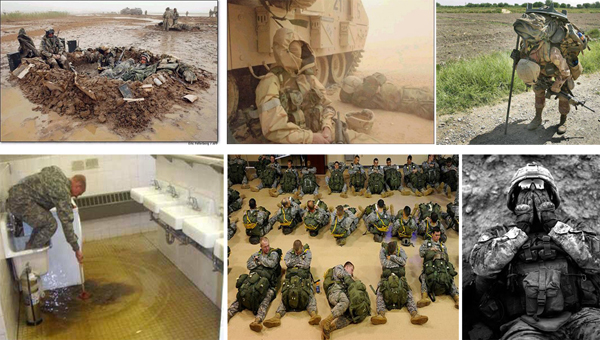
That our society includes a large population who regard military service as obscene, outdated, unnecessary or barbaric is a testimony to its success. Our military provides a curtain of safety so impermeable we have an entire population who has never known fear, oppression, hunger or terror. They live in a bubble of humanity and compassion so complete they are oblivious to the dark side of human nature. The frail walls of that bubble are protected and maintained by a minority of our population who make the commitment to serve our military. Make no mistake, without them our lives would be very different. If you are naive enough to believe otherwise you do so by their grace.

So regardless of your political affiliation, your views; even though you can’t find Eritrea, Somalia, Chad or Congo on a map. Even though you think what is happening right now “over there” is none of our business, consider that you think that because you are well insulated from a reality you cannot conceive. And that someone worked hard to maintain that insulation from the rest of the world.

If you meet one of the people who maintain that insulation from a reality harsher than you can imagine and only a four-hour plane ride away, thank them.

By Tom Demerly.

ff4e7_1220860

It’s time to give you up.

The polo shirt is bad. It is dated and ugly. The polo shirt is a dreadful set of unsavory compromises that removes all that is good from its influences, the collared shirt and the t-shirt. It leaves only the fashion detritus of its origins. It needs to go away once and for all.

The polo shirt has become the default uniform of the panderer. It is silk screened and embroidered for groveling sales reps at trade shows, annoying, bushy tailed clerks in corporate mall stores and men and… God forbid, women who can’t decide if they are laid back enough for a t-shirt or need to put on an actual dress shirt.

photo shirt 600 copy

The polo shirt is the no-man’s land of the fashion world and like the unfortunate souls who made the term “no-man’s land” common in WWI, it needs to die an unsavory death between the trenches and never return. It is the uniform of the fence-sitter.

tumblr_inline_mjo19gcIuV1r5whzi

No one aspires to wear a polo shirt except Rick Astley and pop-collar adolescent males in coastal regions who are a guidance system for a penis at frat parties. The sales reps that don them do so out of fashion ignorance or, for the few of them that know, a resignation that it is a kind of corporate retail uniform, a dreadful reality that customer service and selling things is still relegated to the dregs of the vocational spectrum.

Never put on a polo shirt.

100509-katy-perry-400

In utter distain for the polo Karl Lagerfeld may have gone too far, but then again, maybe not…

The polo shirt typifies everything that is bad about compromise. It is not attractive, functional or comfortable. Most of all it makes the statement that the wearer is entrenched firmly in the most ghastly netherworld of compromise: The pus-colored middle ground. The pointless attempt to try to be all things to all people.

Sony’s chairman Akio Morita told Steve Jobs that after the war, no one had any clothes. So they wore uniforms; polo shirts.

Sony’s chairman Akio Morita told Steve Jobs that after the war, no one had any clothes. So they wore uniforms; polo shirts.

Forward thinking fashionistas know there is an alternative to the polo shirt. Look at Steve Jobs’ iconic black turtleneck. Look at Roy Halston’s attachment to the turtleneck, and look at Karl Lagerfeld’s pointed assault on the mamby-pamby with his operatic mega-collars that, I’ll respectfully suggest, are a male compensational accoutrement. They are, nonetheless, not a polo shirt.

Take a tip from Roy Halston: Slick your hair back, cut it off, flop it to the side but don't wear polo shirts.

Take a tip from Roy Halston: Slick your hair back, cut it off, flop it to the side but don’t wear polo shirts.

Pick a side people: Either put on a t-shirt, join the 21st century and wear a turtle neck or just get on with it and put on a real shirt with buttons. But God forbid, use the poor, unfortunate fabric demeaned to the pattern of the polo shirt for something else, like wiping a dipstick clean to check engine oil.

By Tom Demerly.

978-0-449-80695-1-1

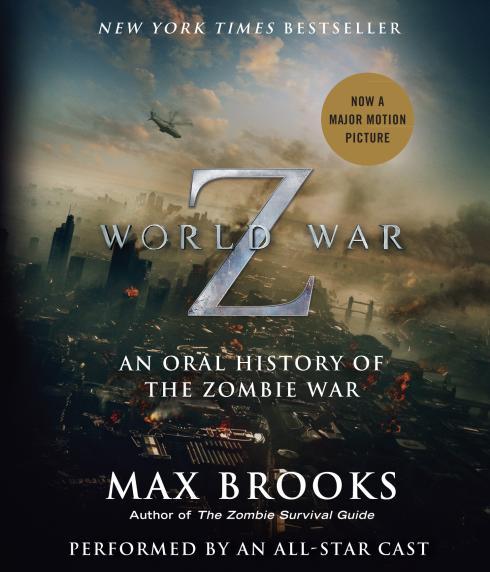
The Max Brooks book, World War Z, opens today as a major summer blockbuster movie already projected to hit $50 million in its first weekend. This review is for the original book.

World War Z is dry-mouth terrifying. A book so masterful and infectious it is actually threatening. Brooks’ unique writing style weaves a sinister tapestry of fiction and reality. And therein lies the horrifying aspect of both this story and the style it is written in.

wwz10

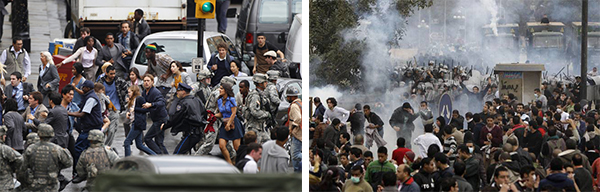
Left, a scene from the movie inspired by Max Brooks’ “World War Z”. Right, the evacuation of Saigon at the end of the Vietnam War. Visual proof that the most terrifying aspect of Brooks’ fictional tale are not the zombies.

I am not a fan of the horror genre, either in film or books. I’ve seen enough real horror that the two-dimensional themes of mock horror are pale and irreverent to me. The people who play zombie video games and go to “zombie chase” events boggle me as shielded sheep so removed from the real world they need the mock stimulus of false terror. There is plenty of real terror in the world. I read World War Z at the urging of a friend who works in government service. “I don’t like zombie stories” I told her. “This book,” she said, “has nothing to do with zombies.”

As with other great horror literature from Frankenstein to Dracula and including George Romero’s original Night of the Living Dead, this story works because of its placement in history. Mary Shelly’s Frankenstein, published in 1818, foreshadowed advances in medicine and science that were developed before the ethics to employ them. It’s a reality we continue to moderate to this day with genetic engineering and patent protection of organisms. The somewhat earlier Bram Stoker novel Dracula wrestled with themes of sexual revolution and religious skepticism.

“The most terrifying aspect of World War Z is not how the zombies behave, it’s how the living react.”

Max Brooks addresses the terror of a world unified in death that rises up to consume the living. His tale narrates the stages of any uprising, whether it is an uprising of the undead, or an impoverished nation zombified by oppression and lack of human rights. In both a zombie uprising or the Arab Spring the most terrifying aspect of World War Z is not how the zombies behave, its how the living react.

wwz20

A still from the film adaptation of Max Brooks’ book and a scene from the real life Arab Spring.

For readers acquainted with the tapestry of world events, uprisings and human nature this book rings so true and authentic it raises goose bumps. The book features interviews with key characters in the history of the war. One particularly haunting passage chronicles the experience of a pharmaceutical executive who patented an early “antidote” for the disease spread by the dead that “zombifies” people. “Americans were still praying to the God of science to save them” he rationalized about the false antidote his company introduced. There is even a narration of new programs to reduce the dependency of the public on government aid needed to “repel zombies”. It reads so closely to a BBC headline your mind races to weave together countless real world parallels.

wwz30

“World War Z” author Max Brooks, son of the comedy maven Mel Brooks, lectures at a U.S. Army presentation.

World War Z is a story that wedges itself into the tiny fissures of human culture, then uses a major dose of fear and a minor extrapolation of fiction to wedge them open. As you read the book you begin to look at culture around you and realize how frail it is, and how few contingencies there are. Most crowded cities are only a power failure, natural disaster, government uprising or other issue away from the scenes described in the book. The fear cultured in this book is the reason why people store canned food and move to the hills. By the time you get to the end of the story, that sounds like a more viable, safer and more sustainable lifestyle that commuting to a 9 to 5 job in Los Angeles.

As you experience the trauma and stress of World War Z you are held in some measure of relief that fiction weaves very simple and uncomplicated enemies. The zombies are unfeeling, not truly living, not at all human. They are absolutely evil. Few enemies in real life are so clearly evil. That makes the story more convenient and underscores the reason why every great leader rallies against the threat of a great enemy- real or contrived. After years of grey conflicts against complex enemies the zombies provide a convenient venting of the collective angst, something societies often crave. It’s another dangerous undercurrent of this tale.

While George Romero pre-dated this story with Night of the Living Dead his metaphor was against prejudice and racism. Max Brooks seems to use his zombies as a culture unified in death rising against a dwindling society of the living. One of the themes oddly missing from World War Z, for all its realism, is any commentary on social media. That omission is haunting, and it isn’t hard to imagine that the virus infecting Brooks’ zombie horde is the virus of instant communication and borderless association, the same way social media crosses borders and infects with almost no resistance.

Most people will see the movie World War Z, and I say you should read the book too. It is a story of the mass psyche, the worst of human nature and most horrifying susceptibilities of society. The story is so relevant and the skill in delivery is so masterful it belongs on the shelf with the great horror classics.

tri10

I did my first triathlon in 1984. Since then the sport has obviously changed and grown. As a participant in nearly every capacity of the industry for over 30 years, since before the sport began, I’m fascinated with the trends in triathlon. It’s a part of my job to try to understand where those trends are headed.

Through the first decade of the 2000’s we sold triathlon as the recession-proof, upwardly mobile super-sport. It was a marketer’s dream with the median participants’ income of $126,000 per year (USA Triathlon demographics report, 2008) creating a fresh crop of cycling and multisport super-consumers. Bike brands conducted white-paper slugfests to attract $5000+ “superbike” buyers. New product categories were invented when consumers bought their ways through existing ones. Every domestic Ironman sold out in minutes. Other discretionary consumer categories may have suffered. Not triathlon.

It’s tough to get super accurate demographic numbers over the last two years of triathlon without paying for them. USA Triathlons’ demographic data is becoming somewhat dated. We’ve traditionally pointed to the Kona Bike Count for a sense of athlete buying behavior. That information may be increasingly misleading as it only measures athletes who qualified for Kona or got in through the lottery. Their buying behavior may be altered by their participation in Kona and different from a typical age grouper racing locally, the larger demographic.

Triathlon Business International, an industry think-tank and cooperative founded by Triathlon Hall of Famer Dan Empfield, publisher of Slowtwitch.com, has the data but asks $5,500 for the full report on triathlon participation, spending levels, shopping behavior and brand preference. Empfield is a skilled marketer and knows where and how to collect relevant data so the report is likely worth it to those with deep enough pockets, but in this editorial I am sticking to a few guesses based on observations.

One dictum of trends and passing time is that you can count on change. If triathlon has trended contrary to the economy, almost like a Bear mutual fund, then logic dictates we are in for a contraction of sorts when (if?) the economy rebounds.

Another negative factor is the erosion of profit margins at the high end. An increasing number of local alpha-athletes and hotshots enjoy some version of “sponsorship” that means they don’t pay full margin retail for high end triathlon bikes. At the bike brand level this may not be apparent. It is more apparent at the consumer level where retailers sponsor away high end consumers converting them to deep-discount buyers. If a bike brand only produces 200 units across a size range of a $10,000+ “superbike” but 30 of those are sold at a discounted “pro purchase” price it weighs heavily on the profitability of the remaining 170 units.

tri20

A few factors have acted on the current version of triathlon. The economy is one, contributory media another and the influx of female athletes a third. There are quite a few others. I suggest the amalgamation of these may converge to “normalize” triathlons over this next decade. Participation numbers will still be good, but the $100K+ earning individual will melt into a minority of participants that is more proportionate with the general population. Consumers won’t “compete” to buy $5000+ superbikes in the numbers we’re used to. Instead, they will look for bikes in the $1000-$2500 price point. Their participation in events will shift to local events. Ironman numbers will remain strong and sell-outs will continue, but as the sport grows or stays roughly the same in participation the sustenance will be at the “average athlete” level, not the superbike buying, Ironman-a-year doing super-consumer triathlete.

One of the key priorities of our sport has to become participant retention. One good way to do that is provide frequent and accessible racing opportunities. Randy Step of the Running Fit stores in Michigan introduced a series of short, inexpensive mid-week triathlons that are close to major population centers in Southeastern Michigan, an area ravaged by the recession. Step’s race series is three sprint triathlon events each named after a different dinosaur. The short distance races are held at 6:00 PM on Wednesdays, one in June, July and August. The races start at $64 entry fee, a bargain for a well-run multisport race. Despite the challenging local economy all three races will sell out, and all the previous events have too. Clearly Randy Step has figured something out.

As Randy Step’s race series in recession ravaged Michigan suggests triathlon may enter a period of “democratization”. We’ll see more participation from the fitness enthusiast and charity ride participant, a spin-off of the “cause racing” demographic. People will likely still aspire to Ironman, but they may not feel the need to own a $5000-$10,000 super bike to do it on. The demand for more accessible and less expensive events like Randy Step’s dinosaur series will increase. Along with that will be the demand for new and exciting bike models in that price category.

Historically the triathlon industry has been more reactive than proactive. Randy Step’s races are an exception. It’s possible that brands who position themselves to serve the mid to low price point recreational triathlon consumer now will be the first to reap the benefits and will enjoy them the longest before there is another change in the sport.

86d2ac3a3854b17bfaf9728723ef688c

Both sides of the gun violence issue will need to learn to evolve to make progress.

The gun law debate typifies the very worst of our system. Gridlock. Misinformation. Murder and fear. The debate has been shamelessly exploited and distorted by both sides of the issue. Neither side has made progress to a better way. And as the gridlock continues, people die. Our first move to address gun violence has to be compromise by both sides of the argument from their current positions. Until then, nothing will change.

I’m a gun owner and a victim of gun violence. I see both sides of the gun argument in America. I’ve also travelled the world and seen how gun laws work and don’t work from Tanzania to Toronto. I believe there is a better way. This is not it.

The gun lobby has stonewalled. Their doctrine seems to be one of rigidity rather than progression. I’m a gun owner, former military, from a family of gun owners and NRA members. I’m here to tell you that the gun lobby’s lack of willingness to adapt has contributed to the “plight” of the American gun owner and likely even contributed to the proliferation of gun violence. At a minimum the gun lobby’s position hasn’t helped build a constructive future for lawful firearms owners. Instead it has made the divide between NRA and the gun-control lobby wider. That position can’t be sustained. The gun-control lobby has a very well defined target to come after in the current, non-progressive, non-adaptive gun rights lobby.

The gun control lobby is no better. Championed by a vocal populace they have, like the pro-gun crowd, distorted statistics to bolster their argument to such a degree that neither side can be believed. The gun control lobby stonewalls also, believing a finite set of specific new (old?) gun laws will eventually stem the proliferation of gun violence. They might be right. They might not. And abridging current laws is an amputation. Amputations aren’t preventative medicine. The crowd that espouses background checks, mental health checks, “assault” weapon bans and other a la carte legislation are hitting the drive-thru at the fast food legislation restaurant. It’s a shiny, conspicuous quick “fix” that soothes the conscience. As I say, it may work. A little. But to suggest any part of the gun violence problem is dependent on any one factor is foolhardy and short sighted. And to press the agenda of conspicuous legislation against certain classes of weapons and certain purchase processes is equally short sighted.

An editorial in the The New Yorker framed the debate perfectly, albeit unintentionally. Writer Nick Traverse said, “despite popular support” the Senate voted down every gun control measure being considered. He went on to say the two largest publicly traded gun manufacturers in the United States had increased their market capitalization by “552%” since President Obama took office. So, if the majority of Americans support gun control, who bought so many guns that the big gun companies are worth 5.5 times as much as they were our current President was first elected?

130419_PHOTO_MANHUNTBOSTON_010_jpg_CROP_article920-large

Any front page news photo reinforces how things have changed since our original gun laws were drafted. That change reinforces the arguments of each agenda, meaning the responsibility for moderation rests with compromise, not inaction or stonewalling.

What is the solution?

First, we need to move toward middle ground.

The gun lobby would do well to acknowledge that, when the bulk of our current gun ownership rights were drafted it was illegal for women to vote and legal to keep slaves. In almost every other area of legislation that governs social conduct there has been progression and adaptation. Except gun ownership. Despite the fact that society and weapons technology has changed massively from when the bulk of current gun ownership laws were drafted we haven’t evolved the laws that govern either. If the gun lobby had been more  progressive and proactive about safeguarding weapons ownership and society at large, they wouldn’t be in the legislative bull’s-eye right now. For the gun lobby, acknowledging there is a need for adaptation of gun regulation is a start.

The gun control lobby needs to refocus on being a violence control lobby and not be so “scope-locked” on pushing through ineffectual legislation that only addresses the most sensational and conspicuous aspects of gun violence. When the focus changes from being gun-control/magazine capacity control/assault weapon control/background check control to a more omnipotent review of mental health, education, public safety and law enforcement reform then they will make meaningful progress toward reducing gun violence. Until then they aren’t even grabbing low hanging fruit, they are picking up the rotten fruit that fell from the tree years ago and wasn’t that good then.

There is a lot to gain from being the first group to vault the stone wall. If the NRA proposed changes to legislation that addressed the hotpoints like background checks and mental health verification they would be seen as being progressive and pro-active instead of inflexible and puritanical. If the gun control lobby backed off the agenda of regulating conspicuously sensational weapons in the belief that will somehow have meaningful impact on the bulk of gun violence they would not only appear to be wiser- they would be. If both things happened the acceleration toward a middle ground would begin, and our collective futures, gun owner or not, would become safer.

I don’t pretend to offer the full list of solutions, only a thematic direction. That theme is to adopt change to reduce violence. It took a long time for the problem to become this significant. It is like a complex social cancer that has metastasized a little into every cell. It won’t be cured with an amputation or series of amputations, but by a cooperative, adaptive and regenerative approach with a concern for society rather than specific agendas.

For both the gun control and gun ownership lobby there is one certainty: Neither side can afford to do nothing

562315_10151430090108568_1713296559_n

Photo: David Cenciotti, theaviationist.com

The Boston Marathon bombing was a strong example of how news reporting and consumption have changed substantially in the zero-delay era of contributory journalism. The major news networks stuttered, choked and backpedaled. Social media was used to break the story of the second bombing suspect’s capture after one of the most dramatic manhunts in history.

The world first learned about the capture of the second bombing suspect through the Twitter feed of Boston Police Chief  Ed Deveau. CNN, MSNBC, FOX and the other news outlets learned from that tweet at the same time the rest of the world did. No news desk, no editor, no copywriter, no fact checking. By the time the networks ran it everyone with a smartphone already knew it. And accepted it as truth.

Social media played a key role in the Boston Marathon manhunt but also showed ominous signs of a new media that was invented before the rules to best employ it were developed. That’s dangerous. It’s also a common theme in new technology from the atom bomb to genetic engineering. The technology is developed before the rules to best employ it are considered. Then, the rules get made up in a fairly abrasive and hurried process along the way. Whether it is news reporting, weapons proliferation or gene therapy, once the genie is out of the bottle it is impossible to stuff it back in. And inevitably, people get hurt and things get broken along the way to figuring out a better way.

reddit-detective-boston-marathon-bombing

Immediately following the Boston Marathon bombings posts speculating about suspects, including their photos, began running on social media.

The potential for disaster from empowering the everyman with instant media access became apparent during the Boston manhunt. Photos of men dressed in tactical-looking clothing with shoulder patches and carrying backpacks began circulating as a point of concern. People played fast and loose with whom these men were. The photos were shared again and again referring to the men in them as “persons of interest”. They weren’t. The situation became worse when a ricin-poisoning scare in Washington surfaced and an explosion happened at a fertilizer plant in Texas. It took only minutes for the self-appointed conspiracy theorists to weave together a tale few big fiction writers would have conjured. A photo of a young man with a vaguely “eastern” appearance was circulated as a person of interest. As the hysteria elevated he became so concerned for his safety he stayed in his house. The Internet junior G-men and conspiracy experts began to take on the feel of a lynch mob. Instead of tar and feathers they had Facebook and Twitter.

Each generation has its de-facto media that represents unimpeachable accuracy. As each of those media emerge and evolve “experts” claim the rules have completely changed with that new media. It happened with the invention of the printing press, it happened with radio, it happened with television and it has happened with the Internet and contributory social media.

The truth is, the rules do not change. Shoddy reporting is still shoddy reporting. Speculation is still completely different from recounting verified facts. And like all previous media, if there is simply too much signal traffic it is difficult to gain any real understanding of events until things calm down.

There is an integral way to teach the best employment of social media that lies within the medium itself. Because of its contributory nature, we, as users, can reach some consensus on how to best use social media. Once that consensus is achieved, it is self-proliferated through social media. It becomes a kind of social media moray, the same way common courtesies such as a handshake and saying “thank you” are culturally transmitted, but to an even greater degree since those conventions don’t cross cultures the way social media does. The later underscores the necessity for such a consensus because social media, unlike other norms, is not regional; it’s universal and instantaneous.

560120_584104788276109_761752636_n

One of the most remarkable posts following the Boston attacks was a photo that surfaced on social media of a group of Syrians holding a banner that said roughly, “this is what we experience every day” on it. It also included a message of condolence for the bombing. At first blush there was an abrasive, mocking tone to the photo, almost as though the suggestion was, “Ha, now you have to deal with terrorism too.” It is a well know dictum that when people read something on the Internet they tend to default to the worst possible interpretation.  But when I read it I thought back to the challenges of communicating quickly across cultures and with new media. The photo had been taken only minutes earlier and showed a big banner that took some time to prepare. I remembered Syrian friends and how they often phrase something. I also remembered that, since I am not as skilled at foreign languages as these men are (I couldn’t write a banner in Arabic and post it on Facebook since my Arabic isn’t good enough) it would be very easy for me to be the “ugly American” and presume their English was perfect and they were being snide. I decided that would not be my interpretation though. Instead I decided the Syrians meant us sincere condolences and also desired empathy for their plight. That shift in perspective completely recalibrated the post for me and, I hope, for others when I shared it.  It was an example of author Stephen Covey’s dictum, “Seek first to understand, then to be understood.”

With these experiences in mind I’ve drafted my own set of editorial reminders for social media. It ‘s by no means the de-facto style guide, but it’s a start point for me. It looks like this:

–       At a minimum, think twice about what you post.

–       At a minimum, think twice about what you read.

–       If you wouldn’t want it said about you, don’t say it about anyone.

–       If you post your opinions, you’ve granted license to tolerate others’.

–       What you post never goes away, even if you delete it.

There are exceptions, and I am not an expert on this, you may feel differently and there may be times when this does not apply, but qualifiers go a long way to make things civil and safer.

Social media may be the most powerful resource of this century. It crosses borders instantly without restriction and grants power previously reserved for only a few. In the Arab Spring the power of social media toppled governments. It has made instant heroes, and villains. More than perhaps any single technology man has developed it has empowered and united us. How we decide to make use of it as it continues to evolve will say a lot about the trajectory of our future.

a33a9a8420766609bb3a109f2d9264d4[1]

I live with two cats, Mia, a beautiful 6-year-old rescue with long, pretty hair, beautiful green eyes and a fluffy tail and MiMi, a 2-year old orange striped wild cat found as a kitten in the desert with one eye hanging out of her head. My cats are constant companions. I watch them. They watch me. Despite a huge gap between my species and theirs we’ve worked out ways to communicate that are quite effective. I’ve learned a lot about life and about myself from seeing how they live. Here is some of what my cats have taught me:

Live in the present.

Cats have smaller brains than us. So they worry less. I watch them enjoy a spot in the sun, good food, a nap. They live for what is happening. If they are having fun, they keep having fun until they are tired, then they lay down. If they are scared, they leave the environment to find someplace safer. Cats do not spend time worrying about their past or their future. Instead, they make their present as good as possible and the rest sorts itself out. While people can’t do that entirely since it would be irresponsible we often worry too much about a future we haven’t built yet and a past we can’t change at the cost of appreciating the present we’re living in now. My cats remind me, live in the present.

33876_10151138477053568_795395725_n[1]

Find amazement in simple things.

I buy my cats toys. They ignore most of them. Their favorite toy is a length of orange parachute cord that was a leftover from something I was making. They’ve been playing with it for two years. Both MiMi and Mia play with this cord like it was the first time they’ve seen it, and like their lives depend on catching it. When they do catch it, they carry it over to a corner, chew on it for a second, then forget it until next time. Then, it is all new again. There is tremendous wisdom to finding wonder in simple things.

Be careful.

Mia likes to jump from one piece of furniture to another. I’ve never seen her miss. Before she jumps she studies the area she is jumping to in detail. If she doubts the landing place is safe or she can make it, she finds another way. She still jumps, but she exercises care and caution in assessing the risk before she jumps. My cats still take chances and have fun, but they understand how far they can jump and aren’t reckless.

579445_10151140016848568_259415559_n[1]

There are no handicaps.

MiMi was found by my friend Billy as a stray kitten wandering in the desert with one eye out of her head from a terrible injury. She was dying. Billy took her to a veterinarian who saved her life and removed her damaged eye. MiMi doesn’t know or care that Mia and I have two eyes and she only has one. She simply uses her one eye for everything, moves her head a little more to compensate for only having one, without even realizing it. She can do anything Mia and I can do, and she is the most loving and kind cat. To her, having one eye is just the way it is. It is neither good nor bad. MiMi knows she can’t change only having one eye, so she lives like she has two and doesn’t let this become a drawback to her.

eaad7bda317a37cd500fe25858c6467d[1]

If you want something, try to get it, but exercise reasonable caution.

MiMi learned food came from the refrigerator. So, she got in the refrigerator. That makes sense. The problem was I almost didn’t notice her and nearly shut the refrigerator door. It terrified me. I rearranged the food in the refrigerator so she couldn’t jump inside again and told her that wasn’t a good idea because she could accidentally get shut inside. I know (think?) cats don’t understand the complexity of that explanation and it is mostly for me. But since then, she hasn’t done it again.  Instead, when I open the refrigerator, she runs over and sits between the open door and the refrigerator until she gets what she wants. She figured out how to get what she wanted but with minimal exposure to risk. Smart.

Rest.

Cats take frequent rests. I have never seen either of my cats tired. They know when to lay down and stop playing. They never get burned out from chasing their piece of string or watching birds outside the house. Cats know they aren’t effective if they are too tired so they make sure they get adequate rest and they make rest a priority.

319874_10150802000453568_1518155349_n[1]

Seek first to understand.

I read this idea in a book by Stephen Covey (The Seven Habits of Highly Effective People) but didn’t really “own” the knowledge until I watched my cats for a long time. Before they do anything of significance, like walking across a room or chasing something, they study the area long enough to gain a reasonable understanding of it. Then they decide how they will respond. Consequently, they rarely get themselves into bad situations or a situation they can’t get themselves out of.

Sometimes you have to stand your ground.

A strange cat came onto the porch. This was a big event. Mia hissed and growled. MiMi’s tail seemed to get bushier and her fur stood up. There wasn’t a fight, but there was some hissing and low growling and everyone understood quickly they needed to respect each other. Once the visiting cat understood the porch belonged to Mia and MiMi already, the visiting cat went next door. Sometimes the cat comes and visits, but now, it sits a few feet away from the screen and rests there peacefully while Mia and MiMi watch it.

18412_10151168885113568_586416209_n[1]

Embrace good things.

MiMi and Mia have a fake furry blanket that sits in the sun and gets warm. It may be their favorite thing. They sit together on it, roll around, fall asleep, lick each other and get brushed on their warm, fake fur blanket. If I pick it up to clean it they follow me around until I put it back, then they get right back on it to be sure it’s still OK.

Have respect for yourself and take good care of yourself.

Mia is a very typical girly-girl. She gets her hair brushed every day and purrs the whole time. She never over eats and has a lean and healthy build. She loves to hold her bushy tail up in the air, especially when MiMi and I are looking at her, and move it just slightly to make it wave. She uses her beautiful eyes to get what she wants, and it always works. But, she has never taken advantage of it by asking for too much food or too many treats or too much brushing. MiMi is a tomboy and spends time sharpening her claws and likes to get brushed until she gets bored. MiMi and Mia spend time licking each other every day because they both know how beautiful they are and how important that is.

392783_10151390232808568_1644595204_n[2]

These are just a few things I’ve learned from my cats. I’m always learning more. I don’t pretend to suggest everything about life can learned by watching your cats but, I will suggest there are a lot of common sense lessons there if you are willing to see them.

533166_10150732870648568_821803062_n[1]