Archive

Commentary.

(Really…) By Tom Demerly.

action

The cycling press has seen some pointed allegations of plagiarism recently, especially in equipment reviews. Most notably the online publication Bikerumor.com has come under criticism for potential plagiarism of gear reviews from noted editors like James Huang of cyclingnews.com.

In cycling media it’s pretty easy to flush out who the original authors are and who the copycats are. You look at content and publication dates. When things are worded closely it may be a coincidence or it may be strict adherence to journalistic format. You can only say so much that is unique about a guy riding around a track for an hour.

But when things are worded identically and formatted in exactly the same order that smacks of quick and dirty cutting and pasting: that’s plagiarism.

Luckily, most writers in the cycling industry are terrible and have no training or even a grasp of English usage. You wouldn’t want to copy their work, let alone read it. So it goes un-copied. And unread.

I’m lucky. My early journalism, media and English teachers hammered me with the rules for original content. Every one of my journalism and media teachers worked in active news and feature publication before they taught. One of them, Mr. Russ Gibb, revolutionized media by popularizing subscriber television. These are the guys I learned from; Mr. Bartell, Mr. Korinek, Mr. Gibb. Later I had editors who were both smarter and better writers than me. That helped, and I learned from them too.

Like libel, plagiarism can be difficult to prove. Part of the reason is that a formally trained journalist writes in a format taught to all journalists. It’s the common “Inverted Pyramid” that starts with a lead, contains a “who, what, where, when…” and ends with a conclusion. Feature content is a little less structured but generally starts with a “hook” to draw readers in, something fast and catchy to hold them and then terse, tight copy to tell the story.

That’s how it should be.

The biggest temptation for journalists to cheat the system came when word processing software gave them “cut and paste” capability. It became easier to cut and past with a few keystrokes, do a quick rewrite and call it your own. Before that, and I am proud to say I wrote in this era, we used typewriters with no “CTRL C” capability. We actually had to think.

Any journalist or creative writer will tell you there are only so many stories, so many plots. That’s a fact. Depending on where you learned to write you ascribe to the knowledge that there are somewhere between 7 and 20 storylines in all of human communication. That’s it. Everything written is some variation on those formats. The problem isn’t when someone tells the same story, even in the same order or similar voice. The problem is when someone steals someone’s hard work through a quick cut and paste and then calls it there own, then sells it (and ad space around it) and benefits from it.

I recently wrote a feature about an endurance athlete who did a long distance open water swim. It was a luxurious article to write, something I could really get into since I knew the characters and genuinely admire them. I took my time with it. Fawned over it. Spent too much time on it by the measure of any barking editor hanging over a copywriter like a Damocles deadline.

Two days after I wrote that story a local feature writer knocked off my article nearly word-for-word including verbatim quotes that came from questions I had written, and asked. They stole my “slant” on the topic. I earned that journalistic intimacy over time because of my familiarity with the topic. Those were the things I brought to the table with this story, and another writer pulled them off my table, put it on their own and said, “Look at this story!”

What can I do? Nothing. Nor do I have the rancor to do anything. Instead it makes me want to be more original, more stylized, more unique and more professional in my writing. It makes me want to hone my craft to a degree that, when people read my stuff, they know it is me. And when they read something similar, they say, “This sounds like something Demerly would write.”

The ultimate praise for a writer and author is to have a “style” attributed to them. You hear literary comparisons that say, “This is like Hemmingway” or, an ultimate complement like “Reads like a Tom Clancy novel.” Through style, voice, innovation and commercial success some writers have built their own “brand”, a style so unique they own it, no matter who borrows it.

Until a writer achieves that level of uniqueness and originality it kind of all boils down to “who, where, when and what”. And the best way to rise above the in-actionable (even when accurate) accusations of plagiarism is to simply elevate your writing above it, so no one can steal it.
tomphotoguy

By Tom Demerly.

story10

I was sick.

Some kind of flu. It’s going around. And not enough sleep. Been up since 4:45 AM working a triathlon down on Belle Isle in Downtown Detroit. The State just took the island back from Detroit so people from the suburbs go there again. It’s OK.

I decided to take the long way home. You drive through factories, past a Mosque and through Mexicantown. It’s colorful and interesting. Like a meal eaten in a small foreign country, you’re not sure what you’ll find in it.

story30

I saw some kind of weird industrial… I’m not sure what it was. Art? Lawn maintenance equipment? Something from a steel mill? Stopped to shoot a photo or two. A little farther down the road, through Mexicantown, the candles and bottles on the corner reminded me, and all the stuffed animals. “Man, I gotta get this…”

When I walked across the street I briefly let my guard down. Men had set up an OP (observation point) on the corner across from where I was headed, offset but with full visibility on my objective. The second they saw my camera I heard them, “He’s takin’ pictures of it.” There were three of them. Now they were between my vehicle and me. Hmmm.

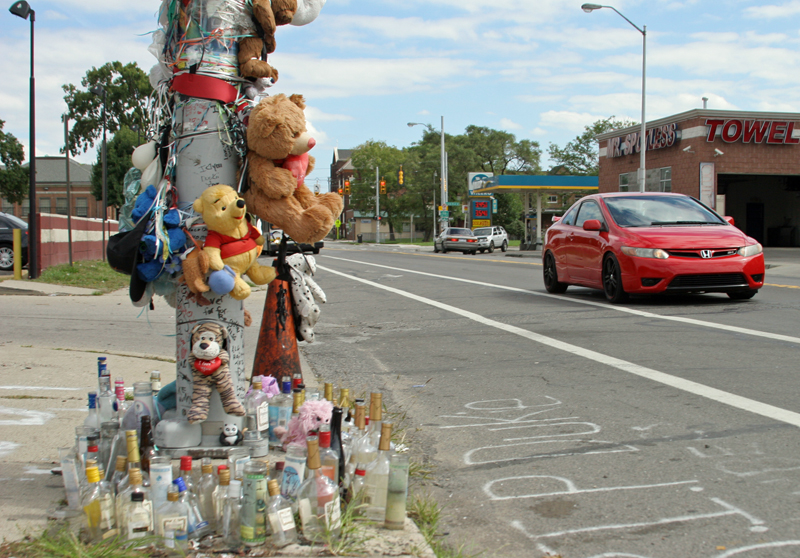
There were liquor bottles, lots of them. Writing on the street, out into the street. Stuffed animals. Notes written on the pole with a sharpie, paint pen, everything. Some in English, most in Spanish. The stuffed animals were fastened all the way up the pole. Some of them were oddly garroted to the pole with wire. They were filthy from weeks in the rain. It looked like a drug cartel had murdered stuffed animals.

“What you takin’ pictures?” The tallest of the three asked. He left off the word “of”.

I walked across the street to make eye contact and speak with them at a normal conversational distance. As if it were normal for me. “I was driving home and I saw this. I’ve seen it before, with people around it at night, and candles.”

The skin on his face seemed drawn tight to his skull. He was tall, handsome and fit. Held his head a couple degrees above level. But he looked tired. “Hey man, lemme show you…”

Now let’s back up a few steps. I’m a guy pretty obviously out of my element, carrying a few thousand bucks worth of camera gear, big camera gear. My truck is parked in a lot filled with broken glass and a car, an old car, with a very large woman in it coughing… or singing… or… I’m not sure. Something really big is hanging down underneath the car. It lists to the side she is on. A man sits obscured by a dense cloud of smoke next to her. I decide this is a great photo op for my friends on social media back in the ‘burbs. The way I would photograph a peacock at the zoo. It was just so… urban.

story20

But this isn’t a peacock in a cage. These are the lives of people, dense and complex, dynamic and evolving.

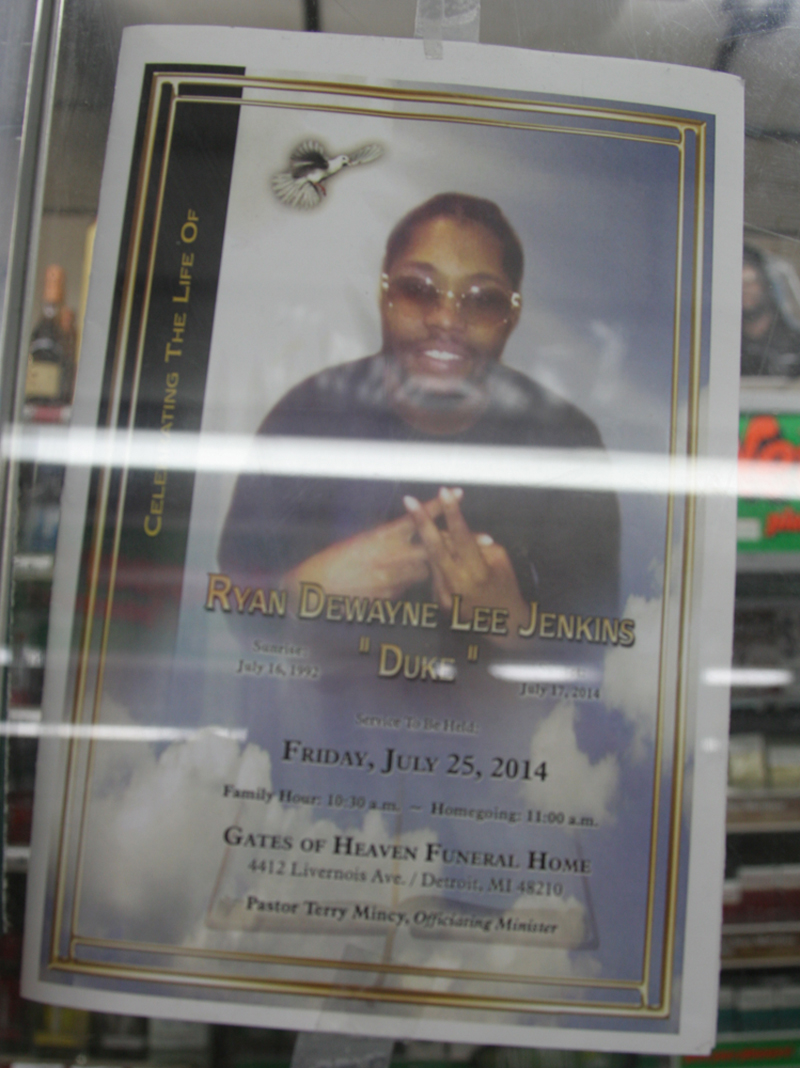
“I got a picture of him in here.” I walk into a smoky party store with a wall encased behind thick, marginally clear, mostly yellowed plastic. I’m a little wary, heck, I’m scared, so I don’t notice where the fruit pies are. There are lots of bottles behind the plastic wall, and a low man with a gigantic head that melts into an even wider neck. Patches of black hair on his head. Lottery tickets, just a few.

“Here man, this is all about it.” It’s behind the thick, yellowed lexan armor. Glare is coming off it so it’s tough to photograph.

His name was Ryan Dewayne Lee Jenkins. Nickname, apparently, “Duke”. Jenkins was eulogized on Friday, July 25. He was shot to death standing at that corner some days earlier. No one explained to me why, and I did not ask. The funeral card in the party store said, “Celebrating the Life Of…” In the photo Jenkins is making some sort of hand sign and his fingernails appear… unusual.

I do not know what happened. I did not ask. I should have. The man told me Jenkins was shot to death. There was a tension surrounding the topic, perhaps continued pain from the loss. Maybe more. I don’t know. The body language of everyone interacting with me was… guarded. I would suspect it might be, especially toward some odd guy carrying a camera taking photos of what is a sacred and intimate memorial. So I took my photos and left.

story40

But as I was leaving one of the men walked up to my truck. I rolled the window down. “Hey man,” he said, “You wanna see something else?”

“Yeah” I told him.

“Go down there, four blocks. There is a candy store. A veteran and a girl own it. It’s new. It’s all they do. Brand new. Sells candy. They’re trying to make it. Go on down there and take some pictures of it and talk it up. They’re doin’ good, tryin’ to make it…”

I followed his directions but didn’t find the candy store. Dropped a pin on a GPS map on my phone and told myself to come back here- that there was more to the story. Much more. My head felt worse and I was so tired it was hard to drive. I went home. But I told this guy I’d help him by telling his story, so I sat down to type before I went to bed.

Detroit isn’t raw, urban or dangerous. It’s not “on the brink”. It isn’t particularly cool or edgy. It’s small town USA in the second decade of the 21st century. People work, they’re friendly, they welcome you. They strive for a better tomorrow. They aren’t closed off and there are no barriers. Two things missing from Detroit are falsehood and pretentiousness. We know the city is run down and dirty. We’ve been through a lot. We’re working on that. It didn’t happen over night. We’re responsible for it, we’ll fix it, and it won’t happen again in our lifetimes. And as it heals and rebuilds its’ stories peel away like scabs off a wound, and sometimes they reveal scars.


By Tom Demerly.

jonlogan10_800

Jon Logan died on May 17, 2012. He died of cancer. He was only 51 years old.

But I still do not understand: Where did Jon Logan go? Today at the Jon Logan Memorial Triathlon I learned where he went.

I am not a particularly religious person. I have read, with reverence, some from the Bible, the Koran, The Tao de Ching. I went to catichism. Religions offer inspiration and comfort. I admire those who follow them and I look to them for guidance too.  

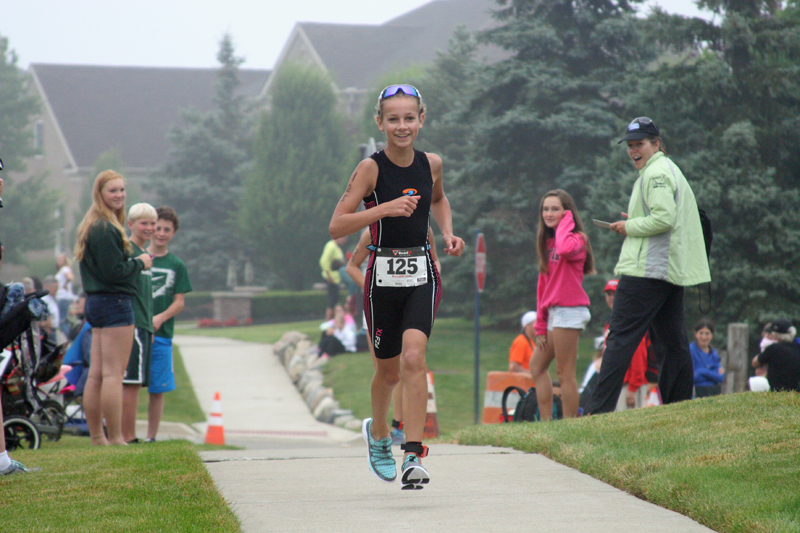
People came to the Jon Logan Memorial Triathlon in Novi, Michigan in much the same way they go to any triathlon, and a little like some go to church. They wore special gear with sponsors’ logos. First time triathletes came with doubtful expressions and simple gear. Then it became apparent this race was very different. 

The setting was beautiful. A wonderful neighborhood of proud mansions with stately lawns, carefully trimmed and lushly landscaped. The sun rose a frosty haze through light mist. Giant freshwater birds put on a quiet airshow as athletes and volunteers arrived. People smiled, shook hands and hugged. The usual competitive silence before a triathlon was gone. Instead, there was fond celebration of friends and acquaintances. There was reverence for our tight knit community and a beautiful sport.

Then people lined up by the lake and got ready to race.

Dense fog rolled onto the swim course. The outer swim buoys disappeared as the lake was cloaked in grey. The mist absorbed the sounds around the lake and a church-like quiet fell. I don’t know if I imagined this, but it seemed like people lowered their voices. I heard one athlete ask another, “What do we do if the fog is too thick to swim?” The other athlete answered, “We do what Jon would do, we swim…”

Nothing stopped Jon Logan. Nothing. He did an Ironman with a broken collar bone, swimming with one arm. It was Lake Placid. With his wife Sandy, he raced Ironmans around the world, ticking off finishes with an effortless ease and a broad smile that made it look… fun. Then he would come back, inspire friends, mentor beginners, volunteer to help, and do the whole thing all over again.

Out in the fog, the strength, humility and courage of Jon Logan beckoned. Jon would have swam.

So people got in line. Announcements were made. Timing mats were set. Sandy Logan shared a prayer, and the athletes did what Jon would do. They raced.

jonlogan20

At the front of the race the best athletes in the Midwest tore away at each other for the win like hyenas on a kill. Fernando, DeCook, Krzyzanowski. Same for the women. In the middle and at the back of the race people learned the sport and were baptized as triathletes for the first time. Triathlon veterans went to the competitive altar to receive their sweaty communion on another racing Sunday.

They did, what Jon Logan did.

And while Jon Logan passed away some time ago, he was, very tangibly, there today. More importantly, Jon went home with everyone who raced today. For young athletes who never met Jon Logan in person, they know him now. They go forward inspired by his character and reverence for life, made stronger by his example. They know Jon Logan now.

Now I know exactly where Jon Logan went, he went to a new start line. We were glad to join him again today as his character and drive live on in the athletes who raced in his name and memory. Jon would have raced, so that is exactly what everyone did today.

1932244_405996476202428_722904881_n

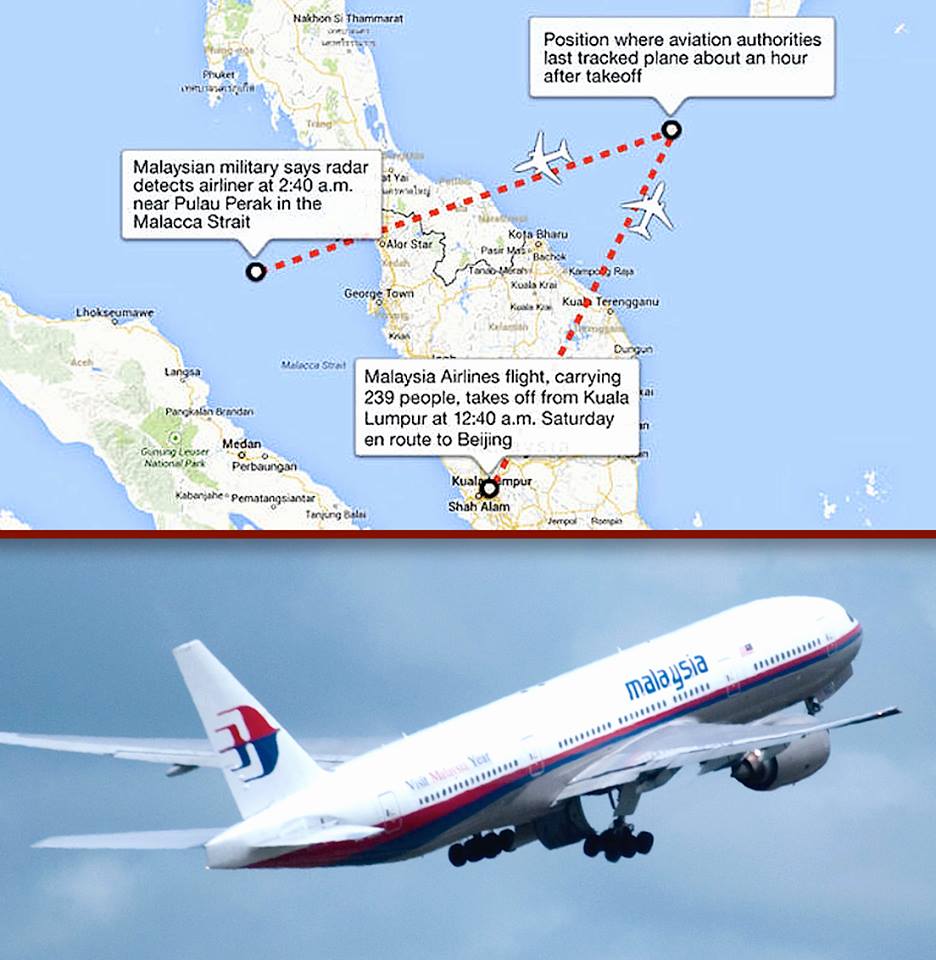
At this hour the mystery of Malaysia Airlines flight 370’s disappearance is one of the most baffling chapters in aviation history. With every hour that passes the mystery becomes more remarkable.  There was no distress signal, automated or manual, no radar track to a known accident site, no anomalistic flight data transmitted, no covert hijacking signal, no wreckage, no diversion to a remote airfield under duress, no witnesses of an actual crash in one of the world’s busiest shipping lanes.

That the aircraft likely vanished over one of the busiest commercial shipping areas in the world, the Straits of Malacca, with 50,000 to 90,000 ships a year passing through it’s narrow, 500-mile passage is even more remarkable.

When you perform a statistical analysis of aircraft accidents over the previous 30 years that involve more than 100 passengers you see how truly bizarre this mystery is.

The U.S. Federal Aviation Administration maintains a detailed database of aviation accidents broken into 18 accident causation categories. They include “Crew Resource Management”, “Fuel Ignition”, “Fuel Exhaustion”, “Incorrect Piloting Techniques” and others.  All of them leave some trace to conduct a forensic investigation.

That MH370 left no trace, electronic or otherwise, is its most remarkable anomaly. Given the volume and sophistication of systems to avoid just such a disappearance one explanation is some willful intervention to counter each of these surveillance and tracking systems took place. Someone intentionally lost the aircraft.

One unnamed source has already proffered an opinion on this disappearance: MH370 was hijacked in a 9/11 style terrorist attack. The target may have been the Petronas Towers in Kuala Lumpur, a hauntingly similar target to New York’s Twin Towers. The attack failed when some intervention, perhaps by crew, passengers or other force led to the flight’s termination in a similar way to United Airlines flight 93 that crashed in Shanksville, Pennsylvania when passengers attempted to intervene in the hijacking and retake the aircraft before reaching its intended target.

It is possible the flight disappeared when it descended to low altitude for the willful purpose of evading radar as it turned back toward Kuala Lumpur on its attack run. This admittedly outlandish theory is partially supported by Fisherman Azid Ibrahim, 66 of Kota Baru, Indonesia. Ibrahim told the New Strait Times that an airplane appeared to fly low below thick cloud deck. He followed the aircraft for about five minutes before it disappeared without crashing. Another witness reported a similar sighting about 30 km (18.6 miles) away from Kota Baru.  Businessman Alif Fathi Abdul Hadi, 29, reported to the Malaysian Maritime Enforcement Agency (MMEA) that he saw “bright white lights”, descending fast into the sea at about 1:45am that same day. A third report from an oil rig also reported seeing a large aircraft flying at low altitude over the region, then a burning object.

873565-943b5708-a8f7-11e3-9a89-1de6a43f024e

In December 2011 the Co- pilot on MH370, Fariq Abdul Hamid, broke regulations when he allowed female passengers Jonti Roos and Jaan Maree into the cockpit, while flying, for a flight from Phuket, Thailand to Kuala Lumpur, Malaysia. The 53-year old captain of MH370, Zaharie Ahmad Shah, had a room in his house dedicated to a computer flight simulator where he could practice flying a Boeing 777. And familiarize others with how to do it.

In an interesting literary parallel, Ian Fleming’s 1961 novel and 1965 film “Thunderball” depicts a fictional RAF pilot named François Derval who is extorted by sexual coercion into stealing an aircraft for a terrorist plot.

This is speculation. But it has origins extrapolated from known statistical data of airline accidents along with an analysis of the region, its vulnerabilities, its known terrorist activity and additional factors. It also is partially reinforced by the emerging navigation tracks of MH370 that show it returning toward Kuala Lumpur where it originated and where the Petronas Towers are.

It is also as implausible a theory as the 9/11 terror attacks were on 9/10. Before the 9/11 attacks and former President Bush’s election the Clinton administration had intelligence that suggested a coordinated attack using airliners in the Pacific region was a plausible threat. One analysis suggested the attacks might originate from Indonesia. The theories were not regarded as actionable. By 9/12 this paradigm had shifted.

When will know the facts about MH370’s disappearance? That is another mystery. Until then all we have is questions and speculation as passing time creates more depth to one of the most bizarre mysteries in aviation history.

By Tom Demerly.

trojanhorse

In much the same way as Franklin Roosevelt is remembered for the Social Security Act of 1935, President Barack Obama will be remembered for the Affordable Care Act.

And it may be a larger success than any of us imagine.

The Affordable Care Act could be a masterfully engineered piece of legislation that has already set in motion the only means possible to topple big medicine and make U.S. health care affordable. But not how you think.

We’ve all seen the charts and YouTubes comparing the cost of medical procedures in the U.S. to other countries. They make a case for health care being significantly more expensive in the U.S. than in other countries that already have a state subsidized or administered medical system.  It’s possible the authors of the ACA did a masterful “Potomac two-step” in selling the ACA to the powerful medical, pharmaceutical and hospital lobby. Washington sold them a Trojan horse.

ACA critics have pointed to a host of administrative problems that are likely short lived. Those problems aren’t “structural”.

A structural problem built into ACA is that the weight of medical costs in the U.S. is spread over the broader economic “ice” of the American population. That ice is still too thin to support big medicine’s current financial weight. One of two things can happen: The ice can break or some weight can be removed.

Since ACA is law, and law can presumably be enforced, the “ice” that is ACA will be held up by Washington. The weight that comes off the ACA ice will be U.S. “Big Medicine” getting whittled down to functional size. No more massive, glossy prescription drug marketing campaigns. No more mini-malls and valet parking at hospitals. No more health care providers filing endless reams of electronic files, paying staff to interpret billing and insurance logistics and creating their own internal television networks to promote themselves. Malpractice litigation will be reformed. Medicine will become more medical, less commercial and litigious.

The ACA will dry up hospital "malls" and commercial dining areas and other accessories to hospital operation.

The ACA will dry up hospital “malls” and commercial dining area and other accessories to hospital operation.

There will be blood. Hospital staff, already strained in many places, will be trimmed. Logistics will be streamlined, even doctors will earn less. Health care suppliers will suffer mightily; with many going bankrupt like auto component suppliers did in the U.S. automotive bailout. And just like the automotive bailout many of the financial negotiations that were abrasive and costly between unions and car companies will now be quickly dispensed in bankruptcy court. And for once, it will be the medical companies that will take the hit. The ACA may protect the citizen-patient.

“Health care quality will contract while health care access will expand.”

If this is the direction of ACA, intended or not, the process will be an abrasive one. We the people in the first decade of ACA will experience constant changes in health care logistics and a general decline in the quality of health care. In short, our health care infrastructure will contract to a scale similar to those of countries with functioning social medicine. In many ways that will appear as a downgrade. But in the spirit of ACA it will spread access to health care across a broader population. Instead of high-income people getting great health care and middle and lower class people getting none or reduced levels with exposure to financial ruin, everyone will get a roughly equivalent level of healthcare services and products. Health care quality will contract while health care access will expand. The optimal balance will be when the two conflicting agendas meet in the middle.

It’s possible President Obama’s ACA will be remembered as the savior of the American patient, not the American medical industry. Getting there will require a long and painful period of financial and legislative surgery that includes some painful amputations with no anaesthetic.

By Tom Demerly.

Cmdr. Brian W. Sebenaler, commanding officer of Naval Special Warfare Basic Training Command (BTC) speaks to members and guests during an establishment ceremony for the command held at Naval Amphibious Base Coronado. BTC reports to the Naval Special Warfare Center and is charged with the basic training of all naval special warfare forces, including both Navy SEAL and special warfare combatant-craft crewman (SWCC) basic training programs, which include the BUD/S course and SEAL qualification training for SEAL candidates, and basic crewmen training and crewmen qualification training for SWCC candidates. (U.S. Navy photo by Mass Communication Specialist 2nd Class Kevin S. Beauchamp/Released)

Cmdr. Brian W. Sebenaler, commanding officer of Naval Special Warfare Basic Training Command (BTC) speaks at Naval Amphibious Base Coronado. (U.S. Navy photo by Mass Communication Specialist 2nd Class Kevin S. Beauchamp)

52 years ago today President John F. Kennedy signed into law the formation of a new special operations unit called the U.S. Navy SEa, Air and Land” or “SE.A.L Teams”; the U.S. Naval Special Warfare Teams, the Navy SEALs.

No military unit is more misunderstood, misrepresented or misquoted. The Naval Special Warfare Teams are also justifiably celebrated as one of the most vigorous, capable and successful combat units in the entire U.S. arsenal.

Over the past 30 years I’ve been occasionally privileged to work and socialize with members of the Naval Special Warfare community. I’ve never failed to be impressed by their internal standards, training and capabilities. And by their humility.

The history books tell you the Naval Special Warfare Teams were born from the Underwater Demolition Teams, the “Frogmen”. Since then their mission and capabilities have expanded to include intelligence gathering, direct action, rescue, security, reconnaissance, technical and operational development and a host of other missions so diverse it has presented major challenges to these units.

(left) Athletes participate in the Navy SEAL Fitness Challenge in Dearborn, Michigan. (right) Naval Special Warfare Operator Mitch Hall wins the annual SuperSEAL triathlon in Coronado, California. (Photos by Tom Demerly).

(left) Athletes participate in the Navy SEAL Fitness Challenge in Dearborn, Michigan. (right) Naval Special Warfare Operator Mitch Hall wins the annual SuperSEAL triathlon in Coronado, California. (Photos by Tom Demerly).

Another great challenge facing the Naval Special Warfare community is the media’s love affair with them. Officially and unofficially the Navy has fed into this, with everything from support of Hollywood film projects to unsanctioned technical support of computer games and thousands of books.  In 2008 and 2009 Naval Special Warfare promoted a national fitness competition called the “Navy SEAL Fitness Challenge”. Naval Special Warfare has supported an annual triathlon called “SuperSEAL” and “Superfrog”.  Naval Special Warfare also sponsored the Ironman World Championship along with several triathletes who are active members of The Teams.  Next week a new Hollywood movie, “Lone Survivor”, joins over 40 popular movies featuring Naval Special Warfare operators as diverse as “G.I. Jane”, “Transformers” and “Act of Valor” that featured cast members from the Naval Special Warfare teams.

In the past decade there has been tremendous growth in the Naval Special Warfare community.  The last time I visited the Phil Bucklew Naval Special Warfare Center in Coronado, California during 2007 there was a construction project underway to house new Basic Underwater Demolition School students and expanded administration activities.

Naval Special Warfare has also seen its share of controversy.  In 2010 a west coast Naval Special Warfare operator and instructor was arrested for trafficking weapons smuggled from Afghanistan and sentenced to over 17 years in prison.  In 2013 Esquire magazine ran a feature story alleged to be an interview with a Naval Special Warfare Operator who claimed to have killed Osama bin Laden during a U.S. raid on Pakistan. The interview was sharply critical of treatment of Naval Special Warfare veterans.

What I’ve learned from the Naval Special Warfare Teams and their members is that they are human. While they are exceptionally dedicated, incredibly well trained and maintain an impressive level of proficiency in a vast array of skill sets they still suffer the fallibilities of the common man. They have difficulty in personal relationships like the rest of us and struggle with divorce and emotional challenges.

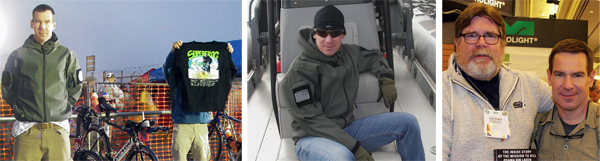
(left) At the Phil H. Bucklew Naval Special Warfare Center for SuperSEAL triathlon. (center) On board an 11-meter RIB off Coronado Island. (right) With Naval Special Warfare Development Group original member and author Chuck Pfarrer

(left) At the Phil H. Bucklew Naval Special Warfare Center for SuperSEAL triathlon. (center) On board an 11-meter RIB off Coronado Island. (right) With Naval Special Warfare Development Group original member and author Chuck Pfarrer.

One of many things that makes them exceptional is they do all this set against the backdrop of a necessity to maintain operational security and rarely disclose their true challenges among non-military relationships. This makes their tremendous burden even greater.

Naval Special Warfare is a community worthy of effusive praise and recognition. They have shouldered a mighty share of the burden of the Vietnam Conflict, numerous “peace time” actions, Operation Iraqi Freedom, the Global War on Terror and other conflicts while maintaining a level of inter-unit quality almost unmatched in the world.  On their 52nd birthday it’s worth acknowledging their contribution.

Authors Note: If you are a fan of books about the U.S. Naval Special Warfare Teams you may find my review for MILTECHREV.com of Greg E. Mathieson Sr. and David Gatley’s impressive new book, Naval Special Warfare here of interest. It is the definitive work on Naval Special Warfare available to the public:

seals10

2014 New Year's fireworks on the Burj Khalifa, Dhubai.

2014 New Year’s fireworks on the Burj Khalifa, Dhubai.

1. You do not know when you will die.

2. It will be sooner than you expect.

3. There will be things you wish you had done.

4. Not fearing death makes you more alive.

5. You will fail in life. Try again. Don’t give up.

6. Don’t fear failure. Instead, fear not trying.

7. Happiness is a balance of striving for new and being content with now. Do both.

8. True friends are one of the most important things.

9. Understand what you can control and control it vigorously. Let the rest go.

10. Plan for later but live for now

By Tom Demerly.

the-waltons-40th-anniversary-today-show-interview

I walked into my friend Mark’s house around 6:30 PM one evening. He lives about a block away. I was returning, in a small way, one of the many big favors he has done for me since I moved back to Michigan. What I saw was shocking. To me at least.

Mark and his wife were seated at a small, round table with a tablecloth. They each had plates, and cups. They were eating food with knives, forks and spoons. It was like the set of a 1950’s movie: a husband and wife having dinner around 6:30 PM, a new baby sound asleep in another room. It was positively… normal.

It struck me pretty hard: This is what that fleeting, ephemeral thing called “normal” looks like.

Like many people I didn’t have  a “normal” family when I was a kid. I had a dad with mental problems, a single mom, and two sisters long gone for those reasons. My childhood was not bad. I didn’t have everything I wanted, I did have everything I needed. But my childhood was different from what I saw at Mark’s house that night.

My family was fractured. Fractured by distance, disapproval, loneliness, lack of communication, forgiveness and trust. In other words, we’re like most families. We have our problems. We have more skeletons than a medical school.  One sister got married in Africa; I’ve got a niece in who lives in Japan. The only way we could keep our distance any better would involve NASA.

Two things that happened in the last decade caused me to revisit the value of family: I almost died and so did my 91-year old mom. As I type this she lays in Beaumont Hospital after two heart surgeries in three days.

When I moved back to Michigan my friends urged me to moderate the fractures in my family. It took time, but I did. It was frightening and humbling. It has also been rewarding and invigorating.

Peace efforts within a family are a lot like negotiating between warring factions in a third world country. Since I have a little exposure to the later, I used what I learned there.

Firstly, you approach it with ownership of your own mistakes and a lot of humility. Secondly, you do a lot of listening. You do what author Stephen Covey said, “Seek first to understand, then to be understood.” Thirdly, you bring some pretty thick skin.

A critical mindset is that you have to leave the past where it belongs- behind you.  You talk a lot about how things could be. Should be. You replace blame with empathy; you replace the lesser past with the idea of a greater future. And you focus on the half of the glass that is full. And mostly, you forgive. Living in the previous world of family arguments, disconnects, betrayals, broken promises and let-downs cannot result in a constructive dialog. It doesn’t foster healing.

Not everyone will get it at first. Families are made of complex personalities and complex pasts. But the behaviors of listening, understanding and forgiving are as contagious as the ones that drive families apart.

Ultimately we decide which behaviors we want in our family by which ones we choose to live in our present. When we make that decision and live it, we get along better.

By Tom Demerly.

1be786d9fe2cdc1fa6a77072d7adefc3

When I woke up in the room I had no idea where I was but something smelled like dust and urine.

There was a man I had never seen before asleep in the twin bed next to the one I was in. He snored.

I sat up, put my feet on the floor and saw they were in decent shape, slightly swollen, skin mostly intact, nine toenails, only one gone. Much better than last time. My mouth was dry. I had a headache. I could stand on my own though.

It took two showers to get all the dust, sand, grime, urine, blood, smoke, stale sunscreen and even fabric bits off of me. I was thankful I didn’t run out of hot water. There were some dead insects in my hair that rinsed out. I took mouthfuls of warm water from the shower. Brushed my teeth four times. After I threw out the clothing that was producing the smell of piss and dust in the room I actually felt clean.

Petra, Jordan, 9 November, 2001; 105.38 miles from the Gaza Strip, 168 miles (by helicopter) on heading 24.1 degrees to the Syrian border, 267.16 miles on heading 55.4 degrees to Iraq.

The Jordan Telecom Desert Cup was a 105-mile non-stop running race from Wadi Rum to Petra, Jordan. I had just finished as the top American, or the second American, I don’t remember which. I had informally allied with a man named Andrew during the previous night. He was a soft-core pornographer from South Africa.

1b0dab114e831d2475db1c5f161b0725

Andrew and I had a mutual interest in racing together. As the youngest male in the race at 22 he was competing for a special prize at the finish line. I had an interest in being the top U.S. finisher. If we worked together to keep each other on course, awake and from freezing to death in the high desert during the night, then made a 30-mile dash at sunrise into Petra we would each achieve our independent goals.

As we trotted into the desert night, packs on our backs, Andrew recounted lurid tales of his business to keep us awake. He met an opulently configured, 18-year old aspiring young lass he described as a… “milk maid”, apparently a common South African colloquialism. The pair drove her father’s expensive Land Rover to the beach one night where she intended to “audition”. Apparently her performance was so commanding that Andrew neglected to notice the tide coming in. It swamped their Land Rover. They only noticed when it began to float and teeter. They were forced to immediately abandon the vehicle, sans apparel, before it capsized. They were left naked on the beach with a long walk ahead of them. Andrew volunteered for the nude jog for help while the young lady searched the tide for swaddling clothes. He considered it training for this race.

It was so cold in the freezing, high desert wind just before dawn that we stopped at a nomadic encampment and asked to roll ourselves up in their rugs for warmth. The incredulous Bedouins obliged and we made ourselves into a kind of human shawarma-wrap in their tent carpets. I promptly passed out. Andrew did too. We slept for over an hour.

Just before we arrived at the finish line we descended a series of ancient steps carved into the wall of a deep desert wadi or canyon. They led to the Lost City of Petra. Jesus Christ had walked these steps. It was said that if you descend these steps you are cleansed of your sins. I could use that.

I remembered we were lunching with staff from the U.S. Embassy in Syria. After I dressed and returned from lunch I learned the man in my room was a U.S. helicopter pilot, and this adventure had only just started.

b504a3bb3c605a3e16327fb56aa9b5aa

By Tom Demerly.

cali

I survived the collapse of Detroit, the Middle East after 9/11 and watched East Germans through binoculars while dodging spies. I’ve never had a sense of looming change like California. The ground beneath your feet is unstable, and it’s not just geology.

California is ruled by silent fear. The culture is collectively grasping the dead image of the California dream.

It must be similar to sailing on the RMS Titanic in 1912 or being on Wall Street on 9/10. Everything seems fine, but there is a tectonic uneasiness. Consider that both the Titanic tragedy and the 9/11 attacks happened by the slightest of circumstances. California is vulnerable to a similar flutter of the butterfly’s wings. It is a culture perched on the fulcrum of the American dream, or nightmare. It can so easily go either way.

I lived in Mission Viejo, California for a year. The neighborhood was idyllic with soaring palms, manicured landscaping, and artificial lakes. Traffic jams of BMW’s delivered perfectly coiffed teenagers to the local high school in what looked like a cattle call for an Abercrombie catalog shoot. If nothing else, Californians are beautiful.

When I arrived in California I walked around a corner to discover two 40-ish females hefting their breasts in comparison. “Oh!” The woman remarked when she noticed me, “We’re sorry… we just got these.” Californians eat natural foods but have artificial breasts. They are afraid of the inevitability of aging and spend enormous amounts in a losing battle to avoid it. There is a cultural aversion to dressing your age in California.

California is crowded. So crowded that I lived inside a massive, sprawling strip mall. The expanse of strip malls is like a skin-eating disease on the terrain. The lesions have connected with each other across the tissue of the landscape to engulf the corporate housing boxes of consumers. We were caged there between purchases and labor shifts.  It resembled an above ground ant nest with nice landscaping. The ants drove Benzs instead of following scent trails.

My cell between the strip malls in California had 2 windows, 2 rooms and cost about $1600 a month. Now I live in a house with 17 windows, 9 rooms and it is $800 a month. I also have a massive yard. In California I slept with my head 9 feet from the front bumpers of cars parked outside. And their constantly bleating alarms. I did have a nice pool though.

Southern California is fragile. One morning on my five-mile commute to work a traffic light went out. One traffic light. The ripple effect throughout Orange County was bizarre. Nearly the entire distance of my five-mile route was delayed or stopped because of one traffic light failure. One. What would happen if there were power failures here like the East Coast power failure of 2003?

California works (now) because of a little known but real principle of space management called the “chicken coop” theory: When there are too many chickens in the coop to all sit on the floor at once you must continually bang on the side of the coop to keep some chickens in the air. The result is an unsustainable society of increasingly collective fatigue. If every Californian had to drive somewhere at once the roads could not handle the number of vehicles. If too many Californians flush their toilets at once…

You may ask, “What about the authentic surf culture? The liberal, progressive attitude and the tolerant society?” Those are the depictions of California we see in themed mall stores, music videos and media. The reality has shifted to an industry of depicting those things. Instead of being California, California is in the business of selling California to the rest of the world, or at least what they think California is. Or was.

What was most embarrassing is that many Californians were very up-tight about being laid-back. They were incapable of poking fun at themselves. When they made fun of me for calling a carbonated beverage “pop” I would reply, “Sorry dude, it’s totally soda man, that was so lame of me…” they would stare at me blankly, as if I had just taken the laid back Dude-God’s name in vein. The reality is that the California surfer dude is simply a hillbilly with a trust fund. Sorry to totally harsh on your scene dudes.

Mostly, Californians are lonely and afraid, and I was one of them. I asked a close friend who was moving if he needed help. He said, in all seriousness, “I don’t want you to help me because you might need me to help you.” That was California in a nutshell.

I went to the same pretty little check out girl at the grocery store every time for a year. The last week I lived there the girl asked, “Why do you always come through my line?”

“I think you are pretty.” I told her. She told me she was taking her break at six and asked if I wanted to have coffee with her next door at Starbucks.

“No,” I said. “I am moving back to Detroit tomorrow.”