Archive

Tag Archives: Tom Demerly

By Tom Demerly.

81b63d97a3731980aa9fd7e0f4f513ff

Contrary to popular belief, rich people don’t cause other people to be poor. That’s a feeble excuse for our national condition.

There is a sentiment that the distribution of wealth in the United States, as inequitable as it is, comes from the wealthy “keeping the little man down”.  To horde disproportionate amounts of wealth- taking it from the backs of Walmart workers.

That’s wrong.  We’re not victims, we’re Americans. “The Man” isn’t keeping us down. That’s just an excuse. It’s us who let us down, and I am a perfect example.

I started and owned a successful business for over 16 years. Then lost everything. I lost my savings, my house, my car, my belongings, my income, my employees, my business, even my health… everything. There were circumstances that contributed to my loss. But ultimately I am the one responsible. Part of the proof is that two friends of mine in the same area and the same industry survived the recession. They survived because they made better decisions than me. They are better businessmen than me.

I am a reason why America failed during this last decade. There are a lot of “me” out there.

There is a reason to own this. Until we own the recession, the mortgage crisis, the banking collapse- unless we own these disasters, on an individual basis, we cannot correct them. We won’t truly recover.

The first step to correcting any problem is owning it. Taking responsibility for it. We need to take a painful and specific look at where we made bad decisions individually that led to our financial hardship. Once we understand how we got here, on an individual basis, we can get out, on an individual basis. America is built on the backs of individuals, and it fell on the backs of individuals who let it down. Guys like me.

Dearborn, Michigan, 2009 on Michigan Ave.

Abandoned businesses, downtown Dearborn, Michigan in 2009 on Michigan Ave.

What did I do wrong? Too much credit, not enough saving. Poor planning. Relying on the fact that money was easy to make and would always be easy to make. Becoming complacent, assuming business would always be good. Trusting the wrong institutions and people. Not saving enough for a rainy day. Beginning to think that earning a living was easy and success was common. Ignoring the basics. Never planning for a downturn in business. Those are some of the general mistakes I made. When you apply those mistakes to a huge company like General Motors before their bankruptcy, the banks before their collapse and the real estate market you see how these behaviors rippled from the individual through our entire culture. It was a house of cards. When the wind finally blew it didn’t need to blow very hard for it to topple.

So what now?

First, we need to own the problem on an individual basis. Look at how we failed. Individually, collectively. Then, with that knowledge, return to the basics of saving and building, working and taking risk, thinking and innovating. Our economic system, as chaotic as it seems, rewards risk and hard work with opulent success and penalizes failure with ruthless disregard and gut-wrenching impunity. It also rewards us with a second chance. It isn’t easy, in fact it is extremely difficult. My life these past few years has been more difficult than I care to share. It’s humiliating. Our system does work though. It provides a level of opportunity, however abrasive and difficult to achieve, that is nearly unmatched in the world. This is the greatest country, the land of opportunity, but it is also a ruthless arbiter.

It demands we own our past before we can earn our future. But our system also forgives.

In my case that meant a lot of tough years. Now I am certain I’ll never make these mistakes again. I’m thankful for a country that allows me to start again with what I’ve learned, no matter how difficult it is. That is the American way.

By Tom Demerly.

Slide07

Amazon.com has lead the online customer service race with their patented “One Click” buying system for web purchases. It is fast, convenient and respectful.

The single largest retail mistake is failing to make the customer experience the top priority. Every operational decision should emanate from customer service and convenience.

Modern retailers have fallen into four traps of subordinating customer service:

  1. The sales staff is very poor.
  2. The checkout process is too long.
  3. They offer repeated, hollow apologies.
  4. They try to collect too much information without a reward.

First: Retail is at the bottom of the job ladder in all but a handful of niche markets. The pay is bad, the hours are long and the work is not inspiring.  If retailers spent more time training staff personally, not through an automated curriculum, staff quality would improve and a basic human need for the employee would be fulfilled; the need for interaction as a valued person. The most demoralizing part of being an employee is feeling like a poorly maintained cog in a machine. Everything from automated job applications to slide show training sends a clear message to employees; they’re a commodity. Personal and recurrent customer service training communicates and maintains not only the standards of customer service but also the nuances like tone, posture and other forms of subtle conduct. Retailers need to invest time in personally mentoring their sales staff. Then sales staff will mentor customers into being loyal.

Second: In a race to collect data and maintain inventory retailers have adopted checkout systems that take too long. I wrote about this here. The checkout experience has become painful. It should be quick and respectful. Two key mistakes are poorly handled defects in the transaction and making the customer wait. Customers: It’s not your fault if a bar code scans incorrectly. If even five percent of customers walked out when a bar code or checkout error occurred the retail industry would change. Vote with your dollars. If checkout is cumbersome or protracted, don’t reward that with the sale. Shop elsewhere.

generalstore

The basics of retail excellence haven’t changed in a century: Courtesy, quick check-out, owning mistakes and compensating the customer for them and respecting the customer’s privacy and time.

Third: Sincerely apologizing for a customer service error is step one, but the pay-off is fixing it. Repeatedly apologizing makes the retailer look less competent. The best way for a retailer to say, “I’m sorry” is to quickly solve the problem. If an item is incorrectly priced the retailer should deeply discount the item on the spot to compensate for the mistake and as an incentive to return. The apology has to be tangible.  Five hollow “I’m sorry”s from a minimum wage Walmartian mean nothing.

“The best way for a retailer to say, “I’m sorry” is to quickly solve the problem.”

Finally: Retailers collect too much data. This is especially true of online retailers and service providers like cell phone companies. While collecting customer data is important in diffusing frustration from a bad experience (when the first three topics in this article are ignored) retailers miss two key steps in customer data collection: 1. Customers should be compensated for their data. 2. Customers should receive an acknowledgement that their data made a difference. It is frustrating to throw your personal information and opinions into a black hole and never know what happened to them.

This list is short but each of these items forms the foundation of building a loyal customer base. That is the key to profitability.

People shop at Walmart because they have to. People shop at Target because they like to. If you were a retailer, which customer would you rather have? If you’re a customer, which experience would you rather reinforce?

By Tom Demerly.

thankavet2

The little girl looked like she staggered off the page of a United Nations poster. She was maybe 9, maybe 50 pounds. Black skin was rent by wrinkles baked from the merciless dryness. Her cracked lips hung below a dry mouth left slack from exhaustion and the inertia of an impending slow death. Life expectancy here is the lowest in the world. A healthy male lives to 45. Infant mortality is the highest.

We sorted through our snacks and handed her brightly colored candy that contrasted absurdly with the skin of her dusty black, emaciated hand. She took the few morsels and I wondered how she would get them down her tiny, dry throat or if what teeth she had left would break trying to eat them.

What happened next was a life lesson I will never forget, and it changed my perspective on humanity.

Seeing she had a few precious calories that may buy more desperate hours on this earth, boys twice and three times her size set upon her. They ignored our presence, knocking her to the ground, scattering the candy. They fought over it like darting fish to bait crumbs. In only seconds the candies were gone, picked from the dusty ground by the swirling horde.

And the girl lay there. But the worst was yet to come. What happened then was shocking and sad.

A normal child in this circumstance would cry and wail. But this girl had neither the energy for a tantrum or the moisture for tears. Even worse, she was so accustomed to living at the bottom of the food chain this was her normal. She slowly pushed herself up, stood on shaky legs, gave us a hollow stare and walked away. Nothing.

Welcome to the rest of the world.

That our society includes a large population who regard military service as obscene, outdated, unnecessary or barbaric is a testimony to its success. Our military provides a curtain of safety so impermeable we have an entire population who has never known fear, oppression, hunger or terror. They live in a bubble of humanity and compassion so complete they are oblivious to the dark side of human nature. The frail walls of that bubble are protected and maintained by a minority of our population who make the commitment to serve our military. Make no mistake, without them our lives would be very different. If you are naive enough to believe otherwise you do so by their grace.

So regardless of your political affiliation, your views; even though you can’t find Eritrea, Somalia, Chad or Congo on a map. Even though you think what is happening right now “over there” is none of our business, consider that you think that because you are well insulated from a reality you cannot conceive. And that someone worked hard to maintain that insulation from the rest of the world.

If you meet one of the people who maintain that insulation from a reality harsher than you can imagine and only a four-hour plane ride away, thank them.

By Tom Demerly.

-738eb62b55ead658

Captains Philips is tense and dramatic, with a sense of pacing and realism that holds you hostage.

Director Paul Greengrass has married the elements of realism, drama and film style to build a depiction of the 2009 pirate seizure of the U.S. flagged container ship Maersk Alabama off the East African coast that resulted in a high seas hostage crisis with its Captain, Richard Philips.

From the terse, abrupt opening pace that makes brilliant use of not showing Tom Hanks’ entire face as Captain Philips in any of the first scenes to the nervous dialogue, Greengrass speaks to the detachment and fear of America toward the boiling tensions of West Africa. The discussion of fears about terrorism and piracy are vague, nearly absent, like our own awareness and detachment from things that only happen “over there”.

The real container ship Maersk Alabama.

The real container ship Maersk Alabama.

Another masterful depiction is the Somali pirate camp and the pirates themselves.  Somali Barkhad Abdi is frighteningly authentic in the role of Muse, the lead pirate. He should be. Abdi is a Somali from Mogadishu who immigrated to the U.S. after being smuggled out of Somalia. He attended the University of Minnesota and answered an open casting call for Captain Philips that landed him and three of his friend roles as the pirates.

The scenes in Somalia are shot in a grainy sepia with shaky camera movements that suggest chaos and unrest. Pan back to the U.S. scenes shot in serenity and with a steady cam and you have a rich visual contrast. These visual elements play over a soundtrack that is large, dark and ominous. The strong score looms in the background then rises to build tension in key scenes. It is a subtle but effective use of the musical score.

Scenes of the pirate takedown of the Maersk Alabama are authentic and rife with real-world action. The supporting cast of the Maersk’s crew holds up the story with a more than adequate depiction of the tension during the boarding and their impressive mastery of the situation during the standoff. Pacing here is snappy and never gets bogged down.

13535252-mmmain

Barkhad Abdi is authentic in the role of the lead pirate. He should be, he is a Somali ex-pat who studied in the U.S.

The film transitions heavily once Captain Philips is taken hostage on the ship’s ocean going lifeboat. The desperation and hopelessness begins to erode the composure of everyone crammed into the little vessel. The open ocean scenes must have had significant cooperation from the U.S. Navy, especially when the U.S.S. Bainbridge and the U.S.S. Halyburton arrive on station. Few scenes are as inspiring as a U.S. Arleigh Burke class destroyer cutting a fast turn toward harm’s way.

The movie changes briskly to U.S. Navy SEALs parachuting into the ocean to board the Bainbridge and supervise the negotiation for the release of Capt Philips. Again, the depiction has a documentary feel to it and the action is tense and quick. A keen trick of the filmmaking was to build the pace consistently until the climax happens with a shock like quality that adds realism to an already eyewitness experience. It’s over before you know it.

The film ramps up the tension as Captain Philips is trapped aboard the lifeboat with the Somalis.

The film ramps up the tension as Captain Philips is trapped aboard the lifeboat with the Somalis.

Greengrass and Hanks save the best for last as the closing scene is a masterwork of acting by Tom Hanks. His depiction of Captain Philips back on the ship is so real it is disturbing to see.

Captain Philips is a great film and a very capable record of the events as reported in the Maersk Alabama piracy. We get an interesting look at the Naval Special Warfare sniper control system and what feels like an accurate depiction of the incident. It’s also good film craft made stronger by Tom Hanks’ typically great acting. In this role as Philips he is at his best ever. Add to this the authenticity of the Somali characters and the movie combines tense drama with documentary realism into a great film that is absolutely more than worthy of seeing.

By Tom Demerly.

ff4e7_1220860

It’s time to give you up.

The polo shirt is bad. It is dated and ugly. The polo shirt is a dreadful set of unsavory compromises that removes all that is good from its influences, the collared shirt and the t-shirt. It leaves only the fashion detritus of its origins. It needs to go away once and for all.

The polo shirt has become the default uniform of the panderer. It is silk screened and embroidered for groveling sales reps at trade shows, annoying, bushy tailed clerks in corporate mall stores and men and… God forbid, women who can’t decide if they are laid back enough for a t-shirt or need to put on an actual dress shirt.

photo shirt 600 copy

The polo shirt is the no-man’s land of the fashion world and like the unfortunate souls who made the term “no-man’s land” common in WWI, it needs to die an unsavory death between the trenches and never return. It is the uniform of the fence-sitter.

tumblr_inline_mjo19gcIuV1r5whzi

No one aspires to wear a polo shirt except Rick Astley and pop-collar adolescent males in coastal regions who are a guidance system for a penis at frat parties. The sales reps that don them do so out of fashion ignorance or, for the few of them that know, a resignation that it is a kind of corporate retail uniform, a dreadful reality that customer service and selling things is still relegated to the dregs of the vocational spectrum.

Never put on a polo shirt.

100509-katy-perry-400

In utter distain for the polo Karl Lagerfeld may have gone too far, but then again, maybe not…

The polo shirt typifies everything that is bad about compromise. It is not attractive, functional or comfortable. Most of all it makes the statement that the wearer is entrenched firmly in the most ghastly netherworld of compromise: The pus-colored middle ground. The pointless attempt to try to be all things to all people.

Sony’s chairman Akio Morita told Steve Jobs that after the war, no one had any clothes. So they wore uniforms; polo shirts.

Sony’s chairman Akio Morita told Steve Jobs that after the war, no one had any clothes. So they wore uniforms; polo shirts.

Forward thinking fashionistas know there is an alternative to the polo shirt. Look at Steve Jobs’ iconic black turtleneck. Look at Roy Halston’s attachment to the turtleneck, and look at Karl Lagerfeld’s pointed assault on the mamby-pamby with his operatic mega-collars that, I’ll respectfully suggest, are a male compensational accoutrement. They are, nonetheless, not a polo shirt.

Take a tip from Roy Halston: Slick your hair back, cut it off, flop it to the side but don't wear polo shirts.

Take a tip from Roy Halston: Slick your hair back, cut it off, flop it to the side but don’t wear polo shirts.

Pick a side people: Either put on a t-shirt, join the 21st century and wear a turtle neck or just get on with it and put on a real shirt with buttons. But God forbid, use the poor, unfortunate fabric demeaned to the pattern of the polo shirt for something else, like wiping a dipstick clean to check engine oil.

By Tom Demerly.

NOTE: This story is fiction based on news accounts. It does not contain factual depictions of any events from official sources.

02_mall_of_america-1-_wide-01e34c3930b2ab81b6aae3e3ed875a9c91de04a9-s6-c30

10:17 Local (15:17 UTC), Monday, 7 October 2013, Administrative Offices, Triple Five Group, Mall of the Americas, Bloomington, Minnesota, United States.

Bob Davis felt a chill race up his spine and down his arms. He saw his hands tremble on the desk in front of him. His ironic sense of humor kicked in when he thought, “Well, Bob, that’s why they call it terror-ism.” He looked at the two men sitting across from him, their mouths moving, but he didn’t hear the words for a second. He forced himself to tune back in to their meeting despite a feeling that this couldn’t be real. It was like walking onto the pages of a Clancy novel.

“…Possibly V-IED’s in the parking lots, ah, that means vehicle-borne improvised explosive devices, a car or truck bomb, like Timothy McVeigh used on the Federal Building, if you recall… There could be some form of crude, locally produced chemical weapon; chlorine gas, something like that. Those have big shock value with the media.  There definitely will be explosives and assault weapons used. They can source that equipment locally and may already have from gun shows around the Midwest. We have agents from the Bureau and the ATF at those shows. Even the NRA people have been helping us, but we can’t catch everything.”

Bob Davis manages operations for the Mall of the Americas in Bloomington, Minnesota. Over the past eight years he has seen women give birth there, the most elaborate shoplifting schemes every devised (and busted), a ring of prostitutes operating in the mall and a coyote that somehow made its way inside the giant shopping center on a busy Saturday night. This was the first time he sat across his desk from two FBI agents getting briefed on plans for a possible Al Qaeda style suicide attack on his mall during Black Friday, the busiest shopping day of the year in the busiest mall in the United States.

Davis was being briefed by the FBI about possible terrorist attacks at the Mall of the Americas two days after a pair of U.S. special operations raids, one in Libya, and one in Somalia. Sixteen days earlier Al Shabaab militants attacked the Westlake Mall, a U.S. style shopping center in Nairobi, Kenya. The FBI men told Davis it was a miracle only 67 people were killed in the Africa mall attack. Based on the damage to the mall, they felt the toll would have been higher. “Westlake was a test run for Al Shabaab. It was training for them, a field exercise. They won’t make the same mistakes twice.”

cb86cb0707be434dab15d4465e891006-f5dfc1e8443f45f985fc34b03738c649-0_t607

The two FBI agents pulled up a file on their tablet computer. “Our estimates of casualties here at Mall of the America in a Black Friday attack are between 400 and 800 killed.”  Davis felt the grip of what an attack would mean. The country, the economy, Minnesota, his community, his tenants, his family, his job. He remembered the economic impact from the 9/11 attacks. He was 40 years old then, working for the Taubman Centers back in Michigan. They managed a large number of shopping malls around the U.S. The 9/11 terror attacks had gutted the company’s occupancy in the next five years when the economy tanked. And that hadn’t been a direct attack on a U.S. shopping center. What the FBI agents were describing to Davis now could sink the shopping mall industry in the United States.

“The real damage, though,” Continued the larger agent with the iPad, “will be the broader economic impact on U.S. business. Retail for the holiday season would be destroyed. Even the e-commerce guys, like Amazon.com, would take a hit since people would not only be afraid to shop at a mall, they would be afraid to shop, period, because of concern over another economic crash. This is the new 9/11. It really would be Black Friday”

Bill Davis had one question for the two FBI men, “So, what do we do to make sure this doesn’t happen?”

“Well,” The smaller of the two FBI men said, “We think we may have reduced the capabilities of the attackers to execute their previous plans, but we still need your cooperation here at Mall of the Americas, Mr. Davis.”

“I’m all ears guys.”

02:45 Local (23:45, 2 October UTC), Thursday, 3 October 2013, Camp Lemmonier, Djibouti-Ambouli International Airport, Headquarters, Combined Joint Task Force – Horn of Africa (CJTF-HOA).

Nine men were arrested in Africa following the Kenyan mall attack. It took a few days for… the authorities… to extract information from those nine men. Taken one at a time none of them provided anything that seemed of much use. But each minor detail they provided, from how they paid for their meals to how they learned to use their weapons, began to congeal into a pattern. When that pattern was fit against the sides of other patterns, now electronically in a basement in Langley, Virginia, there was a horrific conclusion: The U.S. was next.

Once that conclusion was reached the Director of National Intelligence was briefed. He briefed the President, a man deeply embroiled with a domestic political battle when Congress refused to approve economic changes forcing a shutdown of some government offices. The President and his staff were busy with, among other things, trying to manage the first ever White House online flaming campaign via e-mail and social media. Their target was Congress and their intent was to depict them as uncompromising and unreasonable. To his credit as Commander in Chief, when the briefing materials on the Nairobi attacks reached his desk, the President did not delay. He set the wheels in motion via Admiral William H. McRaven at MacDill AFB. McRaven is the ninth man to command the United States Special Operations Command at MacDill, a unified command that coordinates the training, equipment, doctrine and employment of all U.S. special operations units.

McRaven’s units include some of the most sophisticated military intelligence gathering and analysis capabilities in the world. These operate organically to the special operations community, from the field around the world back to MacDill, largely for the purposes of mission planning. The strategic intelligence may flow upward from McRaven’s units, or downward from Langley, but flow it did, in both directions. When the intelligence McRaven’s units had collected was collated with the information garnered from the West Lake Mall attack in Kenya the picture was crystal clear.

A big part of that picture pointed back to a beach house in the Somali coastal city of Barawa.
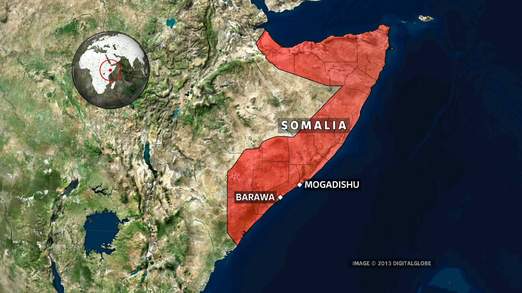
map-1-522x293

Force Recon Marines from the Special Purpose Marine Air Ground Task Force 12 (SPMAGTF-12) at Camp Lemonnier, Djibouti, had been training local indigenous forces in the region.  They also collected intelligence from them during training. Both special operations and CIA operatives joined the activities related to Somalia at Camp Lemonnier to help with data collection and facilitate better, more context-based interpretation of intel. SPMAGTF Recon Marines had even conducted beach reconnaissance of some areas of the Barawa, Somalia coastline.  That hydrographic survey data, combined with signals intelligence, some limited HUMINT (human intelligence from operatives on the ground in the target area), satellite and drone images merged with data from the West Lake Mall detainee interviews.

Back at Camp Lemonnier, at MacDill AFB in Florida, on a ship off the coast of East Africa and in Langley, Virginia, planners held a web conference to review the final plans for a direct action mission to interdict the capability of Al Shabaab to carry out their planned U.S. mall attack.

It was Thursday night. The raid on Barawa was a “go”.
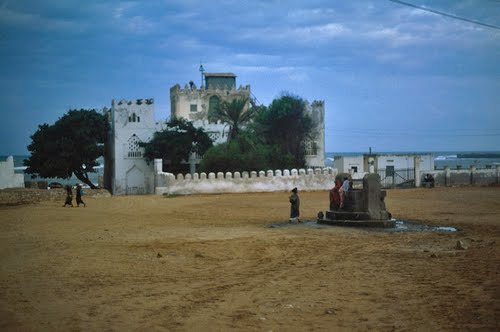
barawa compound

03:50 Local (12:50 UTC), Saturday, 5 October 2013, 473 meters off the coast of Baraawe, Somalia.

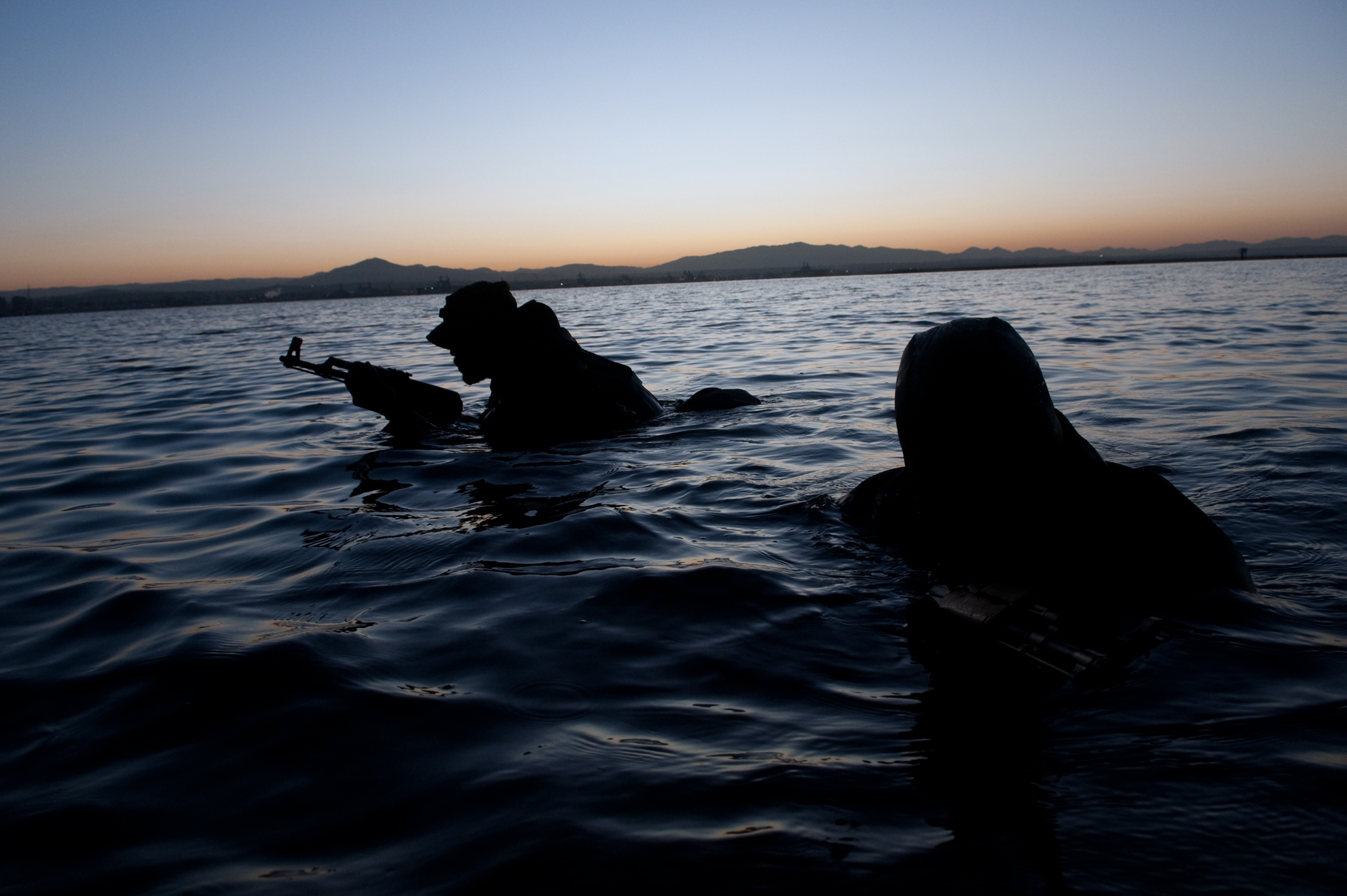
High tide hit the rocky beach off Baraawe, Somalia at 04:38 hours under a dim, waxing crescent moon. Just before high tide the incoming tidal current urged the twelve combat swimmers of the Naval Special Warfare Combat Interdiction Group (formerly “SEAL Team 6 or “DEVGRU”) toward the rocky outcrops that lay just off the Somali coast. Swimming along the surface was easy; the black African waters were warm. High clouds filtered what little moonlight there was.

The assault team had left their F470 CRRC boats almost 2 miles off shore to prevent visual detection of the assault boats from land. The boats used sound suppressed motors that were extremely quiet. After dropping off the combat swimmers the rigid inflatable boats immediately turned back out to sea for recovery on a U.S. Navy ship that was even now steaming back toward the coast after the insertion.

Navy SEAL photo downloads

The first element of the combat swimmer/assault team would hit the beach, remove their swim fins and floatation vests then cross inland on foot less than a kilometer south of their target, a large beachfront villa on the southern edge of Baraawe. They would turn immediately north toward the objective. This first six-man element of the team moved inland approximately 400 meters toward the concealment of low scrub. The other six-man element lay prone in the gently lapping waves of shallow water just off the beach until the flanking assault element was in place. A series of clicks on their updated, secure AN/PRC-126 radios would signal the first assault team was in place. Then the two teams would move toward the target, a two-story villa where the objective, a high value personnel target named Ahmed Abdi Godane, was supposed to be located.

The two elements of the assault team were in place. The wind was gentle coming just barely off the ocean, it was 71 degrees Fahrenheit. The sun would not rise for another hour and forty minutes. Each member of the second assault element heard the clicks in their headset when the first element got into position. They responded with a single click of the mic button. Then each team member checked right, then left, clearing his field of fire and began a low, quick advance across the beach, trending right or north to the target.

Screen Shot 2013-10-06 at 4.57.30 PM

The building was surrounded by low walls on three sides and a high wall at the back. It made sense to go over the lower sections of the walls, enter the courtyard section, assault any threats that were providing security and then conduct the entry. Once the entry began, speed and violence of action was their primary tactic. They had to overwhelm what security may be in place quickly, assault the target building and secure the objective, detain Ahmed Abdi Godane or neutralize him, then exfil the target area. The primary extract route was by helo extraction near a defensible LZ south of the target area. The secondary extract was back out to sea.

Overhead surveillance by an RQ-170 Sentinel drone would provide a live video feed to the command center back at MacDill and help give the Naval Special Warfare operators on the beach a high degree of situational awareness via radio. What the Sentinel video showed now was troubling.  There were more personnel between the insertion point and the objective than normal. Within the walled compound itself, no less than eight hot targets could be seen, some of them milling around from target to target as if they were spreading information. Outside, there were more than ten hot spots between the insertion point at the beach and the objective.  The insertion would almost certainly involve contact earlier than they planned.

A common feature of operations in this region is that its difficult to tell who is a combatant and who is not from overhead surveillance. The hot spot on the drone feed may be a fisherman rigging his boat to go out at first light, or an insurgent walking a security perimeter armed with an automatic weapon and grenades. Until the assault team got eyes on they would not know from the drone feed. They didn’t have to wait to see to find out.

The insurgents initiated contact with one man firing a single round at one of the SEALs as he moved to a concealed position across the beach to establish the flanking position. The single round alerted every other sentry. The SEAL’s weapons were suppressed.  When another assault team member put two rounds into the insurgent it didn’t make enough noise to be heard back at the compound a couple hundred meters away. Nonetheless everyone in the compound was alerted by the single shot, then the silence. Now they were coming outside the wall.

The assault team worked an “L” shaped hasty ambush on the objective, both teams directing controlled fire toward targets they could see. When the volume of returning fire began to increase the SEAL assault team leader radioed for a pair of Viper gunships from an assault ship orbiting off the coast to swing inland for fire support.

Take-off_by_night

The Viper gunships, an upgraded version of the AH-1 Cobra helicopter, overflew the target from the ocean. They banked hard and attacked facing back out to sea to avoid collateral damage from their guns. When the rounds from the AH-1Z Viper ‘s 20 mm cannon hit the compound the result was like cracking open a hornet’s nest. The pilot and gunner could see personnel and vehicles scatter through their Thales Top Owl helmet imagery system. White streaks showed the path of gunfire reaching into the dark to find the assaulters.
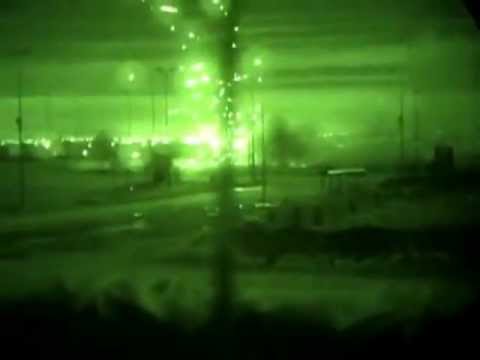
attacktosea

Special operations is a fragile craft with a courageous heritage. But the reality is lightly armed men are flung against sometimes heavily fortified targets in inferior numbers. Their primary advantage is speed and violence of action. If their objective is compromised before it can be overwhelmed their chances of success evaporate by the split second. The SEAL assault force commander on the beach knew this well, having operated on both sides of this double-edged sword for a decade. He knew he had men inland a few hundred meters who risked being cut off from the sea extraction route and that securing a landing zone for extraction was, at best, an iffy proposition now.

The assault was compromised before it began. He signaled for mission abort and emergency extraction.

This contingency was well drilled. The beach fire team put 40 mm grenade fire on the target while the inland team broke contact, peeling back toward the sand and the sea. Each man covered the next in a modified version of the classic peel maneuver to break contact. The Vipers overflew the target at high speed and low altitude, this time flying inland and banking left or south, the opposite direction as before, then paralleling the beach on a gun run to cover the SEALs.

Only twenty-five minutes after the first assault element crossed the beach the team was back in the water as their assault boats raced back inland to recover them. After a twenty-minute swim to the east and south the recovery boats spotted the infrared strobes of the assault teams and the recovery was completed. The Vipers left their orbit along the beach just before the SEALs were picked up off shore and the assault force collapsed back out to sea as the sun lit the horizon an angry orange. It would be hours or even days until U.S. assets would know if the target had been compromised in the raid.

The raid on Baraawe to capture Ahmed Abdi Godane did not go as planned. It also was not a failure. While the primary objective was not achieved it may have killed or wounded Godane. If not, it sent a clear message to Godane and his men: The U.S. will cross the beach to get you before you can get us. Regardless of the results on the beach that night in Baraawe that message was sent and received loud and clear.

10:58 Local (15:58 UTC), Monday, 7 October 2013, Administrative Offices, Triple Five Group, Mall of the Americas, Bloomington, Minnesota, United States. 

“We’ll have teams of agents operating undercover all the way from the parking lots to the inside of the mall itself.” The FBI agent told Bob Davis. “We need to put some of our people under cover as store employees and mall workers over the weekend too. Prior to the weekend we’ll be installing some additional surveillance equipment outside and inside the mall. We’re pretty sure we know what we’re looking for and this surveillance should prevent any operatives from gaining access to the mall.”

Davis thought he should be reassured. The thought of installing security checkpoints at the entrance and exit to the mall was unthinkable. It would ruin business and attract the wrong kind of media. This softer approach seemed much less… obtrusive. He hoped it was enough. He noticed his hand shake again.


By Tom Demerly.

rush_2660573bRon Howard’s RUSH is solidly one of the greatest films ever made, and perhaps the single best sporting film ever. It delivers you to the winner’s circle of epic excitement with intimate drama between iconic heroes.

There are two kinds of human contests: racing and warfare. What Gladiator and Saving Private Ryan did for drama and war, RUSH does for racing. There has never been a film this distinctly excellent and theatrical about any kind of sport. RUSH follows the story of racing rivals Niki Lauda, an exacting Austrian with the precise demeanor of an engineer and the wildly contrasting playboy Englishman James Hunt, his nemesis in the 1976 Formula 1 racing season.

Formula 1 is theater and RUSH is theater about theater. RUSH mainlines the classic themes of drama: danger, love, envy, loss, fear and redemption. It does so with excellent technical authenticity and careful reverence- albeit some historical license. And despite some heavy-handed sepia toning and a lack of real on-track camera work RUSH touches the hot buttons of F1 with incredible sound, vertiginous special effects and visuals. Because RUSH is a film for technical freaks (but not to the exclusion of all others) there is careful attention to on-track technical accuracy. But in the great craft of making movies for everyone in the audience Howard has built a film that will also thrill your wife or girlfriend.

RUSH moderates the pacing of on track action and back-story drama with seamless dexterity, a remarkable feat for the writing and editing crew. The movie is beautifully paced and builds to a massive climax then settles with an absolute masterpiece epilogue.

An intricate part of RUSH is the remarkable casting.  Chris Hemsworth as James Hunt and Daniel Brühl as Niki Lauda are so precisely cast they interchange almost seamlessly with footage of the real Hunt and Lauda toward the end of the film.

article-0-192CE93A000005DC-98_634x286

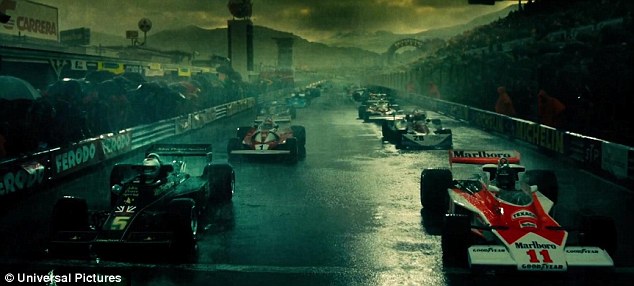
The murky sepia processing of some scenes in RUSH does get tedious but doesn’t detract from the masterful tapestry of storytelling.

The vintage feel of RUSH, while a bit overdone, does trace the beginnings of the modern age of Formula 1 with fairytale quality. You see it as we remember it, in grainy flashbacks and muted hues. The frightening accident sequences depict the time dilation you’ll recognize from any car accident you’ve been in. If you have ever raced anything this movie is mainlining adrenaline.

An integral part of the movie and one of the key layers is Lauda dealing with fear after his crash and moderating the adversarial relationship with Hunt. Both these themes thread the perfect tapestry through Ron Howard’s masterful direction and Peter Morgan’s fine script writing. The themes are reinforced with a bit of fiction though. The punch-up between Hunt and a reporter never happened. Some aspects of Hunt and Lauda’s face offs are more directly attributed to them than they were recorded in real life. It isn’t documentary, but it is great storytelling. Each theme is executed with craft and elegance missing from all but the greatest movies. RUSH is a masterpiece that transcends filmmaking eras it is so perfect.

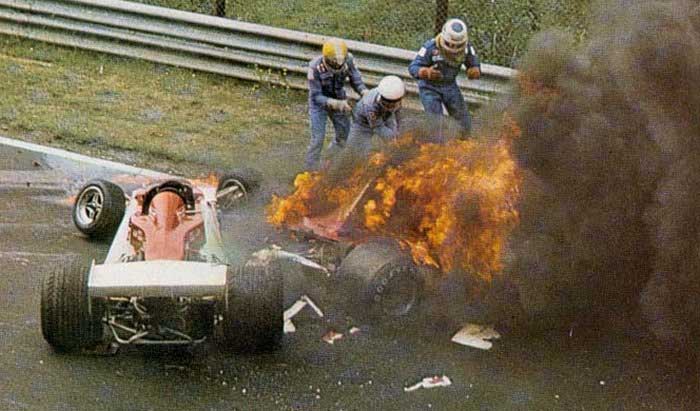
Rush_Niki Lauda crash scene

A photo of the actual crash with Niki Lauda in the 1976 German Gran Prix at the Nürburgring.

Ron Howard is lucky to have such an incredible, true drama as the conflict between James Hunt and Niki Lauda in 1976. He does not squander the gift of this story in RUSH. For those looking to RUSH as an inspirational tale pray to God we all have a James Hunt to our Niki Lauda.

While RUSH stops just short of being a perfect movie due to the overused film toning and a lack of real on-track camera work it is over the top as a perfect drama and amazing human story. The combination works like no other sports movie I’ve seen.  If you don’t’ get a rush from RUSH you belong in a morgue.

By Tom Demerly.

OLYMPUS DIGITAL CAMERASerkovsky was a deal maker. He started as an oil broker then disappeared for a decade. When he re-emerged among the now Russian, formerly Soviet, elite his skin looked better, he looked more healthy and less stressed despite the missing decade. He was tan now.

Andrei Serkovsky carried two cell phones and was never far from his laptop. That many of the people who dealt with him never saw his office wasn’t a surprise. He moved effortlessly in social circles from Madrid to Cairo, knew the streets of St. Petersburg very well and favored Istanbul as a meeting place. While in Istanbul he rode in an anonymous but chauffeured Benz SUV. You could not see the run-flat tires and armor plating by looking at the vehicle. In all ways, Serkovsky moved discreetly, worked quietly.

As the crisis began he sensed an opportunity. While it wasn’t what he told people he did for a living, his business was solutions. Solutions to problems, conflicts.

Syria was just such a problem. An opportunity.

He would not, of course, deal with the primary players. Assad was an egotistical ass, the Russian power brokers driven exclusively by profit and the U.S. president manacled to a moral compass Serkovsky didn’t bother with. As usual, this deal would surface through… contacts. The seeds would be planted: a suggestion, an arrangement, a test, some preparations. Then the plan may run its course and whoever felt the need would claim credit (but never blame). He only expected payment.

In the case of a substantial deal, like this one, it was his custom to take a holiday afterward, provided all ended well. Ibiza in the spring since he favored young girls, Malta most other times since it was quiet and safe. He knew families there and loved the sea surrounding it. He also favored the Greek isle of Lesbos with its excellent food and quaint capital of Mytilene. But all that came later.

For now he sat rolling on the swells in the dark off the Syrian coast. He was near the city of Tartus in the moon shadow of the Hadyah forest. Impervious to seasickness from years of small boat operations and low-level flight, Serkovsky watched as a small launch approached his own boat in the dark. A pelican case filled with documents and memory devices was transferred from vessel to vessel, but no words were exchanged. His own craft came about quickly and set course for Cyprus, immune to surveillance by the U.S., Russian and Syrian forces thanks to a signal emitter onboard that showed his boat as different things to each of the three countries watching its radar image. He was granted safe passage on the night sea.

Once on land Serkovsky moved quickly. He carefully scanned encrypted files from his rendezvous at sea. Once the files were verified, not against any set of records but more against his own intuition, he sent a secure e-mail to someone in St. Petersburg. The next morning, a Sunday, that person proposed an interesting idea over a typically opulent Sunday government brunch. The deal would seem better discussed over fresh salmon, mineral water, dark coffee, fresh bread with rich butter and sweet jam.

4646C7F1-2F8B-48D8-8367-F7EAE7C3A107_mw1024_n_s

At the same time a similar package of information reached a suburb of Virginia in the United States. From there it was e-mailed to an office in the basement of a very large building in Langley. Five hours and a long lunch later a phone in Washington D.C. rang and an identical set of plans to the ones in St. Petersburg was discussed.

Within both sets of plans, the one in St. Petersburg (now moved to Moscow) and the one in Washington D.C., were the protocols for contacts. These contacts were made. The deals were brokered and began to move forward. As agreed, the initial announcements in the west came via the BBC and were reported as a “Russian proposal”. Russian foreign minister Sergei Lavrov took initial ownership of the deal. He nearly tipped his hat when he said the deal would meet a “quick and, I hope, positive answer” from the U.S. and Syria.

It met with skepticism in Washington, at least within the White House. The people at Langley endorsed the solution but the D.C. crowd was a little more cautious, especially when they saw the price tag. Then again, it was cheaper than holding five destroyers and a carrier battle group in the Mediterranean for another three weeks- let alone launching Tomahawks.

Ultimately, the deal began to move forward. As Serkovsky monitored its progress, both overtly and through contacts, he did a mental accounting of his receipts from the deal. The Syrians were broke, so their contribution was the least significant and largely symbolic, or punitive. The Russian contribution was healthy since they were effectively getting credit for the deal and they were cash-rich. They were also good pays and Serkovsky had his closest contacts there, so he had the habit of leaning on them the most. He did most of his banking there so the Russians felt safe with him. The Americans were slow, reluctant pays given to complexity and delays since they were risk adverse to scandal. His payment had to be washed through some “black budget”, usually via Langley. Still, every U.S. dollar had a hundred cents, and $1.5 billion U.S. dollars held a lot of cents. They’d call it an “oil deal in the Bosporus region” or some bullshit.

For now all Serkovsky could do was watch and wait. The deal was on the table, or rather, being passed around under it, and it took time for both sides to take their part of ownership. Payment took another week.

Even so, Andrei Serkovsky allowed himself the distraction of clicking on a website for an Ibiza resort. It featured all night foam parties, pulsing trance music and a pair of 19 year old twins with long hair, one dark, one light, firm features and a penchant for wearing white in the foam parties then waking up on the beach with him.

He hoped the deal continued as proposed.

tamara-and-petra-ecclestone-bikini-candids-on-a-yacht-in-monaco-45-480x319

By Tom Demerly.

978-0-449-80695-1-1

The Max Brooks book, World War Z, opens today as a major summer blockbuster movie already projected to hit $50 million in its first weekend. This review is for the original book.

World War Z is dry-mouth terrifying. A book so masterful and infectious it is actually threatening. Brooks’ unique writing style weaves a sinister tapestry of fiction and reality. And therein lies the horrifying aspect of both this story and the style it is written in.

wwz10

Left, a scene from the movie inspired by Max Brooks’ “World War Z”. Right, the evacuation of Saigon at the end of the Vietnam War. Visual proof that the most terrifying aspect of Brooks’ fictional tale are not the zombies.

I am not a fan of the horror genre, either in film or books. I’ve seen enough real horror that the two-dimensional themes of mock horror are pale and irreverent to me. The people who play zombie video games and go to “zombie chase” events boggle me as shielded sheep so removed from the real world they need the mock stimulus of false terror. There is plenty of real terror in the world. I read World War Z at the urging of a friend who works in government service. “I don’t like zombie stories” I told her. “This book,” she said, “has nothing to do with zombies.”

As with other great horror literature from Frankenstein to Dracula and including George Romero’s original Night of the Living Dead, this story works because of its placement in history. Mary Shelly’s Frankenstein, published in 1818, foreshadowed advances in medicine and science that were developed before the ethics to employ them. It’s a reality we continue to moderate to this day with genetic engineering and patent protection of organisms. The somewhat earlier Bram Stoker novel Dracula wrestled with themes of sexual revolution and religious skepticism.

“The most terrifying aspect of World War Z is not how the zombies behave, it’s how the living react.”

Max Brooks addresses the terror of a world unified in death that rises up to consume the living. His tale narrates the stages of any uprising, whether it is an uprising of the undead, or an impoverished nation zombified by oppression and lack of human rights. In both a zombie uprising or the Arab Spring the most terrifying aspect of World War Z is not how the zombies behave, its how the living react.

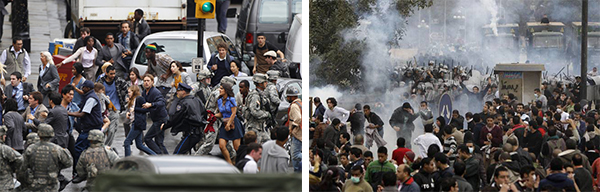
wwz20

A still from the film adaptation of Max Brooks’ book and a scene from the real life Arab Spring.

For readers acquainted with the tapestry of world events, uprisings and human nature this book rings so true and authentic it raises goose bumps. The book features interviews with key characters in the history of the war. One particularly haunting passage chronicles the experience of a pharmaceutical executive who patented an early “antidote” for the disease spread by the dead that “zombifies” people. “Americans were still praying to the God of science to save them” he rationalized about the false antidote his company introduced. There is even a narration of new programs to reduce the dependency of the public on government aid needed to “repel zombies”. It reads so closely to a BBC headline your mind races to weave together countless real world parallels.

wwz30

“World War Z” author Max Brooks, son of the comedy maven Mel Brooks, lectures at a U.S. Army presentation.

World War Z is a story that wedges itself into the tiny fissures of human culture, then uses a major dose of fear and a minor extrapolation of fiction to wedge them open. As you read the book you begin to look at culture around you and realize how frail it is, and how few contingencies there are. Most crowded cities are only a power failure, natural disaster, government uprising or other issue away from the scenes described in the book. The fear cultured in this book is the reason why people store canned food and move to the hills. By the time you get to the end of the story, that sounds like a more viable, safer and more sustainable lifestyle that commuting to a 9 to 5 job in Los Angeles.

As you experience the trauma and stress of World War Z you are held in some measure of relief that fiction weaves very simple and uncomplicated enemies. The zombies are unfeeling, not truly living, not at all human. They are absolutely evil. Few enemies in real life are so clearly evil. That makes the story more convenient and underscores the reason why every great leader rallies against the threat of a great enemy- real or contrived. After years of grey conflicts against complex enemies the zombies provide a convenient venting of the collective angst, something societies often crave. It’s another dangerous undercurrent of this tale.

While George Romero pre-dated this story with Night of the Living Dead his metaphor was against prejudice and racism. Max Brooks seems to use his zombies as a culture unified in death rising against a dwindling society of the living. One of the themes oddly missing from World War Z, for all its realism, is any commentary on social media. That omission is haunting, and it isn’t hard to imagine that the virus infecting Brooks’ zombie horde is the virus of instant communication and borderless association, the same way social media crosses borders and infects with almost no resistance.

Most people will see the movie World War Z, and I say you should read the book too. It is a story of the mass psyche, the worst of human nature and most horrifying susceptibilities of society. The story is so relevant and the skill in delivery is so masterful it belongs on the shelf with the great horror classics.

frogmen100

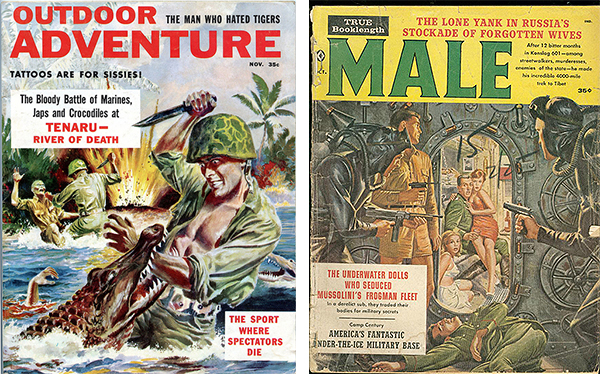
When I was a kid my dad and my uncle read magazines like Men, Argosy, and True Adventure. I wasn’t allowed to see them since they were filled with scantily clad women. This made them all the more exotic so I secretly read them when I could. This, along with the more educational voice of National Geographic were influences that shaped my taste for travel and adventure.

The writing style of the men’s magazines was unique in voice. It was laced with drama and embellishment and written in a crude, masculine language common to men who served in the military or worked in blue collar assembly jobs. With the end of WWII and Korea a new generation was born who were exposed to the stories of men who served in two wars but who had never been exposed to the terrible realities of war themselves. For this generation, born in the ’50’s and ’60’s, the wars were a series of romantic, adventurous and exciting stories that inflated heroes to mythical status.  

frogmen200

By the time the stories reached the pages of men’s magazines they were a long way from journalism. They had become bawdy tales, often sexualized, always exaggerated. I grew up on these stories. They created the demand for the Ian Fleming and Alistair MacLean novels and were the precursors to Tom Clancy.

Some time ago another writer whom I’ve had the good fortune to accompany around the world, Ms. Robin Postell, inspired me to try to write a short story as if I were one of those writers for the men’s magazines in the 1960’s. It was more difficult to capture the language and feel of the writing style than I thought. Here is the final version:

frogmen500

Death Dance of the Cong She-Devil: Navy Frogmen in The ‘Nam.

Lt. Steele doesn’t give a damn. He has too many missions in the Rung Sat Special Zone to count.  Steele cheated death by the skin of his teeth so many times they say he can’t die. He knows different. The only thing that keeps him out of a body bag in the Rung Sat is moving quieter and shooting faster than Charlie Cong.

Steele’s a frogman, Navy “SEAL” they call them. His team hunts Charlie Cong in the murderous Vietnamese swamp. It’s a dark green, stinking wet, real life hell.

The “Rung Sat Special Zone” holds a buzzing hive of deadly Cong half sunk in a stinking mangrove swamp that cuts the ‘Nam in half. Charlie Cong holes up in the Rung Sat because it’s impossible to move in- except for him. The mud is so thick it sucks the boots off your feet. The mangroves so twisted you’ll never see the black cobra that gets you. Your last worry is a Commie bullet since the Rung Sat kills most men before Charlie Cong does. The Huey choppers and Skyraider bombers fly over it, the PBR patrol boats skirt around the outside of it, but only Lt. Steele’s gang of tiger striped, green-faced frogmen hunt Charlie Cong inside the Rung-Sat.

And hunt Cong they do. Take the night of January 19, 1968. Word came down to Lt. Steele’s frogmen that a VC tax collector was making the rounds with a platoon of North Vietnamese regulars as bodyguards. That was normal. What was different was the tax collector was a woman, if you could call her that. You think of a woman as your Mom or your girl. You can’t think of Madame Kang Tomb like that. She’s a she-devil from the swampy jungle hell. The crack NVA guard that follows Madame Tomb fear her. They see her unspeakable acts on the peaceful little swamp-people and her own bodyguards. Tomb isn’t fussy. If you glance at her the wrong way, she’ll have your skin peeled off and string you up to a nipa palm for the ants and the sun to finish. It usually takes a couple days.

Steele got the word that Tomb was expected the following night in the Rung Sat. The information cost a Viet spy a bullet in his head. She’d make her rounds, take what rice and chickens the little swamp people had as tax, murder some during her she-devil death dance, then melt back North where she kept her hive surrounded by terror-worker bee NVA bodyguards. It was Steele’s job to make sure she met a bullet or a blade.

Steel’s men are a gang of roughnecks and he-men. Back in “the world” they were surfers, skin-divers and longshoremen.  All of his men are fit enough to win the Olympics. Here in the ‘Nam they’re green-faced murderers, paid to kill by Uncle Sam and made hard by the freezing waters of Coronado, California where only four men in a hundred could pass the gladiator training torture test called “Hell Week”.  The Navy would half-drown them, freeze them, make them crawl on their bellies ‘til their skin was raw then do it all over again for seven days and nights with no sleep. Some men went mad, others cried for mommy. A few became frogmen. Steele was one, his gang of green-faced assassins a few more.

Their sixth man is the mystery, a jungle tribesman named Nimh. They call him “Charlie Brown” since he loves hunting Charlie Cong and his skin is dark brown from the Vietnamese sun. Charlie Brown isn’t even five feet tall, maybe a hundred pounds after a bowl of rice. His brown skin is like cowhide leather. He could be a hundred by the lines in his face; they say he’s less than twenty. He carries a handmade crossbow that shoots deadly poison arrows, wears a thing like a filthy diaper. No boots or sandals. He fights mostly naked. And there is the necklace. You know… ears strung on a leather thong, cut from Cong killed with his poison arrows. The frogmen told Charlie Brown he’s not allowed to do that. Charlie Brown makes his own rules though. He really doesn’t follow any rules anyway, except kill Cong before he kills you. He has a knife tucked into his loincloth, an old Kabar the frogmen gave him. Charlie Brown is part of the team because of his nose, ears and eyes- and his thirst for Cong blood. He can track the Cong through the Rung Sat when there is no trace; smells a day-old cooking fire a click away. He hears the Cong’s whispers no matter how hard it’s raining or how thick the nipa palm and mangroves are.

frogmen600

Lt. Steele carries a Remington pump action 12-gauge, sawed off short so he can swing the barrel quick from one charging Cong to another in the thick mangroves. Over his back he slings an M79 “blooper” grenade gun. On his hip he wears a pistol belt, gunslinger style, with a Colt .45 in a special canvas holster tied to his leg. He carries a custom Randall knife hand made in Florida. It has a short blade because, as Steele tells it, “Cong necks ain’t that thick.” Steele uses the 12-gauge because the brand new M16 Marauder rifle the army carries doesn’t work in the Rung Sat. They jam up, too delicate.  The bullets don’t cut through jungle. Steele’s men use the top secret Stoner machine gun, the M1 carbine used to fight the Japs in WWII and the new M14 rifle the Marines are carrying. Sure, the Stoner is fussy, but it spit bullets like a rancher spits Skoal, the M-14 hits like a needle-nosed freight train. Steele sticks to the sawed-off 12-gauge scattergun ‘cause he “likes to work close”. The SEAL-frogmen don’t wear normal battle uniforms. They wear special-made jungle camouflage rip-proof safari shirts with pockets sewn all over them. For pants the men wear regular blue jeans tucked tight into their Army canvas-topped jungle boots. Some men wear a green camouflage beret, others a narrow brim, camouflage beach hat. All of them rub boot-black on their faces so the only thing that shows at night are the whites of their eyes.  Steele wears extra slugs for his 12-guage across his chest in a specially sewn bandoleer like a Mexican bandit.

Just after midnight Steele’s frogmen loaded up in a low, dark green Navy motorboat heavy with machine guns and grenade launchers. It cruised on the black water with silent engines along the bank of the Song Dua River in the T-10 Special Military Zone. This is one of the many rivulets that feeds off the Long Tau Shipping channel into the Rung Sat.

Using his red-lens flashlight in the pitch black to save his night vision, Steele showed the Navy boat captain where he wanted to be dropped off on a map, right in the thick mangroves where the main channel meets the Ong Keo River. The tidal current runs fast through there so Steele’s men will wade directly from the boat into the chest deep water inside the mangrove hell. The Navy boat captain is nervous. This is the deadliest part of the Rung Sat.

The boat captain cut the silent waterjet engines early, letting the current carry them into the mangroves. Lt. Steele jumps first, his shotgun in hand. He sinks to his neck and half swims, half walks along the pitch-black, sucking mud bottom. He hears the “ker-plunk” of a snake falling out of the mangroves into the water. Charlie Brown is next into the water, too short to touch bottom he paddles like a dog along the shiny black surface with his crossbow on his back. The rest of the men follow, slipping silently into the water while the boat backs away and disappears downstream in the opaque blackness on the swift tidal current.

frogmen300

It got shallower, the frogmen were almost on land, only waist-deep now, except for Charlie Brown whose bare feet just now touched bottom. They stopped. Listened. The jungle sounds drifted on black, humid air along with the fragrance of rotting vegetation and… smoke. Charlie Brown taps Steele’s shoulder, points off to the left, the due west, and the team of assassins slowly makes their way through tangled branches and ankle grabbing vines submerged in the black water. After an hour, they went 100 feet. Charlie Brown tugged on the back of Steele’s fatigue jacket, pointed his crossbow forward.

Barely visible in the darkness, up on the narrow, overgrown trail: a man in a triangular hat holding a curved-clip machine gun.

Cong.

In less than a few seconds the Cong guerilla is flat on his face with Charlie Brown’s poison arrow in his temple. Silence, not even a whisper. Steele steps forward, pointing his boots as he lifts his feet out of the mud, moving silently. There is a narrow trail where the VC sentry stood before he took a poison arrow to the head. Steele carefully skirts it, staying a few meters inside the jungle.

frogmen400

He moves silently through the thicket as the ground comes up, and then onto solid ground, crouching down low. Charlie Brown squeezes Steele’s shoulder, he pinches his nose. Smoke. The village where Madame Tomb is reigning terror.

At the edge of the jungle the frogmen come on line. The man at either end slips around back of the village through the jungle, including Steele. He steps up to a thatch hut, unsheaths his Randall and silently slips it under the wall, turning it blade up. He cuts through the nipa palm thatch like flame through ice. Steele looks inside. Two men with rifles are sleeping there. He enlarges the hole and slides silently through it, into the thatched hut. First one man, then the other, both silently, both dead. Throats cut. He wipes the blade of the Randall off and stows it back in the leather sheath on his shoulder. He looks out the front of the small hut, too low for him to stand in.
Tomb stands in the center, villagers gathered around on the ground, sitting on their haunches. She collected baskets of fruit and rice. In front of her is a man, hands tied, on his knees. She’s getting ready to exact her toll on the Vietnamese swamp people. She raises her arms over her head in her weird murder-mamba dance, chanting an oath to the Commies as she begins to gyrate slowly in her death dance.

It’s too far for the shotgun, Steele might hit one of the tribesmen kneeling on the ground with the buckshot. It’s too close for his M-79 grenade gun. He pulls his secret weapon from inside his jacket, a Hi-Standard .22 caliber pistol with a silencer built on it. It shoots hollow-tipped bullets that blast apart when they hit Cong skin.
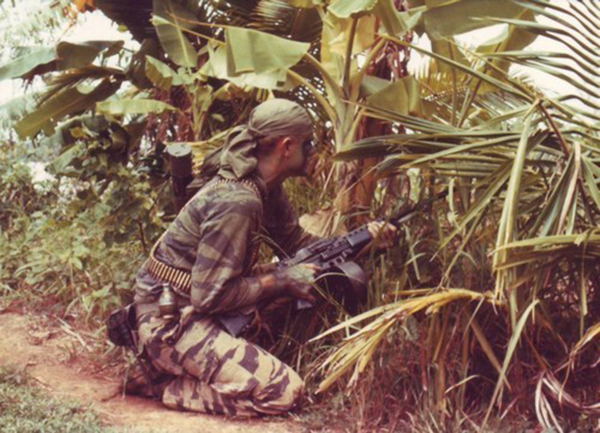
Steele takes a two-handed grip from inside the hut. Madame Tomb gyrates and chants her murderous mantra.

One shot chuffs clear of Steels’s Hi Standard, then two more. One to the head, two in her back. For a moment Madame Tomb seems bulletproof. Then, like a coon who only caught a piece of buckshot, she topples over. Dead. On the ground.

It’s silent for an instant, one loud VC voice barks. It’s drowned by a frogman lead orchestra as men on two sides of the village cut loose in an “L” shaped ambush. In less than a few seconds every Cong is down and bleeding. The couple that survive the crossfire scramble like monkeys back into the jungle, dropping their rifles in a terror-driven dash. The villagers lay flat on their face, terrified but unhurt. The black-faced frogmen are back.