Archive

Tag Archives: author tom demerly

By Tom Demerly for tomdemerly.com

Yesterday someone whose opinion I value told me, “You hate the government.”

I was stunned by this summation.

I don’t hate the government.” I thought to myself. “In fact, I am often a formal, working part of the government.

Where did this broad stroke about my emotions toward the government come from? What caused it to happen? Why do we create these opaque and rigid summations?

It occurred to me that the most interesting, and I’ll suggest threatening thing, about a four-letter summation of any belief set, any person, any group is that it is convenient. And convenience is comforting.

Living with me is anything but comforting, orderly and convenient. I am a weird guy, given to remarkably reasoned insights, absurdly chaotic ones and everything in between. I hate furniture, love open space, and fill it with a clutter of superfluous gear and books. I am kind to animals, believe in some form of gun control and own guns. I believe in peace but work in an industry whose mission is war. I like the government but believe it should be smaller and more efficient. None of who I am is congruent or follows a convenient narrative. I don’t fit into anyone’s tidy little four-word box. Even if you try to suggest, “Tom Demerly is complicated”, it’s not that simple.

We live in an age of accelerating and proliferating media. And, as with nearly every new technology from the first crude stone age weapons to atomic power to social media, we develop the technology before we develop the mutually acceptable and broadly beneficial ways to employ it.

We think shit up and then figure out how to use it later. People driving while texting on cell phones is one example that comes to mind. The guys who invented the atom bomb are another.

As a result, the acceleration and proliferation of media has created a world of chaotic stimulus filled with billions of new voices, some of them skilled in delivery, all of them screaming at once in what feels like escalating volume and urgency.

The influx of stimulus is deafening and disorienting, and creates a kind of social or collective panic that, on an individual level, may make us yearn to make some de facto sense of it all. We want one thing we can hang onto, one set of things to believe, one unimpeachable, unassailable truth to comfort us and still our cognitive waters.

Imagine a world where the distance from one end to the other of a thirty six-inch, three-foot-long yardstick changed arbitrarily. No two peoples’ yardstick reading thirty-six inches was actually the same length. It would be immensely confusing and chaotic.

Quickly, people would gravitate toward a consensus on the physical dimension of the thing we call a “36-inch, three-foot yard”. The consensus may vary from broad region to region, especially those separated by wide geographical obstacles, like oceans and the metric system in Europe and Asia, and the imperial measures still used in the U.S. But broadly we would gravitate toward an emotionally convenient and culturally necessary convention on the physical dimension we referred to as “one yard, three-feet, 36-inches”. We would all get on the same measuring stick.

The need for a common social and cultural yardstick is what drives belief sets like common religions, desires, hatreds and prejudices. We like, and need, to all be on the same page, and in the chaotic world of fast, evolving media, the pages of modern media blow by like a book tossed in a hurricane.

In Gia Fu Feng and Jane English’s landmark translation of the philosophical masterwork by Lao Tzu, The Tao De Ching, it has been translated from Chinese that:

“All the Colors blind the eye.
All the sounds deafen the ear.
All the flavors numb the taste.
Too many thoughts weaken the mind.
Too many desires wither the heart.”

The Tao de Ching was written in about the fourth century B.C. Its origins likely came from even earlier, around the sixth century B.C. and took two centuries to summarize into the cryptic, lyrical haikus that we read today. When you read it, you have to stop and contemplate its meaning and context. It is light in text, heavy on interpretation.

The thesis of this passage from the Tao De Ching is that too much cognitive noise bothers us and may tend to make us gravitate toward the opposite extreme, very defined beliefs that can be distilled into a few words. Simple ideas to make sense of complex stimulus.

The remarkable phenomenon of life has never been as simple as a few words. It is complex. As this complexity is hurled at us in an acceleration and proliferation of media we struggle to make some sense of it. As a result, we summarize and rationalize, trying to cram ideas and people and events into convenient boxes as they come at us faster and faster in a rapidly accelerating and stressful game of cognitive whack-a-mole.

That is impossible. And undesirable. If things were simple, we’d get bored.

I’ll offer that exposure to the “drinking from a fire hose” consumption of social and news media benefits from taking some contrasting time of quiet contemplation, deep research into narrow topics for a more thorough insight and, most of all, strong individual reflection while trying to avoid cramming- and being crammed- into convenient thought boxes.


By Tom Demerly for tomdemerly.com

Business rewards bastards. And Seton Claggett was never a bastard.

TriSports.com in Tucson, Arizona is closing after 17 years of being one of the largest, and one of the first, online triathlon retailers. TriSports.com helped invent, define, and then sink the triathlon industry.

What happened to TriSports.com is happening to all of the triathlon and high-end bicycle business, and it is worth looking at.

Seton Claggett, TriSports.com founder and President, messaged me early today with insights on why the business is closing:

“We are closing because I was in litigation with the bank that caused me to go into BK11 4+ years ago. We went to trial on breach of contract, breach of the covenant of good faith and fair dealing, and fraud. The judge ruled last week that the bank committed all of these but ultimately did not cause us any damages. I now owe them the original $1.8M (most of this would have been paid off by now) plus millions in attorney fees and costs.”

There will be a rush to judgment about what caused TriSports.com to close. Set against Claggett’s disclosure of bank litigation I’ll suggest it was not any singular reason that TriSports.com is closing, but rather a creeping, gradual, decade-long “death by a thousand cuts” that pervades an industry populated by people who like bikes and triathlons first, and do business second. Even though Claggett was not that man- he is a formally trained and gifted businessman- the rest of the industry weighed on pricing and distribution strategies. The Internet experts will have their say, but it’s unlikely many of them will understand the real reasons TriSports.com is closing and the industry as a whole is suffering.

The people still in the bike and triathlon business will pay no heed as the industry continues to contract and fails to adapt under the ruthless crush of economic reality and accelerating business change. I know because I have been one of those people- a business owner, and I did not change, so I know firsthand.

You can’t tell a small business owner anything. I’ve tried with four businesses I worked for; people tried it with me when I owned my own business before that. We never listen.

Until we lose everything, you can’t tell us anything.

I’ve seen five other bicycle and triathlon retailers ride their businesses into the ground. TriSports.com is just the biggest of us to close. It’s the 9/11, the Black Tuesday, the Automotive Recession, the Chernobyl, the Fukushima and the Three-Mile Island of the triathlon retail industry. Once the fallout clears, the industry will be radioactive for years and will only be habitable by ego-driven mutants of the small business world deformed by their bizarre and nonsensical toxic obsession with a sport and a “business” that eats its young, then consumes itself as their internal voice tells them, “I am the one who can get this right”.

They’re wrong. The triathlon business is no longer viable on any significant scale beyond hobby. There are a lot of reasons for that, enough to fill a book.

If you want a single narrative to the complex issue of triathlon business failings, then call it the same thing triathletes suffer from as a culture: hubris. I will, however, suggest that in the case of Seton Claggett and TriSports.com, he is a rare man largely immune to hubris.

I worked at TriSports.com for over two years in their bicycle, then marketing department. One memory of many defines the experience:

The employees of TriSports.com are high in the Arizona mountains outside the sleepy town of Show Low, Arizona. It’s a town named after a bet two prospectors made over a gold strike in the area. Both of them lost. We’re putting on the annual Deuces Wild Triathlon Festival, a series of endurance races in the high, wooded area surrounding Show Low.

Most of the about-50-person staff from TriSports.com drove from Tucson to Show Low, Arizona to help put on the Show Low Triathlon Festival. It’s a massive annual multisport event with kids’ races, various distance triathlons, an off-road triathlon and an orgy of the triathletes’ favorite endurance activity, getting free stuff. The event concludes with a giant raffle benefitting charity where tons, and I mean tons, of triathlon gear and schwag are given away for a charity donation- about the same volume of stuff sold in a small triathlon store in a year. But this is TriSports.com, and we are the largest. So, we can afford to give away tons of stuff for free people probably would have bought at full price anyway.

After the festivities are over it is time to clean up.

It’s hot out and Seton Claggett is addressing us while standing chest deep in disgusting, reeking garbage inside a trash hauling semi-trailer. Every one of us is exhausted, filthy, smelly, sore, hungry and sleep deprived.

“If we leave this mess here it goes against everything we stand for.” He tells our downtrodden mass of long-faced employee volunteers as the sun sags. It’s like a scene in a book about forced labor camps. This is the triathlon industry gulag, and I am exiled here like a less-intellectual retail Solzhenitsyn banished to the labor camps for my own personal failings in this business. Like Cool Hand Luke, I gotta get my mind right.

A key tenant of TriSports.com is environmental responsibility, and cramming all this garbage into the back of a couple semis to dump in a landfill is against Seton Claggett’s molecular make-up as an environmentalist, former boy scout, parent and business owner. It is against the Little Red Book of TriSports.com doctrine.

Despite the sickening, nose-permeating stench of rotting banana peels under the high Arizona sun, dirty bottles filled with congealing sports drinks, discarded race equipment soaked in athlete urine, changed diapers from spectators’ toddlers and all the other disgusting offal produced by a couple thousand athletes and their closest friends, Seton wants us to sort the garbage by hand into bins for environmentally responsible recycling and processing.

Claggett is clamped onto the ethos of environmental responsibility like the face-hugger in “Alien”. The Claggetts have two kids, and Seton’s life mission is to leave the world a better place than he found it for those kids, and for everyone else. Seton and Debbie Claggett’s unswerving attachment to environmentalism isn’t corporate feel-good window dressing. They own it. Environmental responsibility and a doctrine of leaving things better than you found them is in Claggett’s DNA, and he has cloned it into the corporate DNA of TriSports.com and its culture. Not to sell more stuff, but because Claggett doesn’t just believe it’s the right thing to do, he knows it is the right thing to do.

And now he stands chest deep is piss-smelling filth to prove it. And prove it he does.

One by one employees slowly churn into action, pulling trash bags out of the back of the disgusting mess, opening the garbage bags, pulling out discarded wet wipes with… something brown on them. It’s not just gross, it’s fucking gross. But Claggett somehow walks the walk with enough conviction he inspires the entire staff to wade into the offal and begin sorting the revolting mess into neatly organized recycling barrels.

Claggett somehow inspires a crew of tired, volunteer employees to sort filthy garbage by hand in the dark after consecutive 14-hour workdays. Show me a leader strong enough to inspire that, and I will show you Seton Claggett.

A couple hours later, in the dark, we stink like hell and the world is a slightly better place. Claggett himself is covered in filth, and the last to stop working. I have found a new hero.

The Claggetts defined themselves repeatedly with acts of generosity and kindness both large and small. When Seton saw me riding my bike to an airshow loaded down with camera equipment early one weekend morning he secured a pass for me to the Air Force base and took me with him to a private air show during the Heritage Flight Conference at Davis-Monthan AFB. When my cat Frederick died of old age Debbie had every employee sign a sympathy card for me. I still have that card.

The charity and giving doctrine of the Claggetts was infectious. It spread like a smiley-faced plague through the building. After riding my bike to work one day in a rare Tucson downpour the Human Resource Director, a woman named Susan, found dry clothes for me to put on and a towel. When I obsessively worked 70-hour weeks she counseled me for working too many hours.

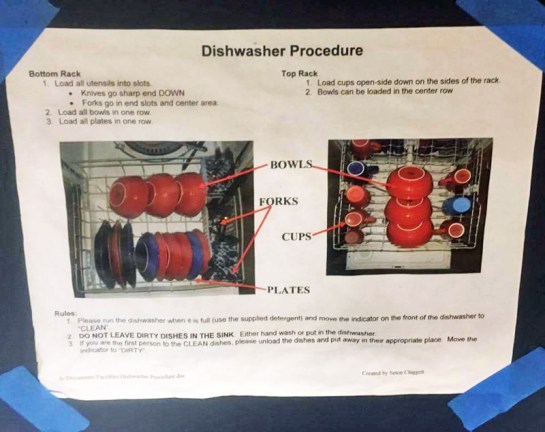
But heroes are fallible and complex, and Seton Claggett is no exception. Claggett was oddly fixated on loading the dishwasher in the employee kitchen correctly. He produced a YouTube tutorial video on the correct procedure, lectured employees at meetings on the correct process and even installed a video camera over the dishwasher to verify compliance. Where did that come from? I chalk it up to Claggett’s penchant for clear thinking and process. He is a smart man, a man of organized thought, spreadsheets and analytical problem solving. To him it is incomprehensible that a person could not load a dishwasher correctly, and that detail mattered. It was a teachable moment.

The dishwasher conundrum.

The story of TriSports.com and the rise and fall of the triathlon industry deserves to be told. It’s a complex story not well suited for Internet chat room fodder. It is more complex, both worse, and better. It doesn’t fit in a 1300 word blog.

If Seton Claggett had opened a software company, an app developer, a social media outlet or any other emerging business I’ll suggest we would mention his name alongside Gates, Jobs, Buffett and Zuckerberg. Claggett is a tirelessly hard-working man with a Masters in business and a deep, analytical mindset and strong stomach for risk. Unfortunately for him his first round of entrepreneurship was spent on an industry filled largely by people long on enthusiasm for the sport, too quick to give a discount and short on business acumen.

I wager Seton Claggett’s next round at business will conclude very differently.

SaveSave

SaveSave

SaveSave

SaveSave

SaveSave

SaveSave

SaveSave

By Tom Demerly and Jan Mack for tomdemerly.com

An elderly man and woman driving eastbound on Hines Drive under Telegraph Road in Dearborn Heights were rescued from serious injury or worse after a crash and vehicle fire on Wednesday, June 14, at approximately 5:15 PM by passing cyclists Nate Nalder, 41, of Dearborn, Michigan and friend Dave Taylor.

Nalder, an experienced road cyclist who frequently trains along Hines Drive, told us, “Dave Taylor and I were riding down Hines, going west. Just after we passed under Telegraph we saw a white, late model Ford Fusion driving across the lawn on the other side of the walking path. It was moving fast across the grass, maybe 45-50 MPH. It came back toward Hines, we heard a loud ‘boom’ and the car rolled three times.”

An unidentified male was driving the vehicle with a female in the passenger seat. The occupants of the vehicle were described as “elderly”. According to witnesses at the scene of the accident, a medical incident may have affected the driver. The cause of the accident has not been officially determined.

When cyclist Nate Nalder saw the accident happen he turned back toward the place where the vehicle came to rest. “I hurried and checked the traffic real quick and rode back to the car and dropped my bike and ran there to the driver’s side and pounded on the window.”

Nalder was attempting rescue from the driver’s side door, but heard a voice from the passenger side shout, “Help me, I’m trapped, get me out of here.”

The airbags in the vehicle had deployed and the interior filling with smoke. The vehicle began burning shortly after it came to rest.

“I said, ‘We got to get them out of here!’ said Nalder, directing rescue efforts of bystanders.  “I did not know the extent of his injuries so I asked him to undo his own seatbelt to kind of assess his condition. Myself and two others guys helped him out and walked him over and set him down.”

As the fire spread, and without regard for his personal safety, Nalder returned to the burning vehicle to recover the female passenger and move her to a safe distance. Another cyclist had arrived on the scene to assist Nate Nalder and Dave Taylor in the rescue. A passing motorist had stopped on the scene and phoned 911 for assistance.

It is possible that, because of the age of the vehicle occupants and the possible medical condition of the driver, the swift selfless actions of Nate Nalder and Dave Taylor at the scene prevented more serious injury from the fire or fatalities as a result of the crash and fire.

According to the account Nalder heard from the passenger of the vehicle, who was transported from the scene by emergency personnel, the driver lost the ability to control the vehicle, possibly due to a medical incident. The passenger was able to grab the steering wheel but could not control the pedals because the driver’s legs were in the way. The passenger steered the vehicle off the road away from other cars but could not control the speed of the vehicle. It struck a pole and rolled several times.

Cyclist Nate Nalder, 41, of Dearborn, Michigan and friend Dave Taylor rescued motorists from a burning vehicle on Hines Drive on Wednesday.

When we asked cyclist Nate Nalder what made him decide to respond by pulling the victims from the burning car and how he had learned to respond to an accident situation he told us:

“When I was younger in high school I was riding in the back seat of a Jeep and came over a hill and accidentally hit a friend who was walking across the street. I just jumped out and helped. It was the automatic thing to do I guess. I grew up being a Boy Scout, doing a lot of lifeguarding classes and learning CPR. Just learning how to take care of a person when they are hurt. Something just said, ‘Get over there and do what you can to help because no one else was’ I was the first person to that car I guess.”

The quick, selfless actions of Nate Nalder and Dave Taylor at the accident scene almost certainly prevented further injury to the two vehicle occupants once the car began burning.

By Tom Demerly for tomdemerly.com


 It was like the beginning of a favorite new song. It began quietly, and you could barely hear it. The soft cooing of a distant sound, a trilling that seemed reassuring and comforting. The world was safe. Everything was all right. It was home and warm and nature surrounded our little neighborhood. I listened to it in bed, shushing my girlfriend with our heads on the pillows, “Listen!” I whispered. There was silence in the dark. Then the gentle spring breeze carried the rising song. “It’s an owl! Can you hear it?” She did. “That’s a good sign. They trap mice and are good for the environment and the neighborhood. He probably lives at the end of the block down by the park.”

We drifted off to sleep to his quiet, lilting song. It made for an easy transition to dreams of rolling, wooded hills filled with friendly owls building nests, cooing their gentle songs while sitting on tree branches as wise, powerful sentinels maintaining the delicate balance of nature.

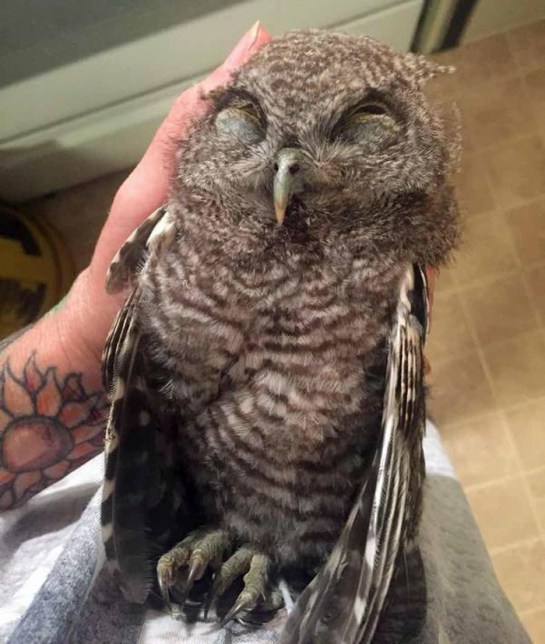
The Eastern Screech Owl (Megascops asio) is a relatively common small owl species found throughout the Midwest and into Canada. It eats mice, rodents, and has adapted well to a suburban environment.

Owls are oddly social and friendly birds to humans. One very early morning a few years ago in Mission Viejo, California I saw an owl swoop down, glance off the windshield of an SUV driving in the early morning darkness, then drop into the street. I walked over to him, he appeared stunned in the middle of the street but otherwise, hopefully, OK. I spoke to him for a moment, asked him if he was OK. His feathery owl head pivoted to my voice. He looked confused, stunned. I scooped him up carefully in my arms, his soft feathers delicate to the feel.

I don’t know how to take care of an owl. I figured I would bring him home, get him a drink and make a little nest for him and take it from there. He was large, the size of a small cat, and very beautiful. He was also exceptionally well mannered, riding in my arms comfortably as if he knew I was trying to help.

In only a block of walking he had composed himself from the brush with calamity. He spread his wide wings carefully even as I held him, then gently lifted off with a downward flap and flew out of my arms. He did one circle over my head, as if to demonstrate he was fine and say thank you for the help, then he flew east up toward the mountains on the outskirts of town. Helping the owl felt like religion. It was like being visited, and blessed, from another world. A kinder, fairer world.

When I heard the owl outside our window here in Dearborn, Michigan I was elated. This is a great omen, a sign that our neighborhood is blessed and safe and well looked after. That things are in balance and that nature and mankind have arrived at a reasonable détente.

But then reality smashed home.

The quiet song disappeared. The owl was found in the street, his eyes barely open, standing on the ground. Confused, sick, in deep trouble.

A Good Samaritan named Jamie found the owl in the street a few days later around 10 PM. She said he was half dead. She picked him up, called the University of Michigan Emergency Veterinary Hospital. She was on the phone with them, getting instructions for how to save the owl as she held him in her arms. He opened his eyes once and she spoke to him as she held him. Then he closed his eyes.

They never opened again.

The owl in our neighborhood died because someone put out rat poison to try to control mice. But the problem with poison is it doesn’t know to only kill mice. It kills everything. The mouse eats the poison, the owl eats the mouse. The owl dies too. And we are left in a world without the owl’s song. It’s a world different than intended. A world that is ruled by our poison, literal and moral.

Using poison to control animals is wrong and immoral. We learned that in the 1950’s and ’60’s with DDT poisoning, and countless times since. It’s also ineffective and short-sighted. The owl was in charge of controlling rodent populations and did an effective job. He maintained a manageable balance of nature. When that is disrupted the results are always different than we imagine, and never better. But our human, insatiable need to control things drive these short-sighted and selfish decisions like using poison to kill a mouse.

You can buy things and you can build things. A fancy house, a yard that looks like a golf course. It proves you are rich and fancy. But you are driving a wedge into the world that pries things apart and ruins what was here before us and will hopefully return when we are gone. We are not better or smarter or stronger or more important. We’re temporary participants in a complex process. When we upset the process we spread suffering, not only to animals around us but to our own lives, often without even know it.

When I think of the most important events in my life, the most extraordinary, the most valuable and lasting they are not the day I bought a car or a house. I actually don’t remember much about those things. But I remember the owl in the street in California. I remember the song of the owl down the block. These things had value. They reminded me that I am part of something bigger and that, if I care for it, it will care for me.

But when the owl down the street went silent I suddenly felt very alone.

SaveSave

SaveSave

SaveSave

SaveSave

By Tom Demerly for tomdemerly.com

This past Presidential election was one of the most divisive and closely contested in the past three decades. We’re still arguing about the outcome. It was set against a backdrop of new participant media. Everybody with social media has a voice of equal visual size, if not reach.

Because of this our closely contested and highly divisive election played out over the stage of social media. And now it feels like we’ve entered an era of rising hysteria.

Why?

From the printing press, the Manhattan Project, the Internet, stem cell research, and social media, we develop technology before we develop the ethics and conventions to employ it with moderation and reason. We just turn it loose, and hope for the best. We’re experiencing that now with social media and in politics.

We’ve entered an era of more polarized and less moderate opinion shared at louder volume than I’ve known in my 55-year lifetime, and maybe in the history of mankind. Author/philosopher Alan Watts once recounted a tour of the MIT campus where the vast and numerous science and engineering facilities were showcased with pride and grandeur, but when someone asked where the philosophy department was, the response was, “Oh, I think it is somewhere over by the library.”

Some of that may be good. But a lot of it isn’t. At least not yet.

There is an axiom that if you redistribute the collective monetary wealth of the planet equally between all people it will, over time, wind up right back with the people who originally had it, and away from those who didn’t.

But what if you equally distributed access to publishing media? To having a public voice? The same outcome might happen in contributory/social media, and for the same reasons. People may not use it responsibly and with reason. So, just as those who would not be good at managing monetary resources would fall victim to those who are, those who do not use communicational resources responsibly will stop getting listened to and lose their voice to those with more judicious use of media. But before they do lose their voice they raise the volume and frequency in one last, desperate attention grab.

We are at the leading edge of that redistribution of voice right now. Everyone has a voice now, and most people love using it, but aren’t quite sure what to say except that they should say something. And, in a new global room full of rising voices we continue to shout louder and louder to be heard above the rising din. And few people take the time to listen. I’m constantly reminded of that great axiom, “Seek first to understand, then to be understood.”

The formerly mainstream news media is included in the rising number and volume of voices and opinions. In order to compete with Twitter feeds, Facebook posts, Snapchat, and Instagram attention grabbing, the formerly mainstream media has had to change to also grab attention. Much of that change isn’t for the better. That has influenced our own behavior, but mostly it has influenced theirs. For mainstream media now, it looks and reads like, the rules are, there are no rules.

So the shouting gets louder and louder, more and more frequent. And as the frequency increases the depth of insight seems to become shallower, more superficial. Sound bytes, YouTubes, hotlinks and infographics are batted back and forth in some new form of cyber argument that mimics a fast and loose version of the Greek forums, where debate raged between scholars in a public forum.

We’ve seen two examples of this in the ongoing, divisive political narrative. Some time ago an expired rock star, Ted Nugent, ignited rancor with radical right commentary that included inciting violence as a political tool. That’s wrong, no matter the political agenda. Every despot has proved that. More recently, an equally less relevant celebrity, Kathy Griffin, depicted the President’s decapitated head in a sensational lampoon that also suggested inciting violent response as a political tool, at least as commentary. That is also wrong.

Both are wrong. Both went too far. Both are a sensational attention grab for a waning career. And both sides argue some justification for each one’s bizarre and extreme political commentary. Both also illustrate our use- or misuse- of new access to media and our rising consumption of it.

One positive outcome has been the impetus to do more investigation into the media we see. That has been fascinating. It’s also helps shape opinions, hopefully to the more informed. And I’ll suggest a more informed opinion is likely to be more structurally sound.

Before the last presidential election I took an online survey that queries you on a long list of issues and, depending on your responses, prescribes who you should vote for. I got Bernie Sanders. I liked that, so I dug a little deeper into the ramifications of having Bernie Sanders as our President.

Voting for President is a little like going shopping without knowing any of the prices. The system tells you, “Pick out something nice, whatever you want.” But there are no prices and you may not even know how much you have to spend. You don’t get the bill until after you made it to the register. If you can’t afford what’s in your political shopping cart you either throw it on a charge card that has been maxed out since Nixon was President or you say, “The person in line behind me is paying.” Then they do that for the next person, and so on…

Increasingly, being in the middle seems to feel oddly isolated as the rising din to “pick a side” on social media gets louder and louder. It seems like the social media doctrine is to pick a side lock, stock and barrel- a political “Happy Meal” that includes a somewhat superficial acceptance of all or nothing from one side or the other. We only get a second to read, to decide, to respond. We may have learned something a long time ago in school, and we do remember part of that, so we quickly compare what we see to what we know and then we hit “post”. God forbid we should actually question, criticize, and inquire. And when we disagree, we need to be ready for the attempts to be shouted down.

I’m satisfied looking at the political and social landscape ala Carte though, and I’d like to know what it is I’m reading and where it came from- to the extent I can.

The outcome of this last election was about as wild a swing from one extreme to the other as you can get. The only way we could be farther from who we had as a former President would be to have elected an albino Margaret Thatcher with male reproductive organs. So things are pretty crazy right now.

The choice we have now is to make use of social media as a shield to paint our existing beliefs on and protect our entrenched views from the swords of new thinking, or as a mirror to reflect our own beliefs in the concern that we may have a big political booger hanging out of our nose.

I’m checking my own nose now. I suggest you do the same.


SaveSave

SaveSave

SaveSave

By Tom Demerly for tomdemerly.com


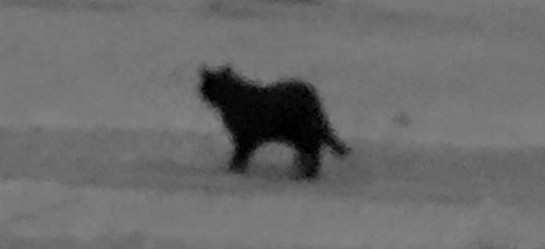
He appeared like night smoke. Silent and sudden.

And like smoke he disappeared without a sound.

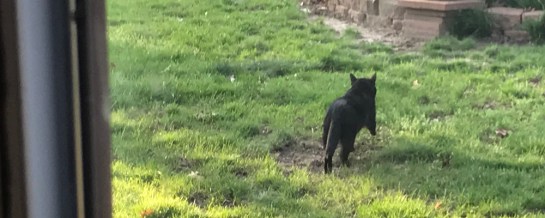
Someone’s black cat walked through our yard. It sometimes jumps on the windowsills. Nothing unusual, just a pet cat on his rounds when its owner let it outside.

Or so I thought.

After seeing the same black cat every day, whom we began calling “The Mysterious Cat”, I started paying attention to him. I had no idea I would discover an incredible, mysterious wilderness right outside my window. It’s a complex hierarchy of alpha predators, finite territories, deadly stalking and a ruthless food chain. It’s no different than the plains of Africa where majestic lions hunt in prides or the jungles of the Suriname Forest in India where Bengal tigers stalk their prey like solitary snipers. In fact, it may be even more complex because, whether we realize it or not, we are part of the food chain.

Five things helped me understand The Mysterious Cat. I watched a BBC documentary called “The Secret Life of the Cat”. It followed the hidden behavior of indoor/outdoor pet cats and revealed details about their range, territorial activity and habits. I recently saw the award-winning film, “Kedi”, about feral cats living in Istanbul, Turkey and the local populations’ reverent relationship with them since ancient times. I was reading author(s) Erin Hunter’s entertaining fiction book series, The Warriors. Erin Hunter, who is actually a group of six different authors, creates fictional feline characters divided into different categories of cats. Some are pet cats, called “kittypets”, others are solitary outdoor cats called “loners” and “rogues”. They have complex fictional societies and elaborate adventures. I was also casually keeping track of local pet cats’ behavior in the neighborhood. I would see the same cats on someone’s porch, notice their schedules and territorial behavior. And then finally, the fifth thing that got my attention:

One night The Mysterious Cat made an extraordinary visit. It stalked into our run-down outdoor back porch. A very large, solid black cat with a thick coat and sturdy legs. He skirted the crumbling brick planter wall, checked over his shoulder twice, then silently climbed in one stride up to where my girlfriend had planted catnip plants. He munched catnip for a second, and then it got weird…

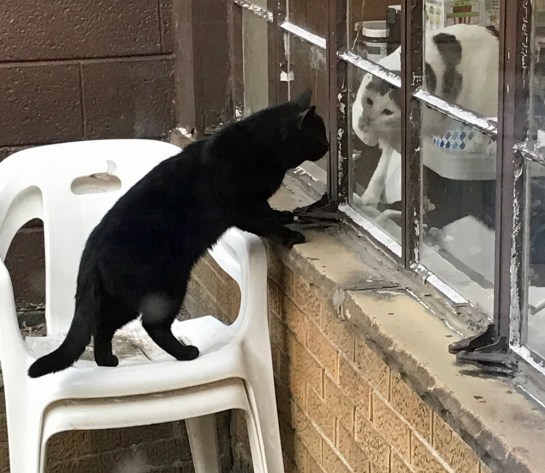
Our indoor cat, Vice-Admiral Malcom Fredrick Davis III (Vice-Admiral for short), stepped up on the indoor porch windowsill. The Mysterious Cat left the catnip plant and slowly walked over to the outdoor window where the Vice-Admiral was. Glass separated the two cats. I anticipated hissing and raised fur, and then one cat would make a hasty retreat. But I was wrong.

The Vice-Admiral, a domesticated indoor “kittypet”, was intensely interested in the Mysterious Cat. He was not afraid of the Mysterious Cat, not aggressive toward him. It was as though he was fascinated, as a person might be seeing an exotic new species. The Vice-Admiral leaned forward toward the glass. The Mysterious cat climbed onto the windowsill outside. Only a thin windowpane separated the two cats. In a gesture that could only be interpreted as a form of inter-species détente, the Vice-Admiral assumed the exact same posture as the Mysterious Cat, mimicking him, side turned to him, pressing against the inside of the glass as the Mysterious Cat leaned against the outside in mirror image. It’s possible the cats could feel the warmth of each others’ bodies through the glass, the vibration from their nervous purring. It made no sense. I expected territorial behavior, meowing, hissing, arched backs. What I saw was bizarre behavior I had never seen between two domestic cats.

Because I wasn’t watching two domestic cats.


The Vice-Admiral maintains surveillance.

I wanted to know who owned the Mysterious Cat, who cared for it, where it lived and what its name is- whether it is a boy or a girl. I posted a photo of the Mysterious Cat from my smartphone on the local neighborhood web forum NextdoorNeighborhood.com. “Does Anyone Know This Awesome Black Cat?” What I learned was stunning.

The Mysterious Cat is not a domestic cat. It is a feral cat.

Feral cats are behaviorally hyper-evolved cats  that appear identical to domestic cats. They live in a vast grey area between wild cats like bobcats, lynxes, panthers and cougars and stray domestic cats. They are very distant from an indoor domestic cat in behavior. They are also different than a stray domestic cat as I learned without realizing it a year earlier.

Feral cats are the alpha predators of suburbia. They are highly adapted and exhibit incredible intelligence, reasoning, and a remarkable ability to learn complex concepts quickly. They stalk, kill and enforce a ruthless command over a clearly defined territory. They sit at the top of a natural suburban food chain few people even know exists. Most of what they eat is prey they kill in their nightly hunting trips. These suburban wildcats help reduce rodent populations and control pests. They are, in a very real sense, the panthers on our porches. Feral cats seldom “convert” from being feral to becoming domestic, although this does happen occasionally. Particularly in the ruins of outer Detroit where vast areas of abandoned houses and overgrown lawns turned mini-forests are the perfect environment for a growing population of feral cats, these remarkable semi-wild cats are on the rise.

One night, after dark, I spotted the Mysterious Cat outside. The wind was east to west and the cat was headed east. My sound and scent would be masked. I followed him to wherever he was going. At first he appeared remarkably casual, walking in shadow near the center of the sidewalk at a businesslike pace. I did not know it, but I was being drawn into an ambush. At each corner he would stop and listen, look, before crossing the street. How did a cat learn to use sidewalks and crosswalks, and obey stop signs? I followed carefully, moving from concealed position to concealed position nearly a block behind him. Remarkably he did something I had learned as a member of an elite special operations unit in the military. He changed direction, circled back and checked behind him to be sure he was not being followed. And he saw me. This cat had just used tactics taught in the most sophisticated combat schools in the military. And he just used them to perform counter-surveillance on me. If Osama bin Laden had behaved like this cat, we’d still be looking for him. I was stunned. This was no one’s pet. This was a sophisticated predator.

A woman on the NextDoorNeighborhood.com forum replied to my inquiry about the Mysterious Cat. Cyndi Parrely lives on the corner two city blocks east of our house. Her garage door is always slightly open, about a foot. There is a stone statue of a cat in her garden. Visible just under her door is a small cat enclosure. The lair of the Mysterious Cat.

“I do not know if it’s a boy or girl. Can’t really get close enough. I began feeding her/him about a year ago. Very gentle but keeps her distance. Never makes a sound.”

Cyndi has defaulted to referring to the Mysterious Cat as “her”. No one knows its true gender or age. Or where it came from. But Cyndi is a kind and generous person who has made a home in her garage for the Mysterious Cat. She has entered the behavioral and food chain of the feral cat, and performs a vital function to its survival.

The Mysterious Cat would only accept food and some limited outdoor shelter from her. No petting sessions, little physical contact. “I touch her when she comes up to eat and she is fine with that. Doesn’t run away.”

Suddenly a number of mysterious puzzle pieces about local cat behavior revealed themselves. Two cats who live at the south end of the block near the entrance to the park never leave their yard. The Mysterious Cat does not permit it. He limits their territory to their own yard, chasing them back to their house if they venture outside their clearly defined territory. He allows them their yard, but no more. And his policing of the boundaries is vigilant and rough.

Young Chester, our adopted stray who lived outside much of the time before we adopted him, had three deep puncture wounds on his left ear when we got him a year or so ago. When Chester first appeared in the neighborhood right before we adopted him the Mysterious Cat had savagely enforced his territorial rule on young Chester. Even though he was no more than a kitten, Chester was a threat, a competitor for food in the Mysterious Cat’s domain. There was no room for Chester. The Mysterious Cat tried to kill him. Luckily, young Chester escaped with only minor wounds and we adopted him permanently as an indoor cat. Now he is safe.

For months Chester would sit in the window and meow a longing, urgent meow in the early morning, the time when the Mysterious Cat was most frequently seen returning to his lair. The week after the Vice-Admiral held his meeting on the back porch with the Mysterious Cat, Chester stopped meowing. He has not done it since. It’s been a week. It is as though some silent communication was passed on that Chester is off the “kill” list; the Vice-Admiral has brokered a peace treaty. Call me a crazy cat person, but this behavior is real.

Cyndi told me, “She [or he] stares at my cat through the glass door. They are both outside together at times and get along. No fights.” Cyndi told me about the Mysterious Cat’s behavior in her yard. “I try and coax her but to no avail.”

Perhaps the most remarkable part of this story is the role we humans play in the Mysterious Cat’s life. Something in us, some desire to spread kindness and safety, is leveraged by the Mysterious Cat. It is arguable who ultimately commands the neighborhood, the humans who live in the houses here, or the Mysterious Cat that can bend us to its will without making a sound.

All Photos and Story By Tom Demerly for tomdemerly.com

SWAT10

The day before the tragic Dallas police shooting on Thursday, July 7, 2016, where five policemen were killed and nine other persons injured, I was invited to embed with a Dearborn Police Special Weapons and Tactics (SWAT) training operation by SWAT Team officer Sergeant [name withheld for operational security].

I did not know the techniques employed by Dearborn Police SWAT would be showcased in international headlines 24 hours later in Dallas.

The Dearborn Police simulation a day before the Dallas shootings was hauntingly similar. What is it like to be a Police SWAT Team operator entering a building with a deadly shooter barricaded inside? Come inside a SWAT team operation and find out…

0830 HRS. Wednesday, 6 July, 2016: Joint Dearborn Police Special Weapons and Tactics (SWAT) Team, FBI, U.S. Army Training Operation; Ford Research and Innovation Building (RIC), Village Road, Dearborn, Michigan.

John David Smith is dangerous.

Anxiety, depression, paranoia and substance abuse. Coworkers reported his angry outbursts to managers. They counseled him, offering help on three occasions. Today he must be separated from the company.

Smith knows this, and he is irate. He puts a hunting shotgun and a homemade pipe bomb in a garment bag and drives to work.

0843 HRS. Wednesday, 6 July 2016: SWAT Training Simulation; Ford Research and Innovation Building (RIC), Room 2155.

The Ford Research and Innovation Building is where vehicles of the next decade are engineered today. PhD engineers keep Ford Motor Company at the top of market share with innovation for 2020 and beyond.

The Ford RIC building is a modern facility in the center of a large complex across from The Henry Ford Museum and Greenfield Village and next to the luxurious Dearborn Inn. It is a safe place to work, with OSHA compliant safety placards and employees certified in safe work practices. A massive decade-long rebuilding of the complex was announced earlier this year. This is one of few buildings modern enough to remain as building the new complex begins.

Workers in Room 2155 see John Smith storming toward their office. He is bent over at the waist; head down, carrying a stiff garment bag. Smith has always been standoffish, but staff is trained to engage with dissatisfied employees and make conversation to lighten the atmosphere.

Smith responds by pulling a pump action shotgun from his garment bag and shooting them.

A mass shooting from a mentally disturbed assailant has begun at the Ford RIC complex.

0851 HRS. Wednesday, 6 July, 2016: SWAT Training Simulation; South Parking Lot, Ford Research and Innovation Building (RIC).

 I am embedded with the Dearborn Police Special Operations, Weapons and Tactics (SWAT) Unit. I will move as part of the team, “stacked up” in the line with their rescue and assault element. The special police officers carry advanced first aid equipment, breaching and rescue gear, bulletproof shields, surveillance equipment, and an array of cell phones and tactical radios. They are also armed with M4 rifles with holographic sights, handguns, smoke, tear gas and stun grenades.

SWAT150

In the training scenario an explosion of 911 calls arrives at Dearborn Police Dispatch miles away on Michigan Avenue in east Dearborn.

“Someone is shooting!” “We hear screaming.” “It sounds like bookshelves fell over and people are running up the hallway.” There is no clear picture.

Through the confusion dispatch officers trained to make order of chaos alert the SWAT team. Regular officers and Ford Security have cordoned off the building with an expedient security perimeter. SWAT positions their vehicles inside the secure perimeter at a concealed location in the south parking lot. The team is gearing up and getting their briefing. It only takes minutes.

By most comparative metrics Dearborn has one of the best law enforcement units in the United States. The department is modern and practices advanced training around the U.S. and the world. Its Special Operations SWAT Team is made up of officers with diverse backgrounds and extensive training, most with military experience, some with combat tours. But this is a civilian setting, vastly different- and more complex- than a battlefield.

The SWAT team leader is one of the older operators. His name is withheld here for security reasons. With his team in a tight circle around him the team leader briefs his men in calm tones:

“One shooter. Our objective is to get to him as fast as possible and neutralize the threat.” He shares the intelligence gathered from 911 calls, Ford Security and from cell phone communications with employees still inside the building being evacuated.

This is a near worst-case scenario: a shooter inside a massive building a city block in size. It’s an ant-maze of cubicles, engineering spaces, workshops, laboratories and vehicle service bays. There are flammable chemicals, explosive gases and high vantage points. Hundreds of places for a gunman to take hostages and barricade himself for a standoff that could end in the loss of innocent lives. The shooter can move with impunity and has demonstrated that he is willing to kill.

While hundreds of people are running out of the building, these men in black uniforms with Spartan patches on their body armor are running in.

We quietly cross an open zone behind ballistic shields and make entry. Fire alarms are blaring. The emergency exits are flung open by escaping employees. It is impossible to communicate above the din.

SWAT140

The team enters against a rushing tide of fleeing, panicked employees. They jam up in an emergency exit. The SWAT operators calmly establish order and clear the evacuees to open the exit. They do it without a word, quickly searching the evacuees and signaling them to raise their hands. The shooter could be concealed among them. Fast action by the team insures he is not. Police outside secure the evacuees and move them to a safe assembly point.

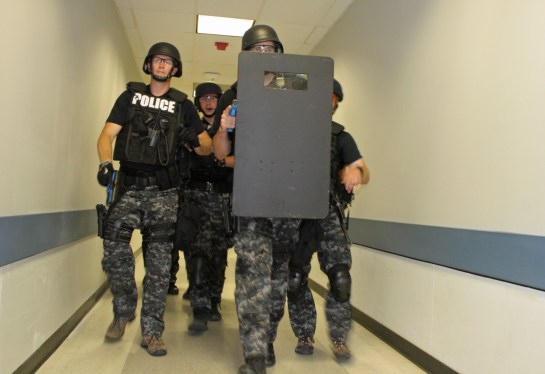
Once inside the team separates into two elements without a word. They are each lined up, or “stacked” behind a thick bullet-resistant shield wielded by point men. If they come around a corner and find the shooter, the operator holding the ballistic shield will stop the incoming bullets at point-blank range while his teammates neutralize the target.
SWAT40

We split the team. One assault element moves to an area where there may be hostages. They operate on sketchy intelligence gleaned from 911 calls that keep coming in, keep changing. The second element, the element I am with, moves immediately to the top floor. We begin a top-down clearing of the building, room by room, in case the first team cannot locate the shooter.

The fire alarm stops blaring. It falls deathly silent in the building. And it is getting hot. The team’s intelligence support unit operating in a large black van outside the building has disabled phones, Internet and air-conditioning. It is critical the suspect shooter does not have access to media. He could use it to watch live video about police response.

First problem: Research equipment in the building is interfering with the team’s tactical radios. The team leader commandeers the radios from Ford Security that are still working. They do a communications check on cell phones and radios. Within seconds new communications are improvised and tested. Problem solved. Forty seconds.

We are sweating now. I carry three heavy cameras and some extra equipment and wear a similar uniform as the SWAT operators. They carry 6-pound rifles, wear heavy body armor, and have on large backpacks with first aid gear, crowbars and door breaching tools. Each man has at least 40 pounds of gear on his back in addition to his ballistic helmet and eye protection. They wear special lightweight tactical boots that make no noise on the floors as they move and provide traction on wet floors. Each one wears hard-shell kneepads in case they must kneel or dive to the prone position.

I’ve done Ironman triathlons and can barely keep up with the team on the stairs with only half their load. These men are in superb condition. When we reach the top of the stairs the only sound is my breathing.

Element 1, the team moving to the possible assailant location, has located an “IED”, an improvised explosive device. A bomb. The U.S. Army and other law enforcement/intelligence units are here for the exercise to provide support and to learn from the operation. I am not allowed to photograph the techniques used to disable the bomb.

In only minutes the EOD team announces “clear”. The bomb is disarmed. There are two (simulated) casualties. SWAT operators use marking pens to write a letter on the casualties’ hands coding their condition for triage by EMT’s once the building is safe.

Our team silently rounds another corner in the systematic sweep of endless corridors.

There is carnage.

The floor is slick with (simulated) blood. There are… 10, 12… 14 casualties down in the hallway. Some dead. Some wounded. Some dying. Some screaming.

SWAT20

It has gone from a hostage situation to a mass shooting, and a small tactical team in a huge building with limited emergency medical capability must make an instant, and agonizing decision: stop and render aid to victims or continue the search for the shooter- who may be creating more victims elsewhere in the building at this moment.

This is a test. A test of the team’s training in decision-making and prioritization. Like most decisions made under extreme circumstances there is no perfect outcome, only a “least bad” choice. Training and mission dictate that choice, and it is made instantly and without hesitation.

The team leader radios the first element. They move to link-up with our team in under two minutes. Instead of briefing the first team members when they arrive, which would take valuable seconds, the team leader briefs them over the radio while en route to our position in the casualty hallway. Seconds are everything.

Wounded people see us. They are screaming for help now. They may be rigged with explosives, one may be the shooter, the shooter may be in any of the doorways emptying into the hallway.

This is a kill zone filled with casualties and the team must manage the conflicting priorities of saving lives and avoiding becoming another victim. The first rule of rescuers: don’t create new victims.
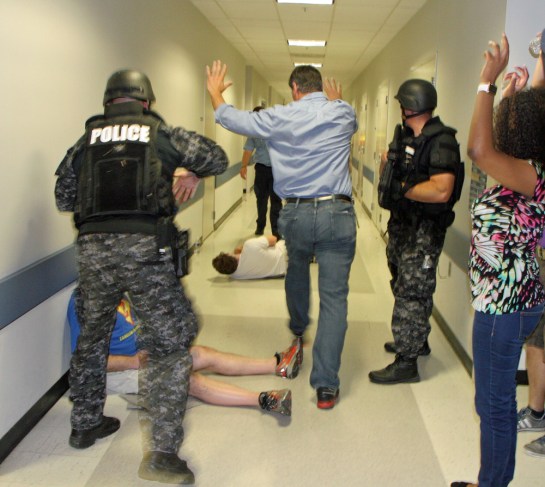
SWAT30

We split again, assault element sweeping to the front of the hallway, our medic moving behind us while the assaulters secure the hallway in front of us. None of the victims are rigged with explosives. None of our victims match the description of the shooter. In seconds the team has swept an adjacent office, secured it, checked the casualties for explosives and weapons and begun treating them. Regular Dearborn Police are pressed into service to help evacuate the wounded. Several victims are dead. We leave them behind. There is a (simulated) bloody bandage stuck to my boot.

After the shock of seeing shooting victims it’s hard to get back into stealth mode. It’s hard to calm my breathing. I look at the operators around me; their faces are neutral with focus.

We enter a meeting room. One operator sweeps left, one right, without a word, skirting the walls of the room with their M4 rifles in the ready position, weapon moving as one with their eyes. They avoid the fatal “funnel” inside the doorway where a shotgun blast from the shooter could cut the team down.

I’m momentarily puzzled when one man scans above us for disturbed ceiling tiles. The other checks a large waste container. The shooter could be anywhere- hiding in trash, concealed in the drop ceiling.

SWAT60

Top floor. We have cleared the entire upper building. The shooter has moved and intelligence suggests there may be hostages since the count of employees rescued, the wounded in the hallway and the number of people who are supposed to be in the building does not match.

Intelligence and training suggest the shooter has moved down to a place where he can secure his hostages and remain defensive. It is rapidly evolving to a standoff hostage situation.

That situation must be avoided.

From the top floor both elements move quietly and quickly to the bottom floor engineering spaces. In total with have covered more than a mile of hallways and stairs. The Ford Security workers show signs of stress, their uniforms soaked through with sweat. I could use water. The building continues to get hotter.

The lower floors are not office cubicles. They are shop spaces and laboratories. Hundreds of places to hide. Flammable chemicals. Gasoline. We enter a large garage area with shiny, new F150 pick-ups hooked to test equipment. The team leader looks in the cab of each truck. Another team member checks the bed of the truck.
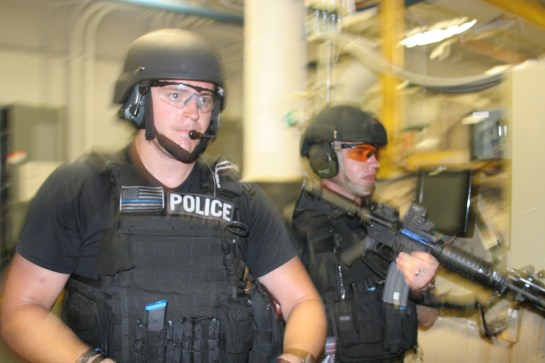
SWAT90

There is a voice. Shouting.

At the end of the garage, through a high, clear garage door we make contact with the shooter. It’s the first time we’ve seen him. He is a big man, face contorted in a mix of anger and fear. It occurs to me that the role player simulating a deranged mass shooter must have experience with real shooters like this. His performance is convincing. There are several members of the simulation team I am not allowed to photograph for security reasons. He is one.

The team forms up behind their ballistic shields. They remain quiet. The shooter is shouting something, muffled by the clear garage door that separates us. One team member, our sniper, speaks quietly:

“I have a shot”.

Our team leader must make a decision: Let our sniper take the shot or advance closer in an attempt to assault the garage where the shooter is, potentially apprehending him alive and securing the hostages.

“Move up.” The team leader directs.

We advance along the wall out of sight of the shooter.

There is no hesitation. A concussion grenade cracks blinding light. The team pours into the room, flowing along the walls, weapons tracking the shooter who is now stunned by the deafening noise of the flash-bang grenade. His next flinch decides his fate, and it is a fatal one. He begins to raise his shotgun.

Two shots. Center mass. It is over.

I’m soaked in sweat, my hair is wet. My back hurts from the tension. The team begins an immediate, systematic search of the hostages. There could be an accomplice. It is too soon for “Stockholm Syndrome”, a psychological phenomenon when hostages empathize- and even defend- their assailant. There is an additional search for explosive devices.

More than anything else the team demonstrated their training enabled them to keep the momentum of their search high enough to end the standoff quickly. There are no easy choices when a life may be taken, and that is weighed against innocent lives being saved. The weight of that decision balances on a delicate fulcrum played out in the court of public opinion and the media days, weeks and months after a real incident takes place.
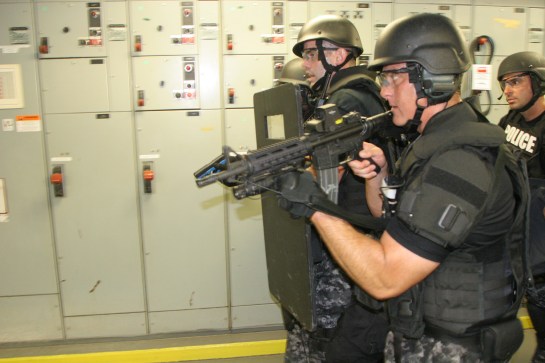
SWAT120

Drenched in sweat and looking for a cold drink I set down my cameras and loosen my boots. The operators converse in measured tones, attentively critiquing the exercise. The outcome of this exercise will be evaluated for months and even years as a way to assess and modify doctrine against evolving threats. If the situation that happened in Texas ever comes to Dearborn our own SWAT Team is more than ready; they are trained, proficient and experienced in meeting the challenge optimally.


tomdemerlyembedded


Writer/photojournalist Tom Demerly is a former Army Long Range Surveillance team member and has written for numerous military, aviation and specialty publications while traveling to all seven continents, including Antarctica. He is from Dearborn, Michigan.


By Tom Demerly for tomdemerly.com.

todd-heisler

U.S. Marine Corporal OR-4 Dave Morgan is dead.

Bled out while waiting for a medevac helicopter in Helmand province Afghanistan. His wife, 23-year-old Brittany Morgan, will find out tomorrow. It will be about three years and four months until his unborn son will find out.

A notice will run in his hometown paper. His mother, his pregnant widow, her sister, Members of the VFW and his Marine recruiter will go to his funeral.

And that will be it.

Apple will announce a new iPhone, the stock market will fall and rise, a Presidential candidate will say something embarrassing, a policeman will be in trouble for entering a bathroom to make an arrest.

But the news of Corporal Morgan’s death will not appear with those headlines.

Almost no one will know.

Morgan joined the Marines when he graduated from High School. He liked sports, did great in shop classes but not great in English. He hunted with his dad before cancer took him. He kept his used Honda Civic running himself. He was resourceful, responsible and respectful.

And now he is dead.

Why?

Morgan believed he was doing something important. Dave Morgan believed he was protecting his country and the ideals for which it stands: Liberty, Justice and Freedom. The chance to do good. The chance to do something right. The opportunity to be one of the good guys. He did not earn much money. He did it because it was a calling.

The moment at which freedom is compromised, the moment at which the headline contains your hometown, the moment when you personally become a part of the news- the moment war, terror and oppression reach out and grip your throat, that moment is one moment too late to change your opinion, to advocate for a stronger military. You will not know terror until that day. You are insulated from it.

Insulated by the efforts of women and men like U.S. Marine Corporal David Morgan.

And until that day it is unlikely you will ever understand. Because of Dave Morgan and others like him.

In the United States we live in a bubble. A bubble of security and complacency provided by the luck of geography and distance, and maintained by men like Dave Morgan. But a short plane ride away there is war and terror. We’re mostly oblivious to it. It has always been a feature of human history.

Our bubble has been maintained by 1,196,554 women and men who died protecting it in wars since 1776. On Memorial Day, we honor their sacrifice and acknowledge their lives.

Dave Morgan and everyone like him understood this. They sacrificed to prevent our bubble of freedom and security from being pierced. And in the case of Dave Morgan and many others, they died for it.

This weekend we acknowledge that.


tomdisarmsmine

Author’s Note: The main character in this article, “U.S. Marine Corporal OR-4 Dave Morgan”, is a fictitious name representative of all 1,196,554 women and men who have lost their lives in armed service to the United States. This fictitious story spans these million-plus stories, all more than worthy of being told. Instead of telling them all here, which is impossible to do adequately, “Corporal Dave Morgan” represents them all thematically.

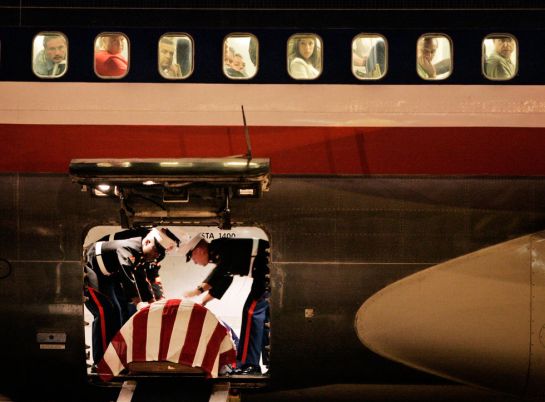
The photo at the top of the page was shot by photographer Todd Heisler of the Rocky Mountain News. It is one of the most iconic images of the Global War on Terror and of the armed services. It appears in this essay:

Visions of the Decade: Todd Heisler’s Final Salute

Author Tom Demerly served in the U.S. Army and the National Guard.

By Tom Demerly for tomdemerly.com

bikeshopdentist

Was at the dentist today. $2,297.00.

My dentist is excellent. Truly. Does a fine job, professional and current on modern dental techniques. Great staff. Nice guy too.

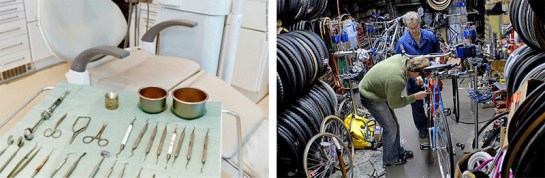
As luck would have it my dentist is also a triathlete. While I was at his office I picked up his bike and brought it back to our bike shop to do a tune-up on it. He’s got a nice bike. He should.

I got to thinking: Why can my dentist command $2500 for services, but I will only bill him about $90-150 for his bike tune-up that takes about the same time? And before you argue that your teeth are a serious “health issue” I will suggest that your bike brakes are too when you need to avoid a collision with a car.

Why is the bike industry unable to command prices for service and products commensurate with other industries? Why is a doctor, a dentist, a plumber, an HVAC repairperson or an auto mechanic so much more expensive to hire than a bike fitter, bike salesman or bike mechanic?

Why are similar things so cheap in the bike industry, when they are priced consistently higher in other industries?

Like any single economic question, there is not one singular answer. It is worth inventorying the reasons why the bike industry, benchmarked against other industries, is habitually under-charging- especially for service- despite growth in demand and technology in cycling.

U.S. culture teaches us bicycles are children’s toys. Labor rates for servicing a Jet Ski, motorcycle, snowmobile or an RV are similar to automotive repair rates. But fixing a bike is something we grew up doing in our driveway. Our value calibration of bicycle service starts in our driveway as a kid. Because the bicycle industry as a whole remains largely unsophisticated compared to Apple and Tiffany’s stores, that value calibration of bike retailers remains lower than other consumer experiences.

bike shop kids

What can the bike industry do to change the perception that bikes are toys and labor should be cheap or free? There are a few answers, but the most apparent are to provide a more modern and sophisticated presentation of services and an updated visceral customer experience congruent with newer high-end client services and retail.

Let’s go back to my dentist’s office.

Days before my appointment I always receive a text message reminder from his office. They also phone me and leave a message with a reminder.

The dentist’s office has a trained receptionist, a “Concierge”, who coordinates services, attends to questions and generally administers logistical concerns with patients. It is her only job- to facilitate a smooth and pleasant transaction. She also handles the payments. The entire payment process is segregated to a different staff, a different physical location in the building. This helps solidify the payment experience as finite, non-negotiable, consistent and repeatable.

My dentist’s office is clean and modern, beginning with the exterior of the building. The signage and everything that transmits his brand message is attractive. His treatment spaces are spotlessly clean and meticulously arranged, not only for obvious sanitary reasons, but also to transmit the impression that this is serious business.

drbruce

Bike shops, by comparison, are less formal places where employees dress in shorts and T-shirts and customers “hang out”. You act how you dress, and you charge how you dress too. The vibe in bike shops is decidedly less professional, and consequently, so are the prices.

For these and other reasons my dentist can command $2500 for a service that takes about the same time and experience as rebuilding his Shimano Di2 carbon fiber triathlon bike. He collects more than ten times the revenue I do for a service that is more similar than dissimilar. And remember my analogy about your bike brakes being as important as your cavities when you’re riding toward an intersection at 20 MPH.

And before old timers argue that a more polished, cleaner, professional approach won’t work in bike shops, I will argue that it likely will, since most adult cycling customers are actually new cycling customers whose benchmark of what a customer experience should be is formed in retailers like IKEA, Apple, Victoria’s Secret and Abercrombie– not hanging out with the guys at the local bike shop. In fact, it is likely the only bike consumers that still want a homy, small-town, casual “buddy-buddy” personal feel to bike is the guy behind the counter, not the customer in front of it.

bikefit80

Change channels.

Tiffany’s is a high-end jeweler made famous by the movie “Breakfast at Tiffany’s” and is still famous for a few reasons, one of which is their iconic “Tiffany blue” (trademarked) brand color. Buy any engagement ring of a given size at Tiffany’s and it is roughly ten times the price of an equivalent sized ring from the corner jeweler. It also carries a consistently higher perception of worth and brand identity.

From 2007 to 2015 Tiffany’s revenue grew 60.49% according to Morningstar.com. That is despite the brutal recession in the U.S.

How does Tiffany’s command a price often ten times higher than an apparently comparable product and still increase sales, even during the recession?

tiffanystore

There are several reasons my dentist and Tiffany’s can command more revenue for seemingly similar services and products to the adult cycling industry.

Firstly, they ask for it. And dress for it.

Setting price immediately establishes a value calibration. When I lived in the Middle East I noticed this value calibration is often highly nuanced. The Arabs (and Chinese) invented commerce as we know it today. They know, unless you ask, you will never get the price you want.

Tiffany’s has also established uniqueness and differentiation through their fortunate product placement in a popular old movie and in every brand message they send, right down to their packaging and bags. When a person walks through a high-end shopping mall with a Tiffany blue bag in their hand, it not only calibrates our perception of the customer as affluent and discerning, it also spreads the brand message of Tiffany’s. It’s advertising. And it bolsters our impression of the customer.

By comparison most bicycle retailers use customer bags that look like you should empty a cat litter box in them.

Tiffany’s also maintains a quiet, reverent display and sales environment. A salesperson in Tiffany’s is never interrupted by a telephone ringing on the sales floor. Phone calls to the stores are answered off the sales floor. A phone never rings in the shopping spaces.

Change channels.

e-Bay is backwards retail. People list items, often used, sometimes of dubious value, on e-Bay and consumers compete upward for price in the auction format. Think about that: compete upward.

 Why do people compete upward for price on e-Bay when normal market forces exert downward pressure on pricing in retail?

Two reasons: Time component and repeatability of transaction quality (different from item quality).

e-Bay auctions end at a specific time, and the expiration of an item’s availability manipulates our perception of its value. e-Bay is also competitive since supply on unique items is finite and limited. When it’s gone, it’s gone. Both of those components exert an opposite competitive effect on pricing.

ebayauction

The quality of the transaction on e-Bay is almost always identical. This is different than the conduct of the seller and the quality of the item being sold/purchased. But it makes a case that the quality of the transaction (separate from the item in the transaction) is a key driver in our perception of price.

If the transaction experience is inconsistent and/or below industry standards it devalues the purchase price. Buy an antique figurine at a local resale shop, pay $10 for it. Buy the exact same figurine on e-Bay, pay $20, $25, $40…. Whatever the final bid is. People negotiate upward in a proven, repeatable transactional template with finite constraints on supply and uniqueness rather than commodity.

How can bike shops leverage these strategies to improve both the customer experience while raising revenues and profits?

The good news is there are tons of opportunities for the bike industry to provide a better experience for its customers. Of course, the reciprocal is that our current standard of customer experience is poor and lagging behind professional offices and forward thinking retail brands like Tiffany’s, Apple and others. Still, this creates a massive “empty space” where bike retailers could be earning more and providing a better experience.

negotiating-with-a-car-salesman-612mz111910

Step One: Recalibrate the Bike Shop Experience.

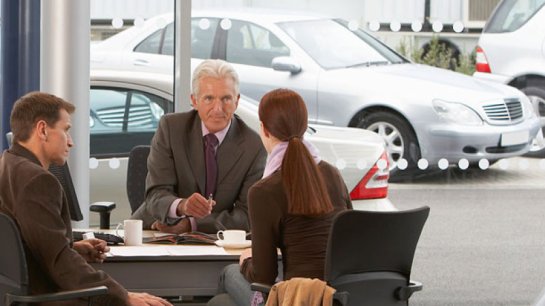
Why do you stand in line at a cash register when paying for a $5000 bike when you sit in a comfortable chair at an automotive dealership or at Tiffany’s to pay for your car or engagement ring?

Seated checkout in a non-cash/wrap setting is a small but significant step in recalibrating customer’s experience and perception of what it is to shop at a specialty bike retailer.

Having one staff member in each shift designated as the “Concierge” who greets, directs customer traffic and may also administer the customer checkout experience during slow traffic hours is another key experience quality feature that recalibrates customers’ perception of our industry.

bestbikedisplay

There are many, many other opportunities for bicycle retail to improve the customer experience by changing the transaction environment and appearance and also by adding tangible value to adult bike sales and service.

In fact, there are enough for me to fill a book with.

A problem in the bike industry is that few bike retailers and service providers are benchmarking outside our industry for ways to make the experience better in our industry. Until that changes, we’ll keep hanging out with our customers before and after shop rides in cool shorts drinking expensive beer while earning cheap wages.

“Nobody knows the future, you can only create the future.” Jack Ma, founder of Alibaba.com.

By Tom Demerly.

coffeefilters_edited-1

A couple years ago I moved back to Michigan from California to start a new business. I went to Costco with friend Sue Nichols Riegle.

I needed coffee filters for my old coffee machine. Costco only sold them in a 1000-count pack. That’s 1000 pots of coffee. A lot of coffee.

If you make one pot of coffee every day that will last you 2 Years, 8 Months, 3 Weeks, 5 Days, 11 Hours, 33 Minutes and 19 seconds.

When you buy them in bulk, the filters are cheap. So I bought the 1000 coffee filter pack, not so much to make coffee, but also to measure the progress of my life measured in coffee filters.

I made a commitment that by the time I got to the bottom of the coffee filters, all 1000 of them, that my life would be a lot different, and better, than it was when I moved back here to Detroit to open a new business.

This morning I noticed I am about half way through the coffee filters, and my life has changed dramatically from when I opened the container. Dramatically for the better.

One pot of coffee, one coffee filter at a time.

Sometimes I drink coffee when I have to stay up late to finish a project, other times I drink it when I have to get up early the next morning to continue the project, and other times I drink it when I finish a project.

They’re half gone and I’ve made a lot of progress. I wonder what I will have accomplished by the time they are all gone?

Here’s what I’ve learned from the coffee filters, and it’s a pretty simple lesson: It’s rare to make huge improvements in your life over one pot of coffee, over one day. It takes many pots of coffee, drunk on many mornings and many nights, to make the slow, grinding, progress that goes into any kind of success.

A friend of mine named Kim Ross once told me, “Successful people are usually just the ones who never gave up.”

She told me that when we were drinking a pot of coffee many pots of coffee ago.