Archive

Travel and Adventure.

By Tom Demerly for Tom Demerly.com

Only a mile and half at its widest, The Detroit River has been a geographical barrier between opposing tribes, rum runners and nations. Few rivers hold this much history. Globally, the Detroit River shares its historical relevance with the Mississippi in the United States, the Bosphorus in Turkey, the Rhine in Germany, the Ganges in India, the Volga in Russia, Paris’ Seine River, Egypt’s Nile, China’s Yangtze and other globally significant waterways like Iraq’s Tigris and Vietnam’s Mekong.

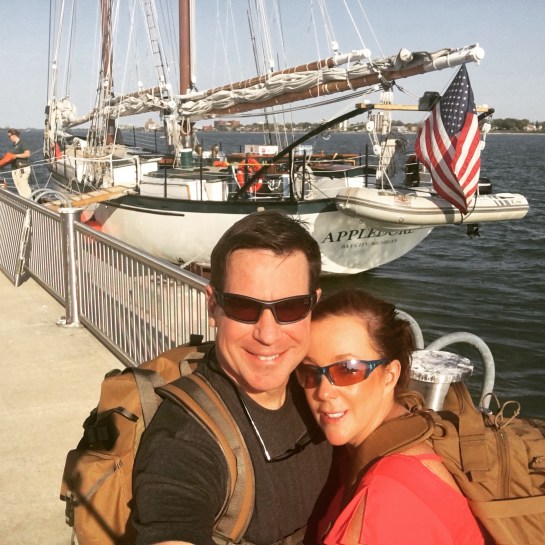
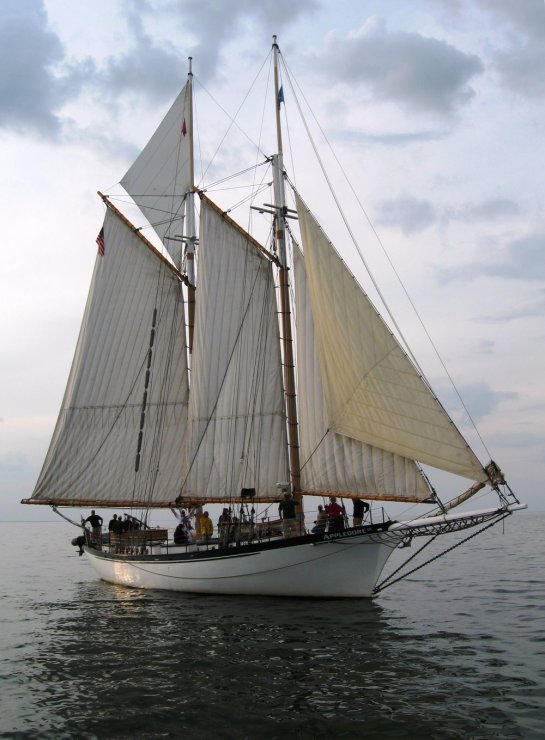
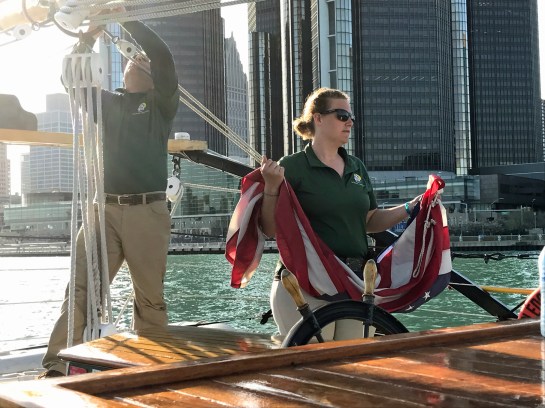
Last Wednesday, as members of the Detroit History Club, my girlfriend Jan Mack and I sailed the historic Detroit River on the 85-foot long Appledore IV two-masted schooner. Appledore IV transports its crew and passengers back in time as soon as they step on board. It is a fitting vessel for a trip back into the remarkable history of Detroit and its unique river.

Our guide on board Appledore IV was Miss Bailey of the Detroit Historical Club. Her encyclopedic knowledge of Detroit history was matched only by her wit and talent. She delivered a fascinating running narration of Detroit’s sensational history from Native conflicts to daring rum-runners driving modified Ford Model-T’s across the frozen river in an occasionally unsuccessful attempt at defying prohibition.

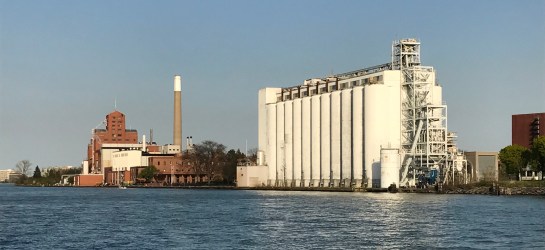
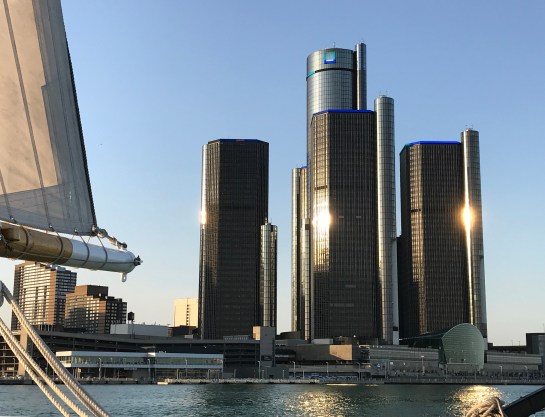
After casting off from the dock in front of Detroit’s Renaissance Center and General Motors headquarters we set sail on moderate winds and calm waters north and east toward Belle Isle and the Hiram Walker distillery. As we sailed across the Detroit River the strong and delicious scent of baking bread drifts off the Windsor shore from the Hiram Walker complex. The yeast processing for spirits production at the distillery produces the delightful aroma, lost on powerboats to their exhaust smell but blissfully preserved onboard the sail-driven Appledore IV.

Once at the top of the river we reversed course under jibbing canvas sails, ducking under swinging booms and picking up winds that brought us downriver toward the majestic Ambassador Bridge. We sailed under, marveling at the incredible volume of truck traffic engaging in the free exchange of goods between Canada and the U.S. that typifies the relationship between the two countries.

To the south we saw the dark silhouette of the industrial monolith of Zug Island, formerly one of the most polluted places on earth, now in the midst of reform into at least a slightly less toxic habitat. Today foxes, peregrine falcons, feral cats and other unusual species share the island with its heavy industrial tenants like steel mills and coke ovens. A rare species of sturgeon lives on one side of the island because of the deposits of coal cinders that collect on the bottom of the river from the industrial activity.

Mystery surrounds much of Zug Island, a private, manmade industrial otherworld that has produced an undefined loud humming sound to the distress of residents as far as ten miles away. Some say it is the sound of wind through industrial structures on the island. Over a million dollars has been spent on studies to find the source of the bizarre sound but the maker of the mechanical music remains a mystery.

Shipping traffic is a huge part of the Detroit River. During our cruise we saw two passages, one a massive ore freighter and the other a smaller cargo vessel, our radios crackling to life with instructions from the river traffic control as Customs and Border Patrol vessels zipped back and forth. The Detroit River is one of the busiest commercial rivers on earth, and ship spotting along its banks is a popular pastime.

This cruise aboard Appledore IV with the Detroit History Club is a rare and intrinsic perspective on Detroit, and one all Detroiters ought imbibe in. People who live in Detroit and its suburbs often have a deep affection for something undefinable about the city that makes it unique. An intrinsic authenticity and resilience belonging to a place that survived riots, wars, fires and economic collapse. Detroit has produced iron and steel, innovation and art. But few people own the deep historical context of Detroit’s remarkable and repetitive penchant for survival and prosperity.

To join the Detroit History Club and enjoy their many fascinating and varied events follow this link:


http://www.detroithistoryclub.com

Photos and Story by Tom Demerly with Jan Mack.

shark20_700size_wcredit

I’m going to puke.

The waves just won’t let up. My equipment is too tight. It is digging into my guts. I pissed inside my wetsuit and another guy’s fins keep whacking my ankle hard enough to make my legs scream. I’m drenched with cold salt spray. The wind coming over the bow is freezing. I can’t see a thing except some vague notion that we are getting farther and farther from land and the ocean keeps getting rougher and rougher.

I’m headed south from Roatan Island, Honduras in a very crowded, open skiff that more closely resembles a Somali refugee boat than a dive yacht. My girlfriend is sitting next to me.

At least she was my girlfriend when we got on the boat.

She might not be if we make it back to shore. This week she earned her Advanced Open Water SCUBA Diver certification, often diving in silty, dark brown water with the same visibility as day-old coffee. Now we’re about to dive in heavy seas far offshore at significant depth in a school of sharks. Big sharks.

And we’re not using a shark cage.

Speaking of refugees, some of our boat crew looks more like… well; this isn’t Jacques Cousteau’s Calypso. They find some seemingly random point in the tossing ocean marked by a soccer ball-sized red buoy almost too small to see. It’s too deep to anchor. We tie off to the buoy line.

The incessant, nauseating roll of the ocean is worse once the boat stops. At least I’m not getting pelted by freezing salt spray and having my rapidly contracting nuts crushed on the fiberglass benches of the gunwales anymore.

sharkdive10

The idea is, “Get out of the boat as fast as you can” because being in the boat sucks. Divers are doing back rolls into the waves immediately, like there is a fire on board. I think everybody is ready to barf, and SCUBA divers know it is always calmer underwater.

I glance at my girlfriend. She isn’t smiling.

I roll off the rail and fall a long way into a wave trough before I hit the water tank-first with a commanding splat. The boat slides down the same wave and crushes me underwater. I’m glad I forgot to inflate my buoyancy compensator vest since I really would have gotten clobbered if I had, but now I’m hurrying to get compressed air into my vest since the weight of my gear is dragging me under fast.

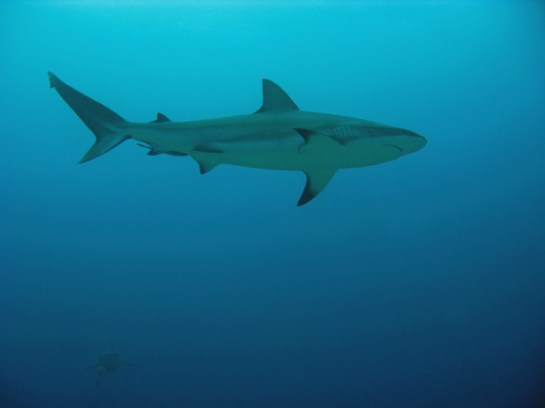
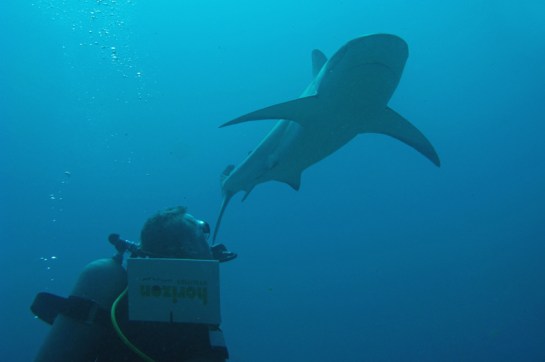
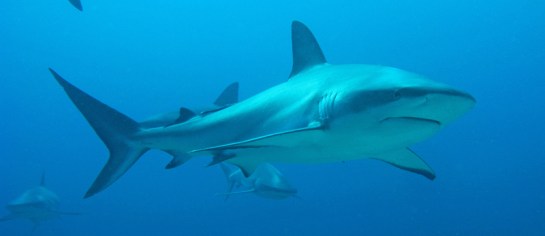
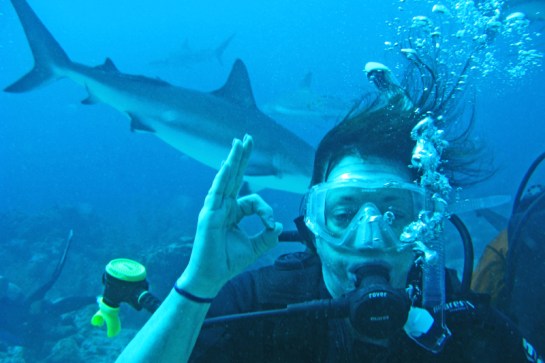
I roll over and look down. There is a shark. About the size of a Toyota. Its pectoral fins are gracefully splayed outward; I have a perfect plan-view of it 60-feet below. There is another. And another… They circle slowly in silence down there.

The sharks know we are coming. They swim up from the depths and wait. Wait for something to eat. Wait for us. Wait for the black-rubber bubble monkeys to come see them.

sharkdive30

This is the Cara a’ Cara dive site. In Spanish, “Face to Face”. It’s named that because it is world famous for having a face-to-face encounter with big sharks at depth without protective cages.

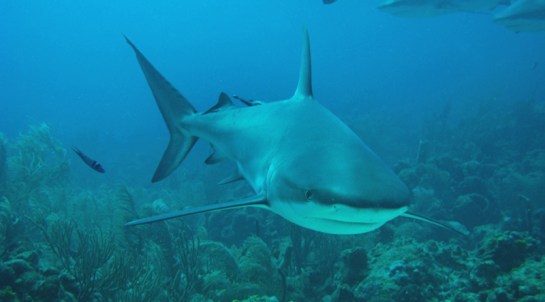
There are a few species at Cara a’ Cara but the most common are Carcharhinus Perezi, the Caribbean Reef Shark.

Caribbean Reef Sharks are large, about 10-feet at full size. They share the top of the food chain with other large sharks in the Caribbean reefs, especially in shallow water above 200 feet depth.

These sharks are not dangerous or aggressive. If they feel threatened, which is rare, they exhibit a “threat behavior” posture akin to a cat arching its back. They eat fish, and because there are a lot of fish around them in the Caribbean, they are seldom hungry. These facts make them a rather threatening looking, but actually agreeable shark species.

We’ve brought fish with us, and a load of camera toting “adventure” tourists looking for a thrill, a good story, a good Facebook post. And I am one of them.

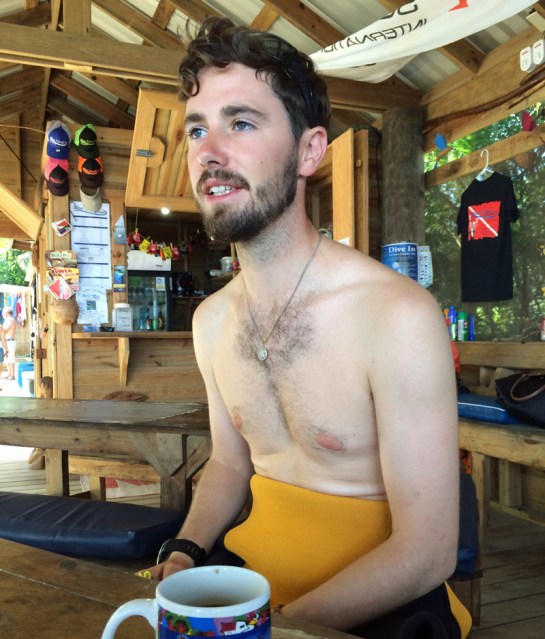
We brought our dive master with us. His name is Russell Nicholson. Nicholson would fit easily into the crew of the Calypso as one of the divers in a Jacques Cousteau documentary. Bearded, slim, handsome, fit, 26. He speaks with a British accent that seems like narration in every Discovery Channel wildlife documentary you’ve seen. Nicholson has dove everywhere. He is calm and relaxed underwater. During our dives earlier this week I studied his technique, fanning his fins in a motion more like an aquatic animal than a SCUBA diver to move slowly along underwater.

sharkdive40

I don’t know it now, but Jan is still on the surface, tossing over the waves and expressing concern about the safety of this dive to Russell.

Me? I’m a tourist who just wants to pet sharks.

As usual it is decidedly less chaotic underwater. Visibility is good, maybe a couple hundred feet, the water is warmer than the air and there are, thank God, no waves churning my stomach down here.

A queue of divers who speak five different languages hangs onto the mooring line beneath the buoy. Our languages don’t matter underwater. We descend the mooring line as a group, as though we are rappelling into the steel blue depth.

There is a reef at our back forming a natural theater. We keep the theater wall to our back, presumably to limit the approach of sharks from behind us but more realistically to keep a bunch of tourist divers from swimming off willy-nilly chasing sharks and getting lost a couple miles off shore.

We pack in, divers next to one another against the reef at 70-feet depth. A moray eel who makes his home here sticks his large, green head out inches from my right elbow in greeting or in grumpy warning to “stay off my lawn”.

sharkdive50

The dive master on this dive brings a bait box to feed the sharks. And this is why they always come. And also why what we are doing may be considered wrong.

According to the late R. Aidan Martin the former Director of the ReefQuest Centre for Shark Research, a Research Associate of the Zoology Department of the University of British Columbia, and an Adjunct Professor of the Oceanographic Center of Nova Southeastern University:

“In recent years, organized shark feeds have provoked considerable controversy. Critics claim that this activity changes the behavior of sharks and the structure of reef ecosystems. There is concern that sharks become dependent on these ‘hand outs’ and may associate all humans with food, increasing the likelihood of attack. Proponents argue that sharks are simply opportunistic, if the feedings stopped, the sharks would simply disperse and go back to feeding upon whatever they fed on before. Although accidental nips have occurred (mostly received by ‘shark wranglers’ conducting the feed underwater), there is no good evidence that shark feedings increase the likelihood of attack away from the feeding site. The issue of modifying reef ecosystems is more difficult to assess. Yes, shark feeds may concentrate predators artificially and the intensified removal of fishes from the environment for use as shark bait is a concern. But populations of sharks and other reef predators have been seriously depleted by overfishing and habitat erosion and many operators use left-over scraps from local restaurants, using fish remains that otherwise would have gone to waste. Clearly, this is a complex issue and a quick or easy resolution is not on the horizon.”

My guilty concerns about reckless “eco-tourism” are somewhat assuaged by Martin’s remarks. If we leave, the sharks won’t flop around on the bottom waiting for handouts from tourists. They’ll just keep being sharks, like they’ve done for millions of years as one of the oldest surviving species on earth.

sharkdive60

The sharks are close now; there are about 20 of them. And they are breathtakingly beautiful.

I’ve loved sharks- or the idea of sharks- all my life. When I was a kid I read Peter Benchley’s novel “Jaws” and saw the movie over and over. I’m not sure why I liked it so much. It just seemed… adventurous.

But as we grow up our perspective changes. And hopefully we learn. Between my years as a zitty teenager reading Peter Benchley books and sitting in the dollar theater and now I had traveled the world. I remembered my fascination with sharks. After nearly 200 triathlons, quite a few of those in the ocean, I had never seen one- a big one, up close. I was a SCUBA diver, but all I saw were nurse sharks. One time a big bull shark followed me while snorkeling in Belize. Another time I found a school of sickle fin lemon sharks in the Virgin Islands and waded in to swim with them while they dined on a school of panicked baitfish.

But I never had that moment with sharks, big sharks. Until now.

sharkdive70

Operating my camera took work as the sharks circled in front of us at 70 feet. I tried to stay relaxed so I got decent photos. Prayed my camera would work down here.

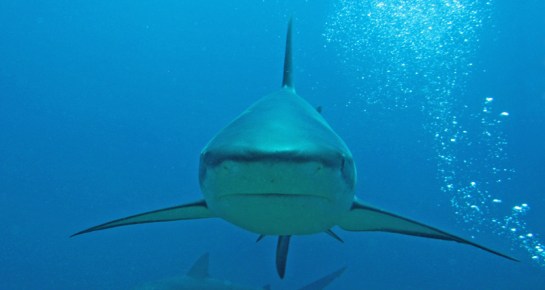
Then I looked up. She was four feet from me, swimming right into my mask. A big 8-footer. A shark bigger than me. I shot one photo of her coming head-on, then gently kicked my fins once to scoot over, to let her pass.

She was only inches from me, so I touched her. You aren’t supposed to touch the sharks on a shark dive, but I will die someday and this may be my only chance. It was selfish, but I wanted to know what it felt like to touch her, and I wanted her to know I did.

I gently laid my hand on top of her right pectoral fin. It remained motionless as she glided forward slowly. I was struck by her… firmness. Her pectoral fin was hard. The sharkskin, just as you read, was rough and like sandpaper. Fine sandpaper.

She did not react, flinch, dart away, rear around and bite. She just swam- glided rather- straight ahead. I watched, her tail barely undulating slowly side to side in an elegant kind of Hula.

The divemaster opened the bait can and the sharks went berserk, a wild spinning mass of 8-foot rifle bullet bodies darting into the same space. The clear water was stirred into a silty mess, and I was surrounded by sharks ripping a small bait bucket to pieces.

I don’t know where my girlfriend was.

sharkdive80

The silt settled quickly as it does at depth, and the sharks regained their composure. Now the divers left the rock amphitheater and swam amongst them. We swam with them, alongside them.

It seemed so incredibly good, so beautiful and safe and wild and good. The gentle sharks, retired from their feeding frenzy, glided amongst us, cameras going off, divers marveling at their size and shape and girth and elegant power.

And then divers began to ascend the rope. But I wanted to stay. As divers left I was on the bottom with more and more sharks- there were more of them and less of us. Finally, the last diver and myself started toward the buoy line to begin our sad ascent to the world of air and problems. I did look down one more time at them, and they were leaving.

I fear that we are losing the world. Nature. Animals. The sea. That it is already damaged beyond repair and despite our quaint efforts to save it, it is too late. And I am old. 54. So this may have been my last chance. And I did, quite selfishly, take it.

One day I will die.

If I am lying in a bed, doped by drugs and drifting in and out of life, I hope I remember them still- the beautiful sharks- and how I felt with them. How perfect and majestic and regal they were. I hope I remember them as I die of old age.

sharkdive90


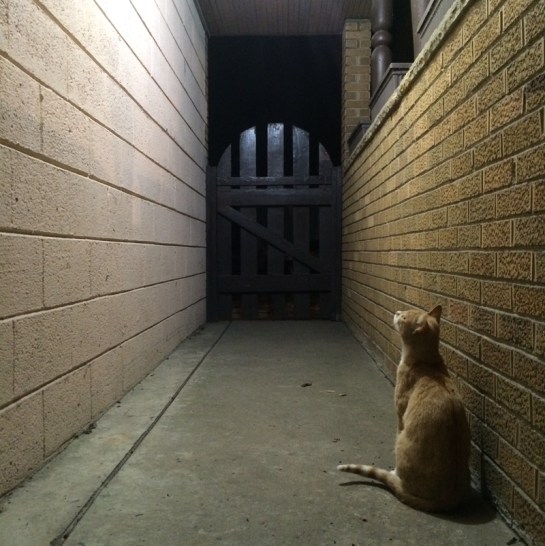
Author Tom Demerly likes cats as well sharks, can’t help petting them both and has been all over the world.

tom


By Tom Demerly.

MrX10

He just appeared.

Out the back window in a pool of light at 12:34 AM. He was interested in what was inside our window. When he looked inside our house he saw two happy, healthy, well-fed cats with rooms full of toys and cat trees and water fountains and beds. He had a sad look of longing on his face.

And then he was gone.

MrX20

It was March 13 that first time we saw him. Since then he has come back many times. Sometimes he just shows up. He comes running when he sees us. Now he answers to our voice when he is around or meows outside the window to come in.

We started calling him “Mr. X”, a man with no name, no obvious place of belonging.

When Mr. X arrived the first time I was concerned. Animals show emotion on their face. After decades of living with cats I could tell Mr. X was not happy outside our house that night. He wanted a warm blanket, a cat tree, something to eat and a friend.

MrX30

We kept an eye out for him and over time he would make his way back for another visit. Then another. Finally, one day, we invited him into the back porch. It’s segregated from our two cats (inside only cats with clean health records). He was incredibly affectionate, loved to be petted, then held, then brushed. He smiled a big cat smile and purred when we gave him his own blanket. Then we bought him a water dish, a food bowl, his own litter box, a heated bed, all on his own glassed-in patio.

MrX40

We wondered where he was from. Was he someone else’s cat? Did a family move away and abandon him? There were five houses for sale on our block- he could have been from one of them- a family moved out and left him behind.

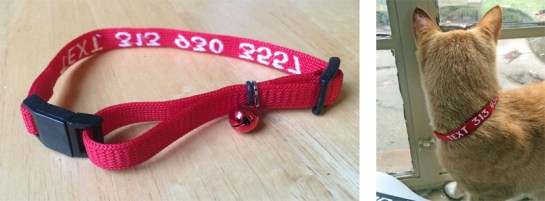
We had a special collar with our phone number made and we planned to put the bright red collar with our contact number on him so if anyone owned him they could call us when he got home. Domestic cats have relatively small territories, males larger than females, but finite territories nonetheless.

MrX50

Mr. X happily accepted the collar and went on his way. We hoped we’d find an answer to the mystery of Mr. X soon.

On April 1st at 10:57 AM I got a text message, “My cat came home with a collar that had this number on it. Did you put it on?”

Success. Mr. X had a home, and a name. His name is “Chester”. We don’t know his last name.

MrX60

As it turns out Mr. Chester lives next door. He comes and goes as he pleases. The people who own him have children who love him and take good care of him. His excellent disposition speaks to their kind treatment of him. But the person who texted me told us her husband is allergic to cats and they were looking to relocate him.

Of course, Mr. Chester has a vote in all this.

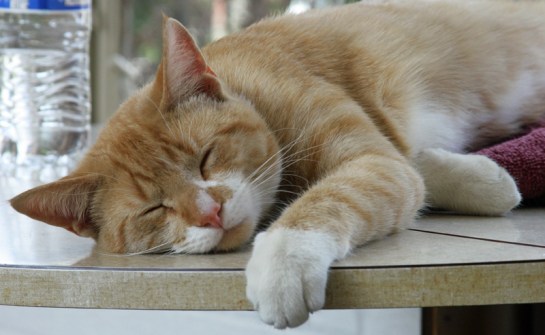
Over the next few days Chester made it clear he loves us and enjoys good food, a heated bed and a wide open back porch to lay in while the sun spills through the window during the day.

MrX70

But Mr. Chester also loves his freedom. He wakes up from his daytime naps and wanders out of the back porch at night. He plays in the yard, running around me, playing fetch, getting petted and stalking imaginary things.

Then he disappears.

MrX90

We’ll see him in the window next door. Then outside. Then back in our porch. Our cats haven’t met him except through the window and screen and by sharing scents on the back porch after he leaves. Mr. Chester needs a clean veterinarian exam before he integrates with our cats because of disease that can be transmitted from cat to cat.

But there is more: As it turns out the man next door isn’t the only one allergic to cats though. Jan Mack is also allergic, and she takes a coal shovel full of prescriptions every day to moderate her allergies to our two cats, MiMi and Vice-Admiral Malcom Fredrick Davis III. So the full integration of Mr. Chester into our home may never be possible for three reasons; Jan is allergic, and a third cat may add to the symptoms, Mr. Chester may not want to live inside permanently, and outside cats can put inside cats at risk for transmitted disease. Lastly, MiMi and the Vice-Admiral may not want a new cat. They are curious about Mr. Chester’s visits, but reserved about him being a permanent resident.

MrX100

So, as it turns out, Mr. Chester is the decider in this matter. If he decides he wants to move from next door to our house, he is welcome as long as we can moderate the issues of Jan’s allergies and integrate him with MiMi and the Vice-Admiral. But those factors also weigh heavily on the matter.

For now, Mr. Chester is enjoying the benefits of two households and seems quite pleased about it. A veterinarian visit is in his future, and we worry about his exposure to traffic and other animals outside, but he appears to be a clever man who has made his way so far.

MrX110


By Tom Demerly.

roatanjet

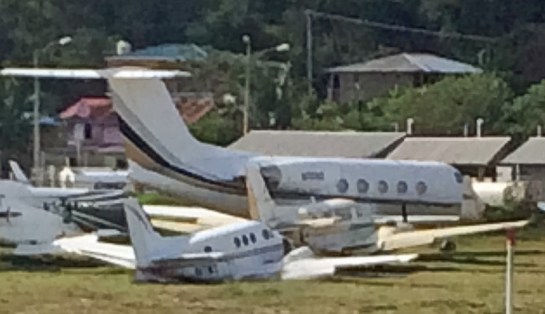
The mysterious, abandoned Gulfstream II business jet with registration number N707KD at Roatan Airport. Photo shot on Saturday, 20 February, 2016 by the author.


Tuesday, April 1, 2014, approximately 1540 HRs Local, North of Roatan, Honduras in the Southern Caribbean.

Eric Emanuel Mejia Montes is sweating.

Montes is sitting in the right, co-pilot’s seat of a Gulfstream II private jet wearing registration N707KD. Only 40-feet below, and slightly behind him is a Cessna 182 single engine, prop-driven civil aviation light plane.

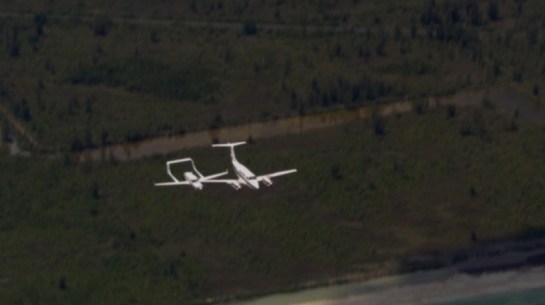
Flying in tight formation the two planes are on final approach to Aeropuerto Internacional Juan Manuel Gálvez, the only airport on Roatan Island, 30 miles off the Honduran coast in the southwestern Caribbean.

The Cessna’s maximum speed is 173 MPH. The Gulfstream II’s minimum stall speed is 121 MPH. Any slower and it falls out of the sky. The Cessna can’t fly any faster to keep up with the jet, now flying so slow it is a wind gust away from falling out of the sky.

The two very different aircraft, one a private executive jet designed for intercontinental travel, the other a light general aviation plane, were never intended to fly close formation with each other, let alone in bumpy tropical air near sunset on short-final approach to a small island runway with no air traffic control facilities.

On radar the two aircraft look like one because they are so close, and despite the stress of trying to hold a close formation (Montes isn’t much of a pilot, barely qualified to fly the Gulfstream) it is more important they risk a midair collision than be detected by the radar-carrying AWACS planes of the U.S. and Mexican security forces.

Planes90909

The Michael Mann fictional movie “Miami Vice” depicted two drug smuggling aircraft flying in close proximity to appear as one on radar for the purpose of concealing one of the planes.

Co-Pilot Montes and his “captain” have the easier job. The man, or men, in the Cessna beneath them must wait until the last second before they steer away from the jet above them, avoid a midair collision and quickly land on the same runway behind the jet. Then Montes and Ríos will taxi the jet to a parking area, abandon it and run to the still-running Cessna light plane for a hasty take-off from Roatan. All without official clearance and mostly without detection.

The two planes and their crews followed a mysterious, untraceable path south toward Roatan. No one knows where they took off from, and there was no flight plan filed for their destination. The authorities at Juan Manuel Gálvez Airport, what authorities there are, knew nothing of the arrival of this unusual formation of aircraft.

No one knows exactly what Gulfstream II N707KD and the Cessna 182 are doing. No one knows where they came from.

Three years later what I learned poking around Roatan’s little airport, its island shops and restaurants, from taxi drivers on the island and local SCUBA divers, is that the next day the Cessna 182 that left Roatan with both flight crews- was shot down. All of the crew members were killed according to reports- what reports there are- and no accessible record of who the original Cessna pilots were, where they came from or what they were doing exists.

flanker

A Russian-built Venezuelan Air Force Sukhoi SU-30MKK.

From other sources I learned the Cessna 182 was intercepted that next day over the jungle by a Russian-built Venezuelan Air Force Sukhoi SU-30MKV Flanker-G. The big Venezuelan fighter shot the Cessna down with a burst from its GSh-30-1 30 millimeter cannon. The charred bodies of Darimel Guerrero Ríos and Eric Emanuel Mejia Montes- the flight crew of Gulfstream II N707KD- were found inside.

But no one else was.

Reports revealed the Gulfstream II that landed without clearance the day before on Roatan and was quickly abandoned without explanation “tested positive for having carried narcotics”. It didn’t take an expert intelligence analyst to figure that out.

But what happened afterwards- the disappearance of the Cessna flight crew, the shoot-down by the Venezuelan fighter, the lack of documentation of most of the incidents and the almost complete lack of reporting on the entire incident- is perhaps the most fascinating part of the story.

Or maybe not.

In a search of the Drug Enforcement Agency’s database for fugitives the name of one, “’Mike’, Mohammed Mouied, alias EL KHATEEB and/or Mike KHATEEB” is revealed in a search for the names of Darimel Guerrero Ríos and Eric Emanuel Mejia Montes.

Mouied or El Khateeb, or Mike Khateeb- whichever alias you prefer (they’re likely all fake) is a Jordanian. There is a moderately serious criminal record for meth-amphetamine attached to his name and the directive “Do not attempt to apprehend this individual.” His activities appear unrelated to the incident of abandoning the aircraft on Roatan and the shooting-down of the Cessna the next day by the Venezuelans. But he is still somehow linked to the incident- at least in the DEA database.

The abandoned Gulfstream II, registration N707KD, remains at Juan Manuel Gálvez Airport in Roatan. If you fly onto the island for a holiday, look to your left as your plane lands. That’s it sitting north of the runway across from the small terminal. No one has claimed the half-million dollar jet. Curiously, it has not been seized and sold by authorities. It just sits.

And in the mystery of Gulfstream II N707KD there remain many more questions than there are answers.


All Photos and Story By Tom Demerly and Jan Mack.

shark20_700size_wcredit

What is left of our oceans? Is it too late to “save” our planet? Does sustainable tourism exist?

Roatan, Honduras is an island 40 miles off the coast of mainland Honduras in the western Caribbean. It is home to the largest barrier reef in the western hemisphere, the Mesoamerican Reef, second largest in the world.

My girlfriend Jan and I went to Roatan to find a place that is quiet and safe, untrampled by tourists and free from the industrial harvest of its resources. We wanted to see if there is anything left.

We found interesting- and disturbing- contrasts.

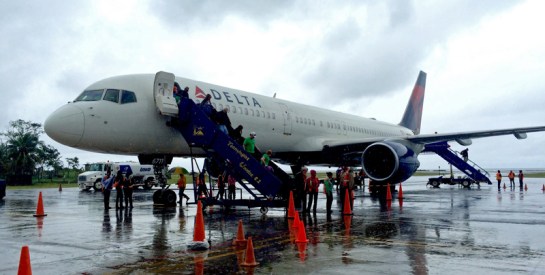
One 7,858-foot concrete airport runway serves Roatan. It’s large enough to land a Boeing 757 on- barely, and according to some sources, not quite long enough to take it off from. But Delta Airlines operates 757 service to Roatan once a week if weather permits.

plane

The Saturday we flew into Juan Manuel Gálvez International Airport was iffy. Low cloud and driving rain raked the island. It was February 13, 2016.

There is no modern landing approach system for Roatan’s only runway- no runway lights either. If the weather is too bad to land when you get there, you fly back home. The landing is even sketchier since your aircraft has to carry at least enough fuel to fly back to the mainland if it can’t land because of bad weather. During the fifth circle above the airport at 3,000 feet over a barely broken- and thickening- cloud layer our pilot’s announcements became increasingly tense.

“We’re going to try for it.” The pilot announced. Airline passengers are uneasy with terms like “try for it” when it comes to landing a big plane loaded with fuel on a short island runway.

Our huge Boeing caromed onto the end of runway 07/25 right on the ocean’s edge like a fighter onto an aircraft carrier. Brakes screeched hard as the thrust reversers on our twin jet engines shot an eight-foot diameter plume of spray forward of our plane. With only yards of runway left we stopped. We didn’t know when we landed we would need every inch of it for take-off a week later if it were a hot day, which is almost every day in Honduras.

Minutes later a United 737 twin-engine airliner made a similar attempt at getting into Roatan- and failed. He flew back to the mainland. We were the only flight to get onto the island that day. When we left the immigration checks, the airport closed.

They fingerprint you coming into Roatan and take your picture. There have been problems. Problems with people coming to commit fraud, sexual crimes, drug use and trafficking. It isn’t an epidemic though. The island is, based on our experience, safe and friendly. The islanders have built this line of defense against the things that make mainland Honduras, one of the most dangerous places in Central America, unsafe for tourism.

bird

Every islander told us that mainland Honduras milks Roatan tourism as its cash cow but returns little back to the island. Both holiday tourism from the few cruise ships that visit for day trips and slightly more adventurous “eco-tourism” for the SCUBA diver crowd. Jan and I were the later. We imagined ourselves as somehow… “better” or more authentic than the cruisers.

Our base would be Blue Island Divers, a rustic, beautiful dive center on the north coast of Sandy Bay with two cottages on the beach. Eric and Carly White run Blue Island Divers. They’re Texans, with the attendant drawl and pleasant manner. But their easy attitude belies a work ethic that is tireless. Filling SCUBA tanks, fixing plumbing, scheduling dives, maintaining boats, serving drinks, teaching new divers and improving existing ones- all done quietly behind the scenes against a backdrop of relaxed island paradise.

house

What Carly and Eric have created at Blue Island Divers is a sparkling gem in a vast sea of lesser experiences. Authentic and welcoming, small and quant, this is exactly what we had hoped for- a quiet cabin on a remote beach with tropical birds and roosters for alarm clocks, sunset views and hammocks swaying under jungle palms. It looks like a movie set. Exotic reef fish swim in shallow, crystal water forty steps from where our heads hit the pillow in our cottage. You can walk the beach for kilometers in either direction. The reef sits yards off the beach, creating a calm estuary ideal for swimming, snorkeling, sunning and teaching new divers. In our front yard lies some of the best diving anywhere on earth- a two-minute small boat ride away. Some dives sites you can swim to.

hut

Our beach cabin at Blue Island Divers in Roatan.

My girlfriend Jan is a new SCUBA diver and I am an old one who hasn’t been underwater in years. We took basic and refresher dive training in Michigan then went to Roatan for her open water certification dives and to explore one of the most renowned dive sites in the world.

Jan is a triathlete who had open water swim anxiety. She ‘s an Ironman finisher. It may seem odd that she was uncomfortable swimming in open water but fears of the unseen live in our minds that way. SCUBA diving is a way to understand what is really below the surface to moderate those fears.

jan surface

Our dive instructor and dive master at Blue Island Divers is Russell Nicholson, 26, originally from Newmarket, United Kingdom. Nicholson looks the part; short, Errol Flynn beard, curled hair and relaxed eyes that never waver, never suggest alarm or urgency. His voice is a laconic monotone of British accent, always spoken at a volume that politely requests attention rather than loudly demands it. His remarks about a dive site, sea conditions, dangerous sea life and submarine lesson plans are precisely spoken and trimmed of any sensation. There is the slightest hint of Ian Fleming’s James Bond when he suggests we “Just go inside, and have a nice swim-through” at an underwater cavern in 65-feet of ocean that opens over a submarine cliff dropping into a black abyss. No other dive master could have made us confident in such an expedition. Nicholson made it seem almost… pastoral. “We’ll just kip down and have a look, then we’ll decide.”

Russ Nicholson got here after finishing college, sciences and exercise physiology, in England at the height of the recession. With poor job prospects he did what any self-respecting English adventurer does, he traveled the world as a SCUBA instructor.

Russ

Dive Instructor Russ Nicholson.

“Egypt was incredible, but the Muslim Brotherhood and the unstable government made things a bit dodgy at times…” From there to Asia, Thailand, Indonesia across the Pacific to Australia where he worked construction for a couple years. Then back on the road of undersea adventure as an expert dive instructor. Nicholson certified over 500 divers and built a reputation as one of the finest dive instructors across that part of the world. Now he sat across from us, our own private instructor and underwater guide.

Drenching rains and ocean gales pummeled the island washing rivulets of thick jungle mud through swollen rivers dumping into the ocean when we arrived. The island wore a dense, brown belt between its beaches and the reefs. Diving was nearly impossible in the salt-water muck upon our arrival.

rain

A short day later as the weather broke we boarded one of Blue Island Divers’ small dive skiffs from their dock and motored over peeling tubes of big waves that looked like the opening of “Hawaii Five-O”. Our boat Captain, Elden, is an islander. To him the sea has road signs on it. To us it was a dangerous tempest. He navigates the waves and reef like a commuter on a cloverleaf with a Garmin.

Elden found passage between a small island and the reef, ducking behind it then out to sea between waves. Once past the reef our dive boat rose and fell with nauseating amplitude. Combined with a grey sky, dark water and threatening rain it was a good day to lose your lunch over the rail. I dry-heaved five times in the attempt.

After Russ administered our pre-dive checklists and Jan and I did a buddy check we did a back roll entry, swam the five-foot rollers on the surface to the reef marker and deflated our buoyancy compensators for the descent.

Everything changed. A vast landscape, varied and perfect, spanned below us as we fell like underwater skydivers to the white sand sea floor. It was calm underwater. Swarms of colorful fish swam easily in relaxed processions over white sugar sand between coral arrangements the size of buildings. Instantly ten or fifteen species were in front of us. As if queued by our entry a peaceful sea turtle flew over the bottom. What was chaotic and stormy on the surface gave way to Roatan’s main paradise- the paradise beneath the waves.

shark90

Nothing prepared us for the enormity and splendor of underwater Roatan. It’s shocking. Otherworldly. Only feet below the surface the world changes entirely. No other transition in human experience is as abrupt and dramatic. It takes billions of dollars and decades of technology to fly into outer space. It only takes a few SCUBA lessons to fly into the inner space of underwater Roatan as weightless aquanauts.

We dove on reefs and shipwrecks, to 100-foot depths and searched for fish species, cataloguing them on an underwater slate. Russell planned underwater navigation exercises for us on land, briefed and rehearsed us, then lead our dives and administered tests in underwater compass reading, distance measurement and every aspect of open-water recreational sport diving. We did two and three dives a day.

Roatan skies yielded to sun and calm seas. The surface conditions improved. We became more relaxed and at home in the ocean. Bobbing on the calm surface before and after a dive under warm sun was relaxing. When we surfaced we ate orange slices picked from trees the day before.

lizard

The only contrasts came when we were back on land. Roatan is a poor island. People lead a subsistence life working in service industries. When we walked on some of the beaches toward the small tourist area visited by the cruise ships the amount of trash on the beach was disheartening. During some of our dives we collected bits of plastic bags from the reef at depths of 60-feet, deadly plastic bags that could choke a sea turtle or strangle coral.

In a strange irony the deadliest things in the ocean were plastic bags from cruise ship gift shops. The jellyfish, stingrays and sharks posed no threat. The tourist trash was killing things in front of us.

Among its dive attractions Roatan has a population of large Caribbean reef sharks (Carcharhinus perezii). One dive site, “Cara a Cara”, rests on the bottom in 70 feet of water about two miles off the south coast. Cara a Cara is the farthest from shore of hundreds of popular dive sites on Roatan. The sharks gather there. And so do the adventure tourists.

shark30

I’ve been a diver on and off almost since I was a teenager. Sharks, big sharks, have only been a rare, distant shadow in the sea that fades into the abyss after we entered the water. I learned sharks didn’t like people. Sharks ran from us. But at Cara a Cara the sharks will return each day if the divers do. The divers descend with a white plastic bucket with a few fish heads in it- not nearly enough for a meal if you’re a nine-foot shark, but enough to tempt them close enough for photography.

We rode a typical open-skiff dive boat packed with divers about two miles out to the dive site. It was rough, waves broke over the bow, we were soaked. One of the other divers, a Frenchman, joked that we looked like the opening scene from “Saving Private Ryan”. He was right.

shark40

At the moment I back-rolled off our dive boat I had become a part of the problem. I had become a tourist hoping to grab some snapshots of something that should be regular and natural in the ocean, but is increasingly fleeting, exploited and rare.

Descending the mooring line to Cara a Cara I saw the plan form of a big reef shark below me. Gliding on his pectoral fins, he steered a patient course over the white sand 60 feet down. Circling, weaving, looking, waiting. Then there were two, then six, then twelve- then too many to count. Some were massive, the size of a kayak. None were small. Most were pristine and perfect. One trailed a length of fishing line from a hook gouged into the right corner of his mouth. All of the sharks were, curiously, female. Five of them were pregnant. A hopeful sign.

shark80

We landed on the white sand bottom in a natural coral amphitheater at 70 feet. Two rows of divers, me on the end. Russ Nicholson dove with Jan and I on the dive. We brought our own SCUBA tanks and equipment since the shark dive operation’s compressor was broken and they had a reputation for allowing their SCUBA tanks to drain too completely for safe operation. Russ looked after us and the other divers. Only minutes after reaching the bottom Russ had to ascend with two divers whose tanks had become dangerously low on air way too quickly.

One diver ran a large video camera, the dive master on the dive administered the bait bucket and the sharks obliged with a display that reached a crescendo when they spun into a whirling feeding frenzy, sending sand flying into the water and reducing visibility. I was in the middle of a shark feeding frenzy 70-feet under heavy seas two miles off shore.

shark70

We swam amongst the sharks. They shared their ocean with us for a few minutes. We took their picture. After about 25 minutes on the bottom the sharks began to slowly drift back to the depths and we began to slowly ascend our buoy line, each party returning to its respective worlds.

I don’t know if what we did at the shark dive was good. Am I part of the problem? Did we somehow alter the sharks’ behavior? Does our diving with them threaten them? My rationalization included a promise that I would tell the story of the Sharks of Roatan Island, and now I have.

If you are a diver, you can see them too for $100 if you think that is a good thing. The dive boat is too crowded and the sea can be rough, but the sharks are nothing short of a miracle. A miracle that I am afraid may last only slightly longer than a perfect sunset on Roatan.

tom

Tom Demerly has written for “Outside” magazine along with a host of others and traveled on all seven continents. He isn’t any good at catching fish though.


By Tom Demerly for tomdemerly.com

HF-bridge-double-span-1991

Purity and distillation. In endurance sports these two things reduce us to our motives, our capabilities. They hold a mirror to our our inner core and reveal what drives us. What keeps us going forward when there is nothing else there- no music, no crowds, no finish line, no mile markers. Only distance and our own strength.

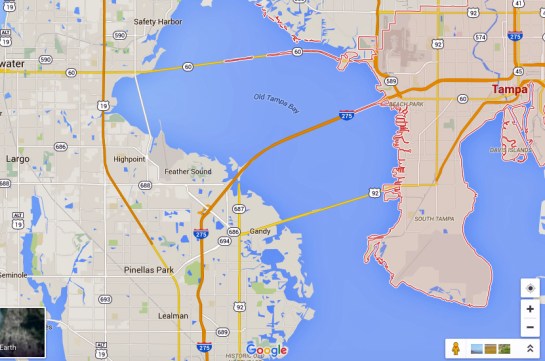
Between Clearwater and Tampa, Florida stretches a rare 9-mile ribbon of white pavement. Set against a stark backdrop of water and sun it distills ambition to reality and leaves a volatile cocktail of capability. What is left after the distillation process is what you have to work with. The Courtney Campbell Causeway is a two-lane traffic span for people driving to the Florida coastal region of Tampa from Clearwater and back. Purpose built next to the highway span is a multi-use path for bikes and runners.

When you run Courtney Campbell out and back it is 18 miles. And it is hot.

courtneycampbell15

The Garmin Connect map display from my Garmin 920XT showing the mile markers.

I ran Courtney Campbell on Monday, January 25th. It was 60-degrees Fahrenheit with an East North East wind at only 6 MPH and low humidity at 57%. Perfect conditions.

You run Courtney Campbell at noon by yourself on a weekday. There are almost no other people there. You are left alone with your ambitions, your shortcomings, your capabilities. After 18 miles of running the concrete ribbon across the brilliant ocean you understand what you can, and can’t, do. And that is why I was there.

It is quiet. Brilliantly, disturbingly quiet. The ocean surface is finely rippled. Seabirds paddle in groups above submerged weed patches on the sand looking for fish. You hope for a good omen- perhaps a shark or a dolphin, to add some mystic power, some suggestion of allegiance to the wild sea.

courtneycampbell20

A boat crosses under the causeway toward the other elevated highway to the south.

Because the miles accumulate without markers or fanfare you simply glide for hours without concern. It just feels good to be next to the ocean, running, in the company of the wild sea.

People run and do triathlons for many reasons. As you grow older your reasons change. Evolve. If you are still in this sport after 30 years it isn’t to impress someone, it isn’t to prove anything, it isn’t for a tattoo or a medal or a T-shirt. It is for the things on the Courtney Campbell Causeway.

Wind. Distance. Air. Ocean. Strength. Purity. Solitude.

I found those things on the Courtney Campbell Causeway, and I had missed them for the past few years.

courtneycampbell25

The Courtney Campbell Causeway is Highway 60 at the North end of Old Tampa Bay. There is parking at either end and restrooms at the east side, but no water or restrooms on the causeway.


By Tom Demerly.

coldwar10

“Our greatest calling as soldiers is to create a world that is secure for all mankind. Free of war, tyranny and oppression. Equitable and tolerant. If we do our jobs we render ourselves obsolete, so we are remembered in museums and quiet parks by regal memorials.”

I wrote that for the graduating class of the U.S. Army Infantry School, Fort Benning, Georgia, Cycle C-6-1 in 1982. I was the honor graduate of my first military school, a combined course of instruction for new soldiers called “OSUT” or “One Station Unit Training”. It was an efficient factory that turned out good soldiers. We were supposed to stem the tide of the red menace we feared would blow through the Iron Curtain like a steel hurricane and storm across Europe to push liberty and democracy into the Atlantic under the crushing torrent of Communism.

We were ready to fight. We just never knew what war we would be fighting. “A war with no battles, no monuments… only casualties” as Tom Clancy wrote in The Hunt for Red October.

This week two incredible monuments of this Cold War were consigned to museums and displays. And their internment is symbolic of the end of this terrible era.

coldwar50

The last flying Avro Vulcan, XH558, at an airshow appearance earlier this year.

The only flyable Avro Vulcan Bomber, aircraft number XH558 made her final flight this week. The four jet engines that power the massive, bat-like bomber have been declared too old to fly safely so she returns to the surly bonds of earth as a relic.

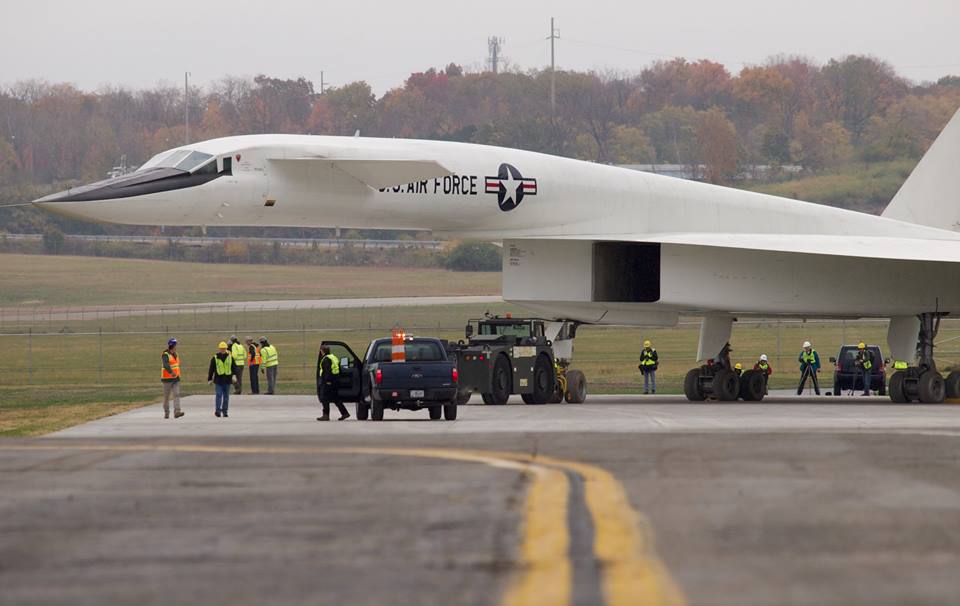
The day before the only surviving North American XB-70 Valkyrie was wheeled to a new and permanent indoor display facility at the National Museum of the United States Air Force in Dayton, Ohio near Wright-Patterson Air Force Base.

1948176_10153777466714309_4764320602961335253_n

The only remaining North American XB-70 Valkyrie being towed to its final exhibition building at the National Museum of the Air Force in Dayton, Ohio.

These two giant bombers were designed to deliver nuclear mega-death in an atomic slugfest that thankfully never came. Some strategists who espouse the deterrent theory suggest that it is because these bombers flew that the Cold War never got hot.

The two aircraft are quite different. The Avro Vulcan was an operational jet bomber used by Britain’s Royal Air Force. She wore a huge cloak of camouflage and the red/blue roundels of The Empire. The Vulcan saw combat in the 1982 Falklands war when she launched long-range bombing raids on Argentinean positions in Port Stanley in support of a British invasion. Vulcans flew a complex 3,914-mile transit one-way to their targets after leaving an airbase on Ascension Island. They relied on a relay system of aerial tankers to refuel them. The Vulcan was also a star of the 1965 James Bond film Thunderball in which a nuclear-armed Vulcan is hijacked to the Caribbean and its atomic bombs ransomed by an evil network.

http://www.youtube.com/watch?v=B2vXzgQBz_8

The Rockwell XB-70 Valkyrie’s lineage is less illustrious but no less sensational. The XB-70 was a massive, six-engine supersonic jet bomber intended to penetrate Soviet airspace over the arctic at three times the speed of sound. Then it would level Russian cities with nuclear megadeath. The Valkyrie wasn’t a total disaster, but very close to it. One of the two prototypes crashed in an ill-fated publicity photo shoot in the California desert, killing two test pilots. The single remaining Valkyrie was subsequently grounded. The program cancelled. It became an elephant as white as its gleaming, heat resistant paint. An impossible fist of an airplane for a conflict decided in whispers.

And so the big cold war bombers are consigned to the ground. To the museums. Their stories will be told and retold. They will be cleaned and preserved and shined and photographed. Boy Scouts and school children and old men will visit them.

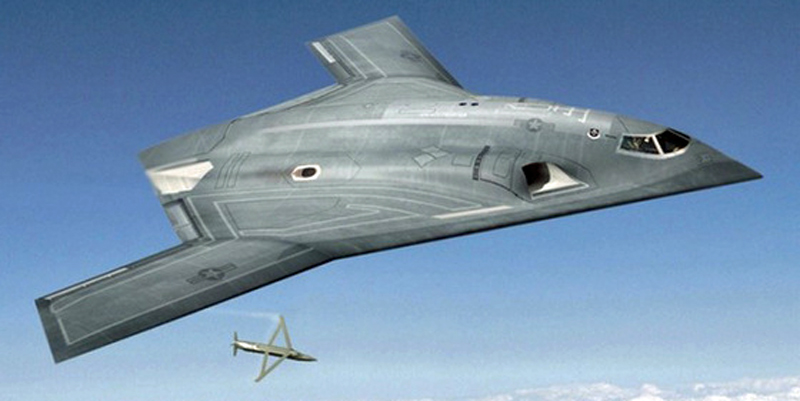
While the internment of these two massive Cold War relics signals the passage of a dangerous era it is an irony that a new mega-bomber project, the “LRS-B” or Long Range Strike Bomber was awarded to Northrup Grumman this same week.

On Wednesday Defense Secretary Ash Carter and the U.S. Air Force announced that Northrop Grumman won the development contract over competitors Boeing and Lockheed Martin. The program is expected to generate $55 billion in revenue for Northrup Grumman over its life making it one of the largest defense acquisition programs in history.

coldwar30

Artist’s concept of the LRS-B bomber project awarded this week to Northrup Grumman.

Some believe the next secret stealth bomber has already been seen, and photographed, over the American southwest when photographers got long range photos of a mysterious flying triangle.

One member of the mega-bomber club absent from the party due to work obligations is the venerable Boeing B-52. The B-52 still flies operationally. It is 52 years old this year. The aircraft is much older than the crews who fly it, and there is no end in sight for the giant, eight-engine “BUFF”. In fact one B-52 stored at the Aviation Maintenance and Restoration Group facility at Davis-Monthan Air Force Base in Tucson, Arizona for eight years was actually returned to service after being refurbished.

While the consignment of the Vulcan and the XB-70 to static displays signify the end of the Cold War they don’t signal the end of conflict I hoped for back at Fort Benning. The conflict between ideologies continues, in some ways more like ancient war than modern conflict. While it is solemn and peaceful to say goodbye to these graceful leviathans it is also worth reflecting on the fact that their replacements have likely long been in the air, veiled in secrecy and flying from remote desert runways. For, as the often misattributed but entirely accurate quote goes, and contrary to my flowery and hopeful speech as a young soldier, “Only the dead have seen the end of war”.

By Tom Demerly.

787_40

The beautiful new Boeing 787-8 arriving at Detroit Metro for the first time ever on December 1, 2014 as Royal Jordanian flight 267.

The first ever Boeing 787 Dreamliner to land at Detroit Metropolitan Airport arrived this morning, December 1, 2014, Monday. Catching a rare first arrival is a big trophy for aircraft spotters.

A month before the arrival of the aircraft, a beautiful, brand new Royal Jordanian Airlines Boeing 787-8 Dreamliner, the Facebook page Detroit Metro Airport Spotting posted an announcement of the first-ever arrival and invited people who “Like” their page to the event. Aircraft spotting is a worldwide hobby among aircraft enthusiasts and bagging a first-ever flight is a rare trophy.

Trying to be in the right place at the right time to catch an arriving flight is a little tricky, but much easier now with the help of flight tracking websites like FlightAware.com and networks of people with like interests on social media.

787_90

The Dreamliner’s route from Amman, Jordan over the Atlantic to Montreal, Quebec, Canada before flying here to Detroit.

The Dreamliner arrival originated in Amman, Jordan almost two days earlier and flew in a northern arc across the Atlantic, descending down over northern Canada and into Toronto. It originated as Royal Jordanian Flight 267 out of Amman, continuing from Toronto to Detroit with the same flight number.

The Boeing 787 Dreamliner is a milestone in aviation because of its incredible fuel efficiency, over 20% more fuel efficient than similarly sized passenger aircraft. The 787 competes directly with the mostly French-built Airbus A350, and the A350 is said to be even more fuel efficient. From the start the Dreamliner was meant to be revolutionary. Most of the aircraft’s wings are made of carbon fiber, not aluminum. This makes them lighter and stronger, contributing to fuel efficiency. It also gives the Dreamliner its unique upward bowing of the wings in flight, like a giant, gliding bird.

787_60

The carbon fiber wings of the Boeing 787 Dreamliner form a graceful curve in flight. Here is the Royal Jordanian flight on final into Detroit on its first-ever arrival here.

The windows on the Dreamliner use a unique passenger controlled auto-tint feature as opposed to conventional pull-down blinds. Early Dreamliner prototypes had unusual, triangular shaped windows, reminiscent of the DeHavilland Comet. The production versions settled on a squarish, advanced passenger window that is about 30 percent larger than other aircraft in its class. Probably better that Boeing went to the more conventional square windows since the triangular windows that originated with the Comet airliner in 1949 were blamed for several crashes and later changed.

1024px-Boeing_787-8_N787BA_cockpit

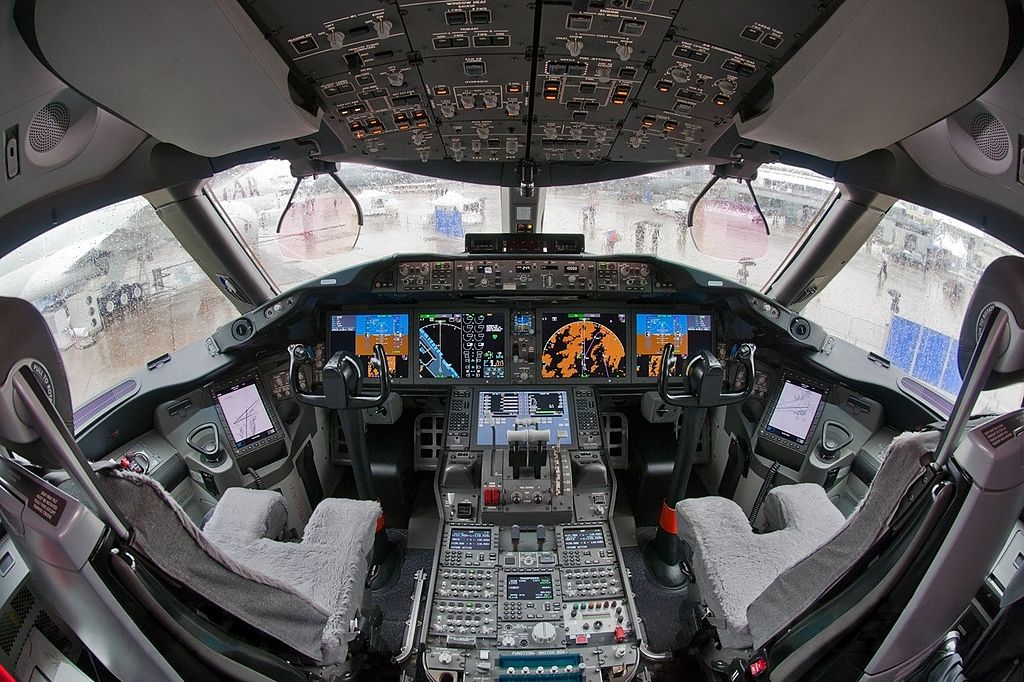
The Dreamliner’s advanced cockpit features full glass display integration, conventional wheel-style flight control column, Heads Up Displays in front of the windscreen unique communications system interfaces.

To get photos of the Dreamliner’s arrival I went to the south end of Metro Airport. After driving around the airport and watching flight arrival and departure patterns it was easy to predict which runway the aircraft would likely be arriving on. Early traffic of “heavies”, Bowing 747’s, were arriving on the western runway at Metro, runway 4L as approached from the south. The Dreamliner arrived on runway 3L. Usually the very large aircraft like 747’s are routed onto their own runway while the smaller aircraft use a different runway on busy arrival days.

787_80

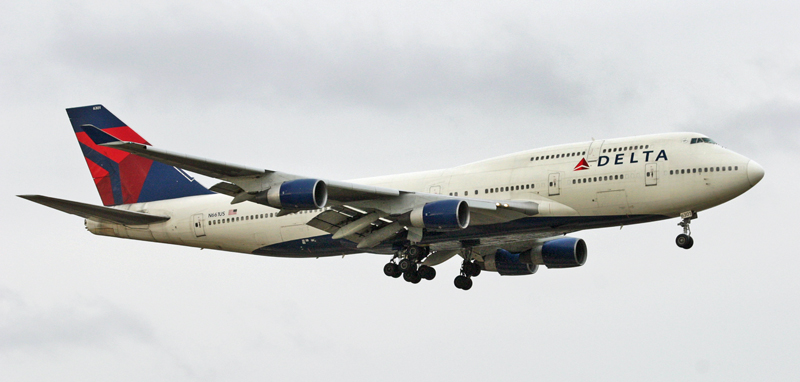
A big Delta Boeing 747 arrives at Metro before the Dreamliner. This aircraft used the farthest west runway, runway 4L as approached from the south.

Security around all airports has to be tight. One Tom Clancy novel featured an attack on an airliner using a shoulder-fired surface to air missile at Tucson International airport. In Clancy’s story, the weapon was smuggled across the Mexican border by Middle Eastern terrorists. When I showed up to the south end of Metro Airport wearing a backpack and walking toward the airport fence, three security vehicles and one Wayne County Sheriff converged to stop me. After a quick and courteous ID check by these excellent security officers they let me wait a few moments for the aircraft’s arrival while they stayed with me.

787_120

A. Where I was located to shoot photos between the approaches for runways 4L and 4R. B. The arrival path of the Dreamliner.

The ideal location to shoot photos of the Dreamliner would have been with the sun behind me. It was an overcast day so the lighting would be marginal. As luck had it, the aircraft was between the sun and me, backlit. Combined with the overcast skies conditions for photography were poor. But plane spotting is a lot like fishing. Sometimes you hit the jackpot, sometimes conditions are just OK. Today was a “just OK” day for photography.

787_20

The Dreamliner on final with flaps in the landing position and gear down. The crummy light conditions didn’t do the nice paint scheme any favors.

About three hours later the Dreamliner was set for departure and I went back hoping for better light. At the north end of Metro Airport I waited in the hotel/rental car parking lot across I-94 for it to take off. About an hour later than we had thought the aircraft was back in the air, this time with a little better lighting.

787_145


Photos and Story by Tom Demerly. (Feel free to share these photos and mention Baltia Thunder Over Michigan)
AA50

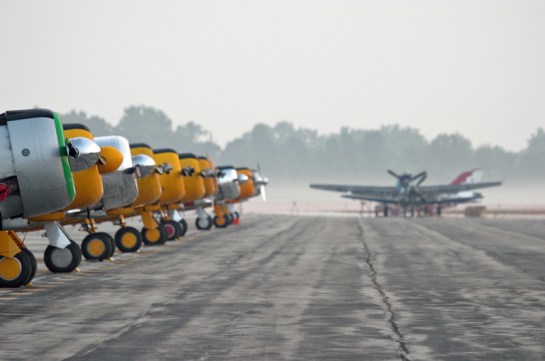
The Baltia Thunder Over Michigan Airshow at Willow Run Airport in Ypsilanti, Michigan on Saturday and Sunday, August 9 and 10, 2014 was one of the largest displays of historic and modern aircraft this year. Most of the aircraft displayed are privately owned, including one of the largest gatherings of T-6 Texan and Harvard trainers anywhere. Thunder Over Michigan also featured the U.S. Air Force Flight Demonstration Team, The Thunderbirds, along with the U.S. Army’s Golden Knights Parachute Team and other airshow acts.

This is my home town airshow, one of the shows I grew up with, so it was a special event to me. Airshow organizers provided photographers with taxiway passes for special access to the aircraft and crews along with a great hospitality tent with food, drinks, bathrooms and detailed information on every aircraft in the show. Tom Walsh, the coordinator of the photo area, did an incredible job hosting aviation photographers from around the world.

AA240

The early morning light provided a unique opportunity for photos on both Friday before the show opened and on Saturday, the first show day.

This crew (above) prepares the famous B-17G, “Yankee Lady”, that lives at Willow Run Airport as part of the Yankee Air Museum. It is a flying piece of history that is beautifully maintained. Several years ago I got a chance to fly in Yankee Lady out of Willow Run as a guest.

Yankee Lady was built in 1945 and once flew as a Coast Guard PB-1G before being sold at auction for only $5,997 to a smelting company and then to an aerial survey company. It later had a career as an aerial fire bomber and also flew in the filming of the movie Tora Tora Tora about the attack on Pearl Harbor. In it’s current condition the aircraft has been completely restored, including the replacement of all fuel and electrical systems. It is seen flying frequently around Willow Run airport.

AA130

Thunder Over Michigan attracted veterans who were pleased to share stories about the planes and people who built the history celebrated here. The show crossed aviation eras from before WWII to the modern era. Here a veteran and one of the airshow pilots chat before the arrival of show crowds.

AA60

A unique perspective on the “Fork Tailed Devil”, the P-38J Lightening “Ruff Stuff”, belonging to Mr. Ron Fagen of Granite Falls, Minnesota. There are only seven P-38 Lightenings left flying and this is the second one I’ve been lucky enough to see. Ruff Stuff was built in 1945 and never saw active service. It has changed ownership several times but its most recent restoration and the stewardship of Ron Fagen in his Fagen Fighters Museum insure its future as a national treasure.

AA40

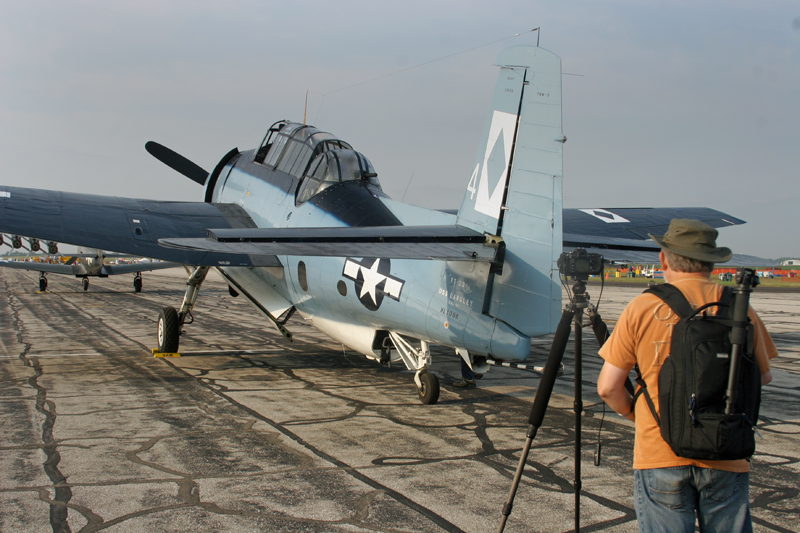
We each shot unobstructed photos of the incredible airplanes out on the flight line, an area restricted from the general public on show day during flight demonstrations. Here we set up his shots of a TBM Avenger torpedo and dive bomber.

AA20

Photographers brought an impressive array of photo equipment to capture the action. We used aviation band scanners to listen in on aircraft communications and air traffic control radio from the show Air Boss.  Shooting aircraft requires big telephoto and zoom lenses to capture the action. Canon equipment outnumbered Nikon significantly. Monitoring the show and airport air traffic control enabled us to set up shots before aircraft arrived, especially helpful with fast jets.
AA110

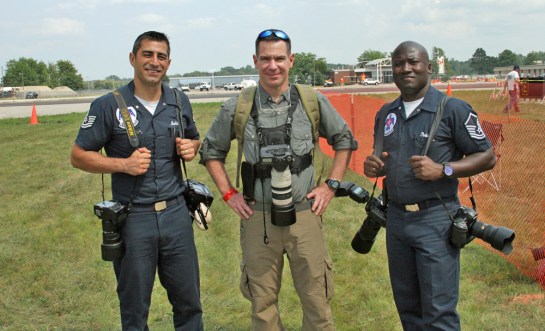
All the photographers enjoyed the same access to the field as the official Air Force Thunderbird photographers Manuel Martinez (left) and Stan Parker (right). I got a chance to grab a photo with these guys as they worked and even got a few tips on aviation photography from two of the best guys in the business.

AA480

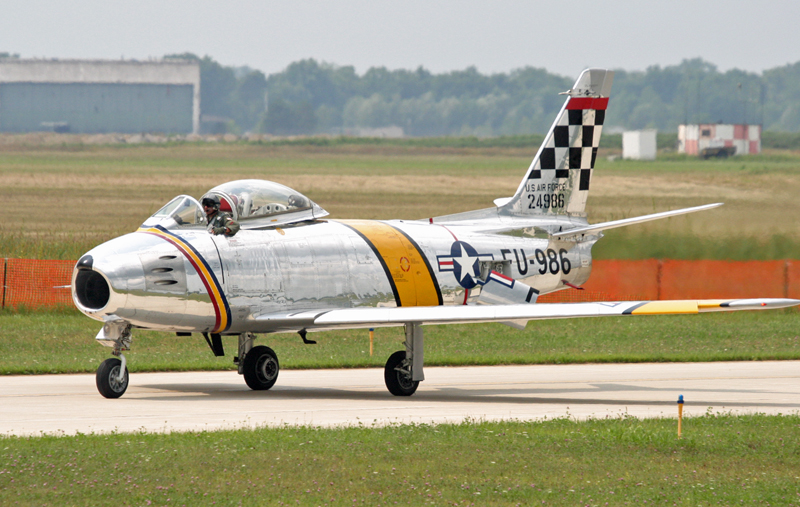
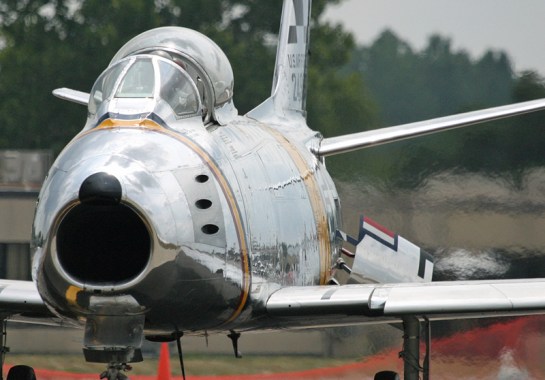
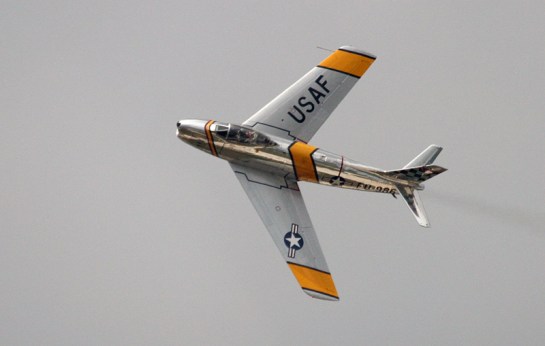
Friday, August 8, was arrival day for many of the aircraft in the show, with planes flying in from all over the U.S.. A highlight was this F-86F Sabre, “Smoky”, owned by Paul Wood from Waukegan, Illinois. The restoration and maintenance of this Korean War era jet is impeccable and it is a favorite of photographers. The aircraft was first owned by the U.S. Air Force then sold to the Fuerza Aerea Argentina or the Argentinian Air Force in 1960. It was later acquired privately in the U.S.
AA30

Paul Wood taxis his F-86F Sabre into the parking area. Notice the open speed brakes and the three holes for the .50 caliber machine guns.
AA90

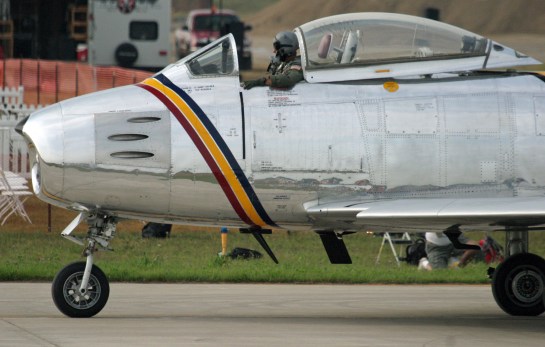
The F-86F has a natural metal finish that is difficult to maintain but brilliant to see on a sunny day. The bubble canopy of the F-86F provided pilots with excellent visibility and inspired the design of the canopy on the most recent fighters including the F-22 Raptor. Pilots like to taxi with the canopy open for ventilation but must duck down to close the canopy fully.
AA100

Paul Wood cranks his F-86F through a flight demonstration that showed the maneuverability and thrust to weight ratio of the F-86F. Considering this jet was built in the late 1940’s it remains an impressive performer. The F-86 was the first fully operational U.S. jet fighter with swept wings.

AA570

A few minutes later the U.S. Army Parachute Team’s C-31A Troopship flew into the pattern at Willow Run for a landing. The pilots obliged photographers with a low pass before final approach. This is a nice sounding, Rolls-Royce powered aircraft built by Fokker. It can carry up to 25 jump equipped soldiers for demonstrations.
AA370

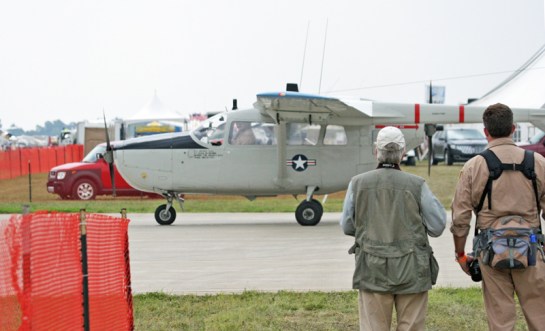
We had excellent access to active taxiways throughout Friday and were accompanied by helpful “safeties” who kept us from getting run over by aircraft when we were looking through a camera viewfinder. It was a remarkable experience to be so close to the aircraft as they came and went during arrival and show rehearsal.

AA360

This unusual aircraft is the de Havilland DH-115 Vampire formerly of the Royal Navy and now belonging to Marty Tibbits of Detroit. It is a pretty, unusual aircraft that operated from Royal Navy aircraft carriers after 1945 and also served, in a different version, with the Royal Air Force. The Vampire, in its many versions, was a successful aircraft that was flown by several countries through the 1990’s, including, oddly enough, Rhodesia.
AA350

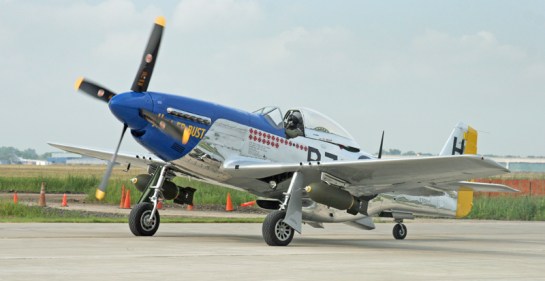
If there was one perfect P-51D Mustang at the show it was Mark Peterson’s “Hell-er Bust” from Boise, Idaho. The aircraft is painted in a photogenic livery and carries a pair of simulated 500 lb. general purpose bombs. Here Mark taxis in after his arrival on Friday. Hell-er Bust has an impressive history since being built in 1945 at the North American Aircraft plant in Inglewood, California. She first joined the legendary 8th Air Force in 1945 but was transferred to the Swedish Air Force in 1948 and the to the Dominican Republc from 1952 to 1984, making it one of the last remaining truly operational Mustangs while in service with the Dominican Republic. Hell-er Bust uses the classic Packard Merlin V-1650-7 engine that produces that goose bump-inducing Mustang sound.

AA300

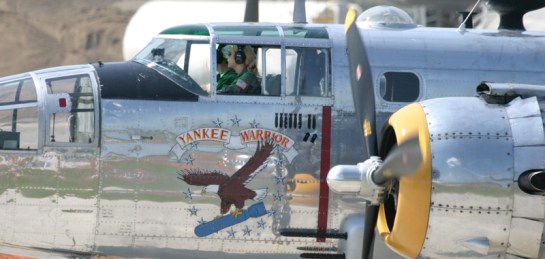
The B-25D “Yankee Warrior” is one of the planes that lives at Willow Run as part of the Yankee Air Museum. We are lucky enough to see it fly around the airport occasionally and got a good look at it on reception day. Five of its .50 caliber machine guns are visible in this view. Yankee Warrior is a combat veteran of WWII, having flown eight bombing missions over Italy before it was retired, then restored.
AA510

Yankee Warrior had a rather attractive pilot flying on arrival day and was meticulously turned out in its natural metal finish. This B-25 is a frequent visitor to air shows around the U.S. but I never found out who the pilot pictured here is.
AA290

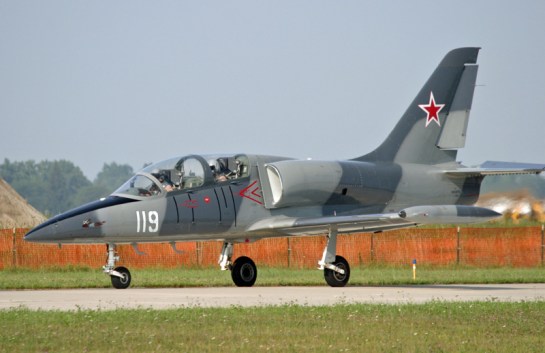
A number of exciting private jets flew in on Friday including this Aero Vodochody L-39C belonging to Tim Brutsche of Battle Creek, Michigan. Brutsche owns Brutsche Concrete in Battle Creek and is a licensed Air Transport Pilot (ATP) who has been an active promoter of youth in aviation for years.

AA280

Here is Tom and his co-pilot, perhaps his wife Beth Franklin-Brutsche who frequently flies with him, taxiing their L-39C to its parking ramp.

AA520

Aircraft owners spent time on Friday chatting with photographers and polishing their airplanes for the show opening on Saturday. This TBM-3E Avenger gets a shine in the morning.
AA500

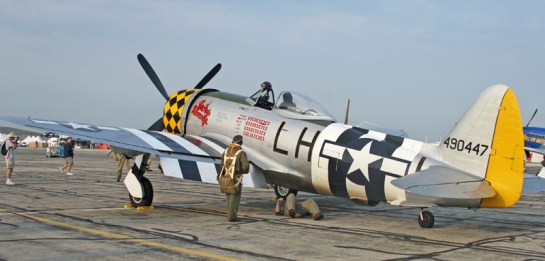
The P-47D Thunderbolt “Jacky’s Revenge” was restored from former Peruvian Air Force service in 1966 and painted in U.S. livery with D-Day invasion stripes on the wings and fuselage.
AA530

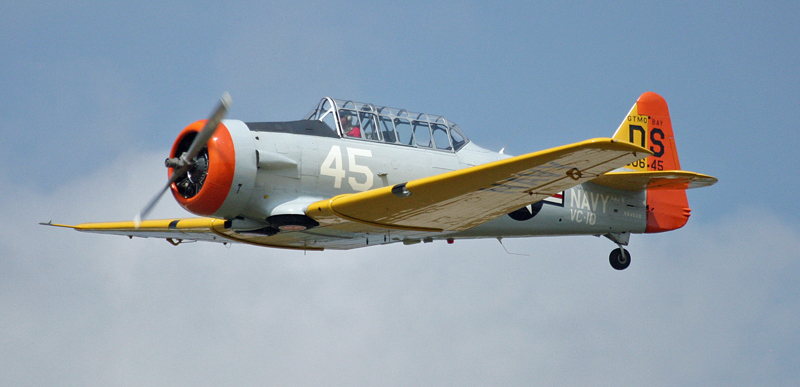
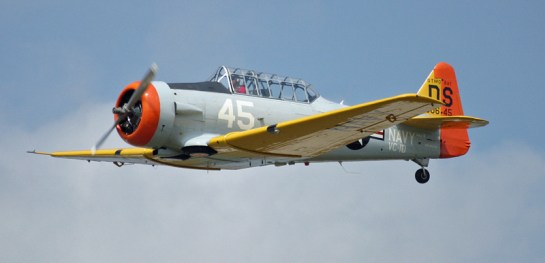
There were so many T-6 Texans, Harvards and this AT-16 Texan from Blanchester, Ohio it was hard to pick just one to photograph, but this bright orange and yellow paint scheme stood out from the other aircraft.
AA220

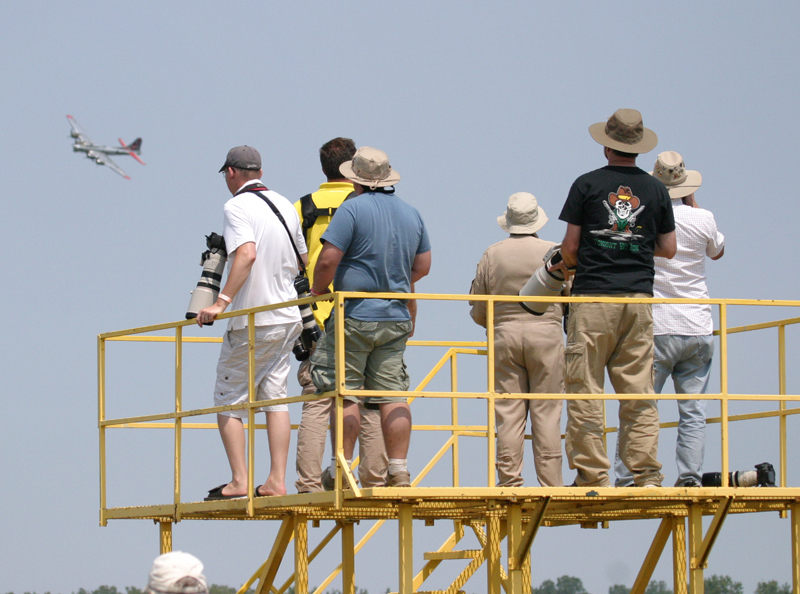
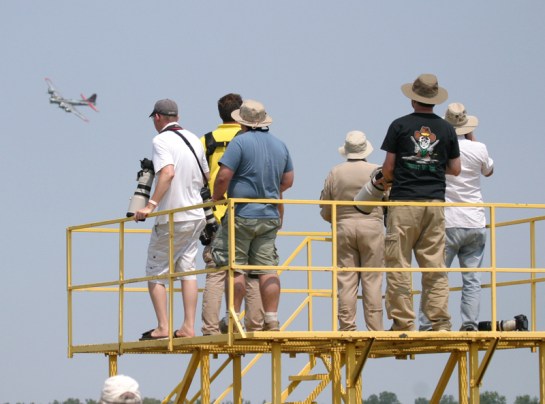
We got a raised maintenance platform to shoot photos from each day, making it easy to get great shots of aircraft taxiing and of the flight demonstrations. Each of the photographers took turns in a corner. We used a pilot band radio receiver to help locate inbound aircraft. When one photographer would see an aircraft inbound to the demonstration field they would shout out, “Aircraft, inbound, from the east…” for the other photographers to get their shot.
AA320

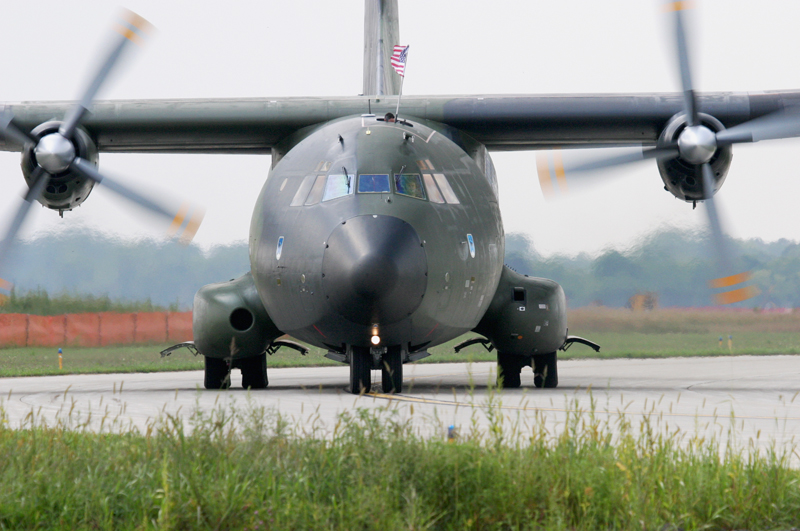
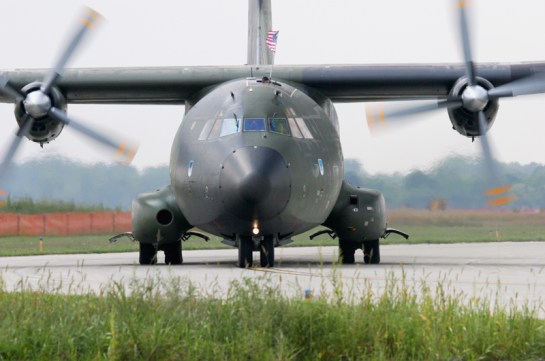
An operational German Luftwaffe Transall C-160D from Air Transport Wing 61at Penzing AB, Germany made a special visit to the show. The Transall is a workhorse twin-engine tactical transport that serves air force around the world and is especially prolific in Europe and Africa. It makes a pretty “whirring” noise like a mini-C-130.

AA120

The flight crew of our visiting German Transall were happy to be at the air show and brought a big tent filled with their squadron mugs, T-shirts, patches and other memorabilia. They enjoyed chatting with the crowd in English and in German and also had fun shooting photos of the other flight demonstrations while they earned some cash selling souvenirs.
AA80

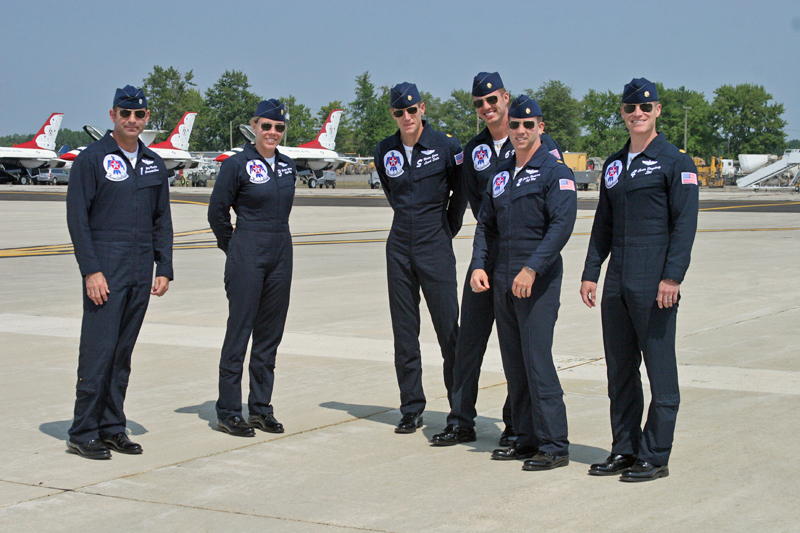
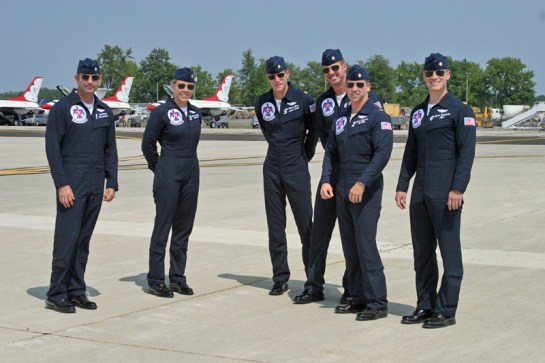
Friday was a relaxed day and a chance to meet the Thunderbird pilots in person without any fences. I caught the entire flight demonstration team here for a candid group shot here.
AA140

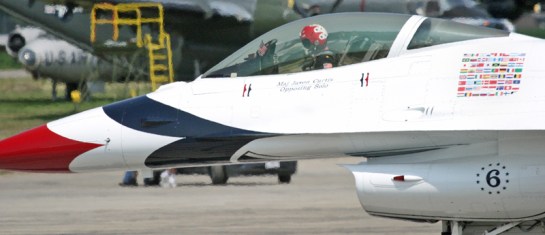
Thunderbird #6 Opposing Solo, Major Jason Curtis of Kalispell, Montana, taxis out for Friday practice. He is a drummer and competitive snowboarder and graduated from the U.S. Air Force Academy in 2004.
AA340

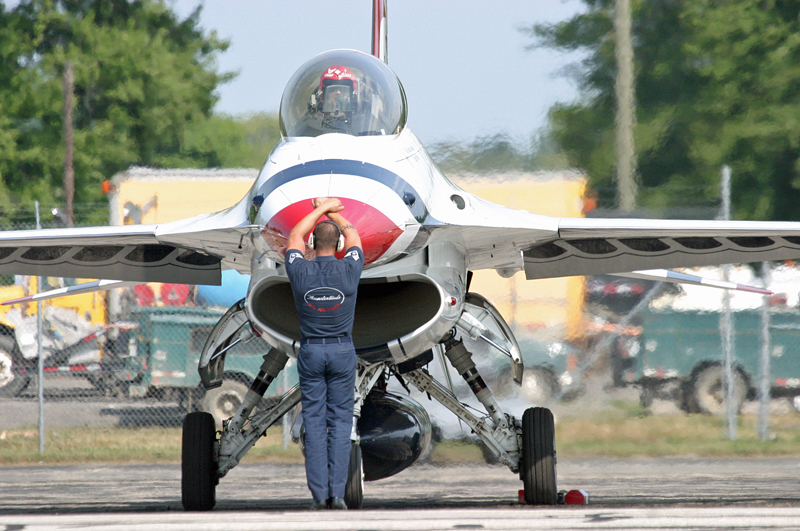
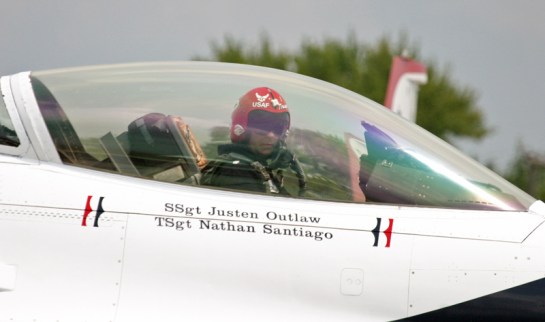
Thunderbird #1, Lt. Col. Bob Moseley taxis out for flight demonstration practice on Friday. The names of the enlisted flight maintenance crew for this aircraft are painted on the right side of the cockpit with Lt. Col. Moseley’s name on the left side of the aircraft. Moseley is a graduate of Virginia Military Institute and has flown both the F-15 and F-22.

AA470

We had an interesting incident on Friday, practice day, when Thunderbird #3, Maj. Caroline Jensen, had a “bird strike”, sucking a bird into the intake of her F-16. The bird damaged the engine and caused her to safely circle the field and make an expedient landing.

AA490

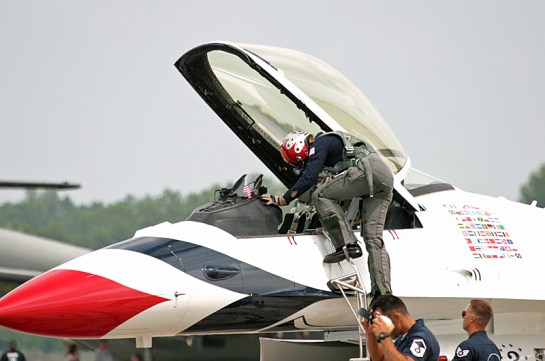
Major Jensen taxied past the photo stand on her way back to the flight line to switch to the reserve aircraft that was already preflighted by the Thunderbird ground crew and ready for engine run-up.

AA560

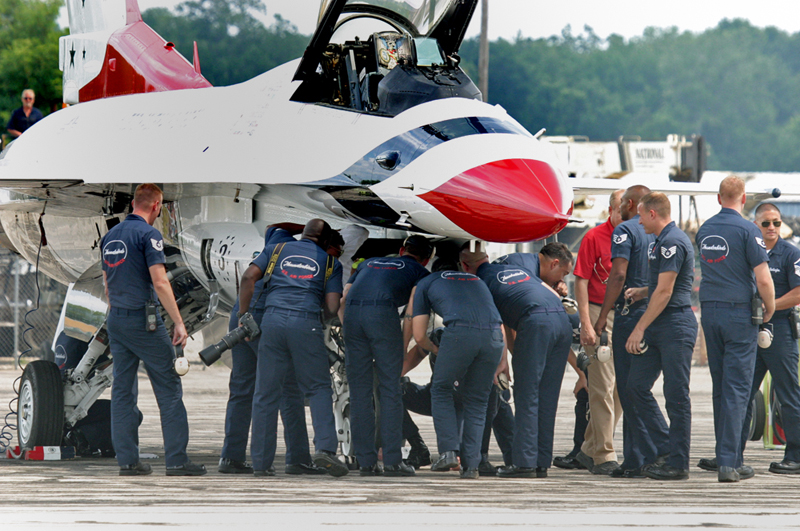
She quickly climbed down from the damaged #3 aircraft and ran to the waiting reserve aircraft while the ground crew began to survey the damage to her F-16.

AA10

All of the Thunderbird ground crew wanted to see the damage to the inside of the F-16 intake from the bird strike. The man in the red shirt is likely the aircraft engine manufacturer’s technical rep who travels with the Thunderbirds, Mr. Tom Eshelman from Pratt & Whitney aircraft engines. That a jet engine can withstand a high speed bird induction through its turbine fans and continue to fly safely is an impressive accomplishment by Pratt & Whitney.
AA540

Major Jensen climbs up to the reserve F-16 to rejoin the demonstration formation after running to the alternate jet that was already preflighted by the Thunderbird ground crew.

AA550

Lighting conditions on Friday practice for the flight demonstration were poor with flat and overcast skies. It was less than ideal for good photos. We enjoyed the practice after shooting a few photos and checked the weather for Saturday, hoping for better lighting conditions for aerial photography.

AA170

The weather on Saturday started misty but the fog burned off quickly as crews got their aircraft ready for the first day of the show. I liked this shot of the B-17G Yankee Lady with the U.S. flag in the sky overhead.
AA310

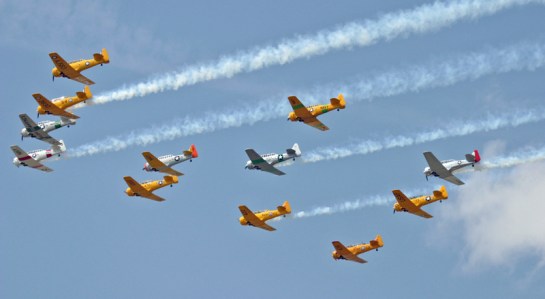
The first big flight demonstration was an giant formations of T-6 Texans and Mk IV Harvards. This is only half of the total formation. The  combined sound of their radial engines was an amazing recollection of what it was like to be near one of the big WWII fighter training bases.
AA260

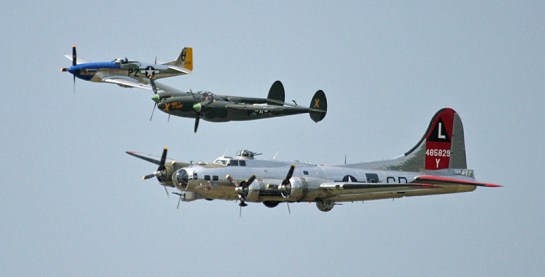
The formation flying continued throughout the morning with an intricately coordinated double-racetrack pattern of aircraft flying over Willow Run. This tight formation of a P-38, P-51 and the B-17 G Yankee Lady is a living display of air power over the Pacific and the European theaters during WWII. I can’t help but wonder what the view from inside the cockpit must be like.

AA230

Ruff Stuff, the Lockheed P-38, did a few photo-pass fly-bys for photographers, giving us the opportunity to shoot photos from different angles.

AA580

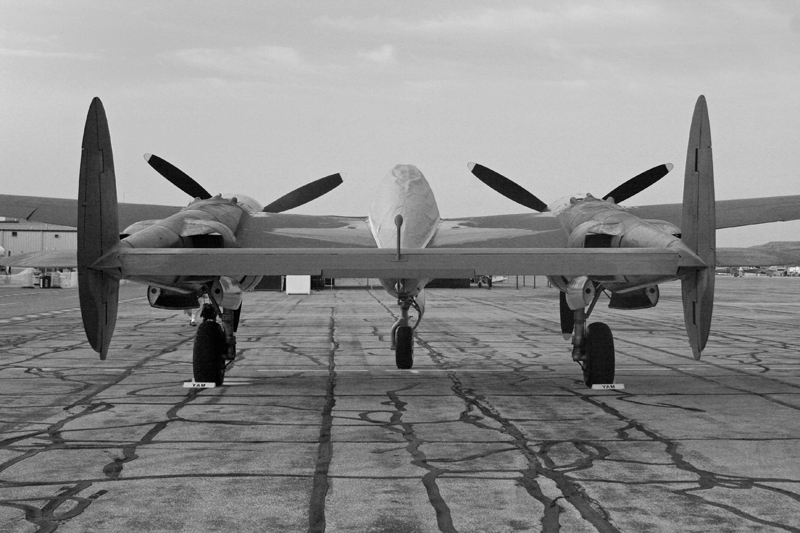
P-38 Lightening Ruff Stuff as viewed from the rear quarter. Notice the superchargers on top of each of the engine booms.

AA590

The chunky looking P-47D Thunderbolt, predecessor to the modern A-10 Thunderbolt II, becomes more graceful in the air. The P-47D was used extensively in the ground attack role. The black and white stripes on the fuselage and wings are called “invasion stripes”. These helped other allied aircraft identify each other following the D-Day invasion to prevent them from shooting at each other and prevented ground crews from shooting at them.
AA600

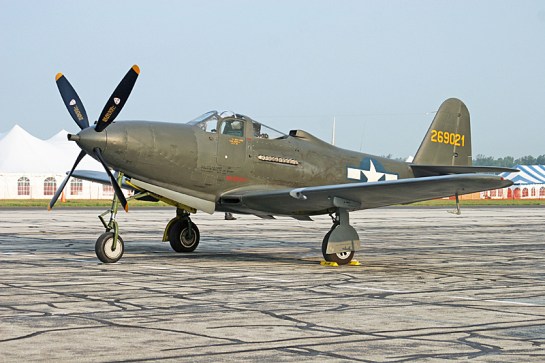
This P-63 King Cobra has a number of unique features including a centrally mounted M-37 30 mm cannon that fired through the propeller hub and an engine located directly behind the pilot. The pilot enters the aircraft through a side-hinged door, not a sliding canopy like the P-51 and P-47. Notice the intake for the centrally mounted engine immediately behind the cockpit. The tricycle landing gear was unique to the P-63 and its less successful little brother the P-39 Airacobra. Most P-63’s saw service with the Soviet Union, over 2,000 of the total of approximately 3,000 built were given to Russia by the U.S. under a lend-lease agreement. Russian pilots actually downed several Japanese planes in WWII with King Cobras.
AA610

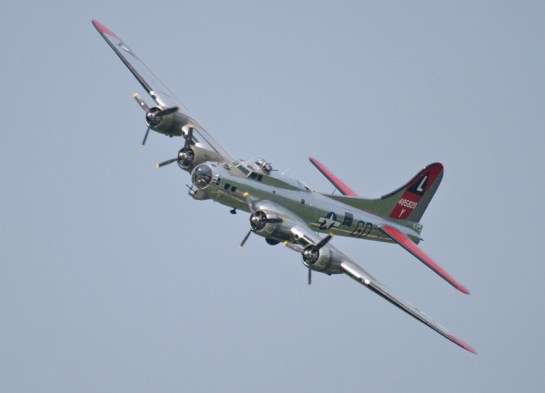
B-17G Yankee Lady turns in toward the crowd line. The “G” model B-17 had several upgrades over the precious “F” and “E” versions, most notably the forward facing chin turret with two Browning .50 caliber machine guns to prevent aerial attack from the front.

AA620

This side view shows a puff of smoke from one of the B-17G’s engines and a good view of the ball turret under the aircraft.
AA770

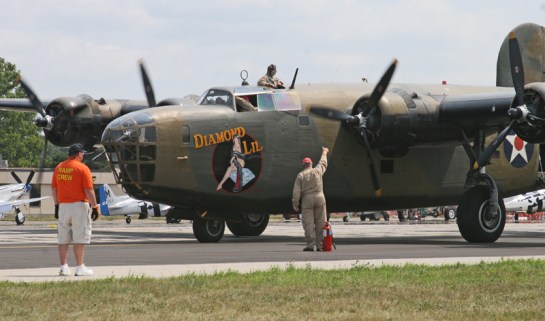
B-24 “Diamond Lil” has a fascinating history as one of the very early B-24A bombers built. The aircraft had a landing accident during its ferry flight to England in the early 1940’s and had to be returned to California for repair. It was converted to a C-87 transport, a modification that likely enabled it survive the war. It went on to be restored as a B-24 with the paint scheme seen here. In this photo the crew is initiating engine start and run-up for its flight demonstration.
AA650

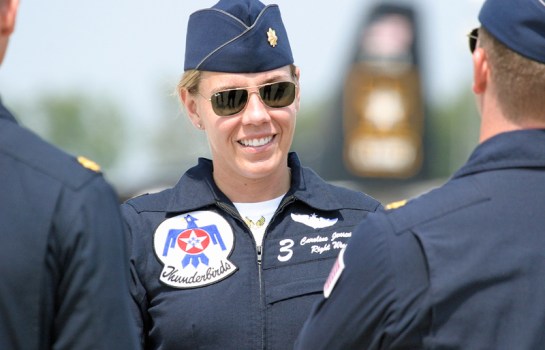
Following the flight demonstrations by the historic aircraft the Thunderbirds held the briefing for their demonstration flight. Here Major Caroline Jensen listens in before the beginning of the demonstration routine.
AA670

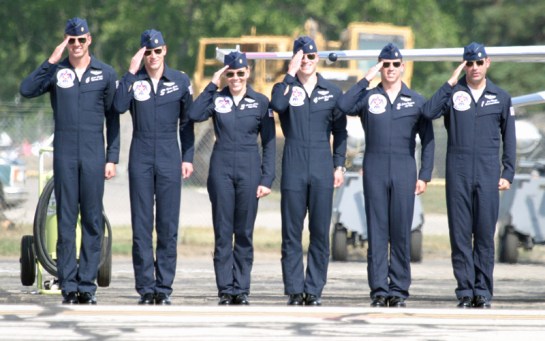
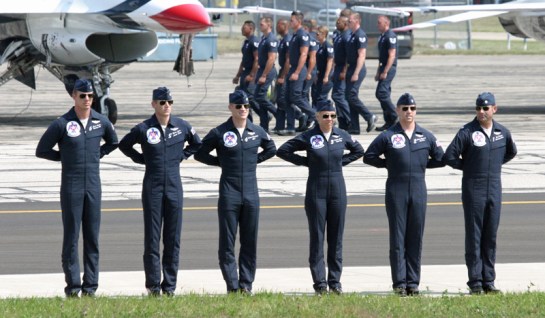
The Thunderbird diamond and solo pilots salute the crowd at the beginning of their flight demonstration routine.
AA660

Introductions of the pilots to the airshow crowd over the PA begin the show as the ground crew forms up for the demonstration in the background. From the preparation of the flight to the aerial maneuvers the entire show is carefully choreographed with impressive precision.

AA640

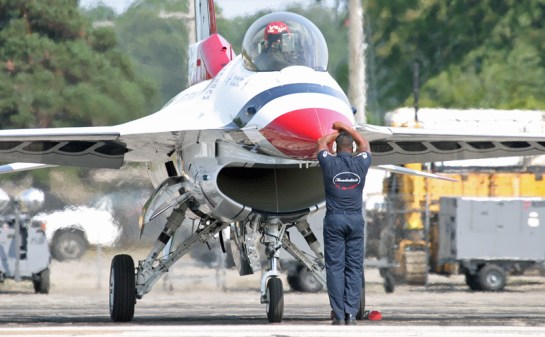
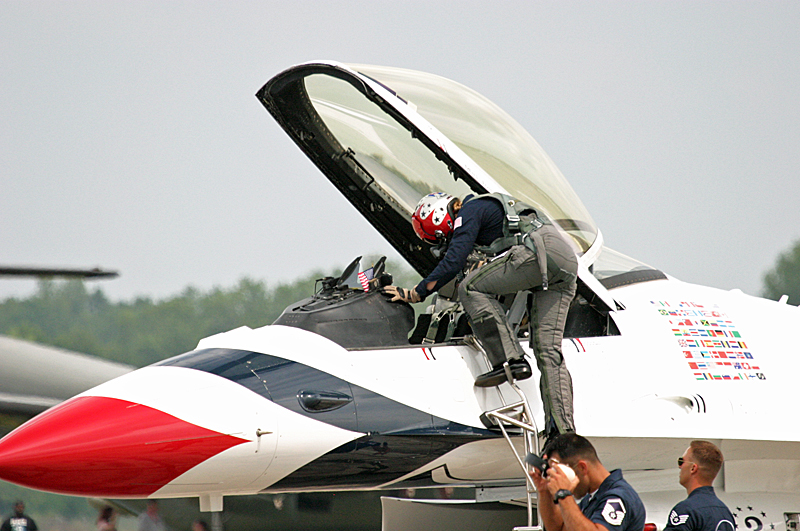
Wearing a pair of G-suit pants the pilots climb the ladder to the cockpit while crew chiefs stand ready to prepare the aircraft for take-off.
AA630

Engine start completed, Thunderbird #1 prepares to taxi to the active runway for take-off.
AA690

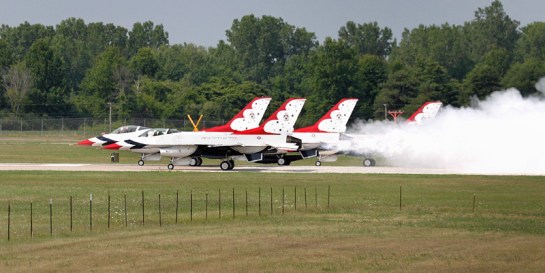
With a plume of smoke the four-ship diamond formation begins their takeoff roll at the start of the flight demo routine.

AA200

The opposing solo aircraft, Thunderbird #6, Maj. Jason Curtis, turns in across the crowd line as he closes on the the lead solo aircraft for one of their head-on passes.

AA380

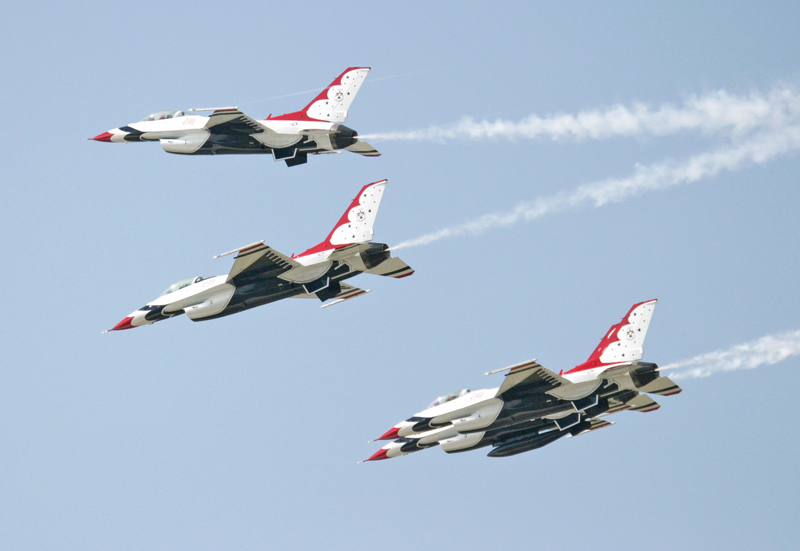
Blue skies and better light gave us a chance to grab good photos of the Thunderbird diamond formation as it flew by the photo stand near show-center.
AA430

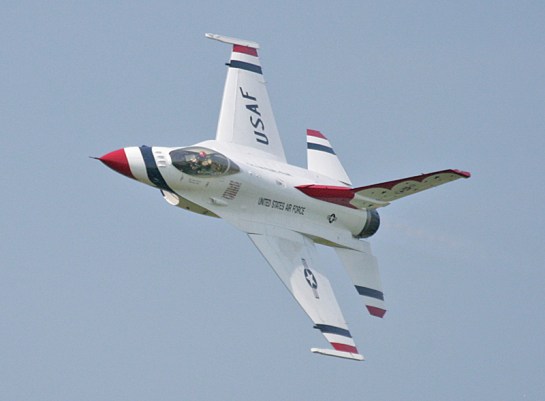
Lead solo Thunderbird #5 Maj. Blaine Jones turns in toward the crowd line for a high-speed pass.

AA420

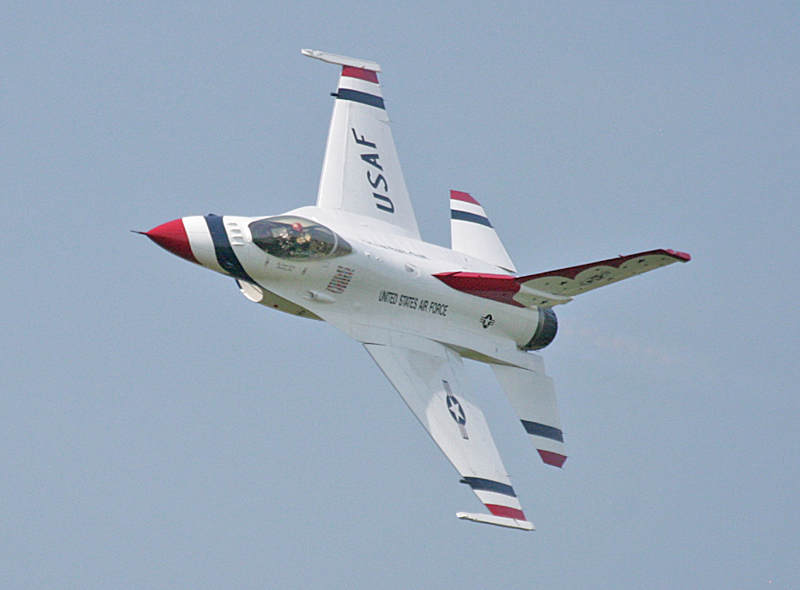
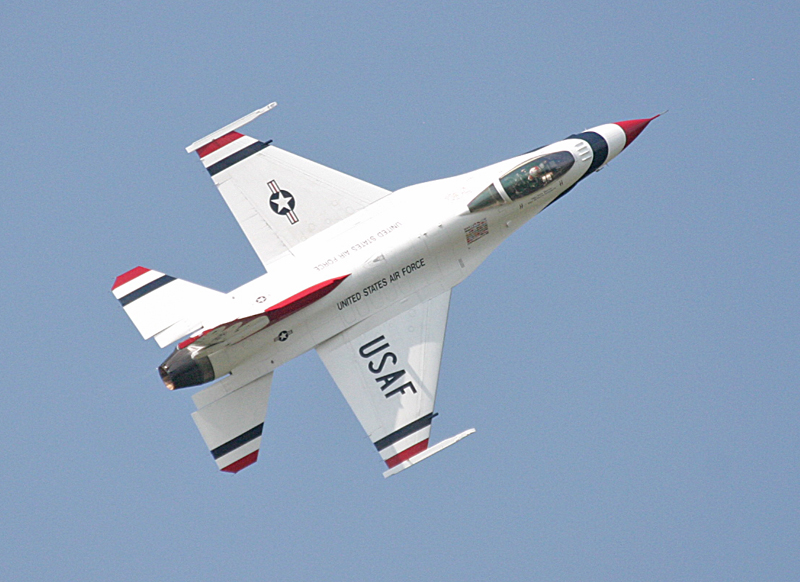
Thunderbird #6 demonstrates a five-point hesitation roll and gives a good plan-form view of the F-16. The paint scheme of the Thunderbirds aircraft is specially designed so the crowd can see the aircraft roll from a distance.

AA460

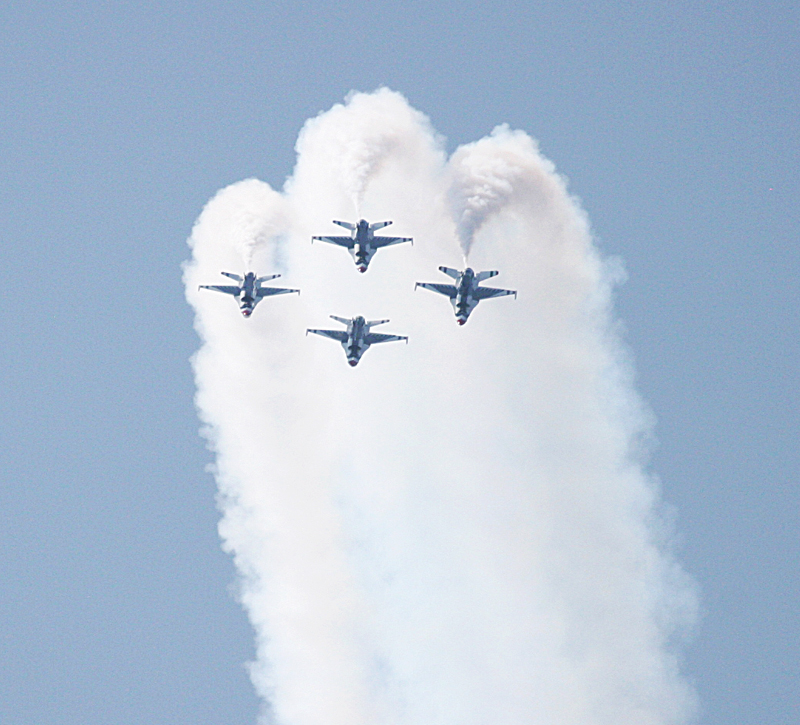
The Thunderbird diamond formation at the top of an inverted loop at an altitude of about 2000 feet above ground level. The Thunderbirds have a “high show” routine and a “low show” routine for overcast conditions when a low cloud deck prevents them from being visible from the ground. We got to see the low show on Friday practice and the high show on Saturday.

airhow1480

“From the left, Thunderbird #5, Major Blaine Jones, the Lead Solo, will execute a maximum performance, high-G turn.” This sequence shows the F-16 turn in under afterburners and pull up to 9G’s. In the third frame you can see the wings of the F-16 flex upward under the G-load.

AA700

The two solos cross in the cross over break, one of the most spectacular and difficult to photograph maneuvers of the show.AA390
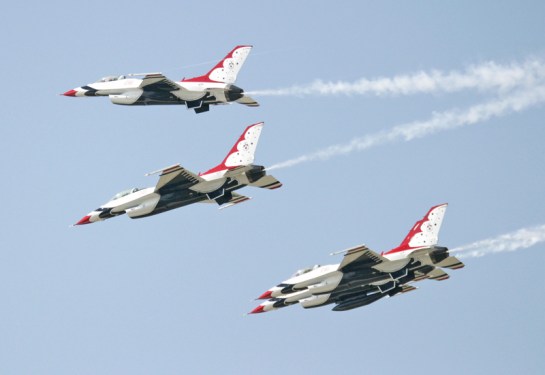
This pull-up maneuver is used to sequentially position the aircraft for entering the landing pattern and makes for a cool shot as the aircraft begin their break.

AA710

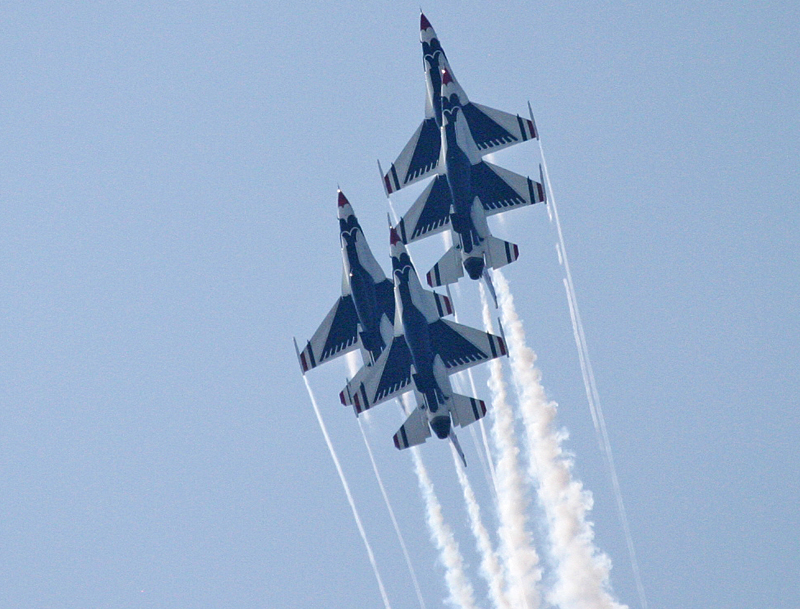
This maneuver begins in the trail formation with the aircraft behind each other and completes a loop up to 2,000 feet where the formation rejoins with incredible precision during the inverted, changing to the diamond formation. Condensation formed on the wingtips streams off the aircraft at higher altitude as the air cools.
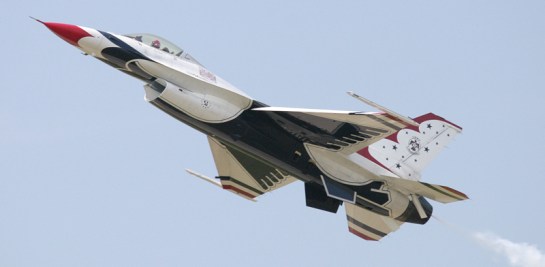
AA720

The opposing solo high-alpha pass: Thunderbird #5 flies across show center at about 100 MPH or nearly the minimum speed the aircraft can maintain and still stay in the air. The speed brakes at the back of the aircraft are deployed to slow it down.

AA730

Thunderbird #6, the opposing Solo, trails condensation vapor as it pulls up to the vertical to rejoin the four-ship diamond formation.
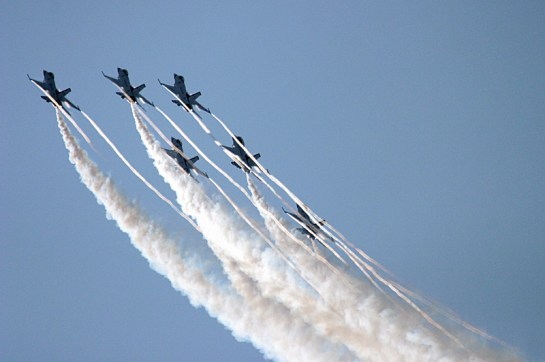
AA740

All six aircraft form the wedge formation high into the afternoon sun with thick vapor trails coming off their wingtips.

AA750

The six-aircraft wedge formation passes in review under slight overcast.

AA760

Then flies into clear sky with a complete change of lighting.

AA410

Finally the diamond formation pitches up to the vertical and executes the high bomb burst with one of the solo aircraft rolling vertically through the middle. It was a classic Thunderbird finale.

AA780

Back on the ground with the chocks in place Thunderbird #1 prepares to shut his engine down at the end of the flight demonstration.
AA790

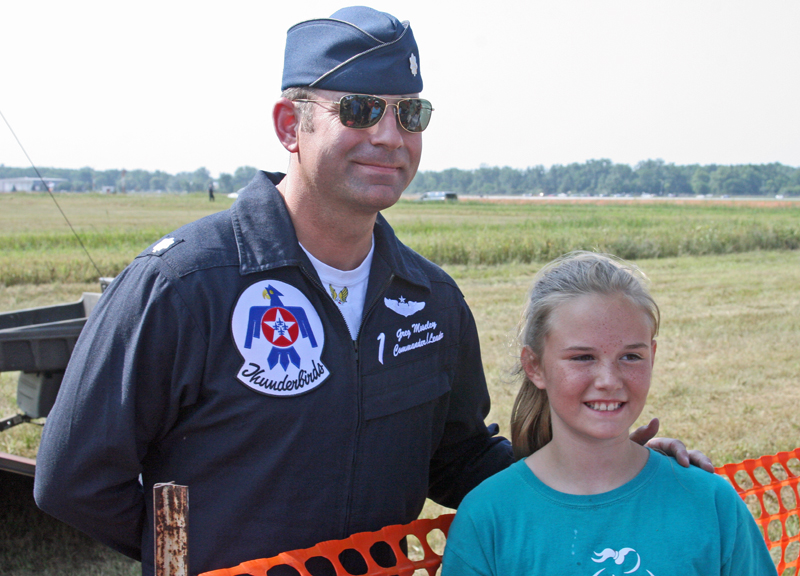
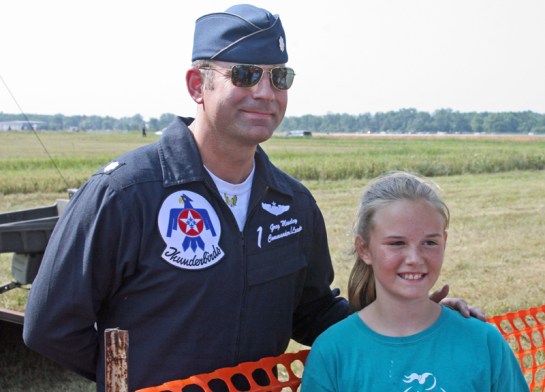
It’s a tradition to wait after the airshow and meet the Thunderbird pilots in person for a handshake, photo and an autograph. Here the Thunderbird team leader, #1 Lt. Col. Greg Mosley, poses for a photo with a fan.
AA7800

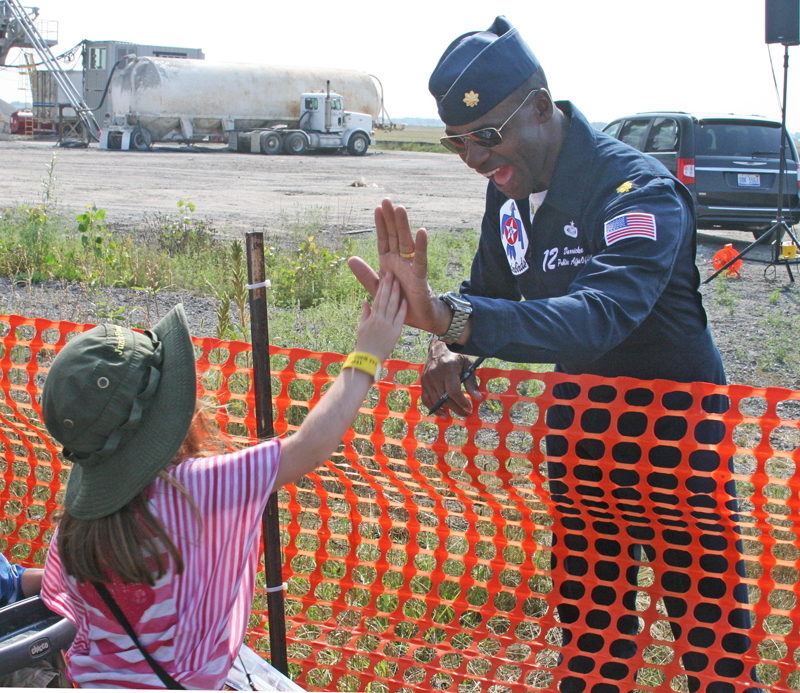
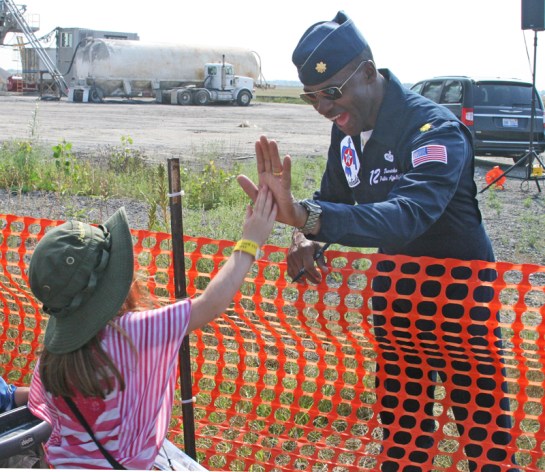
Thunderbird 12, Major Darrick Lee, high-fives a fan at the end of the airshow.

AA210

On my way out of the show I met aviation artist David Ails. Ails was displaying and selling some of his incredible digital aviation art depicting aircraft including the P-61 Black Widow and F-4 Phantom. Ails represents a new breed of aviation artist who uses digital media for creation of incredible images that depict historic aviation events and aircraft.


Craig Bellmann shot this photo of me at the entrance to the Lower Tanque Verde Falls. We went there on an expedition to climb up the falls and swim in the pools that form there during the monsoon season. Flash floods from the sudden thunderstorms are a constant threat during the monsoon season.

Craig, my guide for the day, is an expert on the flora of the desert Southwest. We spent considerable time examining specimens of unusual local plants that survive in the fragile desert canyon environment because of the flow of water through the canyon after rainfall. Many of the plant and animal species are very rare and only survive briefly after rainfall and uniquely in this region. (Left) A seed pod of the Proboscidea altheaefolia or “Devil’s Claw”. (Right) The Arizona Desert Cotton or Gossypium thurberi after blooming.

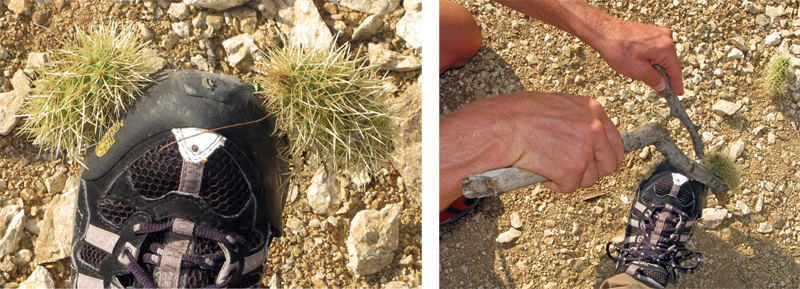
The “Teddy Bear” or “Jumping Cholla Cactus”, Cylindropuntia fulgida, is an annoying and dangerous plant. If you touch it the miniature barbs embed in your skin making removal difficult. Serious injuries for mountain bike riders falling on jumping cholla and hikers being impaled are common in the Southwest. Needles can be painfully lodged in the skin for weeks before they are expelled. These were imbedded in my shoe and had to be removed using two sticks.
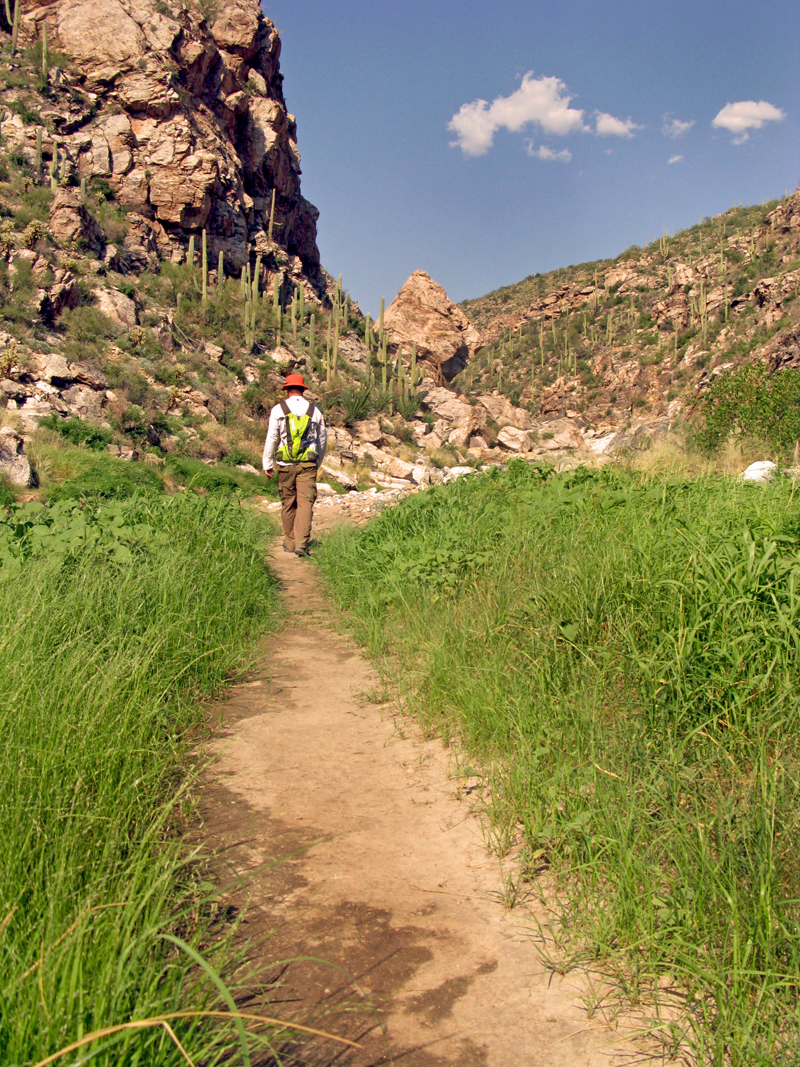
Lush green desert grass grows quickly during the monsoon and disappears just as fast when the water dries up. Few environments on earth transform as quickly as these desert canyons, entirely dependent on the fleeting monsoon rainfall.

This was the seventh consecutive day of high temperatures above 105 degrees in the Tucson, Arizona area so our primary objective was exploring the cool canyon pools that fill after rainfall in the upper canyon. We discovered these pools were teeming with life including unusual transparent fish species.

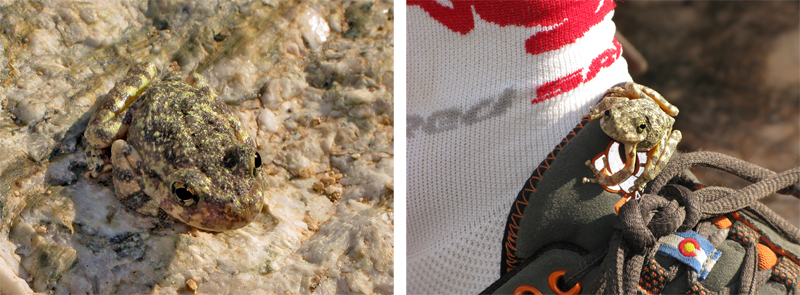
A small frog or toad species joined us at a rest break. Some of the species in the region use a biological process called “cryptobiosis” whereby they lie entirely dormant until the water arrives, then spring to life until the drought of the desert returns.

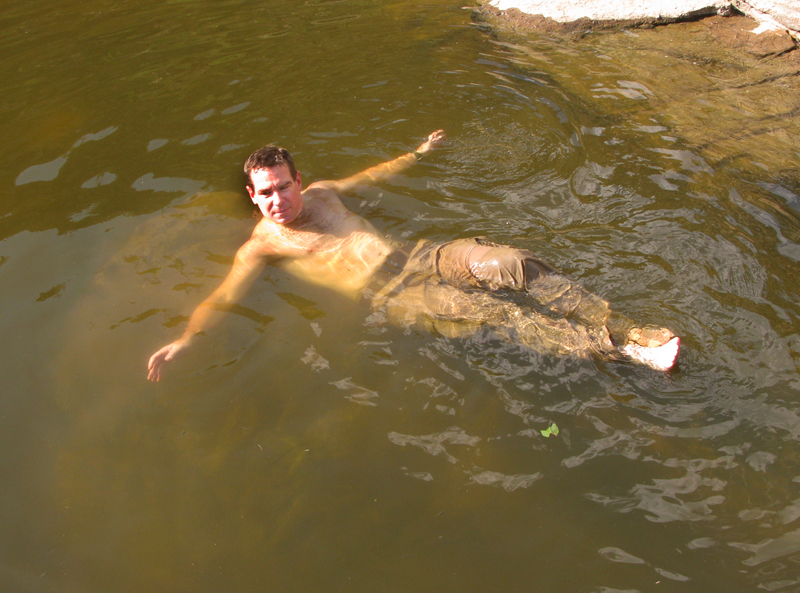
Cooling off in the canyon pools fed by the numerous waterfalls. I wore RailRiders’ VersaTac-light pants made of lightweight, durable 3-ounce Duralite Nylon fabric with Railtex reinforced knees and seat. These pants dry within minutes of leaving the water making them a perfect choice for adventures where you are in and out of the water.

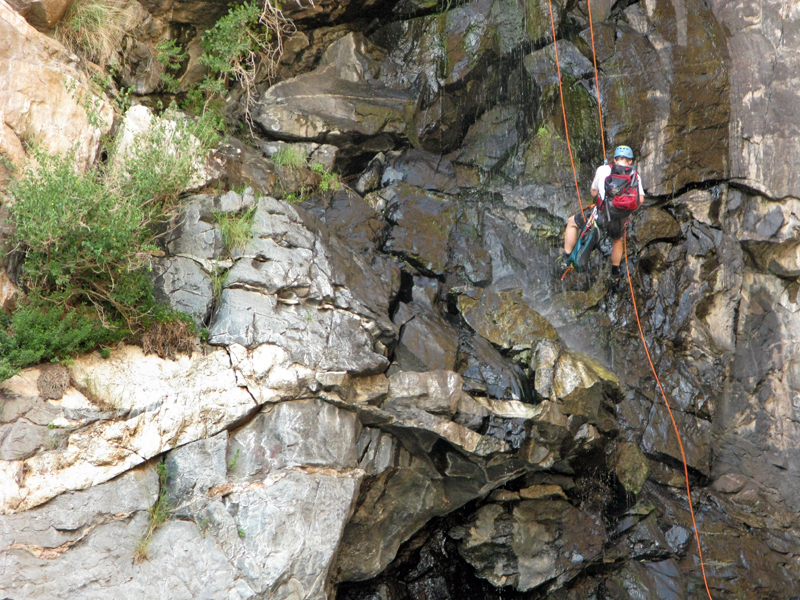
Canyoneering is the sport of descending the flooded canyons using climbing equipment, then swimming across the descending pools from waterfall to waterfall. Here a canyoneer rappels down a dwindling waterfall.

Once he has rappelled down the dwindling waterfall the canyoneer uses his inflated dry bag for bouyancy as he swims across the deep canyon pool.

The canyoneer uses an unusual mix of equipment and skills from rock climbing, mountaineering, spelunking and even white water rafting.

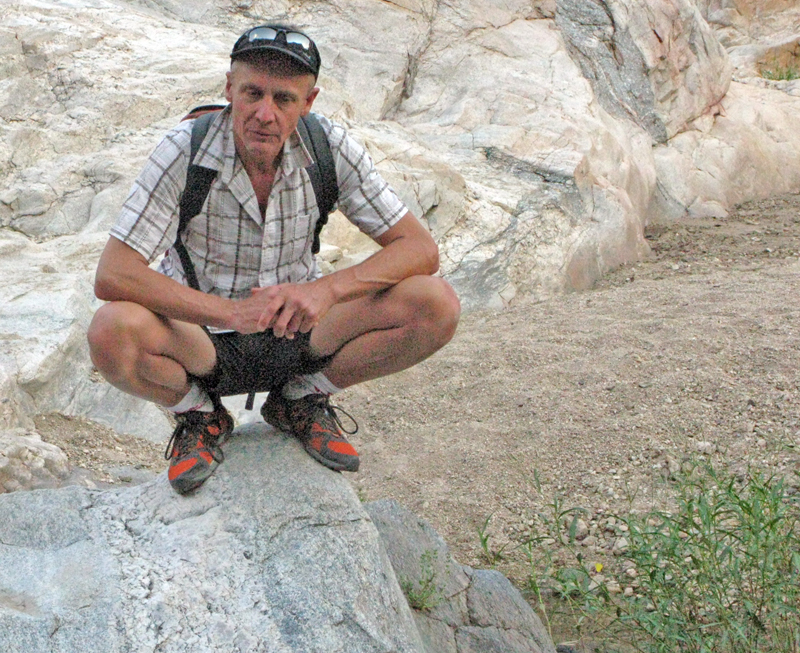
Craig Bellmann is a local expert on the flora, fauna, history, weather and topography of the Desert Southwest. His keen sense for the rapidly changing desert weather, especially in the monsoon, are important in avoiding the deadly flash floods that claim victims every year.

RailRiders’ VersaTac-light reinforced, quick drying pants and their classic Eco-Mesh shirt are perfectly suited for adventures where I’m in and out of water and need protection from the sun in extreme heat. I’ve worn this same RailRiders Eco Mesh Shirt on all seven continents and in the Marathon des Sables, a 152-mile running race across the Sahara in Morocco and in the Jordan Telecom Desert Cup, a 105 mile running race near the Jordanian/Iraqi border.