Archive

Gear Reviews.

By Tom Demerly for tomdemerly.com.

Felt FR30

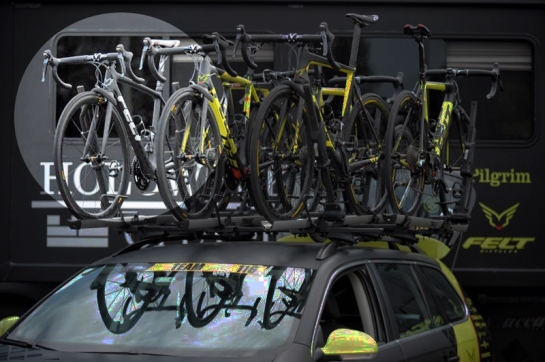
Spy shots obtained at the beginning of the May 15-22, 2016 Amgen Tour of California have revealed a new Felt Bicycles road platform likely slatted for a 2017 season release.

The new frame platform, likely to be designated an entirely new lettered/numbered series, merges a host of design concepts from previous Felt designs such as the Felt “Z” series high head tube road bikes with the traditionally “long and low” Felt “F” series bikes. The result appears to be a road racing bike with a moderate head tube height and several new frame construction and fit features.

Felt FR10

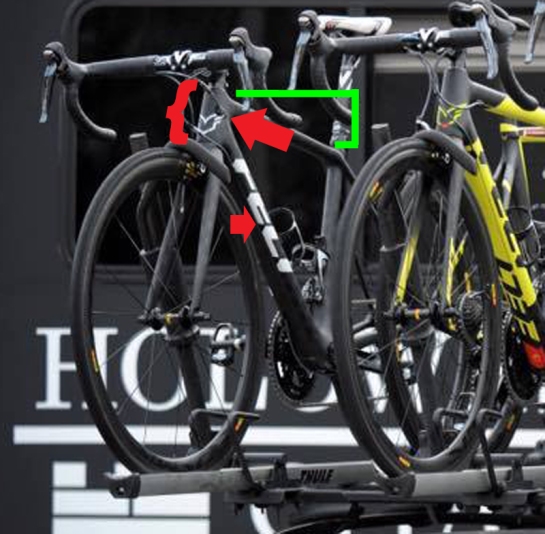
This previously unseen Felt Bicycles platform photographed today at the 2016 Amgen Tour of California shows a new head tube configuration, greater differential from top of head tube to top of seat post and different cable routing from previous Felt road bikes. The fork also appears to have a unique carbon fiber lay-up resembling previous TeXtreme materials used by Felt in their FRD (Felt Racing Development) program.

The appearance of the fork crown and head tube suggest a new construction technique that retains a low, racy appearance with a short head tube but moves more material to the fork crown. This design provides additional fit options while improving comfort according to sources.

Cable routing on the new platform also appear different from previous Felt “F”, “AR” and “Z” series road bikes with cable inlets apparently going directly into the head tube of the frame.

There is no release date for the new platform that was seen in a generic paint and decal livery typical of Felt Bicycles’ prototype bikes from previous development programs.


By Tom Demerly for tomdemerly.com

bikeshopdentist

Was at the dentist today. $2,297.00.

My dentist is excellent. Truly. Does a fine job, professional and current on modern dental techniques. Great staff. Nice guy too.

As luck would have it my dentist is also a triathlete. While I was at his office I picked up his bike and brought it back to our bike shop to do a tune-up on it. He’s got a nice bike. He should.

I got to thinking: Why can my dentist command $2500 for services, but I will only bill him about $90-150 for his bike tune-up that takes about the same time? And before you argue that your teeth are a serious “health issue” I will suggest that your bike brakes are too when you need to avoid a collision with a car.

Why is the bike industry unable to command prices for service and products commensurate with other industries? Why is a doctor, a dentist, a plumber, an HVAC repairperson or an auto mechanic so much more expensive to hire than a bike fitter, bike salesman or bike mechanic?

Why are similar things so cheap in the bike industry, when they are priced consistently higher in other industries?

Like any single economic question, there is not one singular answer. It is worth inventorying the reasons why the bike industry, benchmarked against other industries, is habitually under-charging- especially for service- despite growth in demand and technology in cycling.

U.S. culture teaches us bicycles are children’s toys. Labor rates for servicing a Jet Ski, motorcycle, snowmobile or an RV are similar to automotive repair rates. But fixing a bike is something we grew up doing in our driveway. Our value calibration of bicycle service starts in our driveway as a kid. Because the bicycle industry as a whole remains largely unsophisticated compared to Apple and Tiffany’s stores, that value calibration of bike retailers remains lower than other consumer experiences.

bike shop kids

What can the bike industry do to change the perception that bikes are toys and labor should be cheap or free? There are a few answers, but the most apparent are to provide a more modern and sophisticated presentation of services and an updated visceral customer experience congruent with newer high-end client services and retail.

Let’s go back to my dentist’s office.

Days before my appointment I always receive a text message reminder from his office. They also phone me and leave a message with a reminder.

The dentist’s office has a trained receptionist, a “Concierge”, who coordinates services, attends to questions and generally administers logistical concerns with patients. It is her only job- to facilitate a smooth and pleasant transaction. She also handles the payments. The entire payment process is segregated to a different staff, a different physical location in the building. This helps solidify the payment experience as finite, non-negotiable, consistent and repeatable.

My dentist’s office is clean and modern, beginning with the exterior of the building. The signage and everything that transmits his brand message is attractive. His treatment spaces are spotlessly clean and meticulously arranged, not only for obvious sanitary reasons, but also to transmit the impression that this is serious business.

drbruce

Bike shops, by comparison, are less formal places where employees dress in shorts and T-shirts and customers “hang out”. You act how you dress, and you charge how you dress too. The vibe in bike shops is decidedly less professional, and consequently, so are the prices.

For these and other reasons my dentist can command $2500 for a service that takes about the same time and experience as rebuilding his Shimano Di2 carbon fiber triathlon bike. He collects more than ten times the revenue I do for a service that is more similar than dissimilar. And remember my analogy about your bike brakes being as important as your cavities when you’re riding toward an intersection at 20 MPH.

And before old timers argue that a more polished, cleaner, professional approach won’t work in bike shops, I will argue that it likely will, since most adult cycling customers are actually new cycling customers whose benchmark of what a customer experience should be is formed in retailers like IKEA, Apple, Victoria’s Secret and Abercrombie– not hanging out with the guys at the local bike shop. In fact, it is likely the only bike consumers that still want a homy, small-town, casual “buddy-buddy” personal feel to bike is the guy behind the counter, not the customer in front of it.

bikefit80

Change channels.

Tiffany’s is a high-end jeweler made famous by the movie “Breakfast at Tiffany’s” and is still famous for a few reasons, one of which is their iconic “Tiffany blue” (trademarked) brand color. Buy any engagement ring of a given size at Tiffany’s and it is roughly ten times the price of an equivalent sized ring from the corner jeweler. It also carries a consistently higher perception of worth and brand identity.

From 2007 to 2015 Tiffany’s revenue grew 60.49% according to Morningstar.com. That is despite the brutal recession in the U.S.

How does Tiffany’s command a price often ten times higher than an apparently comparable product and still increase sales, even during the recession?

tiffanystore

There are several reasons my dentist and Tiffany’s can command more revenue for seemingly similar services and products to the adult cycling industry.

Firstly, they ask for it. And dress for it.

Setting price immediately establishes a value calibration. When I lived in the Middle East I noticed this value calibration is often highly nuanced. The Arabs (and Chinese) invented commerce as we know it today. They know, unless you ask, you will never get the price you want.

Tiffany’s has also established uniqueness and differentiation through their fortunate product placement in a popular old movie and in every brand message they send, right down to their packaging and bags. When a person walks through a high-end shopping mall with a Tiffany blue bag in their hand, it not only calibrates our perception of the customer as affluent and discerning, it also spreads the brand message of Tiffany’s. It’s advertising. And it bolsters our impression of the customer.

By comparison most bicycle retailers use customer bags that look like you should empty a cat litter box in them.

Tiffany’s also maintains a quiet, reverent display and sales environment. A salesperson in Tiffany’s is never interrupted by a telephone ringing on the sales floor. Phone calls to the stores are answered off the sales floor. A phone never rings in the shopping spaces.

Change channels.

e-Bay is backwards retail. People list items, often used, sometimes of dubious value, on e-Bay and consumers compete upward for price in the auction format. Think about that: compete upward.

 Why do people compete upward for price on e-Bay when normal market forces exert downward pressure on pricing in retail?

Two reasons: Time component and repeatability of transaction quality (different from item quality).

e-Bay auctions end at a specific time, and the expiration of an item’s availability manipulates our perception of its value. e-Bay is also competitive since supply on unique items is finite and limited. When it’s gone, it’s gone. Both of those components exert an opposite competitive effect on pricing.

ebayauction

The quality of the transaction on e-Bay is almost always identical. This is different than the conduct of the seller and the quality of the item being sold/purchased. But it makes a case that the quality of the transaction (separate from the item in the transaction) is a key driver in our perception of price.

If the transaction experience is inconsistent and/or below industry standards it devalues the purchase price. Buy an antique figurine at a local resale shop, pay $10 for it. Buy the exact same figurine on e-Bay, pay $20, $25, $40…. Whatever the final bid is. People negotiate upward in a proven, repeatable transactional template with finite constraints on supply and uniqueness rather than commodity.

How can bike shops leverage these strategies to improve both the customer experience while raising revenues and profits?

The good news is there are tons of opportunities for the bike industry to provide a better experience for its customers. Of course, the reciprocal is that our current standard of customer experience is poor and lagging behind professional offices and forward thinking retail brands like Tiffany’s, Apple and others. Still, this creates a massive “empty space” where bike retailers could be earning more and providing a better experience.

negotiating-with-a-car-salesman-612mz111910

Step One: Recalibrate the Bike Shop Experience.

Why do you stand in line at a cash register when paying for a $5000 bike when you sit in a comfortable chair at an automotive dealership or at Tiffany’s to pay for your car or engagement ring?

Seated checkout in a non-cash/wrap setting is a small but significant step in recalibrating customer’s experience and perception of what it is to shop at a specialty bike retailer.

Having one staff member in each shift designated as the “Concierge” who greets, directs customer traffic and may also administer the customer checkout experience during slow traffic hours is another key experience quality feature that recalibrates customers’ perception of our industry.

bestbikedisplay

There are many, many other opportunities for bicycle retail to improve the customer experience by changing the transaction environment and appearance and also by adding tangible value to adult bike sales and service.

In fact, there are enough for me to fill a book with.

A problem in the bike industry is that few bike retailers and service providers are benchmarking outside our industry for ways to make the experience better in our industry. Until that changes, we’ll keep hanging out with our customers before and after shop rides in cool shorts drinking expensive beer while earning cheap wages.

“Nobody knows the future, you can only create the future.” Jack Ma, founder of Alibaba.com.

By Tom Demerly for tomdemerly.com

maik

German pro Maik Twelsiek had the fastest bike split at the Ironman World Triathlon Championship in Kona, Hawaii in 2015 on a Dimond beam bike. It may suggest the re-emergence of the beam design.

In a different life I gathered intelligence for the U.S. Army.

On some missions we would watch something, say a building or a road intersection, for hours or days. And nothing would happen.

Sitting on a target for days and seeing nothing happen may seem like an intelligence failure. But it may not be. It is in the empty spaces that most possibilities exist. And when the silence is deafening, there is often a reason.

Such is the case with a seemingly innocuous set of events in the bike industry over the past two years.

Before I begin, I want to state the standard diatribe about predicting anything in any setting, the analysts’ safety net: I will state facts and from these facts I will make some vaticination about an outcome. This outcome is neither assured nor probable. You may or may not recall what Victorian journalist George Eliot wrote about such insights as I am about to proffer: “Vaticination is only one of the innumerable forms in which ignorance finds expression.”

Exhibit A.

On January 5th, 2015, nearly a year and a half ago, Cannondale hired a man named Damon Rinard.

Rinard is a quintessential geek. Seemingly uncomfortable in his skin, he frequently glances at the ground when talking until the conversation turns to his field: engineering. Specifically, bicycle engineering. Most specifically, aerodynamic bicycle engineering.

When Rinard orates about bicycle aerodynamics and frame engineering his chin is held higher, his voice drops an octave and he commands attention. Rinard is arguably the most sought after engineer in the niche of a niche that is aerodynamic road bicycle design, including most significantly, triathlon bikes.

cervelo1-652x326

Rinard was instrumental in the development of the Trek Speed Concept and contributed to the current generation of Cervelo aerodynamic designs. These two brands sit number 1 and 2 atop Lava magazine’s “Kona Bike Count” for 2015. Rinard’s influence touched a staggering 797 bikes at Kona in 2015, nearly half the field. As such, Damon Rinard owns the place as the most important man in triathlon bike design that no consumer has heard of. Your concept of what a triathlon bike looks like is shaped by what Damon Rinard has already done.

When Rinard went to Cannondale at the beginning of 2015 the brand had a strong line of road bikes. These include (arguably) the most advanced aluminum road bikes available since Cannondale is a pioneer of the oversized aluminum road bike and has continued to develop the niche even in the carbon fiber era. Additionally, Cannondale has numerous carbon fiber road and triathlon bike models.

But Cannondale has no aerodynamic bikes.

Enter Damon Rinard. One glaring omission from Cannondale’s current line-up is an aerodynamic road bike platform. A second, more significant, omission is an aerodynamic triathlon bike.

Cannondale has an offering in the “third generation” triathlon bike, the “Slice”, that occupies a nice niche’ for the company. The Cannondale Slice is a short-reach, moderate stack tri bike that excels in fit for short torso riders and in low frame weight. But Cannondale does not have a fourth generation triathlon platform developed using CFD (computational fluid dynamics) with visually conspicuous aerodynamic styling. Nor does Cannondale have an aerodynamic road bike analogous to the Felt AR or Cervelo “S” series bikes.

Rinard is an expert at engineering both the aerodynamic triathlon and aerodynamic road categories.

Was Rinard hired eighteen months ago by Cannondale to introduce new models in the aero road and aero tri categories? Because these two categories, one of them a prominent one (aero tri), are so conspicuously absent from Cannondale’s line-up?

Exhibit B. 

If Andy Potts isn’t the most likeable professional triathlete in the sport, then he is among the top three. Potts is articulate, aware of his image, handsome, affable and fast on the racecourse.

Although Potts has never won the Ironman World Triathlon Championship in Kona, Hawaii, and likely never will, he brings much more to the table than race results. Potts knows what to say, and when to say it. He is also conspicuously American, a trait valuable to a brand that originated in the U.S.

Andy Potts is the perfect front-man for any triathlon brand.

On January 5th, 2016- exactly one year to the day Cannondale hired aerodynamic bike super-engineer Damon Rinard, Cannondale announced sponsorship of Andy Potts.

Exactly one year.

I briefed a private intelligence analyst on this information about Cannondale, Rinard, and the Andy Potts sponsorship and asked them for their calculation, based on my briefing, of the probability of Cannondale releasing new aerodynamic road and triathlon bikes in the next 18 months. The analyst’s probability: “80%”.

The Missing Cervelo.

There is an argument to be made that more things are related in the bike industry than are not.

Only 279 days after Rinard’s announcement that he is going to Cannondale, Cervelo announced they were… announcing a new bike in six more months. That bike introduction has since been delayed.

It is worth merging, for the purpose of discussion, these facts:

  • German athlete Maik Twelsiek set the fastest bike split at Kona in 2015 on a beam bike. Twelsiek rode 4:25:10 at the Ironman World Triathlon Championships in Kona with an average speed of 25.34 MPH for 112 miles. He rode a Dimond carbon fiber beam bike.
  • Damon Rinard’s third bike ever, the “Rinard DR-X”, a one-off technology demonstrator handmade by Rinard years ago, was a beam bike.
  • Beginning with Softride bikes in 1996, beam bikes have already been used in triathlon competition. In an early article about Softride beam bikes published years ago (date unlisted) in Slowtwitch.com, the publication wrote, “They’re more aerodynamic than almost all other bikes, if wind tunnel tests have any validity at all- Softrides always ‘win’ or come very close to winning these tests when they’re applied to a wide variety of bikes.”
  • In an article also published in Slowtwitch.com Damon Rinard told journalist Herbert Krabel that in 2009 he had worked on “…measuring comfort (vibration transmission and human perception).”

The amalgamation of these facts could be used to support an argument that Cervelo’s delayed new bike design may be, and probably is a beam bike.

Additionally, a similar beam bike concept could conceivably be in the works at Cannondale, a dividend of the Rinard “brain drain” from Cervelo to Cannondale.

While the idea that Cannondale is working on a new beam bike under the engineering influence of Damon Rinard’s recent arrival at the company may be a stretch, especially for a 2017/18 model year intro, it is more likely the Cervelo intro may be beam-shaped.

Any Cannondale move to a new triathlon fuselage design would likely have to span several price points, from about $2000-$2500 for the entry range to a full “superbike” spec with race wheels, carbon aero cockpit and electro-mechanical transmission controls (Shimano Di2 or SRAM ETAP) at the lofty $7000-$11,000 price range. This alone may constrain Cannondale and Rinard’s potential new tri bike design to a conventional blade-shaped triple triangle configuration.

In any event the quiet machinations of the industry behind the scenes will certainly lead to a season of significant new introductions during the next 700 days.


By Tom Demerly for tomdemerly.com.

Handful of Hell 10

Rarely you find a great treasure, a book that reaches back with precious reflection on the past and ignites inspiration for the future.

It’s even more delightful when it celebrates an incredible career.

A Handful of Hell: Classic War and Adventure Stories by Robert F. Dorr gives you each of those treasures. Handful of Hell is thoughtfully edited by Robert Deis and Wyatt Doyle to adapt its brilliant snapshots for a new age of readers. The result is incredibly special.

This book is something unique a new audience will love, the reader who won’t sit through an entire novel to get to the action. Handful of Hell is “extreme writing”, the X-Games, the Nitro Circus of story telling. That gives these stories new life to a fresh audience.

This anthology also serves as a historical time capsule, not just of the events depicted, but also of a style of writing mostly extinct that shaped publishing and story telling into the age of Ian Fleming, Alistar MacLean, Tom Clancy and even modern thrill-writers like Stephen King, David Baldacci and Brad Thor.

Handful of Hell 40

Author Robert F. Dorr has lived a James Bond-like lifestyle. Born in 1939 he became a shadowy diplomat from Madagascar to Korea to Liberia, Sweden and England. A published author from age 16, Dorr has been seen in every corner of the globe on diplomatic missions and posing next to advanced fighter jets before orientation rides, something reserved for the connected and influential.

In addition to providing a rare and uniquely informed perspective on conflict, espionage and adventure Dorr is incredibly prolific as an author, having published over 70 books and contributing frequently to aviation and defense publications.

In each of the 17 remarkable adventure stories in Handful of Hell Dorr thrills and teaches- history, editing, writing and style. Writing is hard work, and Dorr has been a tireless slave-virtuoso to the trade. He bangs out tense, staccato sentences that hit like a burst of machine gun fire, punctuating the action the way it happened- and the way we want it remembered.

Handful of Hell 20

The post WWII era of the late 1940’s, ‘50’s 60’s, and even early ‘70’s featured a huge population of American men thrust into middle class America from a life fighting or contributing to brutal wars around the globe. Back at home middle class American life had become dull. This audience was looking for escapism in romanticized adventure. An accounting of their lives that added danger, meaning and romance to their personal narrative. Dorr’s writing does that elegantly. It is quick, tight, vivid and often terrifying.

Interestingly, this book works perfectly in the modern age of media, where attention spans are short and appetite for the sensational is strong. Each story is quick and serrated; once it saws into your imagination it won’t release your flesh to the end. Each one is a quick read. That is how audiences were then, and are again- they want tight, fast action in small sound bites. This is YouTube for book lovers, a collection of crashes, combat, catastrophe and heroism written as if a GoPro could make words on a page.

Handful of Hell 60


Since most “sweat” magazines now reside in a musty pile in your grandfather’s basement Handful of Hell is also a historical homage to the era of adventure magazines. If you want to understand that publishing movement, this book will unlock that understanding.

That new 500-page “best seller” thriller novel will gather dust when you crack the binding on Handful of Hell. Its historical relevance, tight, sensational editing and crisp attention to technical detail are far more engaging, entertaining and even educational. As soon as you start reading Handful of Hell you’ll know it is page-fulls of fun.

Handful of Hell 100

Get your own “Handful of Hell” by clicking this photo.

By Tom Demerly.

CerveloR3d200

On Wednesday, April 13, 2016 online publication Cyclingweekly.com reported that the Union Cycliste Internationale or UCI, the international governing body for the sport of cycling, has “issued a suspension” on the use of disc brakes for professional road racing events.

The new sanction against disc brakes on road bikes follows a trial period of disc brake use by pro cyclists before their permanent approval for competition.

According to Cyclingnews.com this “second testing phase [would have permitted] every rider in a team to use disc brakes in 2016 and in every major race. This is expected to spark widespread use of disc brakes during the 2016 season.”

But today’s suspension of disc brake use in the pro peloton raises a few questions about disc brakes on road bikes specifically, and about cycling technology and its role in the consumer market more broadly.

The cycling industry is a consumer industry. It relies on interest in new products to drive bike sales. Every season new features need to be released to keep customers interested.

But not every new feature has an attendant benefit.

Some features are just… new.

To a degree disc brakes fall in this category, but only to a degree.

Let’s consider a balance sheet of disk brakes on road bikes:

Pros:

  1. Disc brakes remove the braking surface from the rim, allowing new flexibility in rim shape design.
  1. Disc brakes usually have better stopping performance in wet and dirty conditions than a rim brake.
  1. Because a bike frame designed specifically for disc brakes does not need caliper brake mounts frame designers have new latitude with frame design not available with traditional caliper brakes.

IMG_2552Cons:

  1. Disc brakes are heavier than caliper brakes.
  1. Disc brakes are more expensive than most caliper brakes.
  1. Disc brake equipped wheels take longer to change in a race-service setting.
  1. Disc brake equipped bikes are less tolerant of interchanging wheels from bike to bike; the brake disc spacing on the wheel must be exact for it to work on a given bike and this often varies from bike to bike. Caliper brake equipped bikes are easier to change wheels on.
  1. Disc brakes have different stopping power than caliper brakes. This can create different braking performance on group rides where some riders have caliper brakes and some riders have disc brakes, potentially creating a hazard.
  1. There are not as many wheel options available aftermarket for disc brake equipped bikes as there are for caliper-equipped bikes.

If you weigh both sides of the balance sheet you see that disc brakes offer some advantages, but not necessarily advantages in a professional road race setting.

packvssolo

As with aerobars, disc brakes are not well suited for riding in a group, especially if some riders are also using caliper brakes.

Aerodynamic handlebars are similar; in an individual, time trial and triathlon setting they offer proven performance benefits, but they aren’t optimal for use in mass-start bicycle racing.

The bike industry may not have ever intended disc brakes to be a replacement for caliper brake racing bikes. Instead, the disc-equipped road bike may have been targeted for an emerging demographic of recreational cyclist who rides in all-weather.

I use the word “may” because the cycling industry seldom plans such things, but rather throws new ideas against the consumer wall to see what sticks. The impetus is to constantly release something new, if not necessarily better.

Because consumers seem to want “new”.

Disc brakes aren’t bad. They stop a bike adequately in all conditions and better than caliper brakes in wet and dirty conditions. On mountain bikes, cyclocross bikes, dirt road bikes and randonee’/touring bikes ridden in bad weather they are better than caliper brakes.

Recall the time when suspension forks were installed on road bikes used for the cobblestones in Paris-Roubaix. The trend didn’t last, and riders quickly returned to mostly conventional road bikes with rigid forks and caliper brakes at Paris-Roubaix and in the other Spring Classic races.

Suspension forks didn’t go away. They found their own best application on mountain bikes and some recreational hybrid bikes. And there they remain, because they are a feature that provides a tangible benefit on those bikes.

Do disc brakes belong on road bikes? On some road bikes they do. Not all, and they are not a replacement for caliper brakes. If you ride by yourself on dirt roads and in wet conditions, disc brakes offer a benefit. But disc brake bikes aren’t a replacement for the caliper brake equipped road racing bike. They were never intended to be.


By Tom Demerly.

bikefit70BEST

Bike fitting is big business. Having some version of “professional” bike fitting is the new standard for any bike sold above $1000.

How do you tell if your bike fitter knows what they’re doing? Are they a credible, trained, experienced fitter or just repeating buzzwords in a kind of bike fit “theater” learned in a weeklong clinic under the guise of years of experience fitting athletes during the evolution of bike fitting?

Here are ten checkpoints to assess the credibility of your bike fitter:

  1. Do They Ride? The Way You Do?

If a bike fitter knows what it’s like to be a beginner triathlete filled with anxiety and not even know what questions to ask they can help the newest beginner with solid recommendations. A good fitter knows the “beginner’s mind”.

At the opposite end of the experience scale, if your fitter knows what it’s like to sit on an uncomfortable saddle for six hours at Ironman- and can fix it– it’s easier for them to understand what you’re experiencing. If they have done it themselves, you’ve found a fitter you can relate to.
bikefit90

“After their bike fits Dave and Enrique couldn’t help but wonder if there had been some confusion between their two appointments…”

When a bike fitter combines the “beginner’s mind” with elite level competitive experience balanced with formal training and tempered against learned judgment from doing thousands of bike fits, you have a master. And the less a new rider knows, the more the fitter must.

There are a few credible fitters who are not triathletes or bike racers but do know bike fit well. But they are the exception.

Having the practical experience of riding the way you do (beginner or expert) makes communication more effective. It also means your fitter had to apply what they’ve learned about bike fit to themselves. It teaches them critical thinking and hones their analytical skills. That makes them a better fitter.

There is a dark side to the super-athlete bike fitter though, see #10 below.


  1. Have They Been Trained in Multiple Methods? 

Beware of any shop or fitter than espouses a single fit methodology. If a shop tells you “We do Retül (or Guru, or FitKit, or Body Geometry, or FIST)” but uses no other system and is not familiar with any others, it’s worth learning how deep their understanding of bike fitting and positioning really is.

How long have they been fitting? Have you spoken to any other fit clients of theirs? What are their reviews?

Bike fit systems are only tools to make the fitting process easier, more theatric, and in some cases, to sell bikes.

Dan Empfield, inventor of the triathlon bike and of the Stack and Reach sizing convention teaches a F.I.S.T. bike fitting class in England.

Dan Empfield, inventor of the triathlon bike and of the Stack and Reach sizing convention teaches a F.I.S.T. bike fitting class in England.

The quality of the end product depends on the fitter, not the system. A fitter with experience across a number of systems has a more balanced understanding of the bike fit landscape and assesses your fit from a broader perspective. That likely means you’ll get a better bike fit. Beware of the one-trick pony and the Johnny-come-lately with the shiny new fit bike and laser levels.


  1. Do They Espouse One “Fit System” Over Another?

If a fitter uses only the cookie-cutter fitting system associated with the bike brand they sell, you may still get a good fit on that brand, but the fitter’s capabilities may be limited.

As with point #2 above, bike fitting systems are merely tools. All of them will produce a favorable result in the hands of a skilled fitter- but all of them rely on an experienced fitter.

Nice tools, but do they know their stuff?

Nice tools, but do they know their stuff?

When was the last time you asked your bike mechanic, “What kind of wrenches do you use?” As bike fitters become more experienced and capable the system they use becomes less relevant.

It’s the experience and skill of your fitter that matters, not the system they use.


  1. Do They Only Suggest New Saddles for Saddle Discomfort?

Saddle discomfort is a leading motive for bike fit, but if the only thing your fitter does to make you more comfortable is bolt different saddles on your bike or try to measure your “sit bones” to sell you the right saddle, then they are a good salesperson, but a poor bike fitter.

bikefit110

A good fitter will take a holistic approach to saddle discomfort, addressing fit, position, saddle comfort habits, rider fitness and posture and the rider’s clothing to improve saddle comfort.

Bolting on new saddles is a great way to drive sales and usually the most logical approach to the customer, but it is a myopic view of what makes a person comfortable on a bike seat. Your fitter owes you more than a sales pitch on another magic saddle.


  1. Do They Claim To Be Able To Make You “More Aero”?

A great way to tell if a fitter is a hack is if they claim to be able to make you more aero without using wind tunnel testing or computational fluid dynamics.

A bike fitter can use empirical, data-driven checks to verify joint angles. They can take specific measurements of frame dimensions and geometry. They can take quantifiable measurements of your body and make mathematical comparisons to determine relevant ratios for bike fit.

A bike fitter cannot do this for aerodynamics. If your bike fitter claims to be able to make you more aerodynamic on your bike they are guessing, and lying.
bikefit120

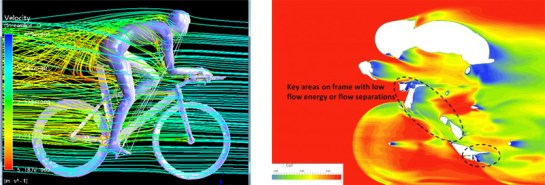
Air is 784 times less dense than water, and it is nearly impossible to predict the behavior of water swirling around your finger. Guessing how air will swirl around a pedaling rider at speed in different wind conditions is impossible without empirical analysis.

I know- I’ve been that guy. I spent over ten years telling clients I would get them “more aero” by lowering their handlebars and making them “more aggressive” until a wise man who happened to have a PhD in aerodynamics told me to “stop embarrassing yourself” by trying to guess at aerodynamics.

I’ve been privileged to wind tunnel test with two bike brands and one independent engineering laboratory in three different wind tunnels over 25 years, on the bike and in the control room. I’ve learned that no one can guess what small changes will make a rider faster over the entire length of a triathlon bike leg. And remember, the goal is to get faster, not just “more aero”, and while those two things are closely related, they are not entirely the same– especially for new riders with comfort issues.

bikefit70

“Jim wondered about riding 112 miles at Lake Placid like this after his bike fit was over.”

Firstly, no bike fitter without a wind tunnel or computational fluid dynamic analytics can guess at the behavior of the boundary layer of air surrounding your body across the entire performance envelope.

Secondly, even if they could, the constantly changing variables of speed, terrain, wind yaw angle and rider posture would make that snapshot in time a very fleeting case study.

Thirdly, while rider aerodynamic drag is the most significant force to overcome in cycling even at moderate speeds, wind tunnel positioning concepts were developed in testing at very high speeds, usually over 25 MPH. British professional triathlon coach Russell Cox discovered the median bike speed for the Men’s 40-44 age category at Ironman Florida, one of the fastest courses in the U.S., was only 17.5 MPH. At these sub-25 MPH speeds there are more opportunities for your fitter to improve your bike split through things that they can actually test for, as opposed to things they are guessing at for speeds you don’t even ride at.

The narrative “Let’s lower your bars to get you more aggressive…” is a valid way to tell if a bike fitter is regurgitating empty rhetoric from YouTube, a triathlon forum, or a three-day fit clinic.
bikefit80

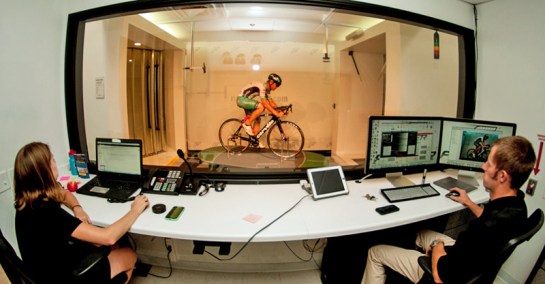
Faster Bike Shop in Scottsdale, Arizona was the first and is likely the only bike retailer in the U.S. with actual wind tunnel test facilities.

If a fitter tries to critique your aerodynamics challenge them by asking, “Can we measure my drag coefficient before and after any changes?” You’ll likely get the sideways puppy stare or a litany of qualifying excuses. Don’t fall for it. There is only one bike retailer in the United States with a wind tunnel, Faster in Tempe, Arizona. If you aren’t there, then your fitter is guessing.


  1. Are They Trying to make you “Straight”?

There is a sub-segment of bike fitting and positioning that tries to enforce symmetry on the human form. The only symmetrical human is Mona Lisa. The rest of us are crooked.

It’s simple to use lasers and shims to try to make a person “straight”, but it may create further skeletal misalignment since our skeletons are usually not straight and symmetrical, especially as we age and accumulate injuries.

The craft of the experienced fitter is to find a functional balance between moderating asymmetries that could contribute to discomfort, or even an injury, and facilitating them. There is likely a “sweet spot” between facilitation and adaptation that provides the optimal benefit to each unique rider. This sweet spot is different for a new triathlete than a person doing their 10th Ironman.

If a bike fitter’s singular goal is to “get you straight” you should tell them to get bent.


  1. Do They Acknowledge Their Limitations?

Many bike fitters try to- or claim to be able to- do too much.

A retail bike fitter should be able to recommend a new bike model, frame size name and geometry that fits you optimally for the type of cycling you want to do. They can then adjust that bike for an optimal basic position, often using different handlebar stems, aerobars and other size-specific components to achieve the best result. Then, they can use any number of analytical tools to verify the results against commonly known bike fit standards.

That’s all.

Bike fitters can’t make you comfortable or “fix” you. They can’t add additional fitness or make you less overweight. They can’t produce the perfect saddle that feels right to you. You still have to train, lose weight if you are overweight and get acclimated to sitting on a bike seat. Those things don’t happen in a two-hour bike fit.

Unless the bike fitter in your store has a formal University level credential in anatomy, physical therapy, medicine or exercise physiology that should be their boundary, and they should respect their customers by working within their boundaries.

Beware of the bike fitter who tries to do too much without the degree to back it up. If a bike fitter learns a customer is suffering from a sports injury they are correct to refer them to a qualified physical therapist. Some licensed physical therapists now have formal instruction in bike fitting too, and you (or your health insurance) will pay extra for that, but it is worth it.

If your bike shop bike fitter tries to play physical therapist, limp out of there.


  1. How Long Have They Been Doing Bike Fits? 

Ten years ago it was still easy to sell a bike with a quick test ride. Now customers are smart enough to demand a more empirical, data supported process to selecting and adjusting the right bike. As a result there has been an explosion in the number of new “bike fitters” in the last ten years.

Not all of the new bike fitters are good.

Many new bike fitters are adequate and recognize their capabilities- and limitations- but many are also quick-talking hucksters who can sling the lingo and the laser beams to appear credible.

Ask your bike fitter questions about their training, their experience, their own cycling background and their limitations. A fitter who claims to be able to do everything has big shoes to fill.


  1. Are They Willing to Recommend Equipment They Don’t Sell?

It’s a good sign if a bike fitter occasionally “walks” a customer by telling them he has nothing in his store to fit them. That suggests their first motive is to get the customer on the right bike, not just get a bike out the door.

A specialty bike shop will stock a well-planned assortment of bikes that have subtly different fit characteristics. Some work well for larger, heavier riders, some for smaller riders, some for long torso cyclists, others for short torso cyclists.

When Triathlon Hall of Famer and inventor of the triathlon bike, Dan Empfield, invented the “Stack and Reach” table for comparing bike dimensions he created a kind of Rosetta Stone for bike fitters to make meaningful comparisons of different bikes and their dimensions. This leveled the playing field and decoded cryptic bike brand size names that have little to do with actual bike dimensions. Empfield’s accounting of bike dimensions gave bike fitters one of their most valuable tools since the tape measure, and also held fitters accountable for being honest.


  1. Are They Good Listeners? 

A good bike fitter conducts an interview with his customers, listening to their experiences, their goals and what they are thinking very carefully. This leads to more questions from the bike fitter. In fact, a good bike fitter often asks the customer more questions than the customer asks them when selecting a new bike.

The best bike fitters listen carefully to position their clients optimally on a continuum between facilitation and adaptation. Facilitating a client means the fitter exclusively listens to the client and does what they say makes them comfortable. Adapting a client means the fitter applies known principles of bike fitting without input from the rider and says, “This is right, get used to it.” The best bike fitters know how to listen to their clients to find the optimal balance between these extremes.

Some bike fitters try to be know-it-alls or local heroes. They try to mold each client into a specific posture or fit model, and they have little space left in their effusive knowledge of all things bike fit, cycling and triathlon related to learn anything from a lowly client. If you can’t get your bike fitter to listen to you, let them talk to the hand.

Craig Turner, founder of Nytro, one of the first triathlon shops in the world, is also one of the best listeners and bike fitters in the industry.

Craig Turner, founder of Nytro, one of the first triathlon shops in the world, is also one of the best listeners and bike fitters in the industry.

I once listened to Craig Turner, founder of Nytro in Encinitas, California, work with a bike customer. I was surprised by how little Craig said, how much he listened, and how he restated the key points the customer made back to them. It was clear that Turner was a careful and analytical interviewer, asking the right questions and leaving space for complete answers. When he was done with the interview he had the expertise to make learned and supportable recommendations. It was like listening to an expert attorney advise a client.


About The Author:

theauthor


While Tom Demerly can be full of shit he has been fitting bicycles since 1984 and performed well over 5,000 bike fittings including Olympic athletes Sheila Taormina and Olympian, National Champion and Tour de France rider Frankie Andreu. More importantly, Demerly has fit thousands of first time triathletes and only a few of them still have numb crotches.


By Tom Demerly.

Power_Of_Three_Book_Banner

I was in a small gift shop on an island when I first saw one of Erin Hunter’s The Warriors series books. I opened it and read one page.

And my trip began.

warriors 10

Warriors is an opulent, luxurious fantasy novel series featuring fictional cats who are empowered with mythical abilities. Their mystical powers have roots in ancient lore attributed to Native American, African and Asian cats- including Egyptian mythology. The result is a dream-like journey with loveable characters overlaid on a detailed examination of cat zoology and animal behavior science. Plot lines and morals threaded through the series feel like an amalgam of sacred texts, from Buddhist writing to the Bible and many others.

The Warriors series is immensely complex, featuring a dizzying number of cat-characters. On the Wiki page for the book series one reviewer is cited as saying the series is “confusing due to its large number of characters”.

But the incredible dream-like quality of the scenes, characters and the fairy-tale, Aesop’s-like moral themes unfold at a brisk pace that is incredibly readable and engaging.

“The incredible dream-like quality of the scenes, characters and the fairy-tale, Aesop’s-like moral themes unfold at a brisk pace that is incredibly readable and engaging.”

Author Erin Hunter is actually three writers and an editor/plot director; Kate Cary, Cherith Baldry, Tui Sutherland write the The Warriors series with Victoria Holms editing.

authors

“Warriors” writing team includes (Left to right) Victoria Holmes, Kate Cary, Tai Sutherland and Cherith Baldry.

This writing team may have created The Next Big Thing. Before you dismiss this idea, let me propose the following:

According to the A.S.P.C.A. there are 96 million pet cats in the United States. Nearly 37% of American households, more than one-third, have a cat. One celebrity cat, Tara the Hero Cat, earns an estimated “$55,000-$463,000 per year” according to the New York Times. Add in other celebrity cats and the total take for the top earning celebrity cats is well over $10 million- probably much more. Now, consider the “Hobbit” film trilogy grossed over $3 billion for three movies, and no one has a Hobbit for a pet. You get the idea; combine cats with a Star Wars style plot line and some convincing computer generated cat characters with celebrity voices and… The commercial potential for The Warriors series is titanic (pun intended), with licensing possibilities for plush toys of each of the cat characters, lines of every pet accessory attributed to the series and about every other standard movie merchandising theme imaginable. The earnings potential is boggling. Why the big movie studios haven’t grabbed this series already is a mystery.

Business potential aside, The Warriors series is why we read. It is escapist, descriptive, creative and pulls you in. Your imagination wanders the mystical forests in the moonlight with the cats. You learn about real cat behaviors and you see your own cats differently after reading these.

I’m a Tom Clancy, Robert Ludlum, Robert F. Dorr fan- technotrhillers, not flowery fantasy stories. But The Warriors series spans genres and speaks across topics to the animal lover and storyteller in me. This series is a gem waiting for mainstream discovery. I’m looking forward to seeing this series explode in popularity and I’m thrilled I discovered it early.

nine_lives_ceremony_by_climbtothestars-d9ld0tw


By Tom Demerly for tomdemerly.com

twohoursbook

Running a marathon under 2 hours is the most sensational human endurance barrier left. Is it possible?

Ed Caesar’s new Two Hours (Simon & Schuster) explores the plausibility of breaking the two-hour marathon barrier with narrative and research that will convert a fitness runner to a marathon fan. Romantic and reverent, Caesar develops the characters and brings us inside the story with documentary storytelling and well-researched technical insight.

Two Hours Grips you like a leg cramp at mile 23, holding on and not letting go. From an opening sprint that takes you inside the closed world of elite marathon running and on into the long, slow distance of endurance sports research Ed Caesar sheds new light on a old sport than has been eclipsed in recent years by the drama of Ironman triathlons and the sensation of made-for-TV novelty events. Two Hours reignites the romance and mysticism of the marathon.

Author Ed Caesar returns the reverence to marathon running and puts a face on the athletes who contest the sport at the highest level. He provides fascinating insights into their staggering training mileage and gossamer physical and mental fragility. His accounting is journalistic but his treatment of the subject matter is laced with meaty passion. The combination of the two makes for a tingling read. I had starting line goose bumps nearly the entire time.

Here’s an excerpt:

“As the gun sounded the lead pack was briefly surprised by an unknown competitor. A white athlete, who was not part of the elite field, sprinted the first few hundred meters ahead of the race favorites, if only to say he had- for a time- led the London Marathon. He must have been a decent runner, otherwise he would not have started so close behind the elite, but his challenge only lasted a minute or so. As the lead men swerved to either side of a set of traffic lights, like a stream around a boulder, the phantom sprinter stopped, stooped and caught his breath.

It was an odd moment. From the truck that drove in front of the race, where the managers and coaches of the elite runners watched the race, the reaction to this man’s quest for fleeting glory was a chuckle, or a dismissive hand gesture. These men were in town for business, not japes. But the stunt was also a reminder of the otherworldly accomplishment of the elite runners. After years of witnessing the Kenyans and Ethiopians race mile after mile at a sub 5-minute pace, it was easy to become blasé about their industry and talent. The amateur’s sprint briefly connected everyday runners to the elite and set their wondrous achievements in context. Somehow, the sport at large had forgotten how to communicate that sense of awe. But for those few seconds, it returned.”

The entire narrative of elite marathon racing rings with awe in Two Hours.

Caesar’s accounting isn’t all romance though. He digs into the dirty world of doping in marathon and the secretive deals made between super-runners to maximize winnings through inauspicious and subtle manipulation of the results.

Running literature is filled with classics from writers like Bill Rodgers and George Sheehan. But there hasn’t been a fresh voice in running books since the now-defunct Born to Run that fueled the spurious barefoot craze and saved running from the recession. Ed Caesar’s Two Hours returns credibility and reverence to distance running literature and opens the conversation about the next sensational chapter in human endurance.

If you pick up Two Hours make sure you have an aid station within reach since, once the gun goes off in chapter 1 you won’t want to drop out of the action until the finish line.

By Tom Demerly.

978-0-449-80695-1-1

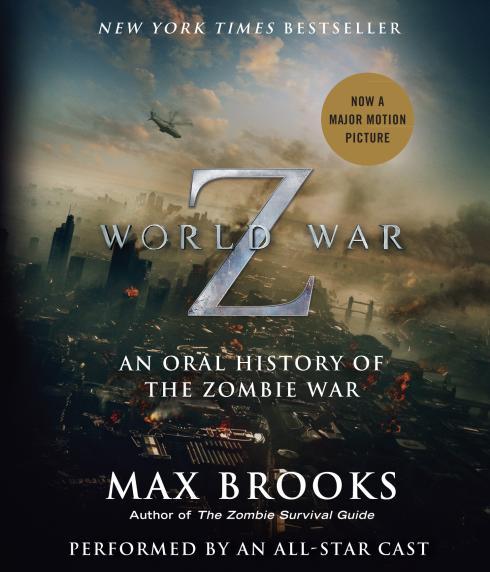
The Max Brooks book, World War Z, opens today as a major summer blockbuster movie already projected to hit $50 million in its first weekend. This review is for the original book.

World War Z is dry-mouth terrifying. A book so masterful and infectious it is actually threatening. Brooks’ unique writing style weaves a sinister tapestry of fiction and reality. And therein lies the horrifying aspect of both this story and the style it is written in.

wwz10

Left, a scene from the movie inspired by Max Brooks’ “World War Z”. Right, the evacuation of Saigon at the end of the Vietnam War. Visual proof that the most terrifying aspect of Brooks’ fictional tale are not the zombies.

I am not a fan of the horror genre, either in film or books. I’ve seen enough real horror that the two-dimensional themes of mock horror are pale and irreverent to me. The people who play zombie video games and go to “zombie chase” events boggle me as shielded sheep so removed from the real world they need the mock stimulus of false terror. There is plenty of real terror in the world. I read World War Z at the urging of a friend who works in government service. “I don’t like zombie stories” I told her. “This book,” she said, “has nothing to do with zombies.”

As with other great horror literature from Frankenstein to Dracula and including George Romero’s original Night of the Living Dead, this story works because of its placement in history. Mary Shelly’s Frankenstein, published in 1818, foreshadowed advances in medicine and science that were developed before the ethics to employ them. It’s a reality we continue to moderate to this day with genetic engineering and patent protection of organisms. The somewhat earlier Bram Stoker novel Dracula wrestled with themes of sexual revolution and religious skepticism.

“The most terrifying aspect of World War Z is not how the zombies behave, it’s how the living react.”

Max Brooks addresses the terror of a world unified in death that rises up to consume the living. His tale narrates the stages of any uprising, whether it is an uprising of the undead, or an impoverished nation zombified by oppression and lack of human rights. In both a zombie uprising or the Arab Spring the most terrifying aspect of World War Z is not how the zombies behave, its how the living react.

wwz20

A still from the film adaptation of Max Brooks’ book and a scene from the real life Arab Spring.

For readers acquainted with the tapestry of world events, uprisings and human nature this book rings so true and authentic it raises goose bumps. The book features interviews with key characters in the history of the war. One particularly haunting passage chronicles the experience of a pharmaceutical executive who patented an early “antidote” for the disease spread by the dead that “zombifies” people. “Americans were still praying to the God of science to save them” he rationalized about the false antidote his company introduced. There is even a narration of new programs to reduce the dependency of the public on government aid needed to “repel zombies”. It reads so closely to a BBC headline your mind races to weave together countless real world parallels.

wwz30

“World War Z” author Max Brooks, son of the comedy maven Mel Brooks, lectures at a U.S. Army presentation.

World War Z is a story that wedges itself into the tiny fissures of human culture, then uses a major dose of fear and a minor extrapolation of fiction to wedge them open. As you read the book you begin to look at culture around you and realize how frail it is, and how few contingencies there are. Most crowded cities are only a power failure, natural disaster, government uprising or other issue away from the scenes described in the book. The fear cultured in this book is the reason why people store canned food and move to the hills. By the time you get to the end of the story, that sounds like a more viable, safer and more sustainable lifestyle that commuting to a 9 to 5 job in Los Angeles.

As you experience the trauma and stress of World War Z you are held in some measure of relief that fiction weaves very simple and uncomplicated enemies. The zombies are unfeeling, not truly living, not at all human. They are absolutely evil. Few enemies in real life are so clearly evil. That makes the story more convenient and underscores the reason why every great leader rallies against the threat of a great enemy- real or contrived. After years of grey conflicts against complex enemies the zombies provide a convenient venting of the collective angst, something societies often crave. It’s another dangerous undercurrent of this tale.

While George Romero pre-dated this story with Night of the Living Dead his metaphor was against prejudice and racism. Max Brooks seems to use his zombies as a culture unified in death rising against a dwindling society of the living. One of the themes oddly missing from World War Z, for all its realism, is any commentary on social media. That omission is haunting, and it isn’t hard to imagine that the virus infecting Brooks’ zombie horde is the virus of instant communication and borderless association, the same way social media crosses borders and infects with almost no resistance.

Most people will see the movie World War Z, and I say you should read the book too. It is a story of the mass psyche, the worst of human nature and most horrifying susceptibilities of society. The story is so relevant and the skill in delivery is so masterful it belongs on the shelf with the great horror classics.

By Tom Demerly.

kent40

An assortment of delightful Kent handmade combs.

There is a saying that class is not distinguished by income. The recession proves this. And while I’d like to be reviewing private First Class cabins on an Emirates A380 on my way to race the Dubai Triathlon, that’s not in the cards right now. So in today’s economy we must turn to the little details of everyday life to experience sublime indulgence into ultimate quality.

G.B. Kent & Sons Ltd. has been making hair combs, brushes and even handmade, natural fiber toothbrushes since 1777. They are not the oldest continuously operating company in the world. That distinction likely belongs to writing instrument brand Faber-Castell who started in 1730. That said, few companies can lay claim to a 236 year history. Like larger companies of its time G.B. Kent & Sons Ltd. enjoyed an early endorsement from the aristocracy of the era. This underwrote their status as an aspirational brand before the term was invented. G.B. Kent & Sons Ltd., now simply called “Kent”, went on to win defense contracts and make combs for the soldiers’ personal kit in WWI. Kent even manufactured special toothbrushes with entirely wooden handles (no animal product) for use by Indian troops whose religion prohibited the use of animal products. The company shows an astonishing 250 varieties of brushes alone, plus other personal care items. Kent made special shaving brushes for intelligence operatives in WWII with hidden maps and compasses for escape and evasion built into the handles.

kent10

A typical “Unbreakable” stamped plastic comb with molded teeth and very pointed ends that tends to pull fine hair and scratch the scalp.

Most standard combs are completely injection molded. The plastic is shot into a die in molten form, cools and the combs pop out of the mold. It is a fast, convenient process but most comb molds are worn from making tens of millions of combs and a completely molded comb has rounded surfaces between the teeth of the comb and pointed teeth. There is also a mold parting line on the comb that does not move over hair smoothly.

kent20

The precision, saw cut teeth of a Kent comb move smoothly through your hair because of their flat (not rounded) inner surface. Notice the precisely rounded, hand finished tips on each of the teeth.

A Kent comb uses saw cut, not injection molded, teeth. The internal surface of the teeth are flat making the comb move through your hair more smoothly without binding or pulling. Because the interval between the teeth of the comb is much more precise than with a molded comb, the hair is arranged more symmetrically also, making your hair appear fuller and more attractive. Kent combs are also made from dense and consistently pliable but stiff cellulose acetate, not polystyrene plastic. This material has an extremely glossy outer hand finish that also glides over hair more easily and without snags.

kent80

The hand made, saw cut teeth on a Kent comb glide through your hair without binding. The rounded tips on the teeth also feel comfortable on the scalp.

Another important feature to the Kent comb design is the tips of the teeth. These are individually hand shaped after the hand saw cutting process. This point-rounded shaping of the tips of the combs prevents the comb from scratching your scalp. Instead, it produces a pleasing sensation that Kent claims stimulates oil production on the scalp to make your hair shinier. I can tell you a Kent comb moves through your hair much more smoothly without snagging and is very comfortable, pleasant even, against your scalp.

kent30

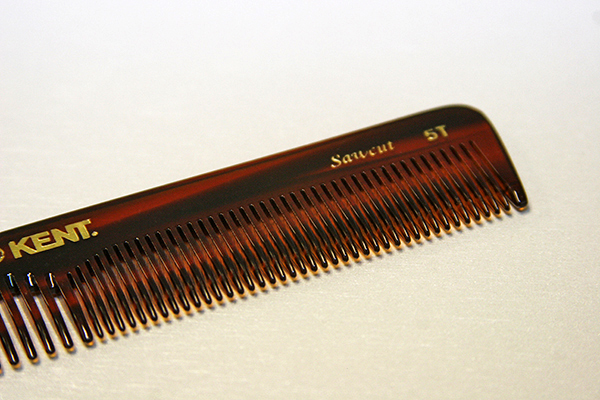
Kent’s model 5T combines fine and course hand cut teeth with their hand finish tips and their beautiful tortoiseshell finish. This large comb is a perfect bathroom comb.

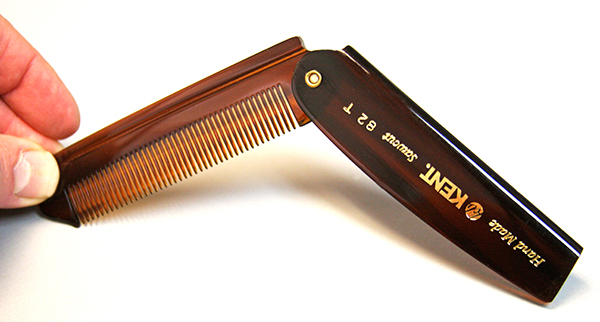
Kent makes an incredible variety of combs you can view on their website. They include conventional pocket varieties, full size valet combs and their novel, folding 82T model which hinges into its own cover like a pocket knife. Because of the special materials the combs are hand-made from they feel heavier in hand, making handling more tactile and controllable. All of the models seem to pull through wet hair, even my fine hair when wet, easily and smoothly.

kent50

Kent’s unique model 82T is difficult to find in the U.S. but worth searching for since it is a delightful travel companion.

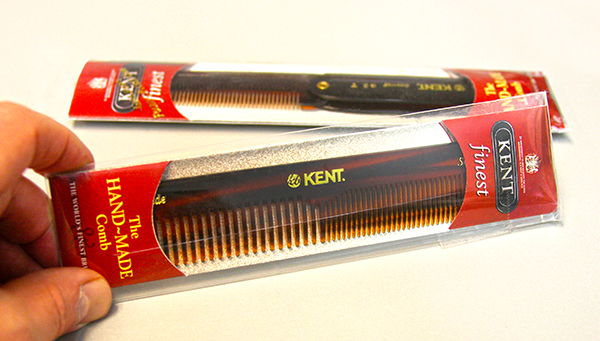
I first learned about Kent combs from a magazine article years ago. I found the brand for sale in a small specialty shop in Christiansted on the island of St. Croix when I was there for diving and the St. Croix 70.3 triathlon. The combs range in price from $7 USD to about $12 USD for the specialty folding comb. Each comb comes in individual clear packaging with a brief history of the product on the back of the package in five languages, a nod to Kent’s international appeal. You can buy Kent combs directly from their website at Kent Brushes and from Amazon.com along with the rest of their handmade brushes.
kent60

Kent’s luxurious line of women’s brushes with satin wood handles and beautiful handmade boxes are an opulent luxury if you enjoy brushing a girl’s hair as a special way to spoil her. The LHS5 is entirely handmade using Indian bristles. It comes in a blonde version that is a beautiful match to many shades of blonde hair. It is also sold in black bristles at about $260 USD.  Kent makes men’s brushes such as the MC4 using cherry wood bases without handles at around $68 USD. There is a smaller polymer center handle version with molded teeth for use with shampoo while showering at less than $10 USD.  I’ve even used their 14T model comb on my long-haired cat since the hand-rounded teeth tips feel good against her skin and the precision teeth do not pull her long hair.

Kent combs and brushes are worth seeking out. They are an affordable no-compromise tribute to making something commonly taken for granted as beautifully and carefully as can be. Using a Kent comb does more than just arrange your hair. It is a reminder that in ever endeavor the pursuit of the very best has advantages, even if they are small ones in everyday practice.