Archive

Commentary.

By Tom Demerly.

_84583932_hi028371646

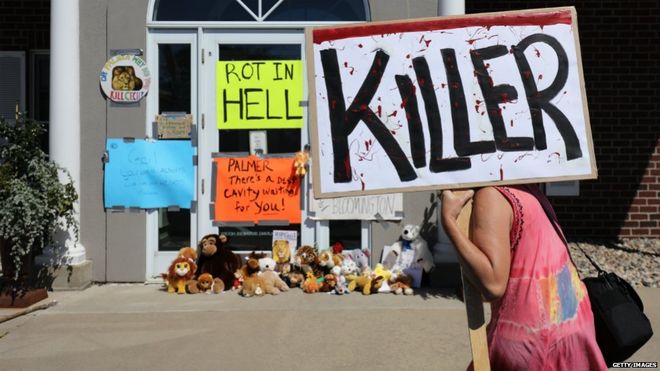
Protesters outside Walter Palmer’s dental office, which is now closed, on Wednesday, July 29th in Minnesota.

Cecil the Lion is dead.

Cecil’s death and our reactions say a lot about mankind. None of it is good.

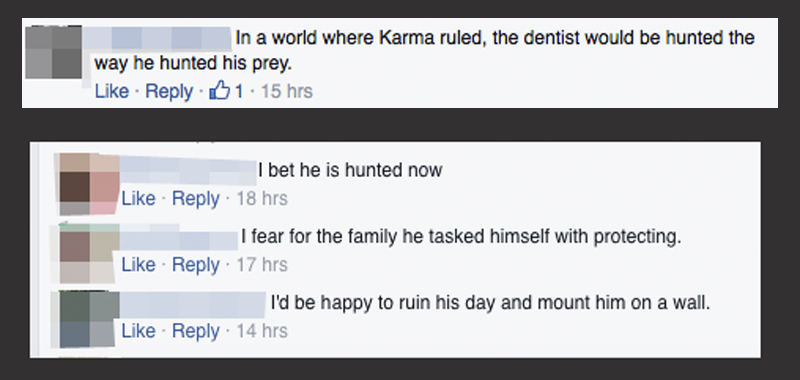
People are calling for the death of the hunter who killed Cecil the Lion. “He should die the same way Cecil died…” “He doesn’t deserve to live…” “I’d shoot him myself and not feel a thing…” are comments on my Facebook feed.

The hunter is a dentist from Minnesota. Social media and news reports say his practice is closed now, he has removed his social media and he and his family have received threats.

The people who write those threats aren’t far removed from the act they are criticizing. While these sentiments seem harmless and passionate on social media they are the violent rants of people removed from the harsh reality of much of the world. And they feed that harsh reality with their vitriol.

cecilthelion

A friend and wise man named Seth Y. observed on Facebook that the same week Cecil the Lion was killed a 12-year old girl in Nigeria blew herself up and killed 10 people in a suicide attack. The day before a 17-year old girl did the same, killing 20. There is also a civil war in Sudan, on the same continent where Cecil the Lion died, that has displaced 2 million people, many suffering from malaria, dysentery and cholera. There isn’t much about that in the social media feeds.

We didn’t grow up on charming Disney animated movies about Nigerian suicide bomber girls or cholera epidemics, so there is little sympathy for the suicide bombing or the refuge crises. Instead we are incensed by the crucifixion of a Kimba surrogate and, in our vast empathy and righteousness, call for the perpetrators head. That makes us not much better.

That’s no more right that killing Cecil in the first place.

Violence and cruelty only end one way: stop the cycle. Stop the cycle of revenge, retaliation, retribution. This includes the vitriol toward the man who shot Cecil. There is a great Arabic proverb, “The wisest is the one who can forgive.” And another that says, “It is wise to forgive, but unwise to forget.”

The sympathy for Cecil the Lion is well founded. He died a horrible and needless death. But the calls for harm to his killer have no more merit than the character of the man who killed him. That man lives in his own private prison. He carries the burden of every life he has taken. To threaten him is to join him.

Our outrage at Cecil the Lion’s murder is well founded. Our behavior surrounding it is shameful. Our cycle of justified violence and exploitation of nature is the downward spiral that could eventually end this illusion we call “civilization”. There really never has been much civil about it.

If you are truly outraged at the needless and tragic death of Cecil the Lion, then do something about it. Volunteer one Sunday at an animal shelter. Donate $50 to a fund that preserves wildlife. Write a letter to the Zimbabwean Embassy in the U.S. (Embassy of Zimbabwe, 1608 New Hampshire Ave NW, Washington, DC 20009 [202] 332-7100), adopt an animal from a shelter and give it a good life. Do something positive so the tragic and needless death of this lion becomes a rallying point for good rather than a lynch mob that destroys another life.

cecil-and-lioness-brent-stapelkamp

By Tom Demerly.

cowboy10

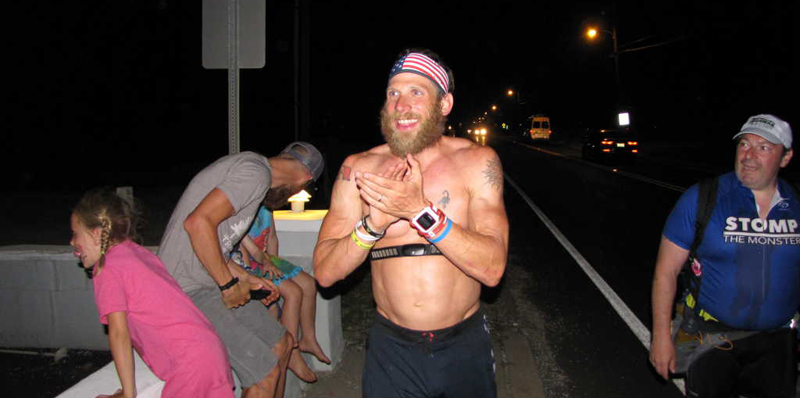
When he started, no one thought he could do it: Complete 50 Ironman distance triathlons in 50 states in 50 days. But he’s done it. And in doing so, he’s changed our concept of what is possible. He is James Lawrence from Utah, 38 years old; The Iron Cowboy.

Ironman has become a tattoo, a brand and an object of conspicuous consumption. A logo on a warehouse club fleece jacket bought after a race.

Before that, back on a beach in Hawaii on February 18, 1978, it was something else. And thanks to Iron Cowboy, it gets back to its roots of pushing through barriers rather than stopping at them to buy a logo-ed jacket and get a tattoo.

Iron Cowboy ran straight through all the marketing. Knocked down the barriers. He reminds us that Anything is Possible. And he did it without the licensing fees and waiting lists. He really Just Did It. The finish line is also tomorrow’s start line. It really isn’t over when it’s over. It’s only over when we stop.

One of the things he demonstrated is that we’ve been pretty lazy, pretty complacent, somewhat petty and oddly “consumer-ish” in our approach to Endurance sports. We just want the tattoo. And fleece jacket. And hat. And bumper sticker. And license plate. And bike number. And…

Ironman built it, and we bought it. Until The Cowboy, it had gotten stagnant, the needle stuck at 140.6.

There are longer races, there are harder races; Marathon des Sables is one. But without the mega promotion and the TV deals and the brand licensing they have remained off the everyman’s radar.

Iron Cowboy ran around the outside of the licensing fees that have been attached to the use of any reference to The Full Distance and made a mockery of dots and “M”s and tattoos. And in doing so he undid, in 50 days, what has taken nearly four decades to do. He reminds us that human limits exist only in our minds. That, unless we continue to push our concept of limits, that wet blanket we call “impossible” begins to settle heavily over us.

When Ironman Hawaii started it was also thought to be impossible by some, injurious by most. Now finishing Ironman is commonplace. It isn’t easy, but it is common.

So The Cowboy just raised the bar. And while Ironman, just one, lowly Ironman done in good conditions after months of training, good nutrition and careful tapering, is somehow made “smaller” in context by James Lawrence, the “Iron Cowboy”, it also remains a significant challenge.

But now we are reminded that there are many accomplishments beyond the finish line at Ironman, and that there is much more to our capabilities than logos or tattoos.

cowboy20

James Lawrence, 38 years old from Utah, completes 50 consecutive Ironmans in 50 days in 50 states on July 26, Sunday.


By Tom Demerly for tomdemerly.com

roadsafety20

Is road cycling dangerous? What are the chances of being hit by a car while riding on the road? Can cyclists manage risk while riding in a shared bicycle/car environment?

The perception is that road cycling is more dangerous today than a decade ago. And, that driver distraction and higher traffic volume have increased the risk and frequency of car/bike accidents.

There is one problem with this perception: The data does not support it. In fact, there is data to suggest that road cycling is statistically safer today per rider than ten years ago if you compare the frequency of reported accidents to the rate of growth in road and triathlon cycling.

Gina Kolata is a writer for The New York Times. In an October 2013 article published by the Times she wrote, “What remain [in cycling safety studies] are often counterintuitive statistics on the waxing and waning of cycling in the United States, along with some injury studies that could give cyclists pause.” By contrast, in the Fatality Analysis Reporting System (FARS) 2004-2012 Final File, 2013 Annual Report File (ARF) published by the U.S. Department of Transportation we actually discover only a 2.8% increase in reported cycling fatalities, from 727 in 2004 to 743 in 2013. This statistic is particularly relevant since cycling fatalities must be reported by law, whereas non-fatal accidents have no formal reporting requirement even if the victim receives medical treatment.

roadsafety10

Compare this change in cycling fatalities with the growth in the cycling sports: The Outdoor Foundation.org reports a significant “174% growth in Traditional Road Triathlon Participation in the last five years”. The foundation went on to report that, “Activities with high percentages of first-time participants in 2012 included stand up paddling, boardsailing/windsurfing and non-traditional and traditional triathlons.”

Even if you discount the statistics for cycling fatalities and triathlon growth each by 50%, the trend remains clear: Serious road cycling/car accidents are becoming less common per rider.

Why has the perception of road cycling evolved into a belief that riding on the roads in more dangerous than ever? There are likely several reasons.

When you conduct a survey of the literature on cycling accidents you discover that cycling safety statistics are pretty dry, while Facebook and social media posts about accidents are pretty sensational. This proliferation of social media posts about cycling accidents contrasted with boring accident analysis likely contributes to the misconception that cycling is more dangerous than ever.

This last decade has produced a new culture of sport cyclists, many of them attracted to cycling by triathlons. Triathlon is fed by several demographics; participants completely new to endurance sports, participants coming into triathlon from distance running, participants coming from a collegiate sports background. None of these three backgrounds emphasize technical bike handling skills. Few triathlon clubs conduct bike handling and group ride skills clinics. As a result this new culture of performance cyclists are racing their bikes on the roads in triathlons but may not be practicing bike handling and real-world road riding skills.

Road cyclists often default to anecdote when discussing cycling safety in traffic: “Yeah, but my friend knows a girl who was hit by a car and…”

As it happens, I am fluent in the language of cycling accident anecdote. I have been hit three times by cars while riding my bike. My lifelong best friend was killed by a car while riding his bike. I’ve had broken bones, torn skin, destroyed bikes and lost my best friend. A cursory examination of my first person experiences might point to a knee-jerk analysis like this: “See… the sport is dangerous, and your experiences prove it.”

3fdce2edcf52932f8d4da987fe006889

But there is more to each of my experiences. In each instance when a car hit me I contributed, partially or entirely, to the accident. In one I was riding in adverse weather, another I rolled a stop sign on a residential street and the third was just after dark when I was caught without lights. In short, I was at least partially responsible for the accidents. In the instance when my best friend was killed, he was riding in the dark on a busy road with a high speed limit by a drunk driver with an obscured windshield. It was the culmination of the most dangerous factors; the perfect storm.

Therein lies a lesson: Risk can be managed and moderated, but that management must be willful and methodical.

Perhaps the best practitioner of risk management is the military. The military’s model for risk management is simple: Meticulous preparation. Training, learning techniques, drilling key skills again and again. Crawl, walk, run. As a result, soldier preparation and survival on the modern battlefield, the deadliest in history, is better than ever. On both the road and in the water, multisport athletes could take a lesson from military training doctrines in risk management and training for riding in a real world environment.

Cyclists have taken an opposite approach: Avoidance. New cyclists tend to seek ride environments they perceive as less risky rather than work on skills for riding in the real world. New cyclists gravitate toward perceived cycling preserves like Metroparks and bike trails.

There are three problems with the risk avoidance approach; it does not teach necessary cycling skills, it does not reflect the broader cycling environment and it creates a false sense of security at the possible cost of taking time to learn good bike handling and road cycling skills. In fact, in a strange flip-flop of statistical trends, it appears as though areas around Metroparks in Michigan tend to have a higher frequency of accidents than do remote, rural and even low traffic density urban roads like streets in Downtown Detroit and the Michigan Downriver area.

roadsafety30

Perhaps the most significant contributor to the cycling-risk dogma is social media. I’ve been a victim, and a villain, of social media misreporting on cycling accidents myself. Several weeks ago a multiple-fatality car accident at a local Metropark was initially reported on social media as a cycling accident. It wasn’t a cycling accident. I shared the reports that the accident was a multiple fatality bike accident. When I learned the accident didn’t involve any cyclists at all, I deleted it from my Facebook page. But the story had already been widely seen and shared. The damage was done. What I should have done is checked the facts before I posted about the accident.

What is the truth about road cycling safety? I interviewed the executive director of the National Bicycle Dealer Association (NBDA), Fred Clements, about trends in road cycling safety. Clements, an experienced industry observer and critic, characterized it well:

“I would consider road cycling to be reasonably safe, though it has much to do with your skills, where you are, and what routes you choose. With reasonable care, the risk can be minimized. The risk is not as great as some people may believe.”

While some may suggest Clements’ perspective is skewed by his position in the industry- that this is the fox watching the hen house- the statistics support his suggestion that road cycling is not as risky as the social media dogma has scared us into believing.

A key reality is that cyclists must assume responsibility for their own safety. Until they do through improved skill training, selecting better routes and being pragmatic instead of sensational then the inaccurate perception that cycling is increasingly dangerous will continue to proliferate.


BY TOM DEMERLY.

tooskinny80_800

A Victoria’s Secret ad run on Facebook after I used Photoshop to retouch back to what I thought were normal looking, physically fit females.


Top fashion brands like Victoria’s Secret have taken heat from consumers and media for manipulating the appearance of their models through both real diet and exercise regimes and also by using photo retouching techniques to make the models appear thinner, taller, and without skin blemishes.

I wondered what would happen if I used Adobe Photoshop to retouch a Victoria’s Secret ad seen on Facebook in the other direction. I wanted to make the models look more “average”, more like my impression of what physically fit females actually look like. Here are the results seen side by side.

sidebyside800

The original ad on the left, my retouched version on the right. It took a lot of work to get rid of all that “thigh gap”.


The project took about 20 minutes in Photoshop, and I am not a skilled user. I used the “liquify” tool, the rubber stamp tool and the masking tool. For an expert in Photoshop the results would be better and quicker.

When I put the two photos next to each other I was struck by how truly bizarre the actual Victoria’s Secret ad looks. The two girls in the center with bare midriffs look truly weird in the real ad, and look a lot more realistic in my Photoshopped version.

The thing that struck me the most was that the ad I Photoshopped now looked pretty reasonable. The actual ad, before my Photoshop, looked freakish.

I don’t know how much (if any) Photoshop is done in an ad like this one for Victoria’s Secret. I do know it took 20 minutes of work to restore the image to my perception of a more normal, fit looking bunch of girls on the beach.


By Tom Demerly.

realtri20_edited-1

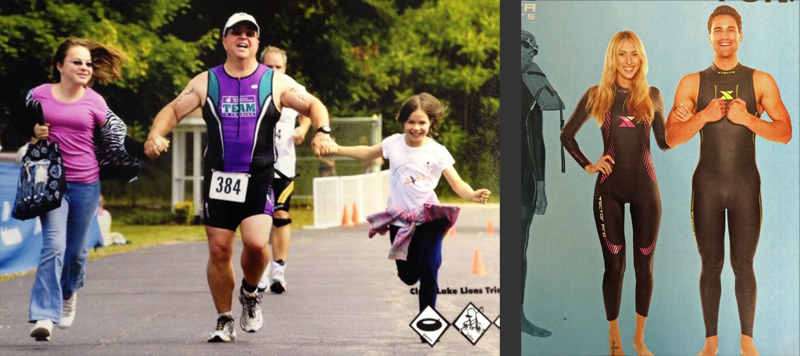
The heart and reality of modern triathlon is the everyday hero, not the thigh-gap supermodel.

Who does triathlons in the United States today? What does the “average” triathlete look like?

Industry dogma suggests all triathletes are high wage earners between 30 and 45 who aspire to race Ironman (or already have). They own a $10K bike, race wheels and a power meter. Their household income is above $120K and they have a graduate level degree. They are the marketer’s dream come true: Young, affluent, fit and shopping.

There are two problems with that “demographic”: it’s outdated and likely wrong. Why?

Set the way-back machine to December 2007. Economists agree this is when the Great Recession started in the United States. It ravaged personal discretionary income and decimated those just hanging on to upper middle class. Many haven’t recovered to pre-recession income and savings levels even though the recovery has thundered ahead, dropping them from the pack like a newbie on their first group ride. Those that have recovered or never suffered an economic loss may be reluctant to part with cash earned during the stock market gains of the past seven years. Americans seem less eager to carry debt, despite an ominous recent spike in credit card debt. Discretionary spending decisions have tightened in the post-recession era.

Many of the tired marketing statistics rehashed about triathlon were collected prior to the 2007 recession– and haven’t been updated since. The post-recession demographics for triathlon have changed.

Americans have also changed physically. We’re heavier- all of us. The number of svelte, uber-athletes is smaller now than it was 20 years ago relative to the general populace, who apparently has been spending what’s left of their shrinking discretionary incomes on Krispy-Kremes, not qualifying for Kona.

realtri100

Americans, including triathletes, have gotten heavier and may continue to as a population. Triathlon has failed to market effectively to that reality.

As a result of this economic and health demographic shift triathlon has filled from the bottom. The sport is growing from an increasing number of new athletes who are more average, heavier, less athletic but still inspired to participate– if not necessarily compete.

This is good news for the triathlon industry if they become more pragmatic about who is really doing triathlons. History suggests the triathlon industry isn’t very realistic about its own consumership. It continues to (try to) market to the svelte, Kona demographic in print and internet media- even though the inspirational stories that bring people into the sport are usually the saga of the everyman participant who had to overcome to participate, and doesn’t really compete.

This fundamental misunderstanding of the distinction between Participation and Competition is what continues to hold the triathlon industry back. It is also why retailers have a hard time earning consistent profits from a market they are increasingly out of touch with.

There has never been an ad campaign in triathlon featuring realistically sized, average age group triathletes. In fact, the same rebellion that has happened in women’s apparel marketing with consumers raging against brands like Victoria’s Secret and Abercrombie & Fitch is ready to happen in triathlon. The middle 90% wants triathlon to “get real” about who is actually participating, and they don’t care about who’s racing in Kona.

realtri40

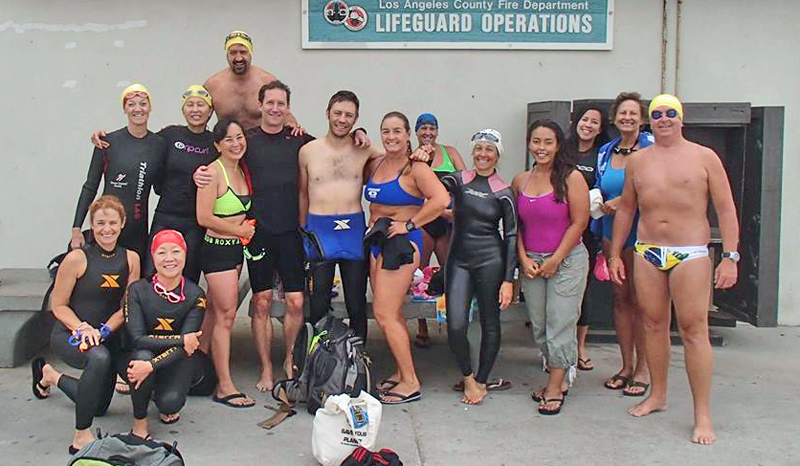
Triathlete Niecia Staggs and his Ocean Swim Club at Torrance Beach, California represent the athlete constituency that truly pushes triathlon forward.


A gold standard metric for triathlon marketers and product managers has been the “Kona Bike Count”, a census of brands and models seen in the transition area of the Ironman World Triathlon Championships in Kona, Hawaii each year. This increasingly irrelevant set of metrics is still used to (try to) sell everything from race wheels to bikes to power meters. There is one problem though- as the sport fills from the bottom the assumption that every participant aspires to emulate the couple thousand athletes in Kona is statistically flawed.

A bike company may devote six figures and more to developing the next triathlon “super bike” costing over $5000 (and even $10K) but they have failed to develop inspiring new designs in entry-level triathlon bikes. If a bike company introduced a comfortable, high head-tube bike with aerobars and a comfortable saddle with an aero appearance at the $1500-$2200 price point it would be an easy decision for new triathletes. New triathletes aren’t interested in the tired marketing paradigm of wind-tunnel white paper dogma that is debated ad nauseam among a shrinking number of triathlon Internet forum mavens. They just want to sit upright on their bikes, be comfortable, look presentable and have a good experience at their triathlon.

realtri30

Apparel and personal care brands have begun to leverage an inclusive, realistic approach to expand brand awareness and foster broader-appeal sales. Numbers say the approach is working.

Apparel manufacturers have missed the mark too, alienating prospective customers with images of sponsored pros with little or no recognition among average triathletes and building clothing that is too tight, too short and in size runs that are humiliating to try on. If a forward thinking triathlon apparel brand introduced a tactfully marketed apparel line called “PR” with upward-adjusted size runs, modest cuts and middle-road visual appeal they would outsell too-tight, mis-sized brands designed to fit anorexic Kona winners.

The idea of every triathlete being the “alpha consumer” isn’t accurate anymore. Triathlon has changed. The sport is filling from the bottom. It has become an “everyman and everywoman” sport. The vision of the triathlete as a super fit, alpha-consumer threatens the sport by becoming increasingly exclusionary. It fails to welcome new athletes and creates barriers to entry like body image and entry price.

There will be big and quick rewards for the first triathlon brands who acknowledge this in their product mix and marketing message. The money is there to make, but it must be earned through pragmatic product design and judicious, ego-free marketing. The first brands to reach the finish line of the new, realistic paradigm in triathlon marketing will be the new podium finishers on the top of the sales charts long after the “winners” of the Kona Bike Count are forgotten.


By Tom Demerly

snowstormshovelBW

I stepped out the door on the way to work two weeks ago. It had snowed. Nothing remarkable about that. It’s Michigan, it’s January.

What was remarkable is that my sidewalks, walkway and driveway were cleared of snow. I did not do it, it was done for me.

I live in Dearborn Heights, Michigan. Three blocks north of me is Dearborn. Dearborn Heights is considered less affluent than Dearborn. It’s like “Dearborn on a budget”. We have lower home values- by a lot. There is less government, fewer services, fewer building codes, fewer police and emergency services. A girl I dated a long time ago is on city council and has run for Mayor a few times. She hasn’t won yet, but I’d vote for her. She’s a smart politician and good administrator.

I can look three blocks north into Dearborn from my house in Dearborn Heights. I live in Dearborn Heights now because it is cheaper. A three-bedroom house on a big lot in Dearborn Heights is about $800 a month. Same house in Dearborn; maybe $1200, on a smaller lot.

Part of the reason Dearborn is more expensive is city services and government.

And that brings us back to the snow.

Like I said, my snow was cleared completely. Quite nicely too. Since I had allowed an extra 15 minutes to shovel my own snow I now had 15 extra minutes of discretionary time before I left for work.

Discretionary time: think about that. It is our most precious non-renewable resource.

So I had a choice about what to do with this valuable 15 minutes.

I was in the Army. And the National Guard. A key thing we learned was to be a team player, act without direction congruent with a key set of values. Work together selflessly. Strive to do more than is expected and never settle.

So I picked up my snow shovel and shoveled the snow of the neighbor one house down from me. Mine was done. His was not.

Meanwhile, three blocks north in Dearborn the city plows had been out (higher taxes there, more expensive housing) but the sidewalks were still snow covered. It takes a while for the sidewalk plows to come after the streets have been cleared. The city can only afford so many sidewalk plows and people to drive them, and sometimes they have damaged people’s private walkways to their house creating lawsuits to get the city to repair them. So it takes extra time for the sidewalks to get cleared in Dearborn. It’s also expensive. The sidewalk sweepers have to be bid on and bought, someone is paid to administer that project, and they must have a college degree in a related field since they are controlling a lot of public money. Then they have to hire people to drive the plows, and the process of hiring those people must be administered fairly and without discrimination or nepotism, so there needs to be some oversight there as well. The sidewalk sweepers also need gas and maintenance and storage during the summer, and that costs money too.

In Dearborn Heights, we just use snow shovels. A guy down the street has a snowblower, so he clears the sidewalks and walkways of his house and the neighbor on each side. Then the guy three doors down, also with a snowblower, does the same. I shovel the rest to the corner. I don’t have a snowblower.

Another guy, one block over, owns a snow removal service. He runs his plow up and down the street. Then we’re done.

Three blocks north in Dearborn, the sidewalk sweeper still hasn’t come.


gluck10

It’s Saturday morning, September 15, 2012. Washington Township, Michigan. An idyllic late summer day, 73 degrees. Wind out of the NNW at a calm 4 M.P.H. A perfect training day for the Ironman World Championship Triathlon in Kona, Hawaii a few weeks away in October.

Local heartthrob triathlete Amy Gluck is out training for the 2.4-mile swim, 112-mile bike and 26.2- mile run that is the most famous triathlon in the world.

Gluck is putting the final touches on her preparation for Kona. Blonde and beautiful, the (then) 40-year old Amy Gluck could grace the cover of any fitness or fashion magazine. In person she is warm and unassuming about her athletic accomplishments. By day she works as a clinical nutrition manager. The rest of the time she inspires the local triathlon community with her drive and humble athleticism while she prepares for another great Ironman.

gluck30

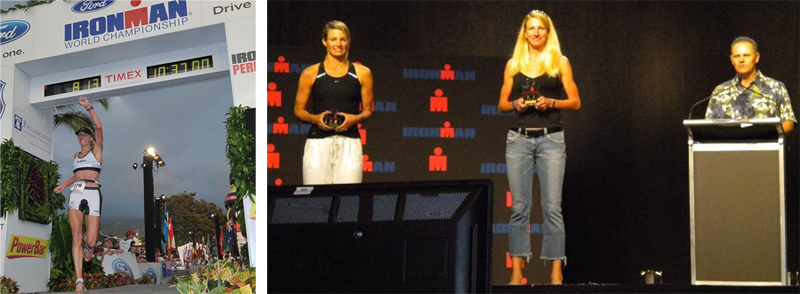
Amy Gluck at the finish line and on the podium at the Ford Ironman World Championships in Kona, Hawaii before her accident.

Amy is up early, as usual, inflating her bike tires and texting training partners. She meets another athlete for their long ride inside one of the local Metroparks where the smooth, tree-shaded winding roads are perfect for cycling. Toward the end of her ride she leaves the park and rides out onto local roads.

Where she is hit broadside by a gravel-hauling semi truck.

Gluck’s bones are crushed, snapped and mangled. Bone fragments, now lethal internal shrapnel, ricochet inside her body. Even though she is wearing a bicycle helmet her brain accelerates inside her skull to smash into the bone, beginning deadly inflammation almost immediately. Her left eye is internally detached. Connective tissues are creased beyond any normal range of motion. But mostly, it is the fatal force of the impact. Based on the reports of the accident the combined forward speed of Gluck’s bicycle and the speed of the semi-truck are equivalent to riding into a concrete wall at about 45 M.P.H. A BBC report on bicycle helmets states that, “If you crash at 15 miles per hour in a normal helmet, your head will be subjected to around 220G [G-force].” But Wikipedia says that, “Very short duration shocks of 100 g have been survivable in racing car crashes.” Gluck’s impact may have occurred at nearly two times those forces.

The next hours are a blur of emergency medical trauma decisions; any one of which made differently- even slightly- will kill Gluck if she manages to live to the next one. Which, in her condition, is unlikely. She is eventually medevaced by helicopter to a more advanced trauma unit, but only after a large section of skull is removed to reduce brain damage from swelling. The skull section becomes contaminated and cannot be replaced inside her head if she lives. Nothing about her condition is hopeful, and the situation is deteriorating. She slips into a deep coma, hovering barely outside the margins of death.

It is a nightmare scenario, every cyclist’s worst fear. The injuries from the shattering impact with the grille of the giant semi-truck are so extensive no one person I spoke to could list them all.

News of Gluck’s accident travels fast in the tight-knit Michigan triathlon community. It’s a community of athletes across all skill levels from Ironman finishers to athletes in their first year of triathlons. And it is a community used to tragedy and loss. There was the death of popular local Ironman age grouper Jon Logan to cancer. A life-threatening accident for triathlete Mike Orris. The sudden death of athlete Sean Tyrrell, the death of Gary Plank, the earlier death of local cycling coach and rider Michael R. Rabe to a drunk driver. Even local running entrepreneur Randy Step suffered congestive heart failure and had heart surgery then came back to be a signpost for not just surviving, but truly living. But Gluck’s accident resonates somehow deeper. In a tragic epilogue another cyclist, 38-yeart old Emily Sands of Dryden, Michigan, is hit and killed seven months after Gluck’s accident on the same roads.

Triathletes- the people who do Ironmans- are a funny breed. They consider themselves somehow exempt from mortality. They are fitter, leaner, healthier. Aside from bouts with shins splints, swimmer’s elbow and road rash from minor bike falls most triathletes believe they are living a healthy lifestyle that contributes to their quality of life and longevity. Amy Gluck’s lethal accident seemed like a morbid alarm clock that woke up the community to their own mortality.

Two things could have happened in the wake of Amy Gluck’s accident, and they would likely happen in the hours while she hovered on the thinnest of lines between life and death. The athlete community could look at Gluck’s horrifying accident and withdraw, becoming individuals living in fear and retreating to a sedentary lifestyle that seems safer. Or, they could rally together and live, even when they were unsure if Gluck would live, and make an unswerving commitment to support Amy Gluck and each other- and not give in to the fear of mortality.

The community chose to rally together and live.

gluck40

The WXYZ television coverage of Amy Gluck’s prayer vigil on September 21, 2012.

On September 21, 2012, six days after Gluck’s crushing accident and at the low point of her descent into a coma, while she hovers between life and death, athletes who know Amy have a prayer vigil at Henry Ford Hospital. Local ABC News affiliate WXYZ reports the story.

It is an unusual video report to watch. Awkward almost. But one senses there is a transition that takes place right before your eyes- in that video. It is the beginning of the collective decision of the community to band together, to rise above, to somehow turn this tragedy into a rallying point. And to pull Amy Gluck back from the brink.

Against all odds, Gluck does not die. She is, however, far from living. Especially by her standards.

Weeks pass. Amy’s sister Kendi Gluck, a physician herself, told the ABC News affiliate, “It’s like a nightmare and I just want to wake up from it.” Friends take turns at Amy’s bedside. Uncertainty about Amy’s survival remains but the tight bonds within the athlete community only strengthen. These are people used to tough going in the late hours of an Ironman, when it seems like the race will never end and the finish will never come. There is a saying among Ironman triathletes, “If you don’t like how you feel, wait a few minutes, it will change.” The community applies that same mental resolve to endure Amy’s tedious grip on life. It is a community uniquely prepared to handle the wild swing of ups and downs. Outsiders would ask, “What will happen to Amy?” the answer was oddly unanimous. “Don’t count Amy Gluck out.” And they didn’t.

The weeks turn into months. One day- different people suggest different dates, Amy Gluck wakes up. And a new race starts. A race harder than any Ironman Gluck had competed in, and a race with an undefined finish line. Now that Gluck has survived the accident, no one knows where her recovery will take her. But Amy Gluck is back in the race, and her multiple Ironmans were merely a warm-up for the race to get back to who she was before her accident.

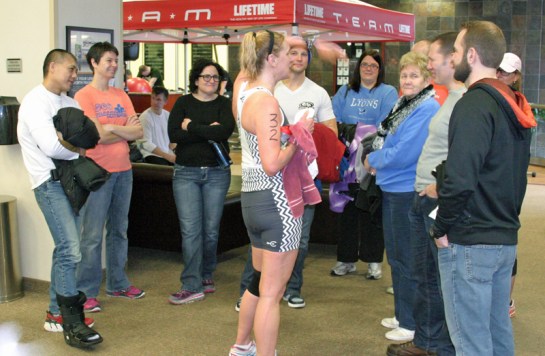
Gluck before the start of the Lifetime Fitness Indoor Triathlon.

Gluck before the start of the Lifetime Fitness Indoor Triathlon.

There are surgeries. Many, many surgeries. Most sound more like carpentry than medicine. There is an endless procession of setbacks and low points. At times Gluck seems out of touch with reality, talking about getting ready for an upcoming race that doesn’t exist as though the accident never happened. But the nature of brain injuries is that, as they heal the person who suffered them gradually reintegrates into collective reality. Gluck has begun that long mental process along with the grating and painful physical recovery, a recovery that may never end.

On May 14, 2014 I visited Amy at the recovery facility she lived in at the time. It was a comfortable, nicely appointed single story community building that felt like an apartment. I had no idea what I was walking into. Would she be… somehow not in touch with reality? How do you ask a person who has been through a terrible accident and barely lived if they are “OK” now? Would she know?

Amy answered the door and gave me a hug. Unusual since, quite frankly, I never knew her well prior to learning about her accident. I only knew of her. She was wearing a sweatshirt and sweatpants and big, floppy socks. Her hair was a messy heap of blonde.

There was something oddly…naked about her eyes. Like she had seen something very bad. They were, however, fully open, as if to suggest an incredible awareness to the unlikely circumstances of her survival. And, to take in all the challenges and possibilities that lie before her.

It was a year and six months since Gluck’s accident.

“Do you remember the accident?”

“I don’t even remember how I ended up where I was riding. I don’t remember anything about the accident. Maybe that’s better.” She speaks quietly between gentle pauses. Each comment from her, whether she is recounting her injuries, recovery or talking about her future, is articulate and well conceived. She is all there. Nothing is missing.

I ask her about being in the hospital and when she woke up.

“I don’t really remember when I woke up. It seemed like a long time. I was kind of in and out.” She says. She seems to diminish the brutality of her ordeal. She says waking from a coma was not like they show it on TV, it does not happen suddenly and all at once.

It occurs to me that blocking out much of what she has been through is not only a physical result of her injuries, but an emotional necessity. Amy had a huge section of her life torn out. She’ll never get it back.

Over the next few months I spoke to many people about Amy Gluck’s accident and miraculous survival, and prospects for more than survival.
amychristina

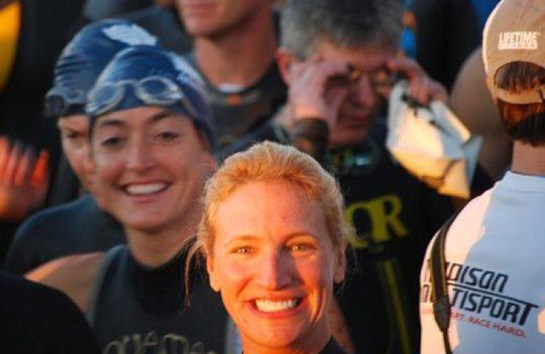
Amy Gluck with friend Amy Christena at a triathlon swim start before Gluck’s accident.


Amy Christena, a longtime friend of Amy Gluck told me, “She’s challenging herself every day. To get back to the girl she was. She is something more than a survivor. She never lost her drive. That is why, inside at least, she is still the same person.” Christena is also an experienced triathlete who shared in many of Amy Gluck’s races and successes prior to the accident. “I honestly thought she was going to die. I’m really amazed she lived.” Amy Christena was one of the people who visited and supported Amy Gluck from day one since the accident, and she participated in the dreadful rollercoaster of her difficult and ongoing recovery ordeal.

During one visit Amy Christena asked Gluck how she was doing. Gluck told her she was getting ready for [Ironman] Louisville. “She was very confused. She took all the conversations in the room and merged them into one. I was devastated”. But Amy Christena never counted out the possibility of Gluck somehow getting better.

Through endless suffering and staggering setbacks Amy Gluck did continue to improve. Her ambition and drive to get back outstripped the pace of her physical recovery sometimes, and that was frustrating. Gluck held exactly the same high standards for her recovery as she did for an Ironman performance in Kona. Just recovering was not enough. Gluck wanted back in the race.

gluck70

On Sunday, January 4, 2015, 2 years, 3 months and 21 days after her accident, Amy Gluck did a triathlon. She participated in the Lifetime Fitness Indoor Triathlon in Commerce Township, Michigan. The race is part of a national series of indoor triathlons sponsored by Lifetime Fitness. And while a short indoor triathlon at a health club is an incredible measure from competing in the Ironman World Championships, it is also a long way from lying in a coma trapped between life and death.

Michael Wilker, General Manager of Lifetime Fitness in Commerce said, “It’s incredible, one of the greatest stories we’ve ever heard, and we’re excited Lifetime could be a small part of it.”

Many of the same people who were seen in the WXYZ news story back in 2012 were at Lifetime Fitness for the event- over two years later “Amy’s Army” was stronger than ever.

College friend Colleen Churchill, a bubbly, adorable physical education teacher chauffeured Gluck to the event from Livonia, Michigan. Churchill’s devotion to Amy’s comeback has been strong. She is one of many foot soldiers of Amy’s Army who never gave up on Gluck’s long run at a comeback. During the event Churchill shared a swim lane with Gluck and rode an indoor bike next to her for the bike leg then ran on the treadmill next to her to the virtual finish line.

gluck100

Along with many other friends of Amy Gluck, Colleen Churchill was there when Amy was in the hospital hanging onto life and then over two years later as she celebrates her miraculous survival.

Amy Gluck still needs help, and plenty of it. While her story has an inspirational ring to it, her recovery is very far from complete. She can’t drive, she does not live independently, her balance issues from the accident mean she may not be able to ride a bicycle outdoors and even if she could, the trauma to her family and friends from the accident and ordeal of wondering if Gluck would even survive are unbearable. The depth of Amy’s loss is immeasurable, from Ironman competitor to being dependent on friends and family for basic transportation and assistance with day-to-day life. Her loss, despite her survival, is staggering. The trip from Ironman podium to life support is about the widest swing of life experience anyone can imagine. While Amy Gluck is soft spoken about her ordeal, everyone else stands in awe of what she has lost, and her brave, never-ending struggle to try to get some version of it back, even if it is only an indoor triathlon her friends have to drive her to.

gluck60

When I asked Colleen Churchill what it was like to share the experience with Amy she told me, “Amy’s struggle reminds me not to take anything for granted, to live your life out loud. Amy’s accident changed my life forever too.”

Talk to anyone about Amy Gluck’s story. They all say the same things. “She is incredible.” “She is stronger than I would be.” “She is an inspiration.” “She makes me value what I have even more.” “She has shown us that participating in the sport is a gift and we can lose it at any time.” “When I reach a tough spot in a race I think of her and it makes it easier.” Every athlete I talked to about Amy is inspired by her.

gluck90

Any other group connected by a common interest would have been shattered by Amy’s tragedy. People would have drifted away in fear, taken up golf or tennis. Something safer. But the opposite happened with Amy Gluck’s friends and the Michigan multisport community. They rallied to Amy’s support. And in doing so, athlete bonds were strengthened. New athletes were inspired and mentored. And athletes looked to Amy’s survival as an inspiration. It is as if the entire community looked to Gluck’s incredible example of trying to go beyond survival and asked themselves, “What Would Amy Do?” The answer is clear; Amy Gluck does more than survive. Amy Gluck gets back in the race.
gluck120


By  Tom Demerly.

rifles

Top: The semi-automatic sporting rifle possessed by Adam Lanza at the Sandy Hook Shooting. Bottom: An automatic M4 assault rifle used by the U.S. military and heavily regulated for public sale.

Nine families who lost children in the 2012 shooting at Sandy Hook Elementary School have filed a lawsuit against Bushmaster Firearms, the company that manufactured one of the weapons in possession of shooter Adam Lanza.

It is likely the lawsuits will fail to increase restrictions on the distribution and ownership laws of firearms in the U.S. Instead, the suit will continue to divert attention away from the central threat of firearms crime; conduct with a firearm, not the technical specifications of the firearm itself.

The primary reason the suit will fail to achieve meaningful reform of firearms legislation is a common misunderstanding of firearms nomenclature: The difference between an automatic assault rifle and a semi-automatic sporting rifle.

An automatic assault rifle has a mode of operation that enables the user to fire multiple shots with a single depression of the trigger: Pull the trigger back one time and hold it, bullets continue to fire. This is an “automatic weapon”. The sales and distribution of these weapons is restricted in most states to persons holding a specific permit that requires more documentation than other weapons.

A semi-automatic sporting rifle has a mode of operation that fires one bullet for one pull of the trigger: Each time the user fires a bullet they must pull the trigger. The sales and distribution of semi-automatic weapons is less restricted than automatic weapons.

This distinction should be straightforward. What has created confusion is the appearance of semi-automatic sporting rifles is sometimes nearly identical to fully automatic assault weapons.

We have already seen confusion between “semi-automatic” (one trigger pull, one shot) and “fully automatic” (one trigger pull, many shots) among lawmakers. There has been more than one press conference when a lawmaker has brandished a semi-automatic sporting rifle and characterized it as capable of firing “hundreds of bullets” inferring that the semi-automatic rifle they are displaying has fully-automatic capability. It doesn’t. And therein lies the reason why attempts to improve firearms legislation have failed.

Confusion may be understandable, although not excusable. Especially among legislators.

Semi-automatic sporting rifles like the ones manufactured by Bushmaster look like fully automatic weapons. The irony is they actually store less ammunition internally than more benign looking semi-automatic hunting rifles. Some models of hunting rifles, including semi-automatic and even bolt-action hunting rifles with a less military appearance house their bullets in an internal magazine that is a part of the rifle itself. The Bushmaster semi-automatic sporting rifle (remember, it wasn’t an automatic “assault rifle”) possessed by Adam Lanza at Sandy Hook holds its ammunition in a separate external “magazine” or metal box that is attached to the rifle when loaded. The magazines for these rifles have assorted capacities that can vary with design. In California, the number of bullets these magazines can hold is restricted to a maximum of 10 bullets. The idea is that, a person is forced to reload their rifle after firing a maximum of 11 bullets (remember, the rifle can chamber or contain 1 bullet ready to fire and the 10 in the magazine a maximum of 11, 10+1=11). Presumably this is intended to limit the damage they can do.

M&R Photography

While many firearms owners and manufacturers argue against firearms legislation reform, their adherence to outdated legislation has continued to polarize their position. Proactive reform of legislation with advocacy from the firearms ownership and manufacturing lobby is a more constructive approach.

If the contention of the complaint against Bushmaster is that the rifle Lanza used at Sandy Hook was a combat weapon with automatic capability, then the complaint does not have merit. If the contention is that the Bushmaster rifle used by Lanza is styled after a fully automatic assault weapon, that argument is factually correct. However, it is a difficult argument to prove the styling and appearance of the weapon somehow augment its lethality compared to other semi-automatic sporting weapons.

The problem with the Sandy Hook lawsuits is they do not focus on a central problem in mass shootings; management of potentially violent persons who may have a history of behavior that could lead to violence. This suit also fails to address another critical aspect of all gun violence; the responsibility of the owner of the firearm (any firearm) to secure it from use by other parties. This includes the distribution of firearms through negligence by failing to adequately secure them from theft. Interestingly, in the U.S. Army, failure to secure a weapon- any weapon- from theft or loss is one of the most serious offences, comparable to a felony in civilian terms and sometimes cause for less than honorable discharge, tantamount to a felony conviction.

Firearms owners argue their rights under legislation drafted well before modern firearms were engineered. The capabilities of firearms have changed significantly since the basis of our current federal firearms laws were drafted. It makes sense that legislation governing the ownership of firearms evolves as the firearms technology does. In nearly every other area of law, legislation has evolved with technology and society, often trailing it, but eventually adapting. Firearms law in the U.S. has somehow been largely excused from this evolution. That is remiss.

Furthermore, legislating firearms specifications is an ineffective approach to moderating firearms crime. Instead, improving legislation of firearms ownership liability is a more effective approach. Legislation that would compel firearms owners to secure their weapons or face stiff felony charges, even through their unintentional distribution through theft, need to be imposing enough so that every firearm owner understands the gravity and social responsibility associated with owning a firearm.
By Tom Demerly.

787_40

The beautiful new Boeing 787-8 arriving at Detroit Metro for the first time ever on December 1, 2014 as Royal Jordanian flight 267.

The first ever Boeing 787 Dreamliner to land at Detroit Metropolitan Airport arrived this morning, December 1, 2014, Monday. Catching a rare first arrival is a big trophy for aircraft spotters.

A month before the arrival of the aircraft, a beautiful, brand new Royal Jordanian Airlines Boeing 787-8 Dreamliner, the Facebook page Detroit Metro Airport Spotting posted an announcement of the first-ever arrival and invited people who “Like” their page to the event. Aircraft spotting is a worldwide hobby among aircraft enthusiasts and bagging a first-ever flight is a rare trophy.

Trying to be in the right place at the right time to catch an arriving flight is a little tricky, but much easier now with the help of flight tracking websites like FlightAware.com and networks of people with like interests on social media.

787_90

The Dreamliner’s route from Amman, Jordan over the Atlantic to Montreal, Quebec, Canada before flying here to Detroit.

The Dreamliner arrival originated in Amman, Jordan almost two days earlier and flew in a northern arc across the Atlantic, descending down over northern Canada and into Toronto. It originated as Royal Jordanian Flight 267 out of Amman, continuing from Toronto to Detroit with the same flight number.

The Boeing 787 Dreamliner is a milestone in aviation because of its incredible fuel efficiency, over 20% more fuel efficient than similarly sized passenger aircraft. The 787 competes directly with the mostly French-built Airbus A350, and the A350 is said to be even more fuel efficient. From the start the Dreamliner was meant to be revolutionary. Most of the aircraft’s wings are made of carbon fiber, not aluminum. This makes them lighter and stronger, contributing to fuel efficiency. It also gives the Dreamliner its unique upward bowing of the wings in flight, like a giant, gliding bird.

787_60

The carbon fiber wings of the Boeing 787 Dreamliner form a graceful curve in flight. Here is the Royal Jordanian flight on final into Detroit on its first-ever arrival here.

The windows on the Dreamliner use a unique passenger controlled auto-tint feature as opposed to conventional pull-down blinds. Early Dreamliner prototypes had unusual, triangular shaped windows, reminiscent of the DeHavilland Comet. The production versions settled on a squarish, advanced passenger window that is about 30 percent larger than other aircraft in its class. Probably better that Boeing went to the more conventional square windows since the triangular windows that originated with the Comet airliner in 1949 were blamed for several crashes and later changed.

1024px-Boeing_787-8_N787BA_cockpit

The Dreamliner’s advanced cockpit features full glass display integration, conventional wheel-style flight control column, Heads Up Displays in front of the windscreen unique communications system interfaces.

To get photos of the Dreamliner’s arrival I went to the south end of Metro Airport. After driving around the airport and watching flight arrival and departure patterns it was easy to predict which runway the aircraft would likely be arriving on. Early traffic of “heavies”, Bowing 747’s, were arriving on the western runway at Metro, runway 4L as approached from the south. The Dreamliner arrived on runway 3L. Usually the very large aircraft like 747’s are routed onto their own runway while the smaller aircraft use a different runway on busy arrival days.

787_80

A big Delta Boeing 747 arrives at Metro before the Dreamliner. This aircraft used the farthest west runway, runway 4L as approached from the south.

Security around all airports has to be tight. One Tom Clancy novel featured an attack on an airliner using a shoulder-fired surface to air missile at Tucson International airport. In Clancy’s story, the weapon was smuggled across the Mexican border by Middle Eastern terrorists. When I showed up to the south end of Metro Airport wearing a backpack and walking toward the airport fence, three security vehicles and one Wayne County Sheriff converged to stop me. After a quick and courteous ID check by these excellent security officers they let me wait a few moments for the aircraft’s arrival while they stayed with me.

787_120

A. Where I was located to shoot photos between the approaches for runways 4L and 4R. B. The arrival path of the Dreamliner.

The ideal location to shoot photos of the Dreamliner would have been with the sun behind me. It was an overcast day so the lighting would be marginal. As luck had it, the aircraft was between the sun and me, backlit. Combined with the overcast skies conditions for photography were poor. But plane spotting is a lot like fishing. Sometimes you hit the jackpot, sometimes conditions are just OK. Today was a “just OK” day for photography.

787_20

The Dreamliner on final with flaps in the landing position and gear down. The crummy light conditions didn’t do the nice paint scheme any favors.

About three hours later the Dreamliner was set for departure and I went back hoping for better light. At the north end of Metro Airport I waited in the hotel/rental car parking lot across I-94 for it to take off. About an hour later than we had thought the aircraft was back in the air, this time with a little better lighting.

787_145


By Tom Demerly.

20110617-Steve

Steve Hed has died. The inventer of the deep section aero wheel and innovator of so many other products and entire product categories died on Wednesday, November 26.

Hed’s passing, and his life, are momentous to triathlon and cycling for many reasons.

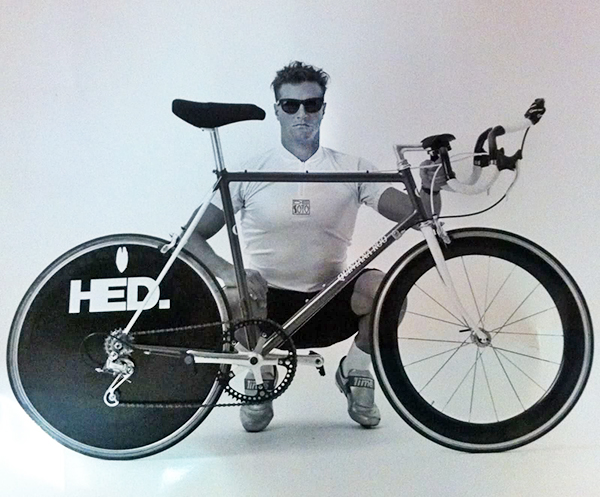
Steve Hed, founder of HED Cycling, was an original among personalities who helped define triathlon. He was more than an inventor. Together with triathlon industry luminaries like Dan Empfield, Emilio De Soto, Jim Felt, Scott Tinley, John Cobb, Boone Lennon and Ralph Ray, Steve Hed engineered products that gave triathletes their own identity. Having a black, deep section aero wheel on the front and a solid black wheel with the all upper-case letters “HED” on them meant something special. When you rode that label, you were a triathlete in the know.

tribikes140

The definition of a triathlete, circa 1988: Emilio De Soto riding a Dan Empfield designed bike with Boone Lennon handlebars and Steve HED wheels including the first affordable rear disk wheel and the very first deep section aerodynamic front wheel.

The loss of Steve Hed is significant to triathlon for another reason. He is the first of our Founding Fathers to go. If there were a Mt. Rushmore for triathlon innovators Steve Hed’s likeness would be chiseled into that granite. New triathletes will only hear of him now. Sadly, they will never experience Steve’s shy genius smirk, long grey ponytail and hunched Einstein-like posture. He was like a mutation of Steve Jobs and the Wright Brothers.

Steve Hed had the gift of sideways thinking, unconventional reasoning. Want to make a bike wheel faster? Instead of making it absurdly light and fragile, add weight and mass to it but at the same time reduce its drag coefficient by making it airfoil shaped. Want to reduce the rolling resistance of a bike wheel? Make it wider to distribute its pressure over a wider surface area requiring less energy to deform the tire. Want to make a bike frame faster? Make airfoil shapes from carbon fiber and fiberglass and meld them into the aluminum frame to make it more like the solid wheel on a WWI biplane. Steve Hed’s humble and inquisitive nature allowed him to see answers were others were too convinced they were right to ever look. When you walked into Steve’s booth at Interbike, you never knew what you would see, but you knew you would see something new and completely different.

Another thing we lose with Steve’s departure is accessibility. When you call a big triathlon brand, you press 1 for customer service, 2 for inside sales, 3 for warranty, 4 for…. When you called HED Cycling someone answered the phone, and every once in a while it was Steve or his wife Anne. Buying from them was like buying from a trusted corner grocer. Before your big race when you bought a special wheel you saved for you would say to Steve or Anne, “Pick me out a good one”, and they would. If you called strapped for cash but had a big race coming up Steve was just as likely to to say, “I made a wheel last week and ruined the decals putting ’em on. I’ll send it to you for $XX off and put the decals in the box for you, you put ’em on yourself.” With HED Cycling you didn’t order from a password protected dealer portal off a spread sheet. You talked to The Man. That made riding his equipment special.

Finally, the passing of Steve Hed is a stark reminder of what we have now in triathlon, and what we will leave behind when we are gone. Steve Hed built an empire, an identity, a category. What will we leave for triathletes to follow? And for those who shaped the essence of the sport still remaining; Dan Empfield, Mark Allen, Scott Tinley, Dave Scott, Jim Felt, John Cobb, Craig Turner, Gerard Vroomen, Phil White, Mike Reilly, Bob Babbitt and others, how will we honor them while we still can?

Steve Hed left us far too early. There were still more inventions to come. More ideas. More questions to be answered. We will never get those answers from the unique and approachable genius of Steve Hed. Instead, the best we can do is to ask ourselves how Steve would have answered those questions, and remember that those three white upper case letters in a simple font are forever a part of our identity as triathletes and the legacy of a very fine man.

stevehed100